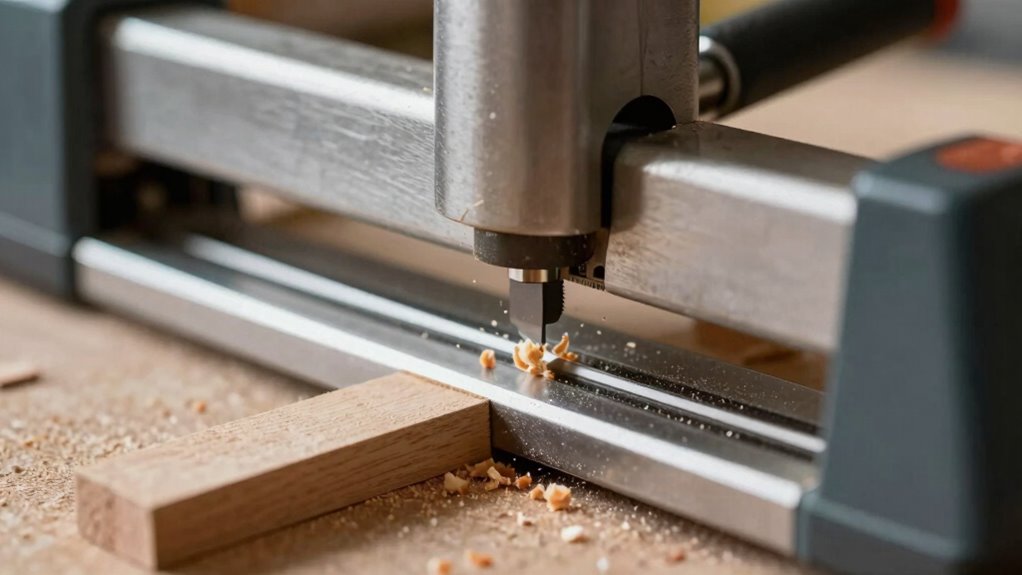

Planer snipe shows up as dips or ridges at the edges of your boards, caused by uneven support and pressure during planing. To stop it, make sure your workpiece is fully supported at both ends with level support blocks aligned with the grain. Proper support stabilizes the board and keeps the cut even, preventing snipe. Keep blades sharp and support materials steady—these simple adjustments make a big difference. Learn more about the tricks to perfect your finish and avoid snipe.

Get business pricing on tools and workshop supplies
- Business-only prices and quantity discounts
- Tax-exempt purchasing
- Multiple users, one account, clear invoices
Key Takeaways
- Properly supporting both ends of the workpiece prevents dips caused by uneven pressure during planing.
- Using level, secure support blocks aligned with the grain stabilizes the board and reduces snipe.
- Supporting materials like foam or clamp pads distribute pressure evenly, minimizing flex and snipe formation.
- Ensuring consistent support setup at infeed and outfeed ends helps maintain a flat surface and prevents snipe.
- Regularly checking and stabilizing the support system contributes to smoother cuts and reduces snipe occurrence.
As an affiliate, we earn on qualifying purchases.
What Is Planer Snipe and Why Does It Happen?
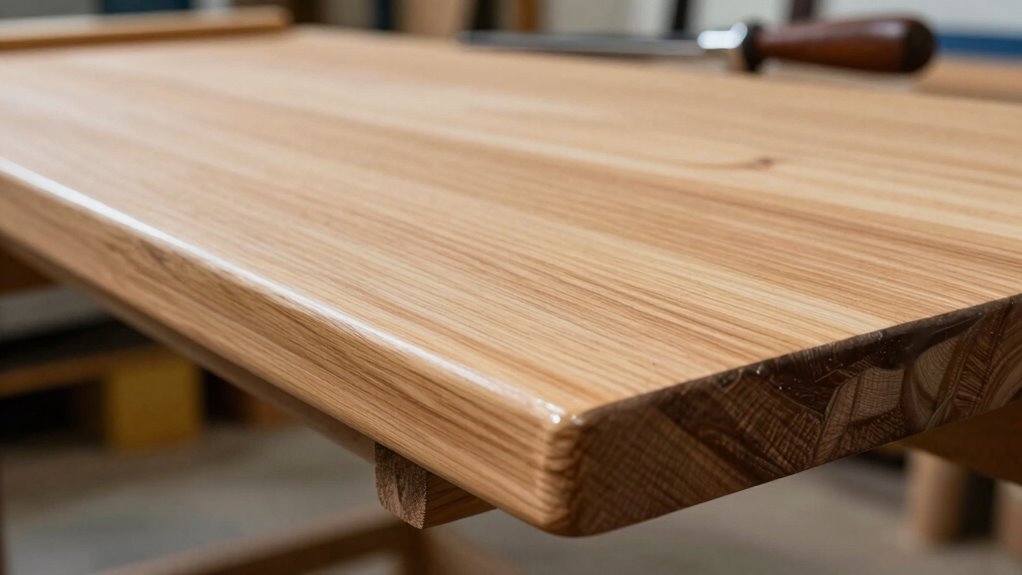
Have you ever noticed a slight taper or thin line along the edge of a board after planing? That’s planer snipe. It happens because the wood’s grain direction affects how the blade cuts. When the blade enters or exits the board, the cut isn’t perfectly smooth, creating a small dip or bump. Blade sharpness plays a big role—dull blades tug or tear the wood rather than slicing cleanly, increasing snipe. As the blade moves over the board, uneven pressure causes the wood to lift or dip at the ends. This uneven cut results in that tapered edge. Understanding how grain direction and blade sharpness influence the cut helps you recognize why snipe occurs and prepares you to minimize it during planing. Additionally, caring for your tools can help maintain optimal blade sharpness and reduce snipe. Proper technique and wood grain orientation are also crucial for achieving a smooth finish and preventing snipe from occurring. Paying attention to planing techniques can further improve results and decrease snipe. Incorporating knowledge of blade settings is equally important for consistent results and minimizing imperfections.
How Support and Balance Prevent Snipe During Planing
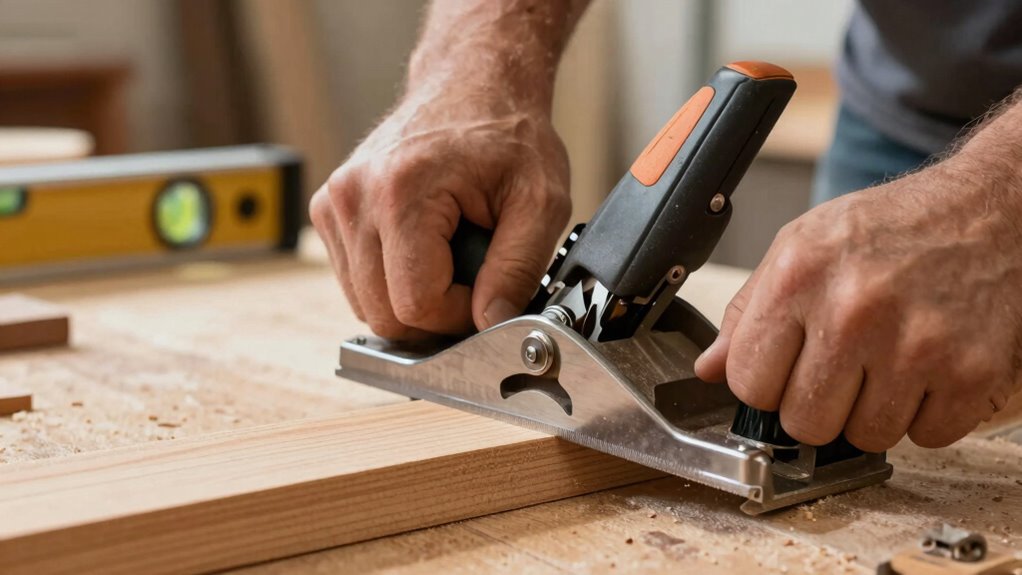
By distributing your support evenly, you help keep the planer stable and prevent snipe. Maintaining your balance during planing guarantees consistent contact with the workpiece, reducing uneven wear. Paying attention to these factors makes your planing smoother and results in a more accurate finish. Proper workpiece support is essential for achieving a flat, professional surface and avoiding defects. Additionally, understanding power tool safety can further enhance your control and prevent mishaps during the process. Incorporating accurate alignment techniques ensures that your cuts remain precise and consistent throughout the project. Using the right garage door openers can also improve the safety and efficiency of your workspace, making your woodworking experience safer and more productive. Employing support systems can further stabilize your workpiece and improve overall results.
Proper Support Distribution
Proper support distribution is essential for maintaining balance during planing and preventing snipe. When support is uneven, the planer tilts, causing inconsistent pressure and uneven cuts. To optimize support, ensure the workpiece is fully supported at the infeed and outfeed ends, reducing strain on the blade and dust collection system. Proper blade alignment also plays a vital role; misaligned blades can create uneven cuts and snipe. Use supports that distribute weight evenly, and double-check your dust collection setup to keep debris from affecting support stability. Additionally, maintain accurate blade alignment to prevent uneven cutting depths. Regularly inspecting and adjusting your equipment can prevent vibration and instability, which are common causes of snipe. Incorporating proper maintenance practices helps ensure the machine operates smoothly and consistently. Paying attention to support and balance during setup is crucial for achieving smooth, balanced planing, minimizing snipe and guaranteeing consistent results. Ensuring consistent pressure distribution across the workpiece further enhances the quality of your planing, especially when combined with a focus on support surfaces and contact points.
Maintaining Balance During Planing
Maintaining balance during planing hinges on how well support and weight distribution are managed throughout the process. To prevent snipe, ensure your support aligns with the grain direction, providing a steady foundation that reduces uneven pressure. Keep a consistent cutting speed; too fast can cause uneven cuts, while too slow may lead to overloading the planer. Distribute your weight evenly across the workpiece and the planer to avoid tipping or shifting, which can create snipe. Maintain smooth, controlled movements, especially as you approach the edges. Proper support minimizes flexing and deflection, helping you achieve a flat, smooth surface. When you pay attention to grain direction and cutting speed, you’re better equipped to keep the workpiece balanced, reducing the risk of snipe during planing.
How to Set Up Support Blocks to Stop Snipe
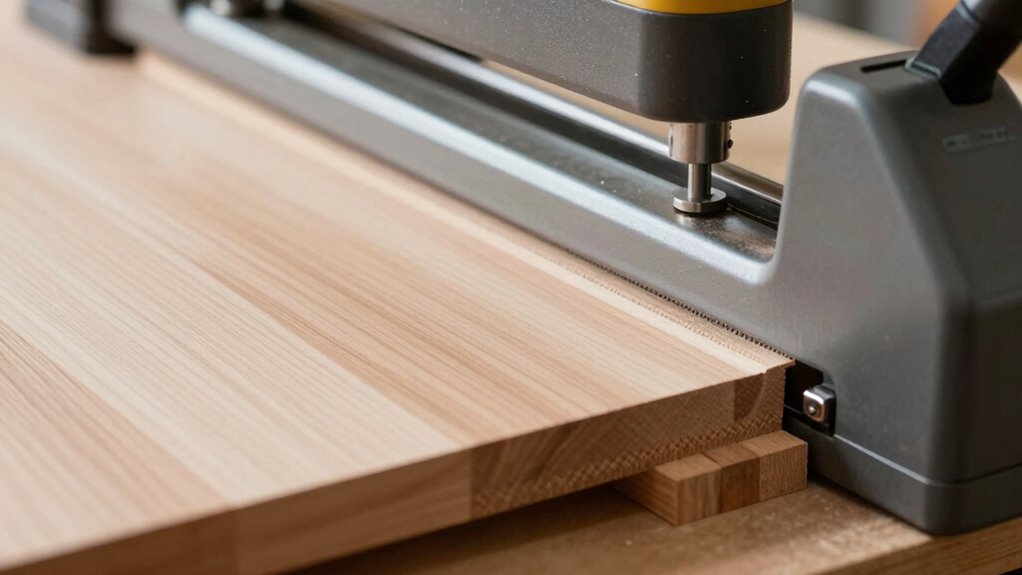
To effectively stop snipe, you need to focus on proper support block placement so the planer maintains consistent contact with the wood. Adjusting the support block height ensures even pressure and prevents uneven cuts. Precision woodworking techniques are essential for setting up and fine-tuning these supports, allowing you to substantially reduce snipe and improve your planing results. Incorporating field‑of‑view nearby can also help create a more comfortable workspace conducive to precise woodworking. Ensuring your support blocks are aligned properly is a key part of support block placement, which directly impacts the quality of your finish. Developing an understanding of inner wisdom can also help you better interpret subtle cues during your woodworking process, leading to improved techniques and outcomes.
Proper Support Block Placement
Setting up support blocks correctly is essential for stopping snipe effectively. Proper support placement ensures the support block provides maximum stability and prevents the planer from creating snipe. To achieve this, focus on these key points:
- Position the support block directly beneath the high points of the wood’s surface where snipe tends to form.
- Place the support block close enough to the cut area to stabilize the wood without interfering with the planer’s movement.
- Ensure the support block is level and secure, preventing any shifting during planing.
Adjusting Support Block Height
Adjusting the height of your support blocks is crucial for effectively preventing snipe. Proper height ensures the support aligns with your wood’s grain direction and maintains consistent contact with your planer. If the support is too high or low, snipe can still occur, especially when your tool isn’t sharp enough to handle uneven pressure. To visualize, consider this table:
| Support Block Height | Effect on Snipe |
|---|---|
| Too high | Leaves snipe at start/end |
| Too low | Causes dips and snipe |
| Just right | Seamless, smooth surface |
| Grain direction | Guides support placement |
| Tool sharpness | Affects height adjustment |
Set support blocks so they’re level with the wood’s grain and your planer’s cutting edge, preventing snipe efficiently.
What Support Materials Work Best for Planer Snipe Prevention?
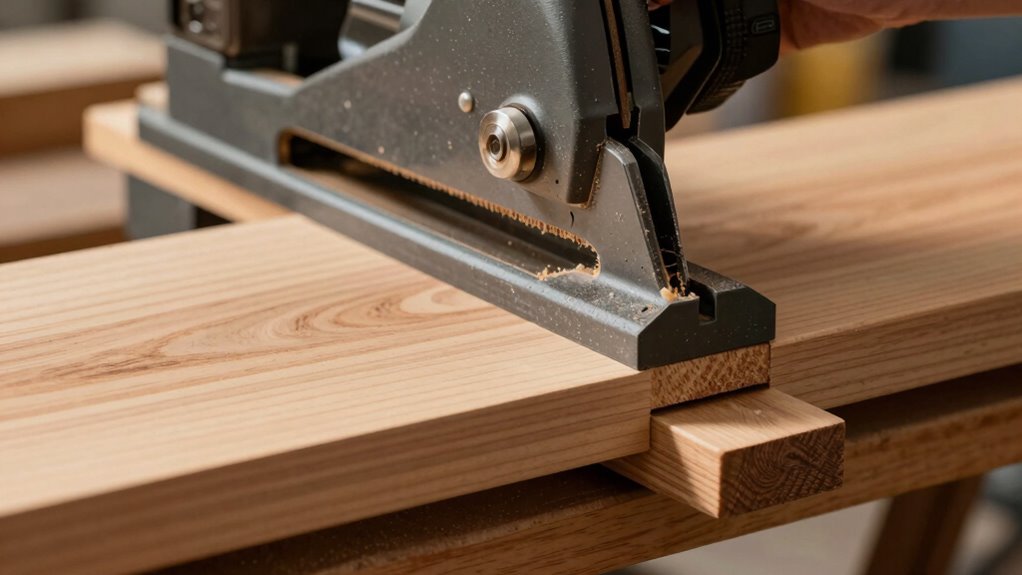
Choosing the right support materials is essential for effectively preventing planer snipe. Support foam and clamp pads are among the best options because they provide even pressure and reduce wood flexing. These materials help stabilize the board during planing, minimizing snipe formation.
Here are the top support materials:
- Support foam – absorbs uneven pressures and cushions the wood.
- Clamp pads – distribute clamping force evenly, preventing dents.
- Cork pads – offer grip and flexibility, reducing movement during planing.
Using support foam under the board’s ends or clamp pads along the support edges ensures consistent pressure. These materials help create a smooth, flat surface, preventing snipe effectively.
Common Mistakes That Lead to Snipe and How to Avoid Them
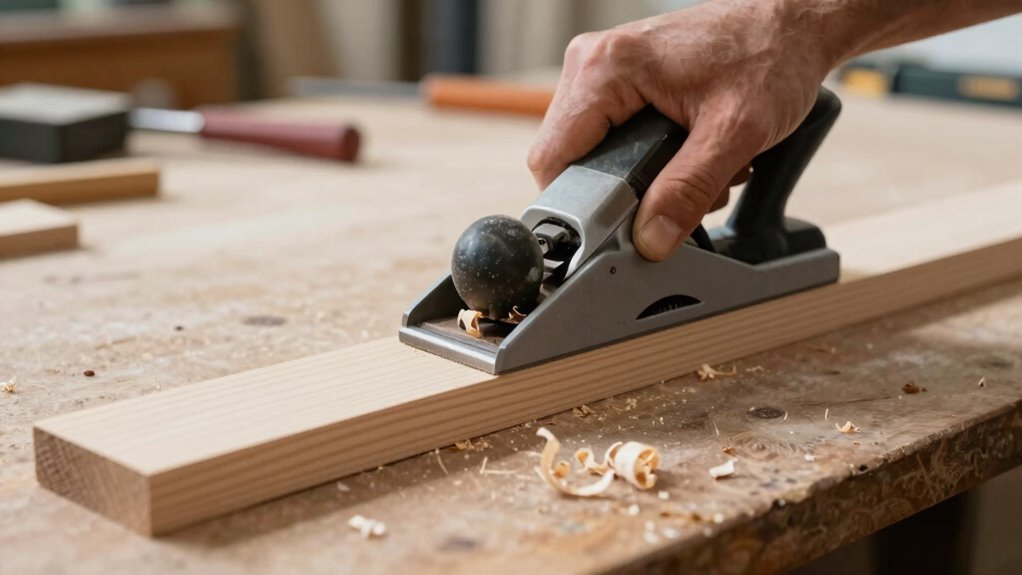
One common mistake that causes snipe is applying uneven pressure when feeding the board through the planer. When pressure isn’t consistent, the cutter head pulls the board unevenly, creating a dip at the ends. Additionally, poor dust collection can lead to debris buildup, which affects blade sharpness and results in an uneven cut. Dull blades struggle to produce smooth, even surfaces, increasing the likelihood of snipe. To avoid these mistakes, ensure you maintain proper, steady pressure during feeding and keep your dust collection system active to prevent debris accumulation. Regularly sharpen blades to maintain a clean cutting edge. Paying attention to cutting efficiency and ensuring blades are properly aligned can further help prevent snipe. Proper blade maintenance is essential for consistent results and prolonging the life of your blades. Adequate dust management also plays a crucial role in maintaining a smooth cut and preventing blade dulling. By controlling pressure, maintaining blade sharpness, and managing dust, you greatly reduce the chances of snipe and achieve cleaner results.
Techniques for Different Planer Models to Reduce Snipe
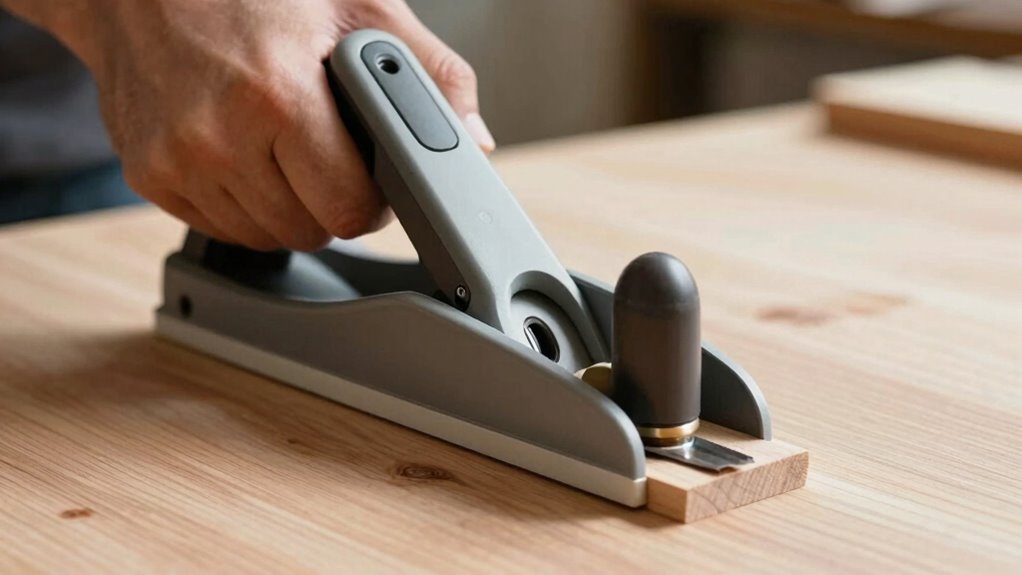
Different planer models come with unique features and mechanisms that influence how snipe occurs and how effectively it can be minimized. For example, some models have adjustable blade alignment, which helps guarantee even cuts and reduces snipe. Others may include dust collection systems that keep the work area clear, preventing debris from affecting the cut quality. To adapt to your specific planer:
- Adjust blade alignment regularly to ensure clean, level cuts.
- Use dust collection properly to keep the workpiece and machine clear of debris.
- Support the workpiece with additional support as needed, especially near the ends, to prevent snipe from uneven pressure.
Troubleshooting Persistent Snipe When Support Isn’t Enough
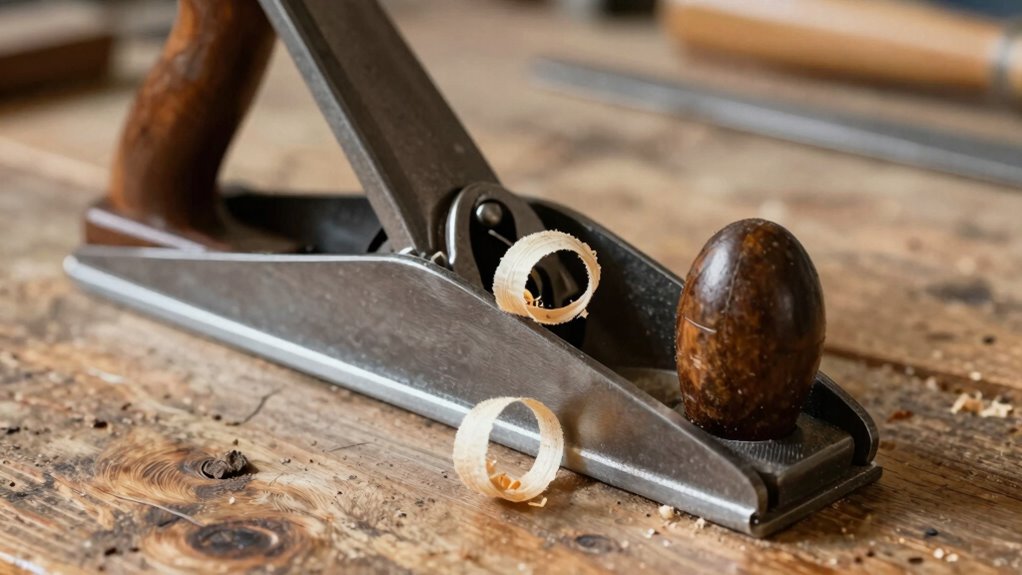
Even with proper support, snipe can persist if the planer’s feed rate is too fast or inconsistent. When the feed isn’t steady, the planer struggles to cut smoothly, causing snipe at the edges. Check your support material; uneven or unstable support can worsen this issue. Also, examine your blades for sharpness—dull blades increase resistance, making it harder to maintain a consistent feed. If your blades are dull, replace or sharpen them to improve cutting quality. Additionally, slowing down the feed rate allows the blades to cut more evenly, reducing snipe. Remember, even with excellent support, improper feed speed or dull blades can cause persistent snipe. Fine-tuning these factors often clears up stubborn snipe problems. Ensuring your feed rate is properly calibrated is essential for consistent results. Moreover, blade maintenance plays a crucial role in achieving a clean cut and minimizing snipe issues. Maintaining proper planer settings can further help control snipe and improve overall performance.
How Proper Support Enhances Your Planing Finish and Accuracy
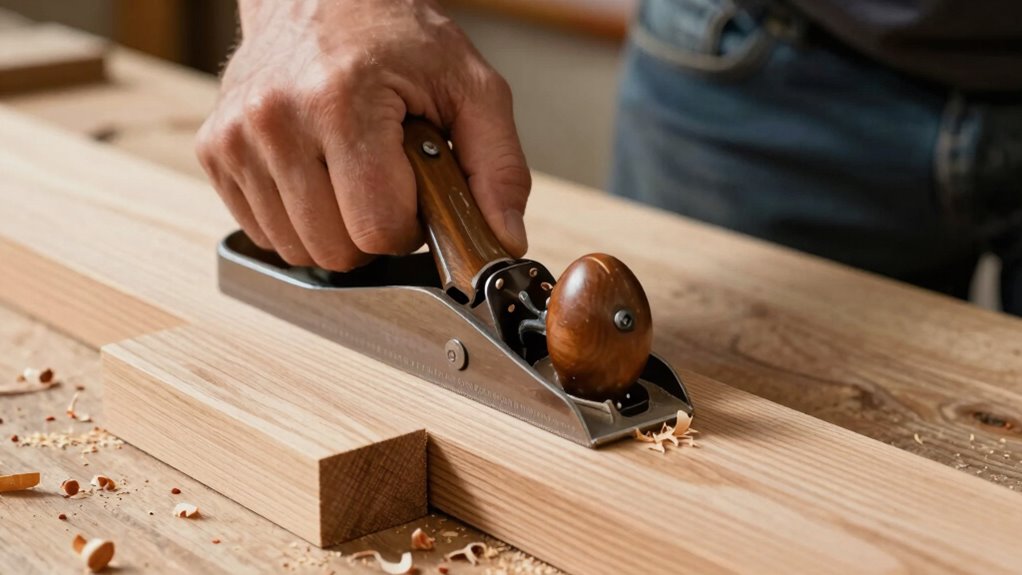
Proper support is essential for achieving a smooth, accurate planing finish because it stabilizes the workpiece during cutting. When your workpiece is well-supported, you reduce vibrations and prevent snipe, ensuring a cleaner edge. Good support also helps maintain blade sharpness longer by minimizing unnecessary strain. Additionally, stable support improves dust collection, keeping your workspace cleaner and your vision clear. To maximize these benefits, consider: 1. Using additional supports or rollers to hold the workpiece steady. 2. Ensuring the workpiece is fully supported at both ends during planing. 3. Keeping your dust collection system active to avoid buildup that could interfere with support stability. Proper setup, including shop layout considerations, also plays a crucial role in achieving optimal results. Implementing proper workpiece positioning further enhances finish quality and overall planing accuracy. Ensuring consistent support contact helps prevent uneven cuts and improves overall surface quality.
Tips for Maintaining Your Support Setup for Consistent Results
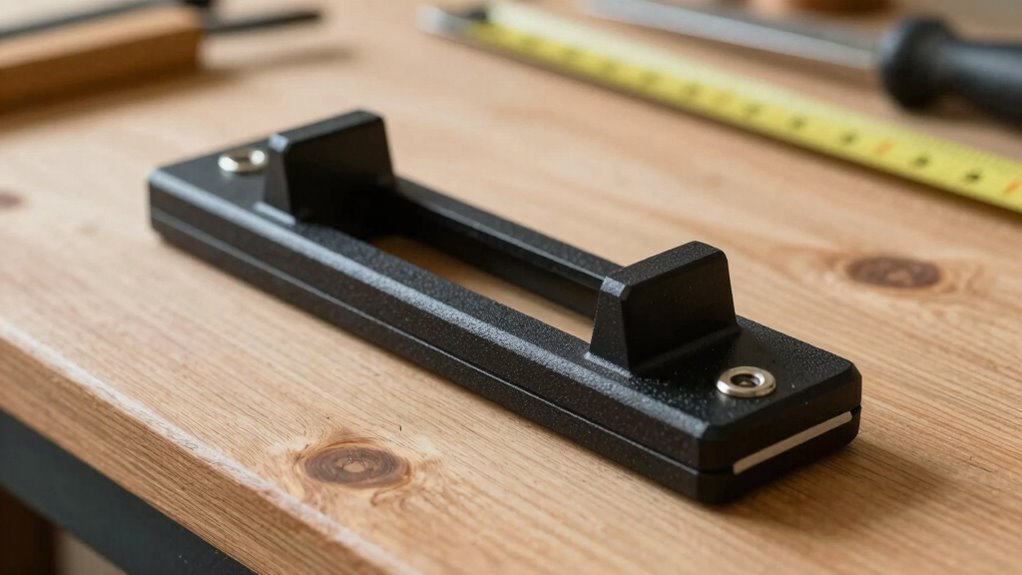
Maintaining your support setup consistently is key to achieving reliable planing results. Regularly check that your supports are aligned and stable to prevent snipe and uneven surfaces. Keep your dust collection system working efficiently; a clean workspace helps you spot issues early and improves visibility. Sharp blades are essential—frequently sharpen or replace them to ensure clean cuts and minimize tear-out. When adjusting supports, do it gradually and test on scrap wood to fine-tune for different materials. Consistent support positioning reduces variability in your planing, leading to more uniform results. Don’t overlook the importance of a tidy workspace; clutter can interfere with support stability. Regular maintenance of your setup, combined with proper blade care and dust management, guarantees smoother, more predictable planing sessions.
Frequently Asked Questions
Can Snipe Occur on Both Sides of the Board Simultaneously?
Yes, snipe can occur on both sides of the board simultaneously, especially if your board tension isn’t even or your feed roller alignment is off. When tension varies, the board may dip or lift at both ends, creating snipe. To prevent this, make certain your feed rollers are properly aligned and maintain consistent tension. Adjusting these can help keep the board flat and eliminate snipe on both sides.
Does Wood Moisture Content Influence Snipe Formation?
Imagine your wood as a breathing creature, its moisture imbalance like uneven breath, causing snipe. Higher moisture content leads to wood swelling on one side, making it more prone to snipe during planing. When moisture levels fluctuate, the wood’s stability shifts, increasing the risk. To prevent this, guarantee consistent moisture content. Proper drying and acclimation help maintain balance, reducing snipe and keeping your project smooth and true.
Are There Specific Planer Brands Less Prone to Snipe?
Some planer brands are less prone to snipe, especially those known for their reliability and positive user reviews, like DeWalt and Makita. You should consider these brands because they tend to have better construction and advanced features that reduce snipe. Keep in mind, even the best brands can produce snipe if not used properly, so always follow recommended setup and operation techniques for ideal results.
How Does Blade Sharpness Affect Snipe Development?
A sharp blade is your best defense against snipe—like a keen knife slices smoothly, a well-maintained blade reduces snipe development. When you keep up with proper sharpening techniques and regular blade maintenance, the planer cuts evenly, preventing uneven pressure that causes snipe. Dull blades tug and tear, increasing snipe risk. Stay vigilant, sharpen often, and your projects will glide through with precision, leaving snipe behind like dust in the wind.
Is Snipe More Common in Certain Wood Types or Grain Directions?
Snipe is more common in certain wood species and grain orientations. You’ll notice it more in woods with uneven grain or those prone to tearing, like softwoods. Grain direction also plays a role; working against the grain increases snipe risk. To minimize snipe, support your wood properly and pay attention to grain orientation, especially in species like pine or cedar, which are more susceptible.
Conclusion
So, next time you think snipe is inevitable, remember it’s just your planer’s way of asking for some support. Ironically, a simple support block can turn your rough, uneven cuts into smooth, professional finishes. Instead of fighting the machine, give it the help it needs, and you’ll wonder why you ever ignored the basics. After all, a little support goes a long way—who knew that stopping snipe was as easy as offering a helping hand?
Fall yard work Picks
leaf blowers
As an affiliate, we earn on qualifying purchases.