
If you’re searching for a desktop vacuum former, you’re likely balancing cost, usability, and versatility. The best models deliver reliable performance for projects like prototyping, cosplay, or small-scale molding, but they vary widely in features and price. The Vacuum Forming Machine 110V stands out for robust lab-grade quality, while the FORMART 3 offers a great balance of size and ease of use for hobbyists. Tradeoffs often involve choosing between professional features and affordability. Keep reading to see the full breakdown of the top options, so you can find the right fit for your projects.

Get business pricing on tools and workshop supplies
- Business-only prices and quantity discounts
- Tax-exempt purchasing
- Multiple users, one account, clear invoices
Complete the kit


Key Takeaways
- The top picks balance ease of use with advanced features like LCD controls and larger work surfaces.
- Professional-grade units tend to be more durable and precise but are costlier and bulkier.
- Compact models excel for beginners or limited spaces but may lack advanced features.
- Price often correlates with build quality and versatility—spending more typically yields more reliable results.
- Careful consideration of project size and complexity helps determine whether a basic or premium model is best.
| Vacuum Forming Machine 110V – Lab Equipment with Steel Balls | 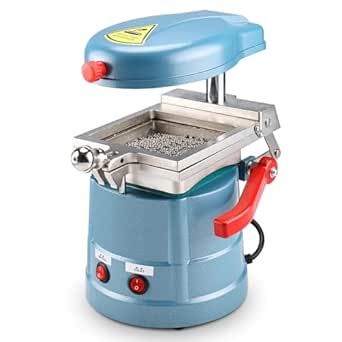 | Best for Professional Laboratory Use | Voltage: 110V | Material: Aluminum | Heating System: Symmetrical heating | VIEW ON AMAZON | See Our Full Breakdown |
| FORMART 3 Desktop Vacuum Forming Machine, 19.7 x 11.8 in, Easy Air Demolding, for Rapid Prototyping, Custom Packaging, Cosplay, Masks, Decoration, Molds, RC Models |  | Best for Versatile, Large-Scale Prototyping | Forming Area Sizes: 19.7 x 11.8 in, 16.5 x 11.8 in, 11.8 x 11.8 in, 11.8 x 8.1 in | Power: 300W | Heating Method: Carbon fiber quartz tubes | VIEW ON AMAZON | See Our Full Breakdown |
| Desktop Vacuum Former, Tabletop Vacuum Forming Machine | 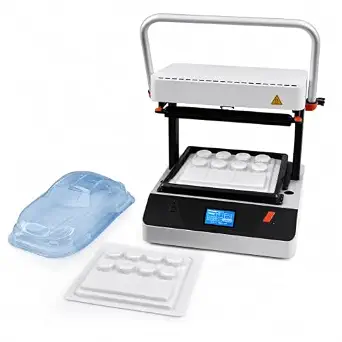 | Best for Small-Scale, Rapid Prototyping | Max Draw Depth: 20cm | Forming Area: 280×200mm | Sheet Thickness: 0.2mm to 3.0mm | VIEW ON AMAZON | See Our Full Breakdown |
| YaeCCC Dental Vacuum Forming Machine with Steel Balls |  | Best for Dental and Precise Clinical Applications | Motor: Heavy-duty vacuum motor | Heating System: Symmetrical heating | Material Compatibility: Various materials | VIEW ON AMAZON | See Our Full Breakdown |
| Dental Vacuum Forming Machine 110V Thermoforming Molding Machine |  | Best for Small Dental Items and Versatile Thermoplastics | Voltage: 110V | Object Size: 5″ x 5″ | Forming Depth: 2″ | VIEW ON AMAZON | See Our Full Breakdown |
| Desktop Vacuum Former with LCD Panel for Rapid Mold Making |  | Best for Precision and Speed in Small-Scale Mold Making | Forming Area: 330x250mm | Material Thickness: 0.2-3.0mm | Effective Forming Area: 280x200mm | VIEW ON AMAZON | See Our Full Breakdown |
| Desktop Vacuum Forming Machine |  | Best for Detailed Prototyping and Educational Use | Worktable Size: 320×240mm | Max Sheet Thickness: 3.0mm | Heating Temperature: up to 280°C | VIEW ON AMAZON | See Our Full Breakdown |
More Details on Our Top Picks
Vacuum Forming Machine 110V – Lab Equipment with Steel Balls
This vacuum forming machine stands out for its durable aluminum construction and symmetrical heating system, making it ideal for precise, consistent molding in professional settings. Compared to the FORMART 3, it offers a more straightforward operation with robust build quality, though it lacks detailed size specifications, which could limit flexibility for some users. Its high-quality materials and even heating provide reliable results, but the absence of multiple size options might restrict use to specific applications. This pick is better suited for labs or professionals who prioritize durability and precision over versatility in size or ease of use for hobbyist projects.
Pros:- Durable aluminum construction with corrosion-resistant coating
- Uniform heating for stable, consistent molding
- Easy-to-operate with separate control switches
Cons:- Limited size or dimension details provided
- Potentially too specialized for casual or hobbyist use
Best for: Laboratories and professional molders needing durable, consistent equipment for high-precision work
Not ideal for: Hobbyists or small-scale users who require adjustable or multi-size units without professional-grade materials
- Voltage:110V
- Material:Aluminum
- Heating System:Symmetrical heating
- Application:Laboratory and professional use
Our verdict“This machine is ideal for professionals needing reliable, durable equipment for precise lab applications.”
FORMART 3 Desktop Vacuum Forming Machine, 19.7 x 11.8 in, Easy Air Demolding, for Rapid Prototyping, Custom Packaging, Cosplay, Masks, Decoration, Molds, RC Models
The FORMART 3 makes a strong impression for its multiple forming sizes and continuous operation, making it well-suited for rapid prototyping and production environments. Its ability to handle various projects with minimal downtime surpasses the smaller, compact options like the Desktop Vacuum Former, which is ideal for smaller, simpler tasks but struggles with larger or multiple-size projects. The dual suction and airflow system, combined with quick heating, allow for high-quality, high-volume output, though its weight and bulkiness make it less portable. This model is best for users who need flexibility and speed in a semi-professional or workshop setting, but those seeking a lightweight, purely desktop solution might find it cumbersome.
Pros:- Multiple forming area sizes for diverse projects
- Uniform heating and continuous cycle for efficient workflow
- Dual suction and airflow for high-quality results
- Quick setup for rapid prototyping
Cons:- Heavy and bulky for a typical desktop environment
- Complex setup may require some learning curve
Best for: Small businesses, makers, or professionals needing a versatile, high-capacity machine for prototyping and mold making
Not ideal for: Casual users or hobbyists with limited space or who prefer lightweight, easy-to-move equipment
- Forming Area Sizes:19.7 x 11.8 in, 16.5 x 11.8 in, 11.8 x 11.8 in, 11.8 x 8.1 in
- Power:300W
- Heating Method:Carbon fiber quartz tubes
- Pump:300W AC induction pump
- Maximum Suction:-92 kPa
- Cycle Time:Fast heating with continuous operation
Our verdict“Ideal for users requiring a versatile, high-capacity machine for professional or semi-professional rapid prototyping.”
Desktop Vacuum Former, Tabletop Vacuum Forming Machine
This compact desktop vacuum former excels in quick, small-scale projects thanks to its built-in ceramic heater and large forming area. Its smart material presets streamline setup, making it accessible for beginners or those doing frequent rapid prototypes, much like the YaeCCC Dental but in a more versatile, non-clinical context. However, its size limits the depth and intricacy of forms, and the noise level could be disruptive in quiet environments. It’s a practical choice for small workshops or hobbyists who prioritize speed and convenience over large or complex molds, but not for projects requiring deep draw or large objects.
Pros:- Fast heating and forming for quick turnaround
- Smart presets simplify material setup
- Built-in vacuum system reduces equipment clutter
- Versatile for small-scale applications
Cons:- Limited to shallow and small forms
- Noise level may be high in quiet environments
- Maximum draw depth may restrict certain projects
Best for: Hobbyists, educators, or small-scale designers focusing on quick prototypes and simple forms
Not ideal for: Users needing to produce large or deep molds, or those working in noise-sensitive settings
- Max Draw Depth:20cm
- Forming Area:280×200mm
- Sheet Thickness:0.2mm to 3.0mm
- Weight:9kg
- Noise Level:65dB
Our verdict“This machine suits those who need fast, small-scale molds with minimal setup, but not large or highly detailed forms.”
YaeCCC Dental Vacuum Forming Machine with Steel Balls
The YaeCCC Dental Vacuum Forming Machine offers precise downward suction and uniform heat, making it ideal for detailed clinical work like dental molds. Compared with general-purpose desktop models, its heavy-duty motor and rust-resistant body provide enhanced durability and accuracy, crucial for dental procedures. However, its size and operation complexity could be overkill for casual users or hobbyists. This machine is designed for professionals who need consistent, high-quality results with materials like dental thermoplastics, though its limited object size and potential learning curve mean it’s less suited for general or artistic projects.
Pros:- Precise downward suction for accurate forming
- Uniform heat distribution for consistency
- Adjustable, rust-resistant construction for durability
- Heavy-duty motor for demanding clinical use
Cons:- No size or capacity details limit versatility
- Operation may be complex for beginners
Best for: Dental professionals or clinics requiring precise, reliable dental molds and splints
Not ideal for: Hobbyists or general mold makers seeking a lightweight or multi-purpose machine
- Motor:Heavy-duty vacuum motor
- Heating System:Symmetrical heating
- Material Compatibility:Various materials
- Body:Adjustable, rust-resistant
- Frame:Non-rotating sliding frame
Our verdict“Perfect for dental clinics and professionals needing precise, durable dental molds with consistent results.”
Dental Vacuum Forming Machine 110V Thermoforming Molding Machine
This 110V dental thermoforming machine makes a compelling choice for creating night guards, custom trays, and splints, especially since it includes 15 thermoforming sheets. Its compatibility with all dental thermoplastics and built-in vacuum pump simplify workflow, much like the Desktop Vacuum Former but with a focus on dental-specific applications. The limited object size of 5″ x 5″ and 2″ forming depth restrict larger projects, but for small, precision dental items, it delivers reliable, uniform results. The need to remove protective film before use adds a minor inconvenience, but overall it offers solid value for dental practitioners or small labs.
Pros:- Compatible with all dental thermoplastics
- Built-in vacuum pump eliminates external equipment
- Uniform heating for consistent results
- Includes 15 thermoforming sheets for immediate use
Cons:- Object size limited to 5″ x 5″
- Forming depth about 2″ may be restrictive for some dental projects
- Requires removal of protective film before forming
Best for: Dental practitioners needing a compact, reliable machine for small dental appliances and trays
Not ideal for: Users requiring to form larger objects or full-sized molds outside dental applications
- Voltage:110V
- Object Size:5″ x 5″
- Forming Depth:2″
- Includes:15 thermoforming sheets
Our verdict“This machine offers a compact, all-in-one solution for dental professionals focusing on small, precise thermoformed items.”
Desktop Vacuum Former with LCD Panel for Rapid Mold Making
This vacuum former stands out for its rapid mold production, often completing a form in under a minute, which makes it ideal for applications like jewelry, culinary arts, or quick prototyping. Its user-friendly LCD interface enables precise adjustments, reducing trial-and-error time. Compared with the Desktop Vacuum Forming Machine, it offers a more compact design and quieter operation, though it sacrifices the ability to handle thicker materials beyond 3.0mm. The limited material thickness capacity means it’s best suited for detailed, thin-walled molds rather than heavy-duty applications. Its small footprint and lightweight build make it perfect for tight spaces, but the lack of detailed info on heating system durability could be a concern for continuous use. Overall, this model provides fast, precise results for hobbyists and small businesses needing quick turnarounds.
Pros:- Fast mold production under a minute, boosting workflow efficiency
- Intuitive LCD interface for straightforward adjustments
- Compact and lightweight, ideal for small workspaces
- Quiet operation at 65dB minimizes noise disturbance
Cons:- Limited to materials up to 3.0mm thick, restricting some applications
- Lack of detailed information on heating system durability raises concerns for heavy use
Best for: Small-scale craftspeople, jewelers, or culinary professionals needing rapid, precise mold making in limited space.
Not ideal for: Users requiring thicker materials or industrial-grade durability, as it handles only up to 3.0mm thickness and limited long-term use info.
- Forming Area:330x250mm
- Material Thickness:0.2-3.0mm
- Effective Forming Area:280x200mm
- Depth:200mm
- Power:1.32kW
- Dimensions:400x405x335mm
- Weight:10kg
- Voltage:110V / 220-240V
Our verdict“This vacuum former excels for users prioritizing speed, precision, and space-saving design in small-scale mold making.”
Desktop Vacuum Forming Machine
Compared with the Desktop Vacuum Former with LCD Panel, this machine offers a slightly larger worktable (320×240mm) and a built-in ceramic heater, making it highly suitable for detailed prototypes, educational projects, and small-scale manufacturing. Its preset material programs and touchscreen controls streamline operation, reducing setup time and ensuring consistent results. The maximum sheet thickness of 3mm aligns with the former’s capability but limits heavier-duty applications. The fast heating cycle and integrated vacuum pump mean fewer external components, simplifying workspace setup. However, its size and power might restrict larger projects, and the maximum thickness could be a limiting factor for some industrial uses. This model is best suited for those who need high detail and ease of use at a manageable size.
Pros:- Integrated ceramic heater and vacuum pump for a tidy setup
- Touchscreen with preset programs simplifies operation
- Fast heating and forming cycles boost productivity
- Capable of capturing fine details and textures
Cons:- Limited to small projects due to its compact size
- Maximum sheet thickness of 3mm may restrict some applications
Best for: Educational institutions, makerspaces, or prototype developers focused on detailed, small-scale projects.
Not ideal for: Manufacturers requiring thicker materials or large-volume production, as it is limited to 3mm sheets and small worktable size.
- Worktable Size:320×240mm
- Max Sheet Thickness:3.0mm
- Heating Temperature:up to 280°C
- Vacuum Pump:Built-in
Our verdict“This machine provides high-detail thermoforming with ease of use, perfect for educational settings and small prototype runs.”

How We Picked
These products were evaluated based on performance, build quality, usability, and value. We prioritized models that deliver consistent vacuum strength, reliable heating elements, and straightforward operation. Durability and ease of maintenance also factored into the rankings, alongside size and price. Our goal was to identify options suitable for both hobbyists and small professional workshops, ensuring a range that covers different skill levels and project types. The ranking reflects how well each machine balances these factors while offering durability and user-friendly features.Factors to Consider When Choosing Desktop Vacuum Former
Choosing the right desktop vacuum former involves more than just looking at specs. Consider the size of the objects you’ll be molding, the machine’s heating and vacuum power, and ease of operation. Budget constraints often influence feature selection, but investing in a durable unit can save money long-term. Compatibility with your workspace and project scope should also guide your decision, ensuring you get a model that’s not overly complex or underpowered. Here are key factors to keep in mind:Size and Work Surface
The dimensions of the work surface determine the maximum size of objects you can mold. Larger surfaces are ideal for bigger projects like cosplay helmets or prototypes, but they also tend to increase the machine’s footprint and cost. Smaller models are more portable and affordable, perfect for hobbyists working on small items or limited spaces. Always match the size to your typical project to avoid unnecessary expense or limitations.
Heating Power and Uniformity
Effective heating ensures the plastic sheet softens evenly, which is critical for quality molds. Machines with adjustable temperature controls provide more flexibility for different plastics and project needs. Uniform heat distribution across the surface helps prevent warping or incomplete molds. Cheaper models may struggle with heat consistency, leading to imperfections, so consider the heating element quality when choosing.
Vacuum Strength and Control
Strong, reliable vacuum power is essential for pulling the plastic tightly around your mold. Some units offer adjustable vacuum levels, giving you more control for delicate or detailed projects. Machines with weak vacuum may result in poor detail transfer or incomplete forms. For advanced users or professional work, a machine with consistent, adjustable vacuum performance is worth the extra investment.
Ease of Use and Maintenance
User-friendly controls, clear instructions, and accessible components make a big difference, especially for beginners. Features like digital temperature readouts, timers, and easy-open lids streamline operation. Maintenance considerations include accessible heating elements and debris-free vacuum channels, which help prolong the machine’s lifespan. Avoid overly complicated setups if you prefer straightforward, quick results.
Price and Durability
While budget models can perform well for occasional use, investing in a more durable, higher-quality machine pays off for frequent or professional-grade projects. Cheaper units may need replacement sooner or lack features that improve results. Balance your budget with your expected usage—sometimes spending a bit more upfront results in better reliability and fewer frustrations over time.
Frequently Asked Questions
Can I use a desktop vacuum former for professional manufacturing?
While desktop vacuum formers can handle small-scale professional projects, they are generally designed for prototyping, hobbyist, or educational use. For high-volume or highly detailed manufacturing, larger industrial vacuum forming machines are more appropriate. However, a high-quality desktop model can be a valuable tool for initial design and small batch production, saving time and costs in early development stages.
What plastics are compatible with desktop vacuum formers?
Most desktop vacuum formers work with common plastics like PETG, HIPS, PVC, and polycarbonate sheets. Each plastic has different melting points and flexibility, so matching the plastic to your machine’s temperature range is important. Always check the manufacturer’s specifications to avoid damaging your machine or producing subpar molds. Using the wrong plastic can lead to warping, incomplete forms, or safety hazards.
How important is vacuum strength compared to heating power?
Both are essential, but vacuum strength directly affects how well the plastic pulls around your mold, capturing details. Heating power ensures the plastic softens uniformly, which is necessary for a smooth, even mold. A machine with great heating but weak vacuum may produce incomplete or poorly detailed results. Conversely, strong vacuum with inadequate heating can cause tearing or insufficient mold formation. Ideally, choose a model that balances both features for the best results.
Is it worth paying more for a machine with digital controls?
Digital controls can increase precision and ease of use, especially when adjusting temperature and vacuum settings. They reduce guesswork and help maintain consistent results across multiple projects. For beginners, manual controls may be sufficient initially, but as projects grow more complex, digital interfaces save time and improve accuracy. Investing in digital controls usually justifies the higher price by providing better control and repeatability.
What maintenance is needed to keep a desktop vacuum former in good condition?
Regular cleaning of the vacuum channels and heating elements helps maintain performance. Inspect electrical connections and replace worn or damaged parts promptly. Ensuring the vacuum pump is free of leaks and debris extends its lifespan. Properly storing the machine when not in use and avoiding overuse beyond its rated capacity can prevent premature wear. Routine maintenance is key to reliable operation and longevity.
Conclusion
For casual hobbyists or beginners, a compact, easy-to-use model like the Desktop Vacuum Former, Tabletop Vacuum Forming Machine offers simplicity and affordability. Professionals or serious prototyping teams should consider the FORMART 3 Desktop Vacuum Forming Machine for its larger work surface and advanced features. Those seeking durability and precision might prefer models with LCD controls, like the Desktop Vacuum Former with LCD Panel. Budget-conscious buyers should prioritize build quality to avoid frequent replacements, while high-end users benefit from machines with adjustable vacuum and temperature controls, making them suitable for detailed or complex projects. The choice ultimately depends on your project size, skill level, and budget, but this guide aims to clarify which features matter most for your needs.