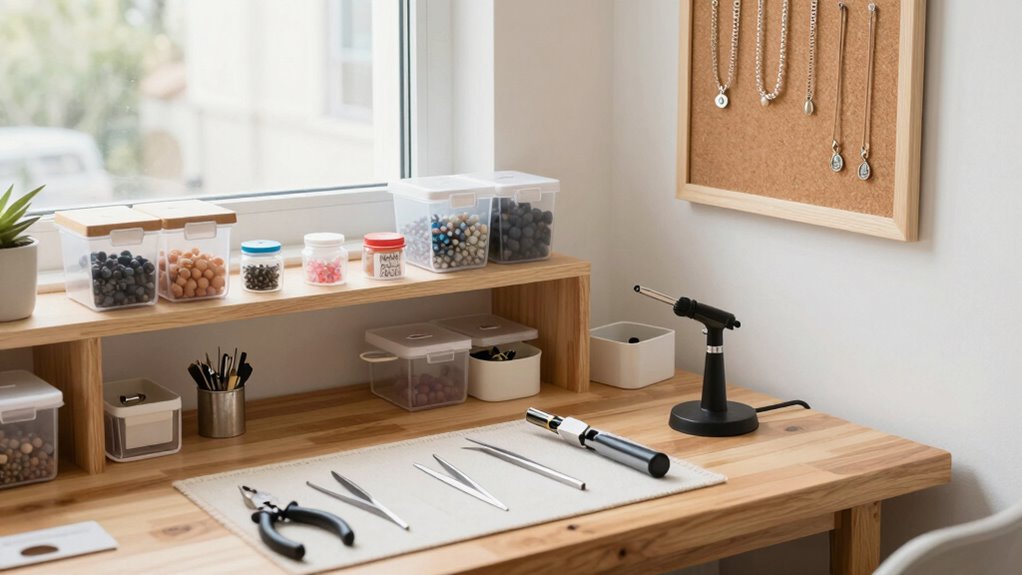
To build a small home jewelry studio without overbuying, focus on affordable, adjustable lighting like warm LED bulbs and DIY diffusers to improve visibility and color accuracy. Use natural light near windows first before adding inexpensive task lamps for flexibility. Keep your space organized to prevent unnecessary purchases and create a welcoming environment with vintage or creative lighting options. If you keep exploring, you’ll discover more smart tips to maximize your workspace effectively.
Key Takeaways
- Prioritize adjustable, warm LED lighting to enhance visibility without investing in expensive professional setups.
- Use natural light near windows and supplement with DIY or vintage lamps for cost-effective illumination.
- Focus on essential tools first, avoiding unnecessary purchases by organizing and assessing your specific jewelry-making needs.
- Create a functional workspace by positioning lighting to reduce shadows and glare, improving accuracy and comfort.
- Incorporate inexpensive storage solutions and creative lighting to maximize small space efficiency and personalization.
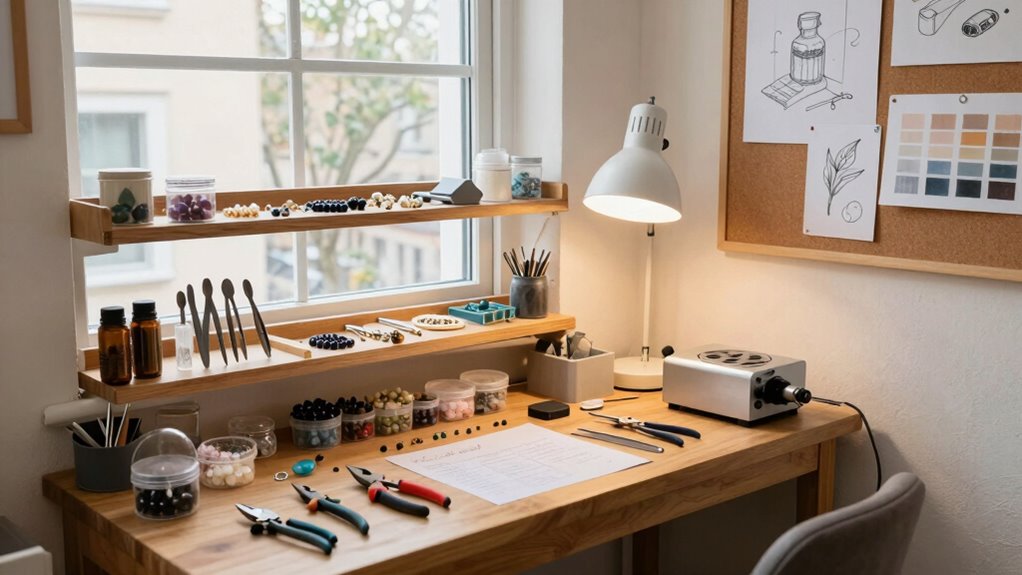
Next, consider your lighting setup. Creative lighting is vital because it impacts your accuracy and comfort when working on detailed designs. Instead of investing in expensive, professional-grade lighting from the get-go, experiment with natural light first. Position your workspace near a window if possible, and incorporate adjustable task lamps to supplement when natural light isn’t enough. To make your space more inviting and functional, use warm LED bulbs that mimic daylight, reducing eye strain and helping you see true colors. Creative lighting doesn’t have to be complicated; simple solutions like clip-on lamps or DIY diffusers can make a significant difference. Proper lighting guarantees you don’t overbuy tools or equipment, and it helps you focus on what’s truly necessary. Additionally, exploring vintage tools and creative lighting options can help you create a unique environment tailored to your needs. Remember, understanding home workspace organization can also maximize your small studio’s efficiency.
adjustable LED task lamp
As an affiliate, we earn on qualifying purchases.
As an affiliate, we earn on qualifying purchases.
Frequently Asked Questions
What Is the Ideal Budget for Starting a Small Jewelry Studio?
Your ideal budget for starting a small jewelry studio depends on your goals, but generally, plan for $1,000 to $3,000. Focus on budget planning that prioritizes equipment essentials like pliers, a workbench, and basic tools. Avoid overbuying by researching quality options within your price range. Start small, invest wisely, and expand as your skills and sales grow, ensuring you build a functional studio without unnecessary expenses.
How Do I Choose the Best Tools for Beginners?
Choosing the best tools for beginners is like planting a garden—you start with essential, versatile tools that you can sustain easily. Focus on quality over quantity, and avoid beginner mistakes like overbuying or neglecting tool maintenance. Look for beginner-friendly options, read reviews, and prioritize durability. As you grow, you can add specialized tools, but starting with reliable basics ensures your jewelry-making journey stays smooth and enjoyable.
What Safety Precautions Should I Take in My Studio?
You should always wear safety gear like goggles, masks, and gloves to protect your eyes, lungs, and skin. Keep a fire extinguisher nearby to handle fire hazards, especially when soldering or working with flammable materials. Make certain your workspace is well-ventilated and free of clutter to reduce accidents. Regularly inspect your tools and workspace for safety hazards, and never work alone when handling potentially dangerous equipment.
How Do I Organize My Jewelry Supplies Efficiently?
You need to master the art of supply prioritization and innovative storage solutions to keep chaos at bay. Use clear, stackable containers and label everything—it’s your secret weapon against clutter. Dedicate specific drawers or shelves for different supplies, and regularly reevaluate what you really need. This way, you’ll keep your workspace streamlined, making it easier to find what you need quickly and preventing the overwhelming mess from taking over.
Can I Expand My Studio Later Without Replacing All Equipment?
Yes, you can expand your studio later without replacing all equipment. Plan for future studio expansion by choosing versatile, modular tools and furniture now, which can adapt to your evolving needs. When considering equipment upgrades, prioritize essential items that can be integrated easily into your current setup. This way, you avoid unnecessary replacements and make certain your workspace grows smoothly as your jewelry-making skills and projects expand.
DIY diffuser for lighting
As an affiliate, we earn on qualifying purchases.
As an affiliate, we earn on qualifying purchases.
Conclusion
Building your small home jewelry studio might seem overwhelming at first, but with careful planning, you’ll find the perfect balance between space and tools. As you organize your supplies, you’ll notice how everything begins to come together seamlessly—almost like it was meant to be. The coincidence of your creativity and space aligning will inspire you to craft more beautiful pieces. Soon, your studio will be a reflection of your passion, all without the burden of overbuying.
small jewelry making workbench
As an affiliate, we earn on qualifying purchases.
As an affiliate, we earn on qualifying purchases.
vintage style desk lamp
As an affiliate, we earn on qualifying purchases.
As an affiliate, we earn on qualifying purchases.