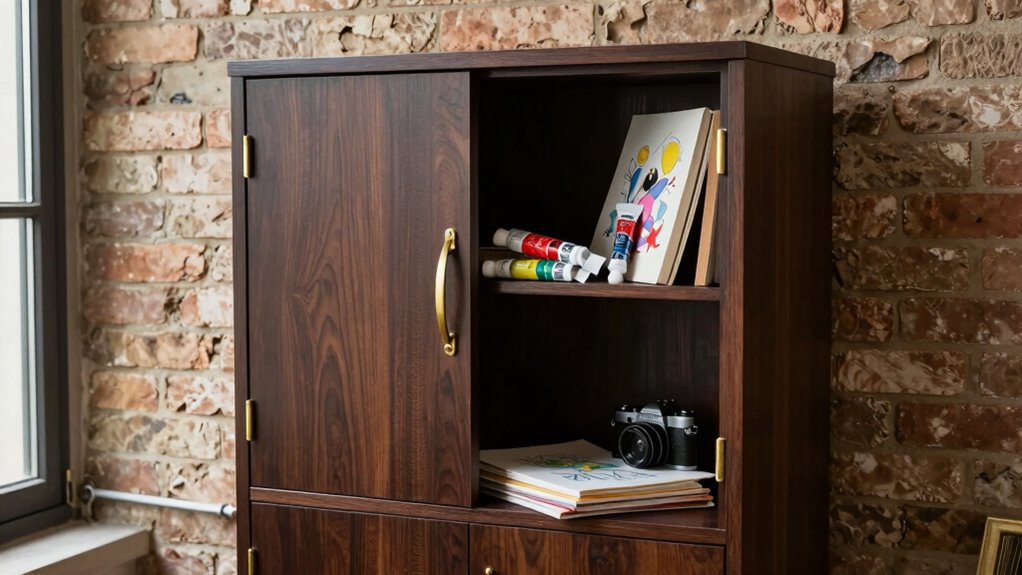
In your creative studio, you should lock away valuable supplies like high-end brushes, paints, and delicate tools to prevent theft, damage, or misuse. Protect sensitive projects, confidential documents, and digital assets with secure storage to maintain privacy and compliance. Keep expensive equipment such as cameras and laptops behind locked doors to avoid theft or misplacement. Locking these items guarantees a safe, organized workspace, and if you keep exploring, you’ll discover even more ways to enhance your security.
Key Takeaways
- High-value art supplies, delicate brushes, paints, and specialized tools to prevent theft or damage.
- Confidential client projects, proprietary designs, and sensitive digital assets for privacy and security.
- Financial documents, contracts, and legal papers to protect against unauthorized access.
- Expensive equipment such as cameras, laptops, and hardware to safeguard physical assets.
- Personal or sensitive information, including passwords or studio access keys, to maintain confidentiality.
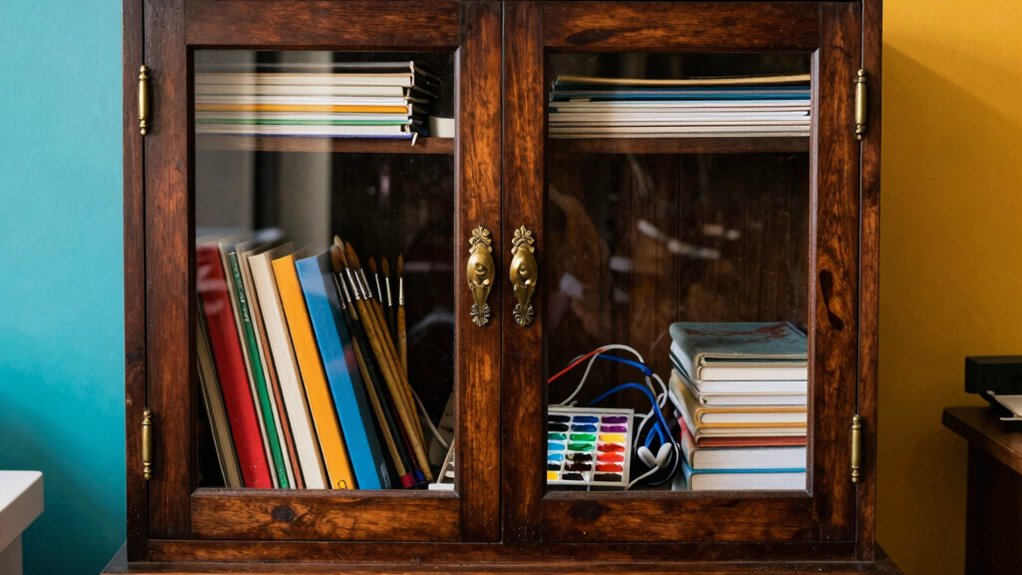
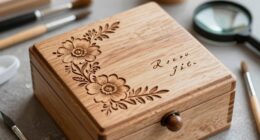
In a creative studio, securing certain items behind locked doors isn’t just about security—it’s about protecting your work, assets, and peace of mind. When it comes to art supplies, you want to keep your most valuable tools safe from theft, damage, or accidental misuse. High-end brushes, expensive paints, delicate markers, and specialized equipment are often costly investments, and locking them away ensures they’re available when needed but protected from curious hands or careless spills. Additionally, if you work with fragile or irreplaceable supplies, locking them up prevents unnecessary breakage, helping you maintain a tidy, efficient workspace.
Confidential projects demand even more security. Whether you’re developing proprietary designs, client-specific artwork, or sensitive concepts, locking these files, sketches, or digital devices keeps your ideas from leaking. In a world where intellectual property can be stolen or leaked, it’s crucial to restrict access to only trusted team members or yourself. Password-protected cabinets, safes, or secure digital storage solutions ensure that your confidential projects stay protected from prying eyes. This not only preserves your competitive edge but also helps you meet client confidentiality agreements and legal requirements.
Secure your proprietary designs and sensitive concepts with password-protected storage to protect your creative edge and client confidentiality.
Beyond art supplies and confidential projects, there are other essentials you should consider locking away. Financial documents, contracts, and sensitive correspondence contain private information that, if accessed by unauthorized individuals, could lead to identity theft or legal issues. It’s wise to keep these in a secure, locked cabinet or safe. If you handle client payments or sensitive financial data, safeguarding these details becomes even more critical. Recognizing the importance of security measures can help reinforce your studio’s defenses against potential threats. Incorporating proper security protocols such as regular audits or access logs further enhances your studio’s security and accountability. Being aware of security best practices ensures that you’re taking comprehensive steps to protect your assets effectively.
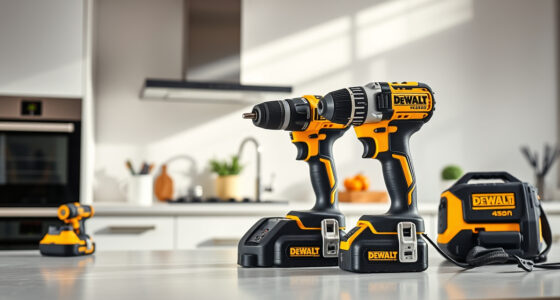
Furthermore, any valuable physical assets—such as expensive cameras, laptops, or specialized hardware—should be stored behind locked doors. Even if you trust your team, locking away high-value items minimizes the risk of theft or misplacement. If your studio is shared or open to visitors, this extra layer of security is essential to prevent unauthorized access. Implementing proper safety protocols can further enhance your studio’s security and ensure that your assets are protected at all times.
Ultimately, locking away these important items isn’t about suspicion; it’s about proactive protection. It ensures your creative environment remains secure, your assets stay intact, and your confidential information remains private. By thoughtfully securing art supplies, confidential projects, and valuable assets behind locked doors, you create a workspace where your focus stays on your creative flow—free from worry about loss, theft, or leaks. Additionally, understanding the importance of biodiversity and sustainable living can influence how you manage your studio’s environmental impact and resource use.

GAIOUS 36" White Floor Storage Cabinet, Locked Metal Storage Cabinets with 2 Doors and 2 Adjustable Shelves, Sideboard Buffet Cabient, Freestanding Cabinet for Home/Office/Garage/Tool Room/Bathroom
- Durable Steel Construction: Made of thickened cold-rolled steel plates
- Scratch-Resistant Finish: Textured electrostatic powder coating for easy cleaning
- Large Capacity Storage: Two adjustable shelves for flexible organization
As an affiliate, we earn on qualifying purchases.
As an affiliate, we earn on qualifying purchases.
Frequently Asked Questions
How Do I Choose Which Items Need Locking?
You should lock away valuable or sensitive items like confidential sketches and expensive art supplies. If certain materials are easily stolen or could be misused, lock them up to protect your work and maintain security. Consider locking storage for fragile or costly items, as well as anything you want to keep private or prevent unauthorized access to. This way, your creative space stays organized, safe, and secure.
Are There Security Risks With Locking Studio Doors?
Locking your studio doors is like sealing a treasure chest—there are some security risks, but it keeps your artistic inspiration safe. While it prevents unauthorized access, it might hinder creative collaboration or cause delays if others need to enter. To minimize risks, install sturdy locks and security systems. This way, you protect your work without sacrificing collaboration, ensuring your creative space remains both secure and inspiring.
What’s the Best Lock Type for Creative Studios?
The best lock type for creative studios combines high creative security with lock durability, like a high-quality deadbolt or electronic lock. You want something that resists tampering and keeps valuable equipment safe. Choose locks made from sturdy materials, ensuring they stand up to frequent use and potential break-ins. This way, you protect your creative space effectively without compromising accessibility for trusted team members.
How Often Should I Update My Locked Storage?
You should update your locked storage regularly to keep your inventory management efficient. Check your storage containers at least once a month, removing outdated or unused items. This routine helps you stay organized and guarantees only current materials are stored securely. Regular updates prevent clutter, reduce loss, and make it easier to locate your creative tools, so your studio remains a productive, inspiring space.
Can Locked Storage Improve My Studio’s Organization?
Locked storage can greatly improve your studio’s organization by keeping clutter out of sight and maintaining a clean workspace. It helps you protect valuable tools, delicate equipment, or sensitive materials related to your studio decor and lighting setup. By securing these items, you reduce distractions, streamline your workflow, and foster a more creative environment. This way, you stay focused and guarantee everything is easily accessible when you need it.
Conclusion
Storing valuable or sensitive items behind locked doors keeps your creative space secure and organized. Did you know that 60% of artists report losing irreplaceable work or expensive equipment due to theft or misplacement? By locking away your most important tools, projects, and supplies, you not only protect your investments but also create a focused environment free from distractions. Keep your creative flow safe and steady by knowing exactly what’s behind those locked doors.