To plan a small batch candle-making workflow, start by organizing all your supplies—wax, wicks, containers, and fragrance oils—and setting up a dedicated workspace. Carefully select your scent combinations, experimenting with small test batches to find the right balance, and keep detailed notes. Establish a clear process timeline for melting, blending, pouring, and cooling. Focus on consistency and efficiency, and you’ll discover how to produce high-quality candles every time—if you continue exploring, you’ll master the process.
Key Takeaways
- Gather and organize all materials, tools, and containers before starting to ensure a smooth workflow.
- Establish a clear timeline for melting, scenting, pouring, and cooling, with precise measurements.
- Test scent combinations in small batches, recording ratios and adjustments for consistency.
- Prepare workspace to be clean, efficient, and free of interruptions throughout the process.
- Maintain detailed records of each batch, including ingredients, timings, and container choices for reproducibility.
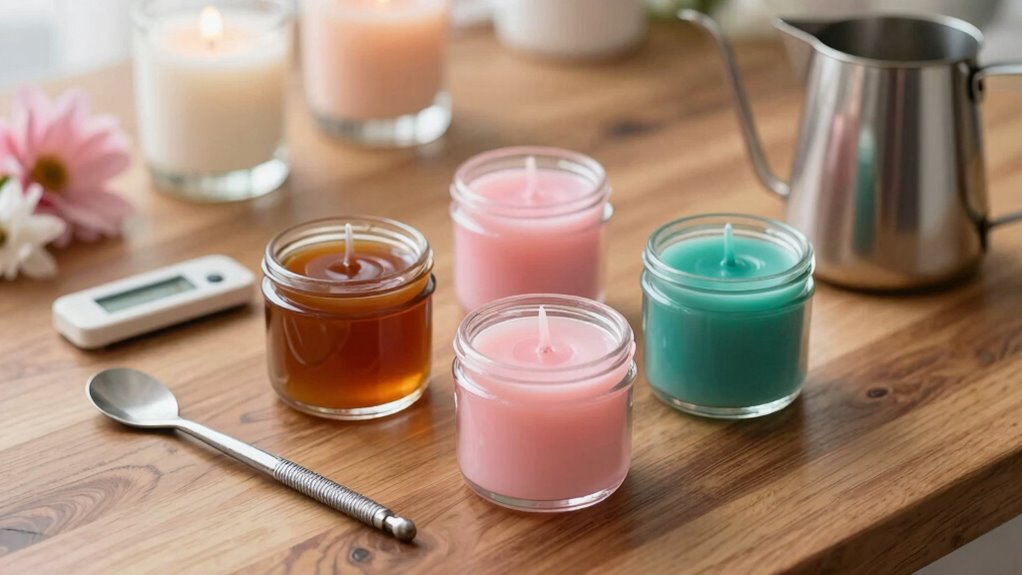
Planning a small batch candle-making workflow guarantees your process runs smoothly and efficiently from start to finish. The first step involves carefully considering your scent combinations. You want to create appealing, harmonious blends that resonate with your target audience. Think about how different scents interact—combining floral with citrus, woody with spicy, or herbal with sweet notes can produce unique and memorable fragrances. Experiment with small test batches first, adjusting ratios until you find the perfect balance. This approach guarantees your final product has the desired aroma and that your scent combinations are both engaging and consistent. Keeping detailed notes during this phase helps you replicate successful blends or tweak less appealing ones.
Next, focus on container selection, which plays a critical role in your workflow. Your choice of container influences not only the aesthetic appeal but also the functionality of your candles. Smaller batches give you the flexibility to test various styles—glass jars, metal tins, or ceramic holders—without significant investment. When selecting containers, consider heat resistance, capacity, and how well they complement your scent and branding. Ensure your containers are clean, dry, and free of any residues before pouring wax. Also, think about the opening size; a wider mouth can make the candle easier to light and more visually attractive, but it might affect burn time. Once you’ve chosen your containers, prepare them by attaching wicks, ensuring they’re centered and secured, which makes the pouring process smoother and results in a more professional look. Additionally, paying attention to container compatibility can help prevent issues like cracking or melting during the burn. Incorporating sustainable materials into your container choices can also enhance your brand’s eco-friendly appeal.
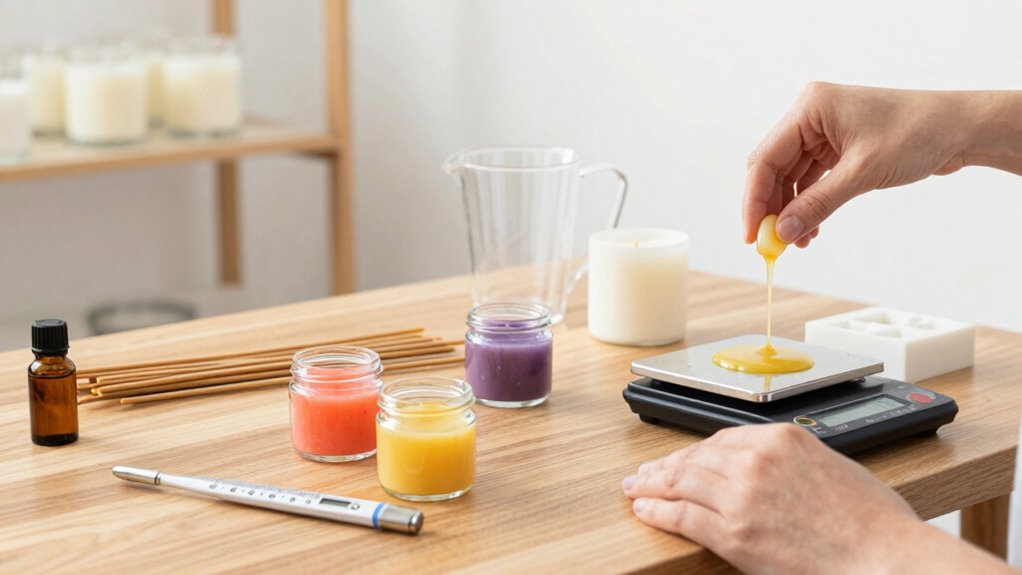
As you plan your workflow, organize your workspace to facilitate a seamless process. Gather all your supplies—wax, wicks, fragrance oils, containers, and tools—before starting. This preparation minimizes interruptions and keeps your focus sharp. Set up your work area with adequate space for melting, pouring, and cooling. When it comes to scent combinations, have your fragrance oils measured and ready to add at the right temperature, typically when wax reaches a specific melting point. Being precise with measurements and timing ensures consistency across batches, especially important when working on a small scale. Additionally, understanding the biodiversity of your ingredients can help you select sustainable and eco-friendly materials that align with environmentally conscious practices. Incorporating eco-friendly options can also appeal to a broader customer base who value sustainability.
Finally, establish a clear timeline for each step—melting, scenting, pouring, and cooling—to prevent rushing and errors. Keeping a detailed record of your process, including scent blends, container types, and cooling times, helps you refine your workflow over time. With a well-planned process that emphasizes thoughtful scent combinations and strategic container selection, you’ll produce high-quality candles efficiently, even in small batches.
As an affiliate, we earn on qualifying purchases.
Frequently Asked Questions
What Safety Precautions Are Essential During Candle-Making?
You should always wear safety gear, like gloves and goggles, to protect yourself from hot wax and chemicals. Keep a fire extinguisher nearby because candle-making has fire hazards, especially when melting wax. Work in a well-ventilated area to avoid inhaling fumes. Never leave melting wax unattended, and make certain your workspace is clean and clutter-free to prevent accidents. These precautions keep you safe during your candle-making process.
How Do I Choose the Right Wax for Small Batches?
You choose the right wax for small batches by considering your candle type, scent throw, and ease of wax melting techniques. Soy wax is popular for its smooth finish and clean burn, while beeswax offers a natural scent. Make sure your candle packaging complements the wax choice. Use a double boiler or melting pot for smooth, controlled wax melting, ensuring safety and quality in your small batch process.
What Are Common Troubleshooting Tips for Candle Issues?
Did you know that improper wick selection causes over 70% of candle issues? To troubleshoot, start by checking your candle wick selection—ensure it’s the right size for your wax and container. Also, review your fragrance oil blending; too much or too little can cause tunneling or poor scent throw. Adjust these elements, and you’ll see improvements in burn quality and fragrance dispersion, making your candles perfect every time.
How Can I Personalize Candle Scents Effectively?
To personalize candle scents effectively, you should experiment with personal scent blending and fragrance layering. Start by choosing complementary fragrances, then gradually mix small amounts until you achieve your desired aroma. Keep notes of your combinations, so you can replicate or refine them later. Don’t be afraid to get creative—layer different scents to add depth and complexity, making your candles uniquely yours.
What Tools Are Necessary for Efficient Small Batch Production?
Ever wondered what tools make small batch candle production smooth? You’ll need a double boiler or melting pot for candle dyeing, guaranteeing even color. Precise wick selection is vital for consistent burning, so keep a variety of wicks on hand. Additionally, a thermometer, pouring pitcher, and silicone molds or jars will help you maintain quality. These tools streamline your process and guarantee your candles look and burn beautifully every time.
Conclusion
By thoughtfully organizing your small batch candle-making process, you’ll find it’s easier to enjoy the creative journey. Embrace each step with a gentle rhythm, allowing your passion to shine through every wax pour and wick placement. With a little planning and patience, you’ll create beautiful candles that bring warmth and ambiance to any space. Remember, the true magic lies in the process—so savor each moment and let your craftsmanship glow.