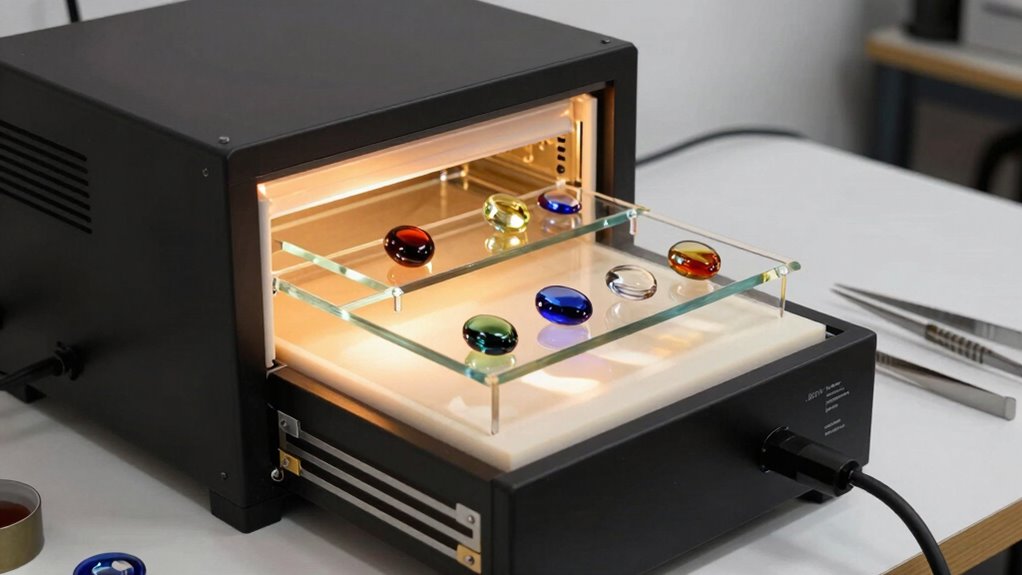
You should consider adding a glass fusing kiln to your studio if it aligns with your workflow, project size, and space availability. Make certain it supports your artistic goals, whether for high-volume production or detailed individual pieces. Safety, maintenance, and electrical needs are also key factors to keep your workspace efficient and secure. If these aspects fit well, it’s likely the kiln is a good match for your studio—keep exploring to confirm the details.
Key Takeaways
- Your studio’s production volume and project size align with the kiln’s capacity and capabilities.
- The kiln’s safety features, ventilation, and space requirements fit your studio’s safety protocols.
- You have sufficient electrical infrastructure and workspace organization for efficient kiln operation.
- Your artistic goals involve consistent, professional-quality glass fusing consistent with kiln performance.
- You’re committed to regular maintenance, safety routines, and troubleshooting to ensure long-term kiln use.
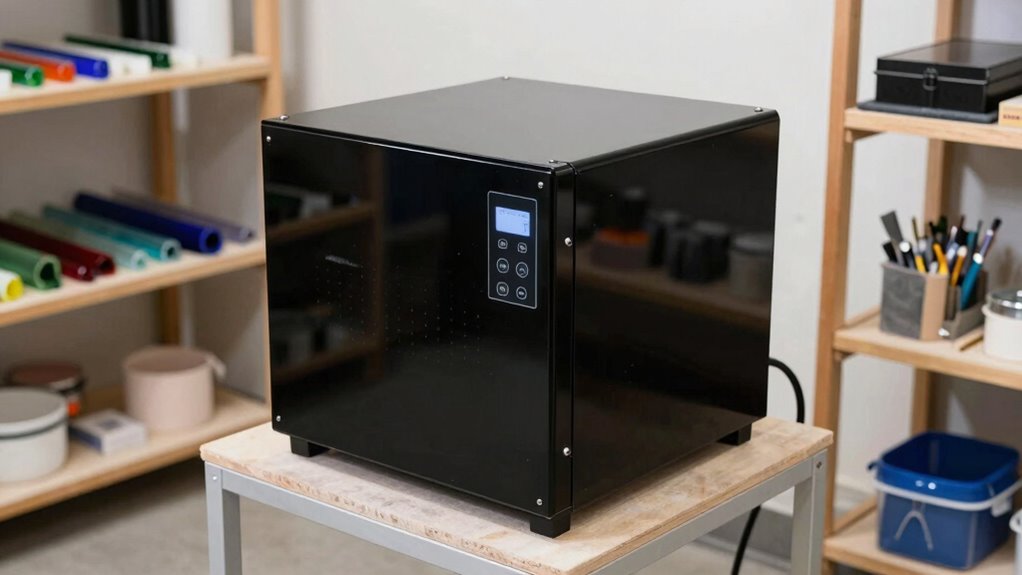
Deciding if a glass fusing kiln belongs in your studio depends on your creative goals and workspace needs. If you’re serious about glass art and want to produce professional-quality pieces, investing in a kiln can be a game-changer. However, before making a purchase, you need to consider safety and upkeep. Proper kiln safety is essential to prevent accidents, and establishing a maintenance schedule ensures your equipment stays reliable and safe to operate over time. If you’re new to glass fusing, understanding these factors will help you determine if a kiln fits your studio environment.
Kiln safety includes more than just following basic precautions; it involves understanding how the kiln functions and maintaining a safe workspace. You’ll want to guarantee your studio has proper ventilation, as kiln fumes and heat can pose health risks. Adequate clearance around the kiln is necessary to avoid accidental contact with hot surfaces. Additionally, you should familiarize yourself with the kiln’s electrical requirements and safety features, such as emergency shut-off switches or thermal fuses. Knowing how to operate the kiln safely protects you and others in your studio. Regular kiln safety checks are vital to ensure all safety features are functioning correctly and to prevent potential hazards. Incorporating safety protocols into your routine can further enhance your studio’s overall safety. It’s also beneficial to keep a fire extinguisher nearby and ensure all studio members are trained in emergency procedures. Proper kiln setup can also reduce the risk of accidents and improve efficiency.
A consistent maintenance schedule is crucial for keeping your kiln running smoothly and safely. Regular inspections should be part of your routine, checking for signs of wear or damage, such as cracked elements or faulty wiring. Cleaning the kiln’s interior and heating elements helps prevent build-up that could cause uneven heating or malfunctions. It’s also wise to calibrate your kiln periodically to ensure accurate temperature control, which directly affects the quality of your glass pieces. If you neglect maintenance, you risk kiln failure, inconsistent results, or safety hazards. Recognizing the importance of proper kiln maintenance can extend the lifespan of your equipment and ensure safety during each firing.
Besides safety and maintenance, think about your workflow. Do you have enough space for a kiln and the necessary equipment? Will you need to run multiple firings in a session? The size and capacity of the kiln should match your production needs. Some studios benefit from smaller, more affordable models, while others require larger kilns for bigger projects. If you plan to teach classes or create a high volume of work, a kiln with reliable performance and safety features becomes even more critical. Ensuring your workspace is well-organized and has proper electrical capacity is also essential to support your kiln’s operation and your overall workflow. Additionally, understanding kiln operation and troubleshooting common issues can help you avoid downtime and maintain productivity.
In the end, whether a glass fusing kiln belongs in your studio hinges on a combination of safety awareness, maintenance discipline, and your artistic ambitions. If you’re committed to following safety protocols and maintaining your kiln regularly, it can be a valuable addition that elevates your glass art practice. Just make sure your workspace is prepared, and you understand the responsibilities involved, so your kiln becomes a safe and productive tool for your creative journey.
As an affiliate, we earn on qualifying purchases.
Frequently Asked Questions
What Safety Precautions Are Necessary for Operating a Glass Fusing Kiln?
You need to wear safety gear like gloves, safety glasses, and a mask to protect against heat, shards, and fumes. Make certain proper ventilation requirements are met, such as using an exhaust system or working in a well-ventilated area, to avoid inhaling harmful fumes. Always read the kiln’s safety instructions, keep a fire extinguisher nearby, and never leave the kiln unattended during operation. Safety first keeps your studio safe and enjoyable.
How Much Space Is Typically Required for a Glass Fusing Kiln?
Most glass fusing kilns need about 3 to 4 square feet of space, but larger models require more. You should consider proper kiln placement to guarantee safety and ease of access, and maintain organized workspace to prevent accidents. Allocate enough room for ventilation and clearance around the kiln. Keeping a tidy, well-planned area helps you operate efficiently and safely, making your glass art process smoother and more enjoyable.
What Maintenance Does a Glass Fusing Kiln Need Regularly?
You need to regularly check your kiln insulation to prevent heat loss and guarantee efficiency. It’s crucial to perform temperature calibration often so your kiln maintains accurate firing temperatures. Clean the kiln interior and elements to avoid buildup and maintain consistent results. Additionally, inspect the electrical connections and replace worn parts promptly. Regular maintenance keeps your glass fusing kiln safe, reliable, and functioning at its best for your projects.
Can a Glass Fusing Kiln Be Used for Other Types of Firing?
Yes, you can use a glass fusing kiln for other firing methods like raku, low-fire ceramics, or alternative firing techniques. However, you should consider kiln customization options to guarantee it handles different materials safely and effectively. Adjusting temperature controls and insulation might be necessary. Always check your kiln’s specifications and safety guidelines to prevent damage and ensure successful firing results with various materials.
What Is the Typical Lifespan of a Glass Fusing Kiln?
Your glass fusing kiln can last decades if you maintain it well. With proper kiln insulation and precise temperature control, it can easily serve your studio for 20 to 30 years—or even longer—becoming a trusted partner in your creative journey. Regularly check and replace worn parts, keep it clean, and it’ll keep firing beautifully, making every piece a masterpiece for generations to come.
Conclusion
Think of your studio as a garden, and a glass fusing kiln as a new seed. If you’re ready to nurture your creativity, watch it grow with each project, and have the space and time to care for it, then this kiln will flourish in your space. When you’re prepared to tend this new plant and let your artistic ideas blossom, that’s when it truly belongs in your studio—ready to help your artistic garden thrive.