Choosing the best cutting machine for felt projects involves balancing precision, ease of use, and versatility. The Brother ScanNCut DX SDX325 stands out as the overall top pick thanks to its built-in scanner and user-friendly interface, making detailed felt designs straightforward. For those prioritizing power and speed, the Electric Fabric Rotary Cutter 250W offers a smooth cutting experience with minimal effort. Many options in this category trade off between complex features and simplicity, so understanding your specific needs is key. Continue reading for an in-depth comparison that will help you select the perfect machine for your felt crafting needs.
Listen free for 30 days with Audible
Thousands of audiobooks and originals — cancel anytime.
Start your free trialAs an affiliate, we earn on qualifying purchases.
Complete the kit


Key Takeaways
- The top picks excel in combining precision with ease of use, vital for intricate felt projects.
- Powerful rotary cutters are ideal for larger felt pieces but may lack detailed design capabilities.
- Laser engravers like the xTool M2 offer unique customization options but come at a higher cost and complexity.
- Size and portability vary, so consider your workspace when choosing a machine.
- Price ranges reflect features—more advanced options offer greater versatility but less straightforward operation.
| Brother ScanNCut DX SDX325 Electronic Cutting Machine |  | Best Overall for Versatile Felt Projects | Built-in Designs: 1,303 | Quilt Patterns: 140 | Lettering Fonts: 17 | VIEW LATEST PRICE | See Our Full Breakdown |
| Electric Fabric Rotary Cutter 250W Cloth Cutting Machine |  | Best for Heavy-Duty Felt and Fabric Cutting | Motor Power: 250W | Blade Diameter: 100mm | Cutting Capacity: 1.1 inches (27mm) | VIEW LATEST PRICE | See Our Full Breakdown |
| BEAMNOVA Electric Rotary Cutter for Fabric and Cloth Cutting |  | Best for Easy, Precise Felt and Fabric Cuts | Motor Power: 250W | Blade Diameter: 4 inches | Cutting Capacity: up to 1.1 inches | VIEW LATEST PRICE | See Our Full Breakdown |
| xTool M2 10W Color Craft Laser Engraver with Full-Color CMYK Printer |  | Best for Multi-Material Creative Projects | Laser Power: 10W | Material Compatibility: Wood, Leather, Felt, Fabric, Paper | Camera: Dual cameras with real-time preview | VIEW LATEST PRICE | See Our Full Breakdown |
| Fiskars 45mm Stick Rotary Cutter for Fabric, Arts and Crafts & Sewing |  | Best Manual Precision Cutter for Felt Projects | Blade Size: 45mm | Material: Titanium Carbide | Handle Design: Ambidextrous | VIEW LATEST PRICE | See Our Full Breakdown |
| Brother SDX125EGY ScanNCut Electronic Cutting Machine Grey |  | Best for Versatile, Detailed Felt Projects with Built-in Scanner | Material Cutting Thickness: up to 3 millimeters | Built-in Designs: 682 | Included Patterns: 76 | VIEW LATEST PRICE | See Our Full Breakdown |
| Fiskars 60mm Loop Titanium SoftGrip Rotary Cutter for Fabric & Sewing |  | Best for Precise, Multi-layer Felt and Fabric Cutting with Comfort | Blade Diameter: 60mm | Blade Material: Titanium-coated steel | Handle Type: Loop handle | VIEW LATEST PRICE | See Our Full Breakdown |
More Details on Our Top Picks
Brother ScanNCut DX SDX325 Electronic Cutting Machine
The Brother ScanNCut DX SDX325 stands out for its all-in-one capabilities, combining a built-in scanner with a large library of 1,303 designs, including quilt patterns and lettering fonts. Its 5-inch LCD touchscreen makes customization straightforward, and the ability to cut materials up to 3mm thick makes it suitable for detailed felt projects. Compared to the Fiskars Rotary Cutter, which excels at manual, precise cuts but lacks digital versatility, this model offers automation and design variety, though at a higher price point. Its wireless connectivity simplifies transferring designs from other devices, but the reliance on a wireless network can be a hurdle for those with unstable connections. This machine is ideal for crafters who want a versatile, feature-rich device that can handle complex felt and fabric projects without manual cutting.
bestFor: Hobbyists and small-scale quilters seeking a digital, multi-purpose cutting solution.
notIdealFor: Those on a tight budget or preferring purely manual tools, as this model is costly and requires digital setup.
pros: Large library of designs, built-in scanner, user-friendly touchscreen, wireless connectivity.
cons: High price, limited to 3mm material thickness, requires wireless network for full features.Verdict: This pick makes the most sense for crafters who value versatility and digital design capabilities for felt projects.
- Built-in Designs:1,303
- Quilt Patterns:140
- Lettering Fonts:17
- Touch Screen:5-inch LCD
- Material Thickness Capacity:up to 3mm
- Connectivity:Wireless network ready
Our verdict“Best Overall for Versatile Felt Projects — a strong pick in this lineup.”
Electric Fabric Rotary Cutter 250W Cloth Cutting Machine
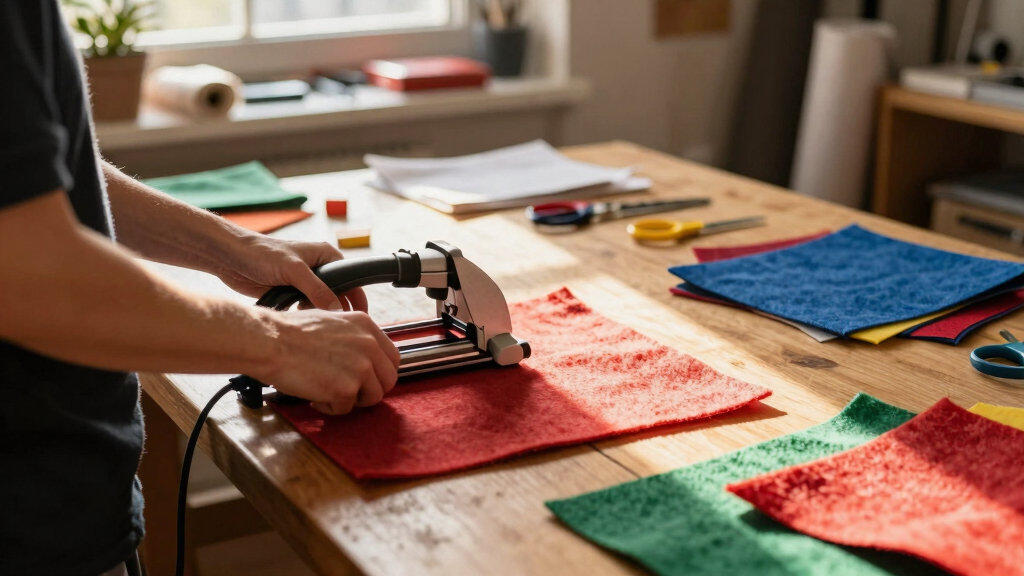
The Electric Fabric Rotary Cutter 250W offers robust power with its high-efficiency 250W motor and a durable 100mm alloy steel blade capable of cutting up to 1.1 inches thick. It provides precise, fray-free cuts on multi-layer fabrics, making it ideal for larger felt projects that require clean edges. Unlike the Fiskars Rotary Cutter, which is manual and better suited for small projects, this machine’s automatic blade sharpening ensures consistent performance during extended use. However, its industrial design and overpowered motor make it less suitable for casual crafters or those working with lighter fabrics, as it can be cumbersome and overkill for simple felt trimming. This model is best for those who need fast, professional-grade cuts on thicker felt and multiple layers.
bestFor: Professional crafters or small business owners working with large felt pieces and multiple layers.
notIdealFor: Hobbyists who prefer manual tools or are working on delicate, light felt projects, as the machine’s power may be excessive and less precise for small-scale work.
pros: Powerful motor for consistent cuts, durable alloy steel blade, automatic sharpening system, safety features built-in.
cons: Overpowered for light fabrics, not suitable for cardboard or wool, industrial size may be bulky for small workspaces.Verdict: This cutter is best suited for those requiring fast, heavy-duty felt trimming rather than delicate or hobby-level projects.
- Motor Power:250W
- Blade Diameter:100mm
- Cutting Capacity:1.1 inches (27mm)
- Blade Material:Alloy Steel
- Speed:850 RPM
- Safety Features:Rotating blade guard, handle-operated switch
Our verdict“Best for Heavy-Duty Felt and Fabric Cutting — a strong pick in this lineup.”
BEAMNOVA Electric Rotary Cutter for Fabric and Cloth Cutting
The BEAMNOVA Electric Rotary Cutter combines a powerful 250W motor with durable octagonal steel blades, making it ideal for quick, clean cuts through felt and lightweight to medium-weight fabrics. Its automatic sharpening system and safety cover help maintain sharpness and protect the user, reducing manual effort. Compared with the Fiskars Rotary Cutter, this model offers motorized assistance, making it easier to handle larger felt projects with consistent results. Its limited suitability for very thick materials or heavy-duty craft work is a tradeoff for its user-friendly design. It’s a good choice for crafters who want efficient, hassle-free cutting of felt without heavy manual effort, especially for projects involving multiple layers or medium-weight fabrics.
bestFor: Hobbyists and DIY crafters working on medium-weight felt projects who want fast, consistent results.
notIdealFor: Users needing to cut very thick felt or heavy-duty industrial fabrics, as this cutter’s capacity tops out at 1.1 inches and is designed for lighter work.
pros: Powerful motor, automatic blade sharpening, safety cover, easy-to-use design.
cons: Not suitable for very thick or heavy fabrics, requires careful handling due to sharp blades, limited to lighter materials.Verdict: This tool is best for those seeking efficient, consistent cutting of felt and medium fabrics with minimal manual effort.
- Motor Power:250W
- Blade Diameter:4 inches
- Cutting Capacity:up to 1.1 inches
- Blade Material:Alloy steel
- Blade Type:Octagonal
- Features:Automatic sharpening, protective cover
Our verdict“Best for Easy, Precise Felt and Fabric Cuts — a strong pick in this lineup.”
xTool M2 10W Color Craft Laser Engraver with Full-Color CMYK Printer
The xTool M2 offers an innovative approach by combining laser engraving with full-color CMYK printing, making it a versatile choice for personalized felt projects. Its dual cameras enable precise real-time workspace preview, which is especially helpful for intricate designs on felt and other delicate materials. While the 10W laser power limits heavy-duty cutting, it excels at detailed engraving and decorative work, setting it apart from purely mechanical cutters. Compared to the Brother ScanNCut, which focuses on digital cutting, the M2’s ability to print in full color and engrave adds a creative dimension. However, complex projects require some learning and patience, and the laser power isn’t meant for thick felts or dense fabrics. This device is best for crafters who want to add intricate, colorful details to their felt pieces.
bestFor: Home crafters and DIY enthusiasts wanting multi-material customization, especially for decorative felt projects.
notIdealFor: Those seeking heavy-duty cutting or professional industrial use, as laser power is limited and more suited to fine detail work.
pros: Combines printing and engraving, dual cameras for precision, user-friendly software, safe enclosed design.
cons: Limited laser power for thick materials, additional modules sold separately, learning curve for complex projects.Verdict: This machine is perfect for users aiming to create colorful, detailed felt designs with added engraving and printing effects.
- Laser Power:10W
- Material Compatibility:Wood, Leather, Felt, Fabric, Paper
- Camera:Dual cameras with real-time preview
- Safety:Class 1 enclosed design
- Included:CMYK Inkjet Printing Module
Our verdict“Best for Multi-Material Creative Projects — a strong pick in this lineup.”
Fiskars 45mm Stick Rotary Cutter for Fabric, Arts and Crafts & Sewing
The Fiskars 45mm Rotary Cutter is a classic manual tool prized for its sharp titanium carbide blade and comfortable, ambidextrous handle. Unlike motorized options, it offers precise control for detailed felt cutting and quilting, especially when working on small or intricate shapes. It’s a practical choice for those who prefer tactile, manual control over their cuts, making it a favorite among traditional quilters and sewists. Compared with electric cutters like the BEAMNOVA, it lacks automation but offers simplicity and reliability. Its safety features, including a retractable blade, make it suitable for frequent use, although it may struggle with very thick or multiple layers of felt, requiring more manual effort. Ideal for hobbyists and professionals who value precision and simplicity.
bestFor: Quilters, sewists, and arts and crafts enthusiasts who prefer manual, precise cutting of felt and fabric.
notIdealFor: Those working with large, thick felt pieces or seeking automated cutting solutions, as it requires manual effort and may not handle heavy layers well.
pros: Sharp, durable blade, ambidextrous handle, safe retractable mechanism, reliable for precise cuts.
cons: Not suitable for very thick materials, blades need replacement over time, less effective for large-scale projects.Verdict: This cutter is best for users who prioritize control and accuracy in manual felt cutting over automation or high-volume work.
- Blade Size:45mm
- Material:Titanium Carbide
- Handle Design:Ambidextrous
- Includes:1 Rotary Cutter with 45mm blade
- Warranty:Full lifetime (excluding blade)
Our verdict“Best Manual Precision Cutter for Felt Projects — a strong pick in this lineup.”
Brother SDX125EGY ScanNCut Electronic Cutting Machine Grey
The Brother ScanNCut DX SDX125EGY stands out for its ability to directly scan hand-drawn or printed designs, making it especially appealing for felt projects that benefit from custom patterns. Unlike the simpler Fiskars rotary cutters, which excel at straight cuts but lack design versatility, this machine offers over 680 built-in designs and a 5-inch touchscreen for easy operation. Its automatic material sensing ensures precise cuts on delicate or layered felt, though it’s limited to materials up to 3mm thick, which may restrict thicker felt pieces or layered projects. The complex setup and US-only power supply could challenge beginners, but for those looking to incorporate detailed, custom felt designs into their work, this is a flexible choice. It’s less suitable for users needing to cut thicker or more substantial felt pieces regularly.
Pros:- Built-in scanner enables direct cutting of printed or hand-drawn designs
- Automatic material sensing ensures consistent, accurate cuts
- Large library of designs and fonts supports diverse creative projects
- User-friendly 5-inch touchscreen simplifies operation
Cons:- Limited to cutting materials up to 3mm thick, restricting thicker felt or layered projects
- Complex setup process may overwhelm beginners or casual crafters
- Designed for US 120V power, requiring a converter elsewhere
Best for: Small craft businesses and hobbyists who want to incorporate detailed, custom felt designs with ease and precision.
Not ideal for: Users who frequently work with thick or layered felt pieces, or those outside the US needing a compatible power supply.
- Material Cutting Thickness:up to 3 millimeters
- Built-in Designs:682
- Included Patterns:76
- Fonts:9
- Display:5-inch touchscreen LCD
- Material Sensor Technology:Yes
- Compatible Materials:paper, vinyl, fabric, balsa wood, chipboard, foam, felt
- Power Supply:120 volts (US only)
Our verdict“This machine is ideal for felt crafters who prioritize design versatility and custom pattern integration, but less so for those handling thicker felt layers or outside US markets.”
Fiskars 60mm Loop Titanium SoftGrip Rotary Cutter for Fabric & Sewing
The Fiskars 60mm Loop Titanium Rotary Cutter is designed for clean, straight cuts through multiple layers of felt, fabric, and foam, making it a staple for sewing and arts projects. Its titanium-coated blade stays sharp longer than standard blades, reducing the frequency of replacements compared to lower-quality rotary cutters like the 45mm Fiskars stick model. The ergonomic loop handle offers superior control and comfort, especially during extended cutting sessions, and the safety lock adds peace of mind for storage and transport. While the 60mm blade size limits cutting larger projects or very thick felt layers, it provides enough size for most craft and quilting needs. Its manual operation means no power requirements but also lacks the versatility of electronic cutters for intricate or curved designs.
Pros:- Titanium-coated blade offers exceptional durability and sharpness
- Ergonomic loop handle provides comfortable, precise control
- Safety lock mechanism for secure storage and transport
- Effective for cutting multiple layers and thicker felt
Cons:- Blade requires frequent replacement with heavy use, adding ongoing costs
- Limited to 60mm blade size, restricting larger or more complex cuts
- Manual operation lacks the ability for intricate or curved designs
Best for: Sewers and quilters who need a reliable, comfortable tool for cutting multiple layers of felt and fabric with precision.
Not ideal for: Crafters seeking a machine capable of intricate or curved cuts or working with very thick felt layers regularly.
- Blade Diameter:60mm
- Blade Material:Titanium-coated steel
- Handle Type:Loop handle
- Warranty:Full lifetime warranty
Our verdict“This rotary cutter excels for straightforward, clean cuts on felt and fabric, especially when comfort and durability are priorities, but isn’t suited for complex or very large felt projects.”
How We Picked
I evaluated these cutting machines based on performance with felt, ease of setup and operation, build quality, and value for money. Devices were chosen for their ability to handle delicate fabrics without fraying, while also offering precision for detailed cuts and designs. I also considered user-friendliness, especially for crafters new to cutting machines, as well as durability and maintenance. The ranking reflects a balance between advanced features and practical usability, ensuring options for various skill levels and project scales.Factors to Consider When Choosing Best Cutting Machine For Felt Projects
When selecting the best cutting machine for felt projects, it’s important to consider several key factors that influence your crafting experience. Felt requires gentle handling and precise cuts, so your choice must balance power with delicacy. Understanding these factors can help you avoid common pitfalls like equipment that’s too aggressive or too limited for your needs.Cutting Precision and Detail
Felt projects often involve intricate designs, making precision a top priority. Machines with adjustable blades, built-in scanners, or high-resolution laser options can deliver more detailed results. However, overly complex tools might be harder to operate for beginners, so consider your comfort level and the complexity of your projects when choosing a device.
Ease of Use and Learning Curve
Ease of operation varies significantly across options. While electronic cutters with touchscreen interfaces or preloaded designs simplify the process, manual rotary cutters excel in simplicity but lack automation. A user-friendly interface can save time and frustration, especially if you’re new to fabric cutting or crafting in general.
Power and Cutting Capacity
More powerful machines can handle larger felt pieces and thicker fabrics, but they might be bulkier and more expensive. Rotary cutters with higher wattage provide smoother cuts for larger projects, yet may lack the fine detail needed for intricate designs. Match your machine’s power to your typical project size and detail requirements.
Size and Portability
If your workspace is limited or you prefer crafting on the go, consider compact models. Larger, stationary machines often offer more features but can be cumbersome. Balance your space constraints against the need for advanced features to find the right fit.
Budget and Value
Prices for cutting machines vary widely, reflecting features and build quality. While investing in a premium model can provide more versatility and durability, many affordable options are sufficient for basic felt projects. Focus on your specific needs and craft complexity to determine where to allocate your budget effectively.
Frequently Asked Questions
Can I use a laser engraver for detailed felt cutting?
Laser engravers like the xTool M2 can produce highly detailed cuts and designs on felt, especially for decorative or intricate work. However, they come with a higher price tag and require careful handling to avoid burning or damaging delicate fabrics. For regular felt crafting, a laser engraver might be overkill, but it offers excellent precision for special projects or customization.
Is a rotary cutter better than an electronic cutting machine for felt?
Rotary cutters excel in manual control and are simple to use, making them ideal for straightforward or larger fabric cuts. However, they lack the ability to produce complex, repeated designs or detailed patterns. Electronic machines, while more expensive and complex initially, provide versatility and precision that rotary cutters can’t match, especially for intricate felt projects.
What safety features should I look for in a felt cutting machine?
Safety features like blade guards, automatic shutoff, and clear safety instructions are essential, especially for machines with sharp blades or laser components. For rotary cutters, anti-slip grips and safety locks are beneficial to prevent accidents. Prioritizing safety ensures a safer crafting environment, particularly for beginners or those working with children.
Can I cut multiple layers of felt at once?
Many powerful electronic cutters and rotary machines can handle multiple layers of felt, saving time and effort. However, the number of layers depends on the machine’s power and blade sharpness. Testing on a small batch first is advisable to prevent damage or uneven cuts, especially with delicate or thick felt sheets.
How do I maintain my cutting machine for felt projects?
Regular maintenance includes cleaning blades, checking for wear, and ensuring that moving parts are lubricated if applicable. Replacing blades when dull is crucial for consistent results. Proper storage and avoiding dust or fabric fibers accumulating inside the machine also extend its lifespan and performance.
Conclusion
For general felt crafting, the Brother ScanNCut DX SDX325 offers the best overall balance of features and ease of use, making it ideal for hobbyists and semi-professionals. If you prioritize affordability and simplicity, a manual rotary cutter like the Fiskars 45mm Stick Rotary Cutter provides excellent value. For those seeking advanced customization, the xTool M2 laser engraver delivers detailed designs but at a higher price point. Beginners will benefit from intuitive models with straightforward controls, while experienced crafters might prefer more powerful, feature-rich options for complex projects.Fall Picks
fall essentials
As an affiliate, we earn on qualifying purchases.