
TL;DR

Get business pricing on tools and workshop supplies
- Business-only prices and quantity discounts
- Tax-exempt purchasing
- Multiple users, one account, clear invoices
Hunker describes a DIY project that repurposes socks into small decorative pumpkins using stuffing and twine or yarn. The finished decorations can be stored and reused, though their durability will depend on the materials and how they are kept.
Hunker has published instructions for turning old socks into small, reusable pumpkin decorations, offering a fall craft that uses fabric and filling instead of fresh gourds. The project calls for cutting a sock, stuffing its foot, shaping it with twine or yarn and adding optional decorations.
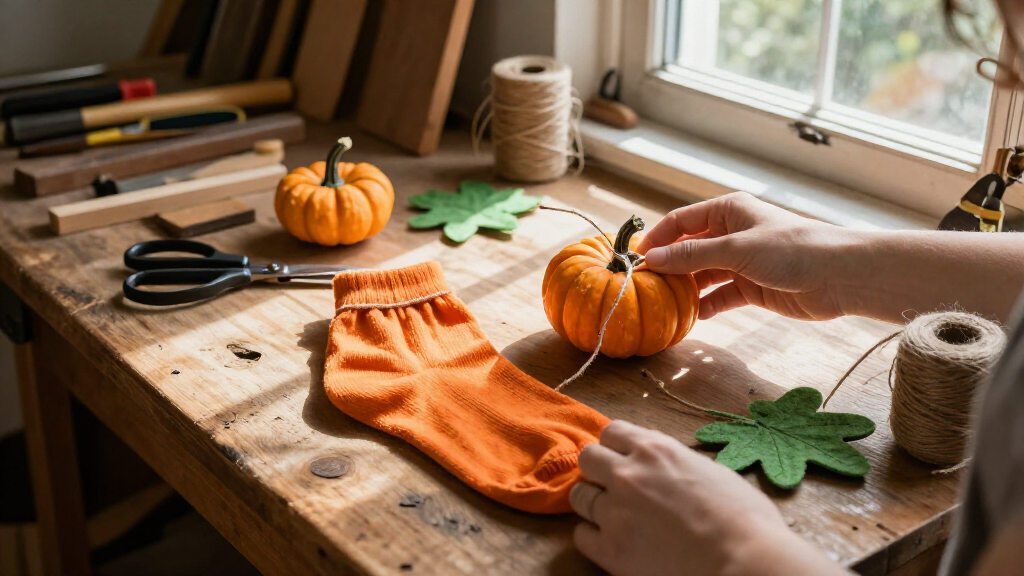
The project uses a sock that is no longer needed but remains in good condition, without holes or runs. The maker cuts away the upper calf section along the heel, fills the remaining foot with pillow stuffing, and leaves about an inch of fabric at the opening. Hunker also lists cotton balls, dried beans or rice as possible filling, while noting that alternatives will change the finished pumpkin’s feel.
To shape the pumpkin, the opening is twisted closed and formed into a ball, leaving fabric to resemble a stem. Twine or yarn is tied around the stem, then passed through the center of the stuffed shape from top to bottom with a needle and pulled tight to create ridges. The cord can then be wrapped around the remaining stem.
Hunker suggests optional finishing touches such as dried or felt leaves, felt triangles or googly eyes. Ribbon can replace twine or yarn, and socks in different colors and patterns can be combined for a varied display. The article also suggests pairing the decorations with linen-wrapped pumpkins.
A Fall Decoration Made to Store
The project offers a way to reuse a household item as seasonal decor. Unlike fresh pumpkins, the sock versions do not rot, according to Hunker’s description, so readers can put them away after the season and bring them out again. That makes them a possible option for people who want decorations they can reuse rather than replace each autumn.
The craft also leaves room to tailor the look to available materials. Using patterned socks, different fillings or added features can change the appearance, though the source does not compare costs or measure how long the finished decorations last.
As an affiliate, we earn on qualifying purchases.
From Fresh Gourds to Fabric
Hunker frames the instructions as an alternative during decorative pumpkin season, when people often display harvested pumpkins on porches. Fresh gourds can spoil, while a fabric decoration can be stored between seasons. The article presents the sock craft as a small home project rather than a replacement for every kind of fall display.
The method relies on familiar craft materials: a sock, stuffing, cord and, optionally, sewing and decoration supplies. Hunker says a needle is used to pull through the pumpkin’s center and form the ridges. The instructions do not specify dimensions, sewing experience or a particular type of sock.
““Cute DIY pumpkins are a genius way to reuse old socks and get long-lasting home decor.””
— Hunker
Durability Depends on Materials
Hunker does not report how long the sock pumpkins last, how best to store them, or whether particular fillings are more suitable for long-term use. It says beans or rice can be used but will produce a different feel; the source does not discuss how those fillings may respond to moisture or storage conditions. The article also gives no cost estimate or tested guidance on washing the finished decorations.
A Project for the Autumn Display
Readers can follow the listed steps with a spare sock and available filling, then decide whether to add leaves, faces or other details. Hunker offers no announced follow-up, event or product release tied to the instructions. The next step for anyone trying the craft is to choose materials and make a decoration for this season, with its condition after storage determining whether it is ready to reuse next autumn.
Key Questions
What do I need to make a sock pumpkin?
Hunker lists a sock in good condition, pillow stuffing or another filling, twine or yarn, and a needle. Leaves, felt shapes, googly eyes or ribbon are optional.
Can I use something besides pillow stuffing?
Yes. Hunker says cotton balls, dried beans or rice can be used, though these alternatives will give the pumpkin a different feel.
How are the pumpkin ridges made?
After stuffing and closing the sock, thread is pulled through the center from top to bottom with a needle. Pulling it tight shapes ridges around the pumpkin.
Can sock pumpkins be used again next year?
Hunker says the decorations can be stored and reused because they do not rot like fresh gourds. It does not give storage instructions or a tested lifespan.
Source: rss
Fall yard work Picks
leaf blowers
As an affiliate, we earn on qualifying purchases.