If you’re searching for a diy electronics craft kit, you’re likely looking to combine hands-on building with educational fun. The Poraxy STEM Science Kit stands out for its comprehensive projects suitable for kids, while the ELEGOO UNO R3 Project Starter Kit is ideal for those wanting a more advanced experience. Many kits face the tradeoff between complexity and accessibility—simpler kits may lack depth, and more advanced options can be intimidating for beginners. Continue reading to see a detailed comparison of the best options, helping you find the perfect fit for your skill level and goals.

Get business pricing on tools and workshop supplies
- Business-only prices and quantity discounts
- Tax-exempt purchasing
- Multiple users, one account, clear invoices
Complete the kit



Key Takeaways
- The top kits balance ease of use with educational value, making them suitable for different age groups and skill levels.
- Soldering kits are best suited for learners who want hands-on practice and are comfortable with basic tool use.
- Starter kits with tutorials tend to offer better guidance, especially for beginners looking to expand their skills.
- More advanced kits, like microcontroller-based options, provide versatile projects but come with a steeper learning curve.
- Build quality and included components vary widely; investing in reputable brands often results in more durable and reliable kits.
| Poraxy STEM Science Kit for Kids Age 8-12 – Build Your Own FM Radio |  | Best Overall for Young Science Enthusiasts | Recommended Age: 8-12 | Frequency Range: 87-108 MHz | Power Source: 2 AA batteries (not included) | VIEW ON AMAZON | See Our Full Breakdown |
| PEMENOL 7-in-1 DIY Game Soldering Kit, Interactive STEM Electronics Project |  | Best for Teens and Adults Seeking Versatile Projects | Suitable Age: 15+ | Number of Projects: 7 | Includes: Manual and video guidance | VIEW ON AMAZON | See Our Full Breakdown |
| Electronic Dice Soldering Kit DIY LED Random Dice Circuit Kit 555 Timer CD4017 for Beginners Students Adults |  | Best for Beginners Learning Digital Electronics | Brand: AXIOMETA | Age Range: 12 years and up | Subject: Electronics, Soldering, STEM Kits | VIEW ON AMAZON | See Our Full Breakdown |
| 7 Pack STEM Science Kits for Kids – Fiber Optic Lamp Building Set |  | Best for Young Kids Interested in Light and Circuits | Set Includes: 7 kits | Age Range: 8-12 years | Project: Fiber Optic Lamp | VIEW ON AMAZON | See Our Full Breakdown |
| STEM Projects Science Toys for Ages 6-14 – DIY Walkie Talkie Kit for Kids and Teens |  | Best for Creative Communication and STEAM Fun | Ages: 6-14+ | Materials: Wooden components | Assembly: No soldering or glue required | VIEW ON AMAZON | See Our Full Breakdown |
| STEM Kits for Kids Age 8-10: Wooden Remote Control Car Building Kit |  | Best for Younger Kids and Hands-On STEM Learning | Material: Non-toxic plywood | Product Size: 6.89 x 4.13 x 2.36 inches | Battery Not Included: Yes | VIEW ON AMAZON | See Our Full Breakdown |
| ELEGOO UNO R3 Project Starter Kit with Tutorials for Beginners |  | Best for Entry-Level Electronics and Coding Enthusiasts | Controller: UNO R3 | Included Components: LCD1602, breadboard, sensors, motors, LEDs | Power Supply: 9V or below | VIEW ON AMAZON | See Our Full Breakdown |
| STEM DIY Electronics Speaker Kit for Kids and Teens |  | Best for Creative Sound Projects Without Soldering | Age Range: 7+ years | Assembly: No soldering required | Includes: Components to build a working speaker | VIEW ON AMAZON | See Our Full Breakdown |
| STEM Kits for Kids Science 8-12, Educational Robot Building Set for Boys and Girls |  | Best for Varied Robotics Projects and Multi-Project Learning | Number of Sets: 5 | Recommended Age: 6-14 years | Includes: Solar cars, wind cars, obstacle robot, transmission tank, glider | VIEW ON AMAZON | See Our Full Breakdown |
| MiOYOOW 4-Digit DIY Digital Clock Kit, Soldering Practice Kit for Students | 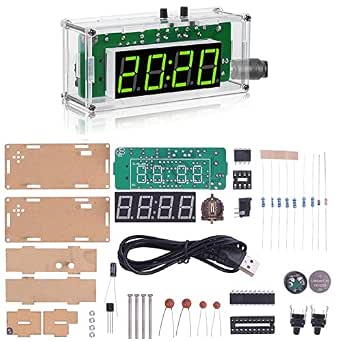 | Best for Soldering Practice and Electronics Enthusiasts | Display: 4-digit LED clock | Functions: Time, date, temperature, alarms | Power: Soldered connection | VIEW ON AMAZON | See Our Full Breakdown |
| Soldering Practice Kit for Beginners – DIY Electronic Lucky Wheel Game Board, 10-LED Soldering Training Kit with Button Start, STEM Learning Electronics Project for Students & Hobbyists |  | Best for Beginner Soldering Skills and Introductory Electronics | Number of LEDs: 10 | Includes: PCB, LEDs, resistors, capacitors, ICs, push button | Suitable for: Beginners, students, hobbyists | VIEW ON AMAZON | See Our Full Breakdown |
| DIYmore DIY FM Radio Kit with Digital Display and Transparent Case |  | Best for Educational Radio Building and Hobbyists Interested in Radio Tech | Features: Diy Kit, Soldering Practice, Educational, Transparent Case, Digital Display | Connectivity Technology: Headphone Jack, Wired | Tuner Type: FM Radio | VIEW ON AMAZON | See Our Full Breakdown |
| ELEGOO Mega 2560 R3 Project Starter Kit with Tutorial |  | Best for Advanced Electronics and Coding Projects | Microcontroller: Mega 2560 R3 | Digital I/O Pins: 54 | PWM Outputs: 15 | VIEW ON AMAZON | See Our Full Breakdown |
More Details on Our Top Picks
Poraxy STEM Science Kit for Kids Age 8-12 – Build Your Own FM Radio
This kit stands out for its engaging combination of hands-on construction and scientific learning, allowing kids to build a functional FM radio with all parts included. Compared to simpler kits like the 7 Pack STEM Science Kits for Kids, it offers a more focused project that deepens understanding of electronics and radio frequency concepts. The inclusion of a 3D wooden puzzle and detailed instructions makes it accessible yet challenging enough to develop problem-solving skills. The main tradeoff is the need for batteries, which aren’t included, and some manual dexterity is required. This makes it ideal for curious children aged 8-12 who enjoy practical STEM activities but may not suit younger kids or those needing a more straightforward experience.
Pros:- Encourages exploration of scientific concepts and circuit building
- Includes all necessary parts with step-by-step instructions
- Promotes creativity through decorating and customization
Cons:- Batteries not included, requiring additional purchase
- Requires manual dexterity and patience, which may challenge some kids
Best for: Kids aged 8-12 who are interested in exploring radio technology and circuit design
Not ideal for: Younger children or beginners with limited patience for detailed assembly and small parts
- Recommended Age:8-12
- Frequency Range:87-108 MHz
- Power Source:2 AA batteries (not included)
- Includes:All parts, mini screwdriver, step-by-step instructions
- Material:3D wooden puzzle, laser-cut pieces
Our verdict“This kit is perfect for young learners ready to dive into electronics and radio projects with guided support.”
PEMENOL 7-in-1 DIY Game Soldering Kit, Interactive STEM Electronics Project
This kit offers a versatile and engaging way to learn soldering through multiple projects, making it suitable for those looking for variety beyond single-focus kits like the Electronic Dice Soldering Kit. Its step-by-step manual and video guidance support beginners and intermediate users alike, with three difficulty levels adding progressive challenge. The inclusion of multiple projects enhances skills in soldering, component assembly, and circuit design, but the kit’s lack of detailed info on tool quality and soldering iron compatibility can be a drawback for those seeking precision and durability. It’s best suited for teens and adults who want a comprehensive, multi-activity electronics experience, but less ideal for very young beginners or those seeking a simple starter kit.
Pros:- Interactive functions enhance hands-on learning
- Includes comprehensive guidance materials with video support
- Offers multiple projects for progressive skill development
Cons:- Requires basic soldering skills and tools not included
- Limited information on component quality and tools provided
Best for: Teens and adults interested in developing soldering skills through multiple projects
Not ideal for: Beginners without basic soldering tools or those seeking a straightforward, single-project kit
- Suitable Age:15+
- Number of Projects:7
- Includes:Manual and video guidance
- Difficulty Levels:3
Our verdict“This kit suits motivated learners wanting a multi-project soldering experience with guided instruction.”
Electronic Dice Soldering Kit DIY LED Random Dice Circuit Kit 555 Timer CD4017 for Beginners Students Adults
This kit makes digital electronics accessible by guiding users through creating an electronic dice with LEDs, similar in scope to the Soldering Practice Kit for Beginners but focused on a fun, interactive project. Its straightforward assembly with all necessary components provides practical soldering experience and introduces concepts like timers and counters. The main limitation is the need for a soldering iron and tools not included, which adds an extra step for complete beginners. It’s ideal for students and hobbyists starting their electronics journey, but more advanced users might find the project too simple or limited in scope.
Pros:- Easy-to-assemble kit suitable for beginners
- Provides practical soldering and digital electronics experience
- Includes all necessary components for building the dice circuit
Cons:- Soldering iron and tools are not included, requiring additional purchase
- Limited to basic digital components, not ideal for advanced projects
Best for: Beginners and students interested in digital circuits and soldering practice
Not ideal for: Experienced hobbyists seeking complex projects or advanced electronic design
- Brand:AXIOMETA
- Age Range:12 years and up
- Subject:Electronics, Soldering, STEM Kits
- Set Name:Axiometa Electronic Dice – Soldering Kit
- Included Components:Electronics Components, ICs, LEDs, PCB, Resistors, Capacitors
Our verdict“This kit is a straightforward choice for newcomers eager to learn digital soldering through a fun, functional project.”
7 Pack STEM Science Kits for Kids – Fiber Optic Lamp Building Set
This collection offers a colorful, visually appealing project for children aged 8-12, teaching basic circuits through building fiber optic lamps. Compared with more technical kits like the Poraxy FM Radio Kit, these kits focus on light and aesthetics, making STEM more tangible and fun. All parts are included, and instructions are straightforward, fostering problem-solving and creativity. However, batteries are not included, which can be inconvenient. This set works best for kids who enjoy visual arts and light-based projects, but it may not satisfy those seeking more complex or technical electronics activities.
Pros:- Educational and fun STEM activity with colorful results
- Includes all necessary parts and clear instructions
- Promotes understanding of circuits and electronics
Cons:- Batteries are not included, requiring extra purchase
- Limited to children aged 8-12, may not engage older or younger kids
Best for: Kids aged 8-12 who love arts and colorful light projects, and want to learn basic circuits
Not ideal for: Older kids or those seeking in-depth electronics or coding components
- Set Includes:7 kits
- Age Range:8-12 years
- Project:Fiber Optic Lamp
- Batteries Included:No
- Manufacturer:BeAndge
- Model Number:BA1021
Our verdict“This kit offers a colorful and accessible introduction to circuits suitable for young STEM learners with artistic interests.”
STEM Projects Science Toys for Ages 6-14 – DIY Walkie Talkie Kit for Kids and Teens
This kit combines hardware assembly with creative expression by enabling kids to build their own walkie talkies, making it a great choice for those interested in communication technology. Compared to the Electronic Dice Soldering Kit, it emphasizes ease of assembly without soldering, suitable for a broader age range including younger children. The included pre-paired units and simple instructions make it accessible, but the lack of decorative markers limits customization options. It’s especially good for fostering creativity and basic engineering skills in kids and teens, though it offers limited functions beyond basic communication, which might disappoint those seeking more advanced features.
Pros:- Easy to assemble with no soldering or glue required
- Includes pre-paired units for quick setup
- Encourages creativity through decorating
Cons:- Paint markers for decorating are not included, limiting customization
- Limited to basic walkie talkie functions, no advanced features
Best for: Kids and teens aged 6-14 who want a simple, creative communication device without soldering
Not ideal for: Older teens or hobbyists seeking more complex electronics or programming features
- Ages:6-14+
- Materials:Wooden components
- Assembly:No soldering or glue required
- Includes:Pre-paired walkie talkie units, instructions
Our verdict“This kit provides a fun, straightforward way for younger kids to explore communication devices and DIY assembly.”
STEM Kits for Kids Age 8-10: Wooden Remote Control Car Building Kit
This wooden remote control car kit is ideal for children aged 8-12 who are just starting to explore STEM concepts through tangible building activities. Compared with plastic-based kits like the ELEGOO UNO R3 Project Starter Kit, this set emphasizes physical craftsmanship and motor skills, offering a different kind of educational engagement. Its non-toxic plywood and rounded edges prioritize safety, making it suitable for younger children, but the wooden parts may be less durable and more fragile over time. The assembly process can be challenging for the youngest users, especially without prior experience, and the battery is not included, adding an extra step for parents. Overall, this kit makes the most sense for parents seeking a safe, creative, and educational project for children who enjoy hands-on construction rather than purely electronic coding.
Pros:- Encourages STEM learning and hands-on creativity
- Includes all parts and detailed instructions
- Made from non-toxic, safe materials
Cons:- Battery not included, requiring additional purchase
- Assembly may be difficult for younger children
- Limited durability due to wooden construction
Best for: Parents or educators looking for a safe, creative STEM activity for children aged 8-10 that emphasizes physical assembly and exploration.
Not ideal for: Older kids or teens seeking more advanced electronics or coding projects, as the wooden design limits durability and complexity.
- Material:Non-toxic plywood
- Product Size:6.89 x 4.13 x 2.36 inches
- Battery Not Included:Yes
- Suitable Age Range:8-12 years
- Number of Items:1
Our verdict“This kit suits younger children eager to combine craft with STEM learning, prioritizing safety and physical activity over electronic complexity.”
ELEGOO UNO R3 Project Starter Kit with Tutorials for Beginners
This starter kit is designed for beginners eager to learn coding and electronics through guided projects. Unlike the more craft-oriented wooden RC kit, the ELEGOO UNO R3 offers a broad array of electronic components, making it ideal for those interested in programming and sensor integration. Its solderless setup and comprehensive tutorials remove barriers for newcomers, but the need for a computer with Arduino IDE installed may limit accessibility for some users. For young children, especially under 10, this kit might be too complex without adult assistance, unlike simpler kits such as the STEM DIY Speaker Kit which requires no soldering. This pick is perfect for hobbyists and students aiming to delve into coding and electronics, with the tradeoff being a steeper learning curve.
Pros:- Includes a wide variety of sensors and components
- Step-by-step tutorials facilitate learning
- Solderless and easy to set up for beginners
Cons:- Requires a computer with Arduino IDE installed
- Some components may be confusing for absolute beginners
- Less suitable for users seeking purely mechanical projects
Best for: Beginners and students interested in coding, electronics, and sensor projects willing to work with a computer and follow detailed tutorials.
Not ideal for: Very young children or those seeking purely physical, non-electronic activities, as it requires programming and solderless assembly skills.
- Controller:UNO R3
- Included Components:LCD1602, breadboard, sensors, motors, LEDs
- Power Supply:9V or below
- Tutorials:22+ guided lessons
Our verdict“Ideal for beginners ready to combine coding with electronics, accepting a learning curve for a broad project scope.”
STEM DIY Electronics Speaker Kit for Kids and Teens
This kit provides a fun, accessible way for kids and teens to build their own working speaker, emphasizing sound and electrical principles without the need for soldering. Compared to more advanced or solder-heavy projects like the MiOYOOW Digital Clock Kit, this set simplifies assembly, making it suitable for children with manual dexterity challenges. It combines educational value with entertainment, encouraging concentration and practical electronics skills in a straightforward manner. However, its focus on basic speaker construction limits its appeal for those wanting to explore more complex electronics or coding. It makes the most sense for young learners seeking quick, tangible achievements in sound engineering, but less so for advanced hobbyists or students seeking in-depth projects.
Pros:- No soldering required, easy to assemble
- Educational and fun exploration of sound and electronics
- Great for gifting or classroom activities
Cons:- Limited to basic speaker construction
- Requires manual dexterity, which may challenge very young children
- Does not include power sources or advanced electronic components
Best for: Kids and teens interested in hands-on sound and electrical projects that require no soldering or complex tools.
Not ideal for: Older students or electronics enthusiasts looking for advanced projects with electronic components like amplifiers or microcontrollers.
- Age Range:7+ years
- Assembly:No soldering required
- Includes:Components to build a working speaker
- Educational Focus:Electronics, sound, engineering
Our verdict“This kit suits young learners seeking an engaging, solderless introduction to electronics and sound engineering.”
STEM Kits for Kids Science 8-12, Educational Robot Building Set for Boys and Girls
This comprehensive set offers multiple STEM projects, including solar and wind-powered vehicles, obstacle avoidance robots, and more, making it ideal for kids who enjoy diverse building challenges. Unlike the single-focus projects like the digital clock kit, this package provides a variety of kits, fostering broad engineering understanding and problem-solving. It’s especially suitable for children aged 6-12 who thrive on variety and hands-on experimentation, but some projects may be too simple or challenging depending on the child’s age and skill level. Batteries are not included, which can be a minor inconvenience, and the complexity varies across projects. Overall, this set is perfect for curious kids who love to explore multiple aspects of robotics and renewable energy, with the tradeoff being less depth in any one project.
Pros:- Includes multiple STEM projects for variety
- Encourages problem-solving and engineering skills
- Suitable for a wide age range and educational use
Cons:- Requires AA batteries (not included)
- Some assembly may be complex for younger children
- Variable complexity across different kits
Best for: Kids curious about robotics and renewable energy, seeking multiple projects and long-term engagement.
Not ideal for: Children seeking beginner-level or simple projects, as some kits may be slightly challenging for the youngest users.
- Number of Sets:5
- Recommended Age:6-14 years
- Includes:Solar cars, wind cars, obstacle robot, transmission tank, glider
- Material:Safety, odorless materials
- Assembly:Easy with mini screwdriver
Our verdict“This versatile set is best for kids eager to explore multiple robotics and energy projects, offering a broad STEM experience.”
MiOYOOW 4-Digit DIY Digital Clock Kit, Soldering Practice Kit for Students
This digital clock kit offers a practical soldering project that displays date, time, and temperature, bridging the gap between basic electronics and functional gadgets. Unlike the more mechanical wooden RC kit or the multi-project robot set, this pick emphasizes soldering skills and circuit assembly, making it ideal for students and hobbyists wanting hands-on experience. Its adjustable brightness and temperature calibration add educational value, but the need for soldering skills can be a barrier for beginners without prior practice. The assembly process demands patience and attention to detail, which may be frustrating for those just starting out. This kit makes the most sense for users seeking a rewarding soldering project with a useful end product, accepting the challenge of electronics assembly.
Pros:- Provides real soldering practice with a functional output
- Features adjustable brightness and temperature measurement
- Includes clear, labeled circuit board for easier assembly
Cons:- Requires soldering skills and electronics knowledge
- Temperature calibration needed for accuracy
- Assembly may be difficult for complete novices
Best for: Students and hobbyists eager to practice soldering and build a functional digital clock with adjustable features.
Not ideal for: Complete beginners or young children who lack basic soldering skills or electronics knowledge.
- Display:4-digit LED clock
- Functions:Time, date, temperature, alarms
- Power:Soldered connection
- Temperature Calibration:Required
- Included Components:Electronic parts, manual
Our verdict“This kit is perfect for those wanting a hands-on soldering challenge that results in a practical, customizable digital clock.”
Soldering Practice Kit for Beginners – DIY Electronic Lucky Wheel Game Board, 10-LED Soldering Training Kit with Button Start, STEM Learning Electronics Project for Students & Hobbyists
This kit stands out for its engaging and hands-on approach to learning basic soldering and electronics through a fun roulette-style game. Unlike the ELEGOO Mega 2560 R3 kit, which is more suited for complex projects and coding, this kit focuses on fundamental soldering skills and simple circuit assembly, making it ideal for newcomers. Its inclusion of all necessary components simplifies setup, but it’s limited to introductory projects and doesn’t support advanced electronics development. The focus on timing circuits and LED sequencing makes it a practical starting point for those new to soldering, though it requires some prior skill to avoid frustration.
Pros:- Engaging project that combines soldering practice with a visual, interactive outcome
- Includes all essential components, reducing setup complexity
- Helps build confidence in basic soldering and circuit assembly
Cons:- Requires some basic soldering experience, so complete novices might find it challenging
- Limited to simple LED sequencing, with no scope for advanced circuit design
Best for: Beginners and students looking to develop foundational soldering skills through a fun, guided project
Not ideal for: Experienced hobbyists or those seeking complex, multi-function electronics projects
- Number of LEDs:10
- Includes:PCB, LEDs, resistors, capacitors, ICs, push button
- Suitable for:Beginners, students, hobbyists
- Learning Focus:Timing circuits, counters, LED sequencing
Our verdict“This kit is perfect for beginners eager to learn soldering fundamentals through a fun, straightforward project.”
DIYmore DIY FM Radio Kit with Digital Display and Transparent Case
Compared with the ELEGOO Mega 2560 R3 kit, which emphasizes coding and extensive electronics, this FM radio kit offers a focused project tailored to understanding radio frequency and analog circuitry. Its transparent case provides a visual element that enhances learning about internal components, while the digital display adds a modern touch. Although it’s easy to assemble for those with basic soldering skills, limited to FM band 88 and a modest output power of 0.5 watts, it suits hobbyists and students interested specifically in radio projects. The kit’s versatility for educational purposes makes it a compelling choice, but those wanting multi-band or higher power radios will find it restrictive.
Pros:- Simple and straightforward assembly suited for beginners and STEM learners
- Includes a clear digital display and a transparent case for visual insight
- Versatile for educational projects and radio hobbyist experiments
Cons:- Limited to FM frequency 88, restricting broader radio applications
- Output power of 0.5 watts may be insufficient for larger spaces or outdoor use
- Soldering skills required might be challenging for absolute beginners
Best for: Hobbyists and STEM learners interested in building and understanding FM radio technology
Not ideal for: Advanced electronics enthusiasts seeking multi-band radios or higher output power
- Features:Diy Kit, Soldering Practice, Educational, Transparent Case, Digital Display
- Connectivity Technology:Headphone Jack, Wired
- Tuner Type:FM Radio
- Power Source:Battery Powered
- Radio Bands Supported:FM
- FM Frequency:88
Our verdict“This radio kit offers a rewarding build for those interested in radio electronics and visual learning, with some limitations on range and power.”
ELEGOO Mega 2560 R3 Project Starter Kit with Tutorial
This comprehensive kit surpasses the simpler soldering-focused options like the Poraxy FM Radio Kit by offering a vast array of components for diverse projects, from robotics to automation. Its Mega 2560 R3 microcontroller provides extensive I/O options, making it suitable for users ready to explore coding alongside electronics. While the included tutorials and pre-soldered modules encourage learning, the sheer volume of parts and complexity can overwhelm absolute beginners, unlike the beginner-friendly soldering kits. It demands a broader skill set and more tools, but in return, it unlocks the potential for highly customized and sophisticated projects.
Pros:- Massive component library enables a wide range of projects and experiments
- Includes detailed tutorials, easing the learning curve for motivated learners
- Organized storage and pre-soldered modules streamline initial setup
Cons:- Too complex for those new to electronics without prior experience
- Bulkier and less portable, making it less suitable for casual or on-the-go use
- Some components may require additional tools and knowledge for assembly
Best for: Intermediate to advanced hobbyists and students eager to explore complex electronics and coding projects
Not ideal for: Complete beginners or those seeking simple, quick-start projects without extensive setup
- Microcontroller:Mega 2560 R3
- Digital I/O Pins:54
- PWM Outputs:15
- Analog Inputs:16
- Flash Memory:256 KB
- Components Included:LCD1602, RFID, RTC, sensors, motors, relay, keypad, joystick, and more
Our verdict“This starter kit is ideal for learners ready to dive into complex projects, coding, and prototyping, with a steep but rewarding learning curve.”

How We Picked
The products in this roundup were evaluated based on a combination of factors including build quality, educational value, ease of assembly, versatility, and user-friendliness. Kits suitable for beginners were prioritized with clear instructions and manageable complexity, while more advanced options were judged on project diversity and potential for skill growth. Price-to-value ratio also played a role; higher-quality components and extensive tutorials earned higher rankings. The goal was to highlight options that cater to a range of users—from kids to hobbyists—while maintaining a focus on engaging, educational, and reliable kits.Factors to Consider When Choosing Diy Electronics Craft Kit
Choosing the right diy electronics craft kit involves understanding your skill level, project goals, and available tools. Considering these factors helps ensure you select a kit that provides both challenge and enjoyment, without leading to frustration or incomplete projects. The following sections highlight the most important criteria to keep in mind when evaluating options.Skill Level and Age Appropriateness
Matching the kit’s complexity with your or your child’s experience is vital. Kits designed for beginners often include step-by-step tutorials and simpler components, reducing the risk of overwhelm. Conversely, more advanced kits may introduce microcontrollers and complex circuits that can be rewarding but require prior knowledge. Ensuring the kit’s recommended age and skill level align with your goals helps prevent frustration and maximizes learning.
Project Variety and Educational Content
A kit with multiple projects or expandability offers longer-term engagement and learning opportunities. Look for kits that include tutorials, clear instructions, and a variety of components. Kits focused on specific projects, like radios or robots, are ideal if you have a clear interest, whereas versatile kits provide a broader foundation in electronics principles.
Build Quality and Components
The durability of the components and the quality of parts directly impact the longevity of your projects. Reputable brands tend to include better-quality resistors, LEDs, and microcontrollers, which can also improve the learning experience. Cheap or poorly made kits may have fragile parts or unreliable connections, leading to frustration and repeated repairs.
Included Tools and Accessories
Some kits come with essential tools like soldering irons, screwdrivers, or breadboards, adding value and convenience. Evaluate whether additional tools are required and if the kit provides everything needed for the projects. Kits that include tools may be more cost-effective for beginners, but hobbyists might prefer to select their own for customization.
Price and Value
Higher-priced kits often provide better components, more comprehensive tutorials, and greater project flexibility, but budget options can still be very effective for learning basic concepts. Consider what features are most important for your goals, and avoid overpaying for unnecessary extras. Balancing cost with quality ensures a satisfying and educational experience without overspending.
Frequently Asked Questions
Are soldering kits suitable for absolute beginners?
Yes, many soldering kits are designed with beginners in mind, offering simple projects and clear instructions. Starting with a basic soldering practice kit can build confidence and skills gradually. However, it’s important to follow safety guidelines and use proper tools to prevent accidents. As you gain experience, more complex kits become accessible, expanding your capabilities and project options.
Can I use these kits to learn microcontroller programming?
Absolutely, many kits include microcontrollers like Arduino or ESP32, which are excellent for learning programming alongside electronics. These kits typically come with tutorials that cover coding fundamentals and circuit design. They are ideal for hobbyists and students who want to develop both hardware and software skills through hands-on projects.
What should I consider if I want a kit that grows with me?
If you’re looking for a kit that can evolve with your skills, opt for those with expandable components or modular designs. Kits that support additional modules, sensors, or microcontrollers allow you to start simple and gradually take on more complex projects. Ensure the kit has a strong community or extensive tutorials, which can guide you through more advanced builds over time.
Are there kits suitable for kids under 8?
Most kits designed for younger children focus on basic concepts and safe, simple components. Look for kits with large, snap-together parts, minimal soldering, and colorful instructions to keep young children engaged. These kits are excellent for sparking early interest in electronics, but more complex projects should be reserved for older kids or teens.
How important is kit compatibility with tutorials and online resources?
Compatibility with tutorials and online communities can significantly enhance your learning experience. Kits that are well-documented or supported by extensive online guides help troubleshoot issues faster and expand project possibilities. When choosing a kit, consider the availability of tutorials, forums, or official support, especially if you’re new to electronics.
Conclusion
For those new to electronics or seeking a straightforward, engaging experience, the Poraxy STEM Science Kit offers easy-to-follow projects and a safe introduction. Hobbyists aiming for versatility and advanced projects should consider the ELEGOO UNO R3 Project Starter Kit or the ELEGOO Mega 2560 R3 Kit, which provide extensive components and tutorials. Parents and educators looking for educational value may prefer kits like the PEMENOL 7-in-1 DIY Game Soldering Kit or the STEM Kits for Kids series. Budget-conscious buyers can find great options among simpler, well-made kits, while those seeking a long-term, expandable setup should prioritize modular kits with strong community support. Each buyer type can find a tailored pick that balances complexity, educational content, and build quality.