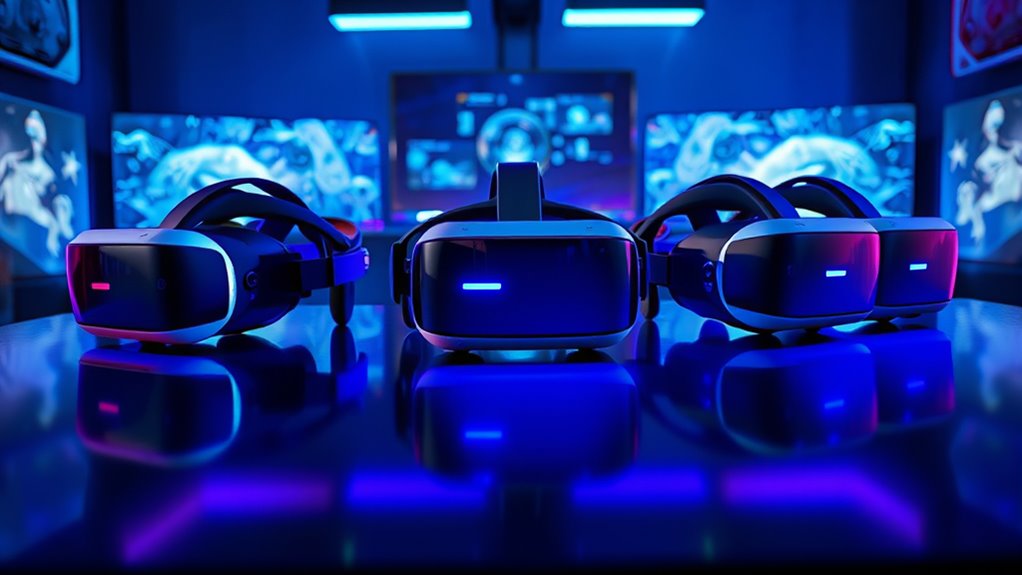

When it comes to highend VR headsets for gaming, the choices can be overwhelming. The best options deliver stunning visuals, precise tracking, and immersive sound, but often come with higher price tags and setup complexity. The Valve Index stands out as the overall best for its excellent display and comfort, while the Pimax Crystal offers ultra-wide FOV and top-tier resolution for enthusiasts. However, tradeoffs like cost, setup difficulty, and hardware requirements mean you need to weigh what matters most for your gaming style. Continue reading for a detailed breakdown of these premium VR options and find the perfect fit for your gaming needs.

Get business pricing on tools and workshop supplies
- Business-only prices and quantity discounts
- Tax-exempt purchasing
- Multiple users, one account, clear invoices
Complete the kit

Key Takeaways
- The most immersive experiences come from headsets with ultra-wide FOV and high resolution, like Pimax models.
- Balance between ease of use and performance varies; standalone headsets like Meta Quest are simpler but may lack some premium features.
- Tracking accuracy and comfort are critical for long gaming sessions, influencing overall experience.
- High-end VR often demands powerful PCs, making hardware compatibility a key factor.
- Premium headsets with advanced features tend to come with higher price points, requiring careful evaluation of value.


More Details on Our Top Picks
Valve Index VR Headset, Black, for PC/SteamVR, 1-Year Warranty (Renewed)
This model stands out for its exceptionally high-resolution display and comfortable ergonomic design, making long gaming sessions more enjoyable. Compared with the Meta Quest 3S, the Valve Index offers a more immersive visual experience thanks to its superior visuals, but it demands a powerful PC and wired setup, which could be inconvenient for some. Its seamless PC and SteamVR integration unlock access to a vast library of titles, though the cost and need for high-end hardware pose a barrier. The renewed status with a one-year warranty adds peace of mind, yet the price remains steep for casual gamers who prefer wireless freedom.
Pros:- High-resolution visuals deliver stunning clarity
- Comfortable ergonomic fit for hours of use
- Seamless compatibility with SteamVR and PC
Cons:- Requires a high-end PC for optimal performance
- Wired connection limits mobility and setup simplicity
Best for: Dedicated PC gamers seeking the best visual fidelity and comfort for extended sessions
Not ideal for: Casual players or those preferring wireless, standalone headsets due to setup complexity and cost
- Color:Black
- Platform:PC/SteamVR
- Warranty:CPS 1-Year Warranty
- Type:VR Headset
Our verdict“This headset is best suited for serious PC gamers who prioritize top-tier visuals and comfort over portability.”
HTC Vive Focus Vision Wired Bundle — XR Headset with DisplayPort PC VR Streaming Kit
The HTC Vive Focus Vision is a compelling choice for those who want both standalone and PC-connected VR. Its 5K display with 2448 x 2448 pixels per eye offers stunning visuals, surpassing many other standalone options like the Meta Quest 3S. The headset’s advanced eye and hand tracking enable highly realistic interactions, suitable for immersive gaming and mixed reality applications. The hot-swappable battery allows longer play, but the setup process is more complex, requiring network and PC connections, which might intimidate beginners. Compared with the Meta Quest Pro, it provides a richer PC VR experience but at a higher setup cost and complexity.
Pros:- High-resolution 5K display creates immersive visuals
- Advanced eye and hand tracking for realistic interactions
- Supports both standalone and PC VR experiences
Cons:- Setup can be complex and time-consuming
- Higher cost and technical barrier for beginners
Best for: VR enthusiasts who want high-fidelity visuals and advanced tracking for gaming and mixed reality
Not ideal for: Casual users seeking simple, plug-and-play solutions or those uncomfortable with complex setups
- Display Resolution:2448 x 2448 pixels per eye
- Field of View:up to 120°
- Refresh Rate:90 Hz
- Connectivity:DisplayPort, Ethernet, Wi-Fi
Our verdict“Ideal for dedicated VR users who demand high resolution and sophisticated tracking, despite a steeper learning curve.”
HTC Vive Focus Vision — Mixed Reality and PC VR Headset with Controllers
The HTC Vive Focus Vision excels as a versatile headset that combines standalone mixed reality with PC VR capabilities. Its 5K display and advanced tracking support immersive environments, while the hot-swappable battery ensures longer gaming marathons. This headset is more complex to set up than the Meta Quest Pro, requiring multiple connectivity options, which could deter casual users. Compared to the Vive Focus Vision Wired Bundle, it offers greater flexibility but might lack some of the dedicated streaming features. The mix of standalone and PC VR makes it a solid choice for those who want multi-purpose use, though the high price and setup complexity are notable drawbacks.
Pros:- Supports both standalone and PC VR experiences
- High-resolution 5K display for immersive visuals
- Advanced eye and hand tracking for realism
Cons:- Complex setup process with multiple connectivity options
- Higher price point for premium features
Best for: VR enthusiasts seeking a flexible device for both standalone and PC-based immersive experiences
Not ideal for: Newcomers or casual gamers who prefer straightforward, wireless headsets without complex configurations
- Display:5K (2448 x 2448 pixels per eye)
- Field of View:120°
- Refresh Rate:90 Hz
- Connectivity:DisplayPort, Ethernet, Wi-Fi
Our verdict“This headset is best for experienced VR users who want a versatile device that offers both standalone and PC VR gaming in one package.”
Meta Quest 3S 128GB Virtual Reality VR Headset (Renewed Premium)
The Meta Quest 3S offers a wireless, untethered VR experience with impressive graphics powered by the Snapdragon XR2 Gen 2 processor. Its 8GB RAM ensures smooth performance, and the dual RGB cameras facilitate mixed reality blending, making it ideal for casual gaming and light mixed reality use. Compared to wired headsets like the HTC Vive Focus, it provides unmatched freedom of movement, but the battery life of around 2 hours can limit longer sessions. Its emphasis on portability and ease of use makes it a great pick for casual players who don’t want to fuss with cables, though it comes at a higher price point for a renewed model.
Pros:- Wireless and untethered for maximum freedom
- Impressive graphics with next-gen processor
- Includes access to over 40 games and a trial subscription
Cons:- Limited battery life for extended gaming
- Requires calibration and setup for optimal experience
Best for: Casual gamers and VR newcomers who prioritize portability and ease of setup
Not ideal for: Hardcore gamers seeking the highest visual fidelity or extended play without recharging
- Storage:128GB
- Battery Life:2+ hours
- RAM:8GB
- Processor:Snapdragon XR2 Gen 2
Our verdict“This headset is perfect for casual users who prioritize wireless convenience over absolute visual fidelity.”
Meta Quest Pro Headset with Virtual Reality Field Trips and 1-Month Subscription
The Meta Quest Pro stands out for its high-resolution 256GB storage, advanced mixed reality features, and powerful hardware suitable for multitasking, gaming, and educational use. Its high-density sensors and spacious 12GB RAM support realistic avatars and precise hand tracking, making it a versatile choice for immersive experiences beyond gaming. The VR field trips and subscription add educational value, but this feature incurs an additional cost, and the overall price is high, making it less attractive for purely gaming-focused users. Compared to the Meta Quest 3S, it offers richer mixed reality capabilities at a premium price, emphasizing multitasking and interactivity over straightforward gaming.
Pros:- High-resolution display with advanced mixed reality features
- Powerful hardware suitable for multitasking and gaming
- Realistic avatars and precise hand tracking
Cons:- Subscription needed for VR field trips (additional cost)
- High price point limits accessibility
Best for: VR enthusiasts interested in high-fidelity mixed reality experiences and educational applications
Not ideal for: Budget-conscious gamers or those solely seeking a simple gaming headset with minimal extras
- Storage:256 GB
- RAM:12 GB
- Sensors:10 VR/MR sensors
- Display Technology:Pancake lenses, quantum dot
Our verdict“This headset is ideal for users who want a premium mixed reality experience with advanced features, despite its higher cost.”
Meta Quest 3 512GB Virtual Reality Headset with Gorilla Tag Bundle
The Meta Quest 3 512GB stands out for its stunning 4K+ resolution and untethered design, delivering immersive visuals without the hassle of cables. Its powerful Snapdragon XR2 Gen 2 processor ensures smooth gameplay, making it a top choice for those seeking a wireless experience. Compared with the Pimax Crystal, which offers even higher resolution and a wider field of view, the Quest 3 sacrifices some visual fidelity for portability and ease of use. The included Gorilla Tag bundle and game trial add value, but the limited battery life and high storage cost may be drawbacks for extended gaming sessions. This headset is perfect for gamers prioritizing immersive visuals and freedom of movement.
Pros:- High-resolution 4K+ display for stunning visuals
- Wireless, untethered experience for freedom of movement
- Powerful Snapdragon XR2 Gen 2 processor ensures smooth gameplay
- Includes exclusive bundle items and a game trial
Cons:- Battery life may be insufficient for long sessions
- High storage capacity increases overall cost
- Requires adequate space for safe movement
Best for: Gamers who want a high-resolution, wireless VR experience with a focus on convenience and standalone functionality.
Not ideal for: Players who require the absolute highest visual fidelity or extended playtime without recharging, as battery life is limited.
- Storage:512GB
- Display:4K+ Infinite Display
- Processor:Snapdragon XR2 Gen 2
- Memory:8GB RAM
- Battery Life:2+ hours
- Cameras:Dual RGB color cameras
Our verdict“This headset suits gamers who prioritize immersive, wireless experiences with excellent visuals, but may not be ideal for those needing longer play sessions or the highest visual detail.”
HTC Vive XR Elite with Deluxe Pack — Mixed Reality and PC VR Headset + Controllers
The HTC Vive XR Elite offers a flexible experience, functioning as both a standalone and PC-connected headset with high-resolution visuals and full-color passthrough. Its swappable battery and adjustable fit make it a practical choice for extended gaming sessions. While the Meta Quest 3 provides greater visual resolution, the Vive XR Elite’s ability to seamlessly switch between mixed reality and PC VR makes it more versatile for gamers who want both immersive gaming and AR functions. The deluxe pack’s additional accessories and controllers enhance the experience, but limited battery life of around two hours and a potentially higher price point can be drawbacks. This headset is ideal for users seeking flexibility and high-quality mixed reality capabilities.
Pros:- High-resolution 3840 x 1920 graphics with immersive visuals
- Standalone and PC VR compatibility for flexibility
- Swappable battery extends usage time and portability
- Full-color passthrough and hand tracking for mixed reality
Cons:- Battery life limited to about 2 hours
- Higher cost compared to simpler standalone options
- Hand-tracking depends on supported titles
Best for: Gamers who want a hybrid VR experience with both standalone and PC connection options and mixed reality features.
Not ideal for: Players seeking the highest resolution for pure visual fidelity or those with limited budget, due to the higher cost and battery limitations.
- Resolution:3840 x 1920
- Field of View:up to 110°
- Refresh Rate:90Hz
- Battery Life:up to 2 hours
- Adjustments:Stepless IPD and diopter
- Tracking Cameras:4 wide field-of-view
Our verdict“This headset is best suited for gamers who want a multi-use device with strong mixed reality features and flexible connectivity.”
Meta Quest 3S 256GB VR Headset
The Meta Quest 3S 256GB provides a compelling mix of performance and affordability, offering wireless VR with enhanced graphics similar to the 512GB model but at a lower price point. Its Snapdragon XR2 Gen 2 processor and 8GB RAM deliver smooth gameplay, while the included 3-month trial gives access to a broad library of games. While it doesn’t match the Pimax Crystal in resolution or field of view, it excels in portability and ease of setup. Battery life remains a concern, as with other Quest models, but for gamers wanting high-end features without breaking the bank, this makes a strong case. It’s ideal for casual players or those new to high-end VR who want seamless wireless performance.
Pros:- Wireless, untethered VR experience for freedom of movement
- Enhanced graphics with Snapdragon XR2 Gen 2
- Includes a 3-month trial for access to over 40 games
- Compact, easy setup and portable design
Cons:- Battery life may limit lengthy gaming sessions
- Lower resolution and narrower FOV compared to high-end PC headsets
- Limited storage capacity for a full game library
Best for: Casual gamers or newcomers seeking a high-end wireless VR headset with a lower price.
Not ideal for: Hardcore enthusiasts who prioritize ultra-high resolution or extended play sessions, since battery life and maximum fidelity are limited.
- Storage:256GB
- RAM:8GB
- Processor:Snapdragon XR2 Gen 2
- Battery Life:2+ hours
- Cameras:Dual RGB color cameras
Our verdict“This headset is well-suited for gamers who want solid performance and wireless freedom without the premium price tag for ultra-high resolution.”
Pimax Crystal Super VR Headset & VR Glasses with Micro-OLED, 53 PPD, 3840×3552 Per Eye, 116° Field of View, Eye Tracking
The Pimax Crystal Super delivers extraordinary visual clarity with 3840×3552 pixels per eye and a 116° field of view, making it ideal for VR enthusiasts demanding ultra-realistic graphics. Its advanced Micro-OLED displays and eye-tracking technology set it apart from typical high-end headsets like the Meta Quest 3, which offers lower resolution and narrower FOV. The tradeoff lies in its higher price and the need for powerful hardware to run effectively, along with a more complex setup process. For dedicated VR fans who prioritize detail and immersion above all, this headset offers unmatched image quality but demands a serious investment. It’s best for users with high-end gaming PCs ready to drive its advanced features.
Pros:- Ultra-high resolution Micro-OLED displays for stunning visuals
- Extensive 116° field of view maximizes immersion
- Advanced eye-tracking and precise 6DOF tracking
- High-quality accessories included for comfort
Cons:- High price point limits accessibility
- Requires powerful PC hardware for optimal performance
- Complex setup and calibration process
Best for: Hardcore VR gamers and enthusiasts seeking the highest resolution and widest FOV for immersive, realistic experiences.
Not ideal for: Casual players or those with limited hardware, due to its high cost and setup complexity.
- Display Resolution:3840×3552 per eye
- Field of View:116°
- Refresh Rate:90Hz
- Tracking:6DOF
- Includes:Face Cushion Covers Face Pad Kit
Our verdict“This headset is perfect for VR aficionados seeking premium visuals and wide FOV, but less suitable for casual gamers or those on a budget.”
Pimax Dream Air VR Headset – 3840 x 3552 Per Eye, 110° FOV, ConcaveView Optics, Eye-Tracking, SLAM Tracking, 6DOF Controllers
The Pimax Dream Air combines high-resolution Micro-OLED displays with a 110° field of view, offering an immersive experience for demanding VR users. Its inclusion of eye-tracking, SLAM tracking, and 6DOF controllers provides precise motion tracking and realistic interaction. Compared with the Pimax Crystal, the Dream Air emphasizes portability and integrated features, though it still requires a robust setup with split DisplayPort cable and compatible hardware. While not as wide in FOV as the Crystal, its balanced specs make it attractive for serious gamers wanting high fidelity and accurate tracking without the extreme price of the Crystal. Setup complexity and limited battery info are tradeoffs to consider. This headset is best for high-end users seeking a combination of resolution, tracking, and mobility.
Pros:- High-resolution Micro-OLED displays for sharp image quality
- 110° FOV enhances immersion
- Includes eye-tracking and SLAM tracking for accurate motion
- 6DOF controllers support natural interactions
Cons:- Requires split DisplayPort cable, complicating setup
- Setup may be challenging for less experienced users
- Limited battery information raises questions about portability
Best for: Advanced VR gamers requiring high resolution, wide FOV, and precise tracking, especially those with capable hardware setups.
Not ideal for: Casual users or those with limited space, as setup is more complex and requires specific hardware components.
- Resolution:3840 x 3552 per eye
- Field of View:110°
- Display Technology:Micro-OLED
- Tracking:Eye-tracking, SLAM
- Controllers:6DOF
Our verdict“This headset suits experienced VR users seeking high resolution and accurate motion tracking in a portable form, but setup complexity might be a barrier for some.”
Pimax Crystal Super VR Headset, 3840×3840 per Eye, Ultrawide, 140° FOV, Eye-Tracking, PC Compatible
The Pimax Crystal Super stands out for its exceptional resolution and expansive 140° field of view, delivering visuals that rival cinema quality and peripheral awareness that elevates immersive gameplay. Compared to the Pimax Crystal Light, it offers a wider FOV and more advanced eye-tracking, making it ideal for flight simulators and racing games where peripheral vision matters. The tradeoff lies in its higher price and the need for a robust PC setup, as it lacks portability and has no details on weight or battery life. Its inside-out tracking and ergonomic design mean longer sessions remain comfortable, though availability may be limited. This headset is best suited for serious enthusiasts seeking cutting-edge visual fidelity and wide FOV, willing to invest in a high-end PC setup.
Pros:- Exceptional 3840×3840 per eye resolution for sharp visuals
- Wide 140° FOV enhances peripheral immersion
- Advanced eye-tracking and inside-out tracking for precise motion capture
- Comfortable ergonomic design suitable for long sessions
Cons:- Price and availability are not specified, potentially limiting access
- Requires a powerful PC with compatible ports, increasing setup complexity
Best for: High-end VR gamers who prioritize absolute visual clarity and peripheral awareness for simulation and immersive experiences
Not ideal for: Casual gamers or those with less powerful PCs, as the premium features require significant hardware investment
- Resolution:3840×3840 per eye
- Field of View:140 degrees
- Display Technology:QLED with Mini-LED and OLED-level blacks
- Refresh Rate:90Hz
- Tracking:Inside-out with eye-tracking
- Connectivity:DisplayPort, USB
- Compatible Devices:PC
- Adjustable IPD:Yes
- Passthrough Camera:Yes
Our verdict“This headset is perfect for high-end enthusiasts seeking ultimate visual fidelity and immersive peripheral awareness, despite its premium price and setup demands.”
Pimax Crystal Light VR Headset for PC, 2880×2880 per Eye, 8K QLED Display with Local Dimming, Inside-Out Tracking, PC VR Headset for Flight Sims, iRacing & Gaming
The Pimax Crystal Light offers a compelling balance of high resolution and comfort, with 2880×2880 pixels per eye and an 8K QLED display supporting local dimming and HDR for vivid, lifelike colors. Compared to the Pimax Crystal Super, it sacrifices some FOV for a more manageable price point and weight, making it more suitable for prolonged sessions. Its 120Hz refresh rate ensures smooth visuals during fast-paced racing and flight simulations. The limited details on included controllers and the need for a capable PC are tradeoffs, but the lightweight design and seamless SteamVR compatibility appeal to dedicated enthusiasts. Its adjustable IPD and ergonomic fit make it a good choice for long gaming marathons. This model makes the most sense for passionate gamers who want ultra-high resolution on a slightly more accessible setup.
Pros:- High-resolution 8K display with vivid colors and HDR
- Lightweight and ergonomic, ideal for long use
- Seamless SteamVR compatibility for a wide range of experiences
- High refresh rate supports smooth motion
Cons:- Heavy for some users despite being lighter than alternatives
- Requires a powerful PC to fully leverage capabilities
- Limited info on included controllers may impact user experience
Best for: Dedicated VR gamers seeking ultra-sharp visuals and comfort for extended flight or racing sessions
Not ideal for: Casual players or those with less powerful PCs, due to high hardware demands and limited controller info
- Resolution:2880 x 2880 per eye
- Display Technology:QLED with local dimming and HDR
- Refresh Rate:120Hz
- Weight:815 grams (28 ounces)
- Tracking:Inside-Out Camera Tracking
- Platform Compatibility:SteamVR, PC
- Lens Technology:Aspheric glass
- Connectivity:HDMI
Our verdict“This headset is best for serious VR users prioritizing ultra-high-resolution visuals and comfort, with the caveat of high hardware requirements.”
Pimax Crystal Super VR Headset, 57PPD & 3840×3840 Resolution per Eye, Ultra-Sharp Image, 106° Wide Field of View, Ideal for Flight Simulators & VR Games
The Pimax Crystal Super with 3840×3840 resolution per eye and a 106° FOV offers ultra-sharp visuals suited for flight simulators and VR gaming demanding high clarity. Compared with the Pimax Crystal Light, it emphasizes a narrower FOV but delivers a higher pixel density of 57PPD, creating incredibly detailed images. Its flexible eye and IPD adjustments ensure a personalized fit, while high refresh rates support smooth gameplay. Though it lacks detailed weight specs and battery info, its comfortable design makes it suitable for lengthy flights or gaming marathons. The high-end features come with a higher price, and a capable PC remains essential. This headset is tailored for enthusiasts who prioritize detailed visuals and comfort during extended VR sessions.
Pros:- Incredible 3840×3840 resolution per eye for sharp visuals
- Flexible eye and IPD adjustments for personalized comfort
- High refresh rates support smooth motion in demanding applications
- Comfortable for extended use
Cons:- High-end features result in a higher price point
- Limited detailed specs on weight and battery life
- Requires a capable gaming PC for optimal performance
Best for: VR flight simulator and high-fidelity gaming fans who want ultra-sharp visuals and adjustable comfort
Not ideal for: Casual or budget-conscious gamers due to higher cost and hardware needs
Our verdict“This headset suits dedicated enthusiasts focused on ultra-sharp visuals and comfort, accepting the premium price and hardware requirements.”
Meta Quest 2 Advanced All-In-One Virtual Reality Headset 256 GB
The Meta Quest 2 offers a compelling high-resolution experience with 1832×1920 pixels per eye, combined with wireless freedom, making it ideal for versatile gaming without the need for a PC. Compared to the PC-tethered Pimax models, it sacrifices some resolution for convenience and portability, with its built-in hardware handling most processing. The anti-slip silicone grips and adjustable straps enhance comfort during long sessions, and its hand-tracking adds an intuitive layer of interaction. The main tradeoff is that, as a renewed product, warranty and longevity might be limited, and calibration is necessary for optimal use. Still, for casual to mid-level gamers seeking high-quality visuals without complex setup, it remains a strong choice. This headset makes the most sense for players who want a standalone experience with decent resolution and ease of use.
Pros:- High-resolution display with immersive visuals
- Wireless, standalone operation for flexibility
- Comfortable adjustable straps and anti-slip grips
- Fast processor enhances gaming performance
Cons:- Renewed product may have limited warranty coverage
- Requires calibration, which can be time-consuming
- Lower resolution than tethered high-end headsets
Best for: Casual to mid-level VR gamers who prioritize convenience and portability for a variety of gaming scenarios
Not ideal for: Enthusiasts demanding the highest resolutions or advanced tracking for professional-grade simulations
Our verdict“This headset is ideal for casual and portable VR gaming, especially for those who prefer a wireless, all-in-one setup over high-end PC tethered options.”

How We Picked
I evaluated these VR headsets based on several key criteria relevant to highend gaming experiences. Performance metrics like resolution, FOV, and tracking precision were prioritized, as they directly impact immersion and responsiveness. Build quality and comfort were also critical, since long gaming sessions demand a headset that feels secure and comfortable. Usability factors such as setup complexity and compatibility with gaming platforms influenced rankings, alongside value considerations like price relative to features. The goal was to identify headsets that offer the best blend of cutting-edge technology, ease of use, and durability for dedicated gamers willing to invest in premium quality.Factors to Consider When Choosing Highend Vr Headsets For Gaming
Choosing a highend VR headset for gaming involves balancing several factors. While specs like resolution and FOV are vital for visual fidelity, comfort and tracking precision greatly influence your overall experience. It’s also important to consider hardware compatibility, especially if you plan to use the headset with a high-performance PC. Cost is another major consideration, as premium features come at a higher price, so knowing what features you truly need can prevent overspending. Finally, think about future-proofing; a headset with versatile capabilities may serve your gaming setup for years to come.Display Quality and Field of View
The clarity of the display and the extent of the field of view (FOV) directly affect immersion. Higher resolution screens like 3840×3840 per eye provide sharper images, reducing pixelation and screen door effects, while a wider FOV (over 110°) offers a more natural, encompassing view. When shopping, prioritize headsets that combine high resolution with a broad FOV for the most lifelike experience. However, keep in mind that increased resolution and FOV demand more from your PC or standalone hardware, which may impact performance or cost.
Tracking and Responsiveness
Accurate tracking ensures your movements are reflected precisely in VR, which is critical for immersive gaming and avoiding motion sickness. Inside-out tracking simplifies setup but may sacrifice some precision compared to external sensors, while external sensor setups can offer more accurate data at the expense of complexity. For highend gaming, look for headsets with 6DoF tracking, low latency, and fast refresh rates. This often means investing in models like Valve Index or Pimax, which excel in responsiveness but require compatible hardware and space.
Comfort and Ergonomics
Comfort becomes a deciding factor during extended gaming sessions. Heavier headsets with adjustable straps, padding, and balanced weight distribution tend to be more enjoyable to wear. Features like ventilation and flexible fitting options can reduce fatigue and sweating. Remember that premium materials and build quality often translate into better comfort, but they also add to the cost. Test or research user feedback to find a model that fits your head shape well and provides sufficient comfort for hours of use.
Hardware Compatibility and Ecosystem
The quality and performance of a VR headset depend heavily on your PC or console setup. Most highend VR headsets require powerful PCs with specific graphics card and USB/DisplayPort connections. Standalone options like Meta Quest can be more convenient but may lack some high-end features or require tethering for full PC VR. Check compatibility with your existing hardware and consider future upgrades when choosing a headset. A well-supported ecosystem also ensures easier access to updates, accessories, and a broader variety of games.
Price and Future-Proofing
Highend VR headsets often carry significant price tags, reflecting their advanced features. While it can be tempting to buy the latest tech, evaluate whether the features align with your gaming priorities. Investing in a headset with modular or upgradeable components can extend its lifespan. Consider the manufacturer’s track record for firmware updates and ongoing support, which helps protect your investment. Sometimes, paying a premium for the newest tech translates into a more future-proof setup that remains compatible with upcoming titles and hardware.
Frequently Asked Questions
Is a highend VR headset worth it for casual gamers?
For casual gamers, a highend VR headset can offer impressive visuals and responsiveness, but it may be overkill if you only play occasionally or on a limited budget. These headsets excel when used regularly and paired with a capable gaming PC, providing a significant leap in immersion and graphics quality. However, the higher price and setup complexity might not justify the investment for infrequent use. Casual players should carefully consider whether they value premium features enough to warrant the expense or if more affordable options could meet their needs.
How important is resolution in highend VR headsets for gaming?
Resolution plays a vital role in visual clarity and immersion, especially in high-end headsets. A higher resolution reduces pixelation and screen door effects, making environments look more realistic and comfortable to view. This can be particularly impactful in fast-paced or detailed games, where clarity helps with awareness and reaction times. However, higher resolution also demands more from your hardware, potentially reducing frame rates if your system isn’t powerful enough. Balancing resolution with performance is key to getting the best gaming experience.
Should I prioritize FOV or resolution in my purchase?
Both FOV and resolution significantly influence immersion but serve slightly different purposes. A wider FOV creates a more natural, encompassing view, making you feel more present in the virtual environment. Higher resolution enhances visual detail and reduces eye strain. If you have to choose, consider your primary gaming style: fast-paced action games benefit from wider FOVs for situational awareness, while detail-heavy simulations or puzzle games may benefit more from higher resolution. Ideally, aim for a headset that balances both for a comprehensive experience.
Can I use a highend VR headset with a mid-range gaming PC?
While some highend VR headsets can work with mid-range PCs, you might face limitations in performance and visual fidelity. Most premium headsets require powerful GPUs and CPUs to run smoothly at their highest settings. Running them on mid-range hardware may lead to lower frame rates, reduced resolution, or increased latency, which can impact immersion and cause discomfort. To get the most out of a highend headset, ensure your system meets or exceeds the recommended specifications and consider lowering some settings if necessary.
Are standalone VR headsets suitable for high-end gaming?
Standalone VR headsets like Meta Quest offer convenience and ease of use, but they typically don’t match the performance and graphics fidelity of PC-tethered highend headsets. They are ideal for casual or moderate gaming, offering portability and simple setup. However, for demanding AAA titles or immersive experiences with high resolution and wide FOV, tethered headsets like Valve Index or Pimax are better suited. Consider your gaming priorities—if you want top-tier visuals and responsiveness, a wired, highend headset remains the preferred choice.
Conclusion
For dedicated gamers seeking the best overall experience, the Valve Index remains a compelling choice thanks to its balance of comfort, tracking, and display quality. If you prioritize maximum visual fidelity and ultra-wide views, models like the Pimax Crystal are unmatched, though they come at a premium and require powerful hardware. Beginners or those with limited space may find standalone options like the Meta Quest 3 more accessible, while enthusiasts should consider the advanced tracking and resolution of high-end PC tethered headsets. Ultimately, your choice should match your gaming intensity, hardware setup, and budget, ensuring you get a headset that elevates your virtual worlds without unnecessary compromises.