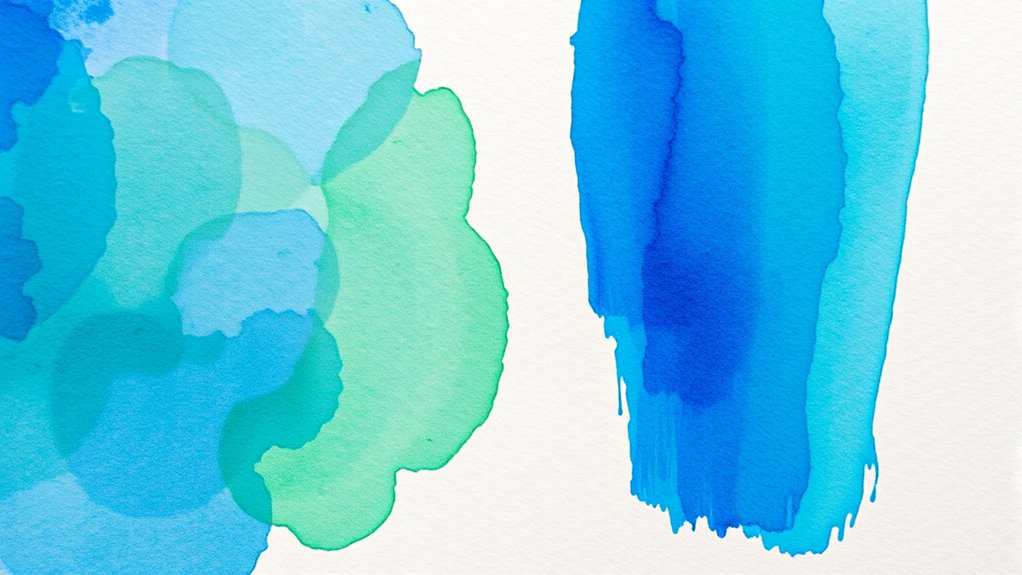

To master watercolor, understand the difference between wet-on-wet and wet-on-dry techniques. Wet-on-wet involves applying paint to damp paper, allowing colors to blend smoothly for soft backgrounds and atmospheric effects. Wet-on-dry uses dry paper for crisp edges and detailed work. Combining both methods gives you more control and creative options. As you explore these techniques further, you’ll discover how each influences the mood and depth of your artwork.
Key Takeaways
- Wet-on-wet allows smooth blending and atmospheric effects, ideal for backgrounds and dreamy scenes.
- Wet-on-dry produces sharp edges, perfect for detailed work and precise lines.
- Combining both techniques enhances complexity, with wet-on-wet for washes and wet-on-dry for details.
- Technique choice depends on desired effects, control, and the specific stage of the painting process.
- Mastery involves understanding brush pressure, timing, and paper interaction to achieve desired results.
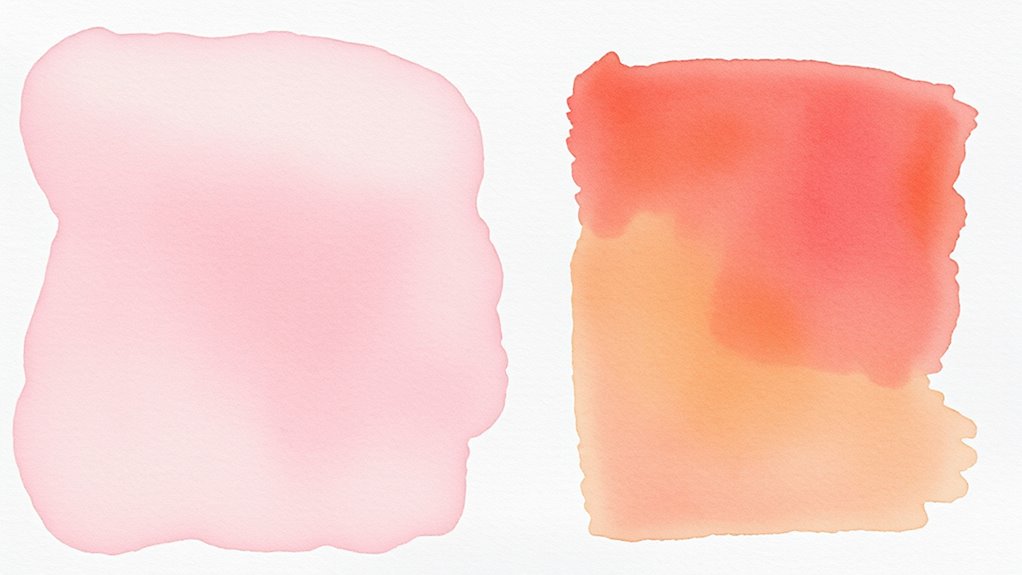
Are you ready to plunge into the world of watercolor painting? If so, understanding the differences between wet-on-wet and wet-on-dry techniques is essential to developing your skills and achieving the effects you want. These methods influence how colors blend, how sharp or soft your edges appear, and the overall mood of your artwork. Starting with wet-on-wet, you’ll discover an approach that allows for seamless color blending. When your paper is still damp, you can drop in pigments, and they will naturally flow into each other, creating smooth transitions and soft, atmospheric effects. This technique is perfect for backgrounds, skies, or any scene where a dreamy, fluid look is desired. To master it, you need to control your brush techniques carefully—holding the brush lightly for gentle washes or pressing more firmly for more defined strokes. You’ll also want to work quickly, as the paint spreads easily on wet surfaces, giving you a lot of room for experimentation with color blending. Additionally, understanding the fabric of the paper can significantly impact how the paint interacts with your surface, especially when using wet-on-wet techniques.
In contrast, wet-on-dry involves applying wet paint onto completely dry paper. This method results in sharper, more controlled edges, making it ideal for detailed work or areas where you want clean separation between colors. When you use wet-on-dry, your brush techniques become vital because you can create precise lines and intricate details without the colors bleeding into each other. It also allows you to layer colors more effectively—each layer remains distinct until you decide to blend them later. This approach is especially useful for adding highlights, fine lines, or detailed textures. Since the paper is dry, your brushstrokes stay crisp, and your color mixing can be more deliberate, giving you better control over the final appearance.
Both techniques have their advantages and can be combined to produce complex, dynamic paintings. For example, you might start with a wet-on-wet background to establish a soft atmosphere and then switch to wet-on-dry to add detailed foreground elements. As you experiment, pay attention to your brush techniques—how you load your brush, the pressure you apply, and the direction of your strokes—since these are key to mastering each method. Whether you’re blending colors smoothly or creating sharp edges, understanding when and how to use wet-on-wet versus wet-on-dry will elevate your watercolor skills. With practice, you’ll develop a keen sense of which technique best suits your artistic vision, giving your paintings depth, clarity, and a professional finish.
As an affiliate, we earn on qualifying purchases.
Frequently Asked Questions
Which Technique Is Better for Beginners, Wet-On-Wet or Wet-On-Dry?
You should start with wet-on-dry because it’s easier for beginners to control brush strokes and manage color blending. This technique helps you build confidence as you learn to control water and pigment, avoiding unwanted mixing. Wet-on-wet can be tricky initially, leading to unpredictable blends. Mastering wet-on-dry first gives you a solid foundation, making it easier to experiment with wet-on-wet later and achieve smoother color blending.
Can I Combine Wet-On-Wet and Wet-On-Dry in One Painting?
You can absolutely combine wet-on-wet and wet-on-dry in one painting—it’s like having a superpower! This blending technique lets you create stunning textures and smooth shifts. Use wet-on-wet for dreamy backgrounds and wet-on-dry for sharp details. Layering methods help you build depth and complexity. Don’t be afraid to mix these approaches; it’s the secret to dynamic, vibrant watercolor art that truly pops!
How Does Paper Type Affect Wet-On-Wet and Wet-On-Dry Techniques?
Your paper type greatly impacts your wet-on-wet and wet-on-dry techniques. With smooth, hot-pressed paper, paint absorbs quickly, making blending seamless in wet-on-wet work. Conversely, rough or cold-pressed paper has a textured surface that slows absorption, giving you more control and detail with wet-on-dry. The paper’s texture influences how paint interacts, so choose your paper based on the technique and effect you want to achieve.
What Brushes Are Best Suited for Each Watercolor Technique?
For wet-on-wet techniques, you want soft, round brushes like sable or synthetic mop brushes in larger sizes (6-12) to spread paint smoothly. For wet-on-dry, use detail-oriented brushes such as pointed rounds or flat brushes in smaller sizes (0-8) to create sharp edges and controlled strokes. Choose your brush types and sizes based on the effect you want, ensuring precision and fluidity in your watercolor work.
How Do I Control Color Bleeding in Wet-On-Wet Painting?
Did you know that 85% of artists find control over color blending improves considerably with proper paint saturation? To control color bleeding in wet-on-wet, keep your paint less saturated and work quickly. Use a damp brush to gently lift excess paint or blot areas to prevent unwanted blending. Practicing these techniques helps you master control over color diffusion, making your watercolor paintings more precise and vibrant.
Conclusion
Mastering wet-on-wet and wet-on-dry techniques open up endless creative possibilities in watercolor. Did you know that artists who regularly practice these methods report a 60% increase in their confidence and control over their work? By understanding when to use each approach, you can achieve stunning effects and bring your visions to life. So, keep experimenting and refining your skills—your artistic journey is just getting started, and every brushstroke gets you closer to mastery.