When working with jewelry wire, choosing the right gauge is key—thinner gauges (like 24/26) are great for detailed wraps, while thicker gauges (16/18) add strength to frameworks. Use proper tools for wrapping and securing findings like clasps and jump rings to guarantee durability. Always handle wire safely, wearing eye protection and gloves when needed. Keep experimenting with gauges and techniques, and if you continue exploring, you’ll master creating beautiful and sturdy jewelry pieces.
Key Takeaways
- Choose appropriate wire gauges (16-26) based on jewelry design for flexibility and durability.
- Use proper tools like wire cutters, pliers, and mandrels to ensure safe and precise wrapping.
- Select wire types (copper, sterling silver, gold-filled) considering safety, appearance, and project requirements.
- Incorporate findings (bails, jump rings, clasps) suitable for the wire gauge and design complexity.
- Follow safety protocols, including eye protection and working slowly, to prevent injuries during wire wrapping.
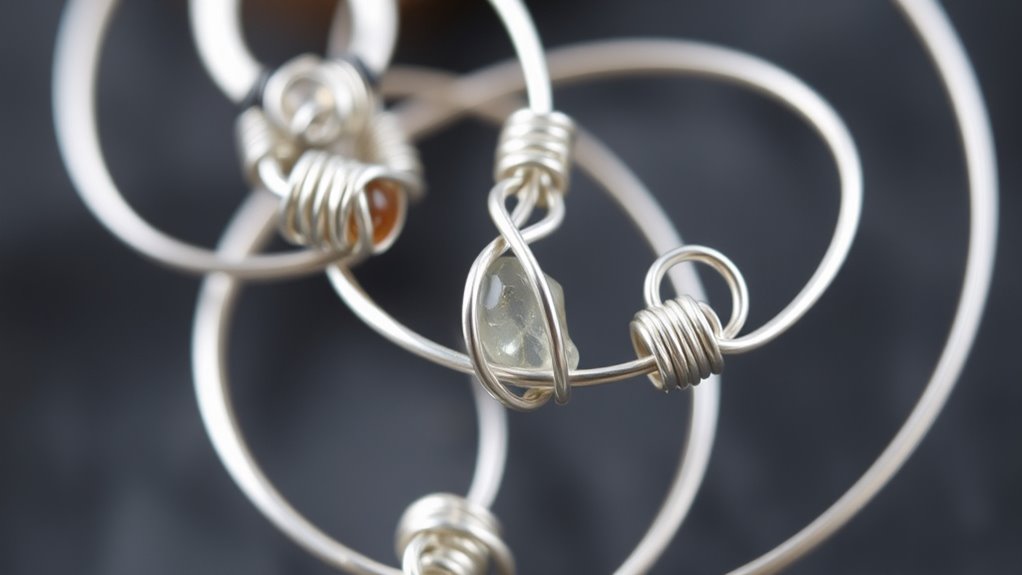
Ever wondered how skilled artisans create intricate jewelry designs using just wire? The secret lies in understanding the different metal types, their properties, and how to work with them safely. When you’re starting out, choosing the right metal types is essential. Copper, sterling silver, gold-filled, and aluminum are popular options, each offering unique qualities. Copper is affordable and easy to shape, but it can tarnish quickly and may cause skin reactions in some people. Sterling silver has a classic look, is durable, and less likely to cause allergies, but it requires polishing and proper care. Gold-filled wire provides a luxurious appearance without the high cost of solid gold, and aluminum is lightweight and hypoallergenic, ideal for sensitive skin. Knowing these metal types helps you select the best material for your project and guarantees your jewelry is both beautiful and safe to wear. Additionally, understanding metal properties can help you choose the most suitable wire for specific designs and applications.
Handling wire safely is just as important as choosing the right metal. Always wear eye protection when cutting or manipulating wire to prevent injuries from sharp ends or flying debris. Use proper tools like wire cutters, pliers, and mandrels designed specifically for jewelry-making, as these help you work more accurately and reduce the risk of accidents. When working with metals, make sure to work in a well-ventilated area, especially if you’re melting or soldering, as fumes from certain metals and flux can be harmful over time. It’s also wise to wear gloves when handling metals that may cause skin irritation, such as copper or nickel, and to wash your hands thoroughly afterward. Keep your workspace clean and organized to avoid accidental cuts or mishandling of sharp wire ends. Remember, safety tips aren’t just about protecting yourself during the process—they also help preserve your tools and materials, guaranteeing your jewelry projects turn out polished and professional.
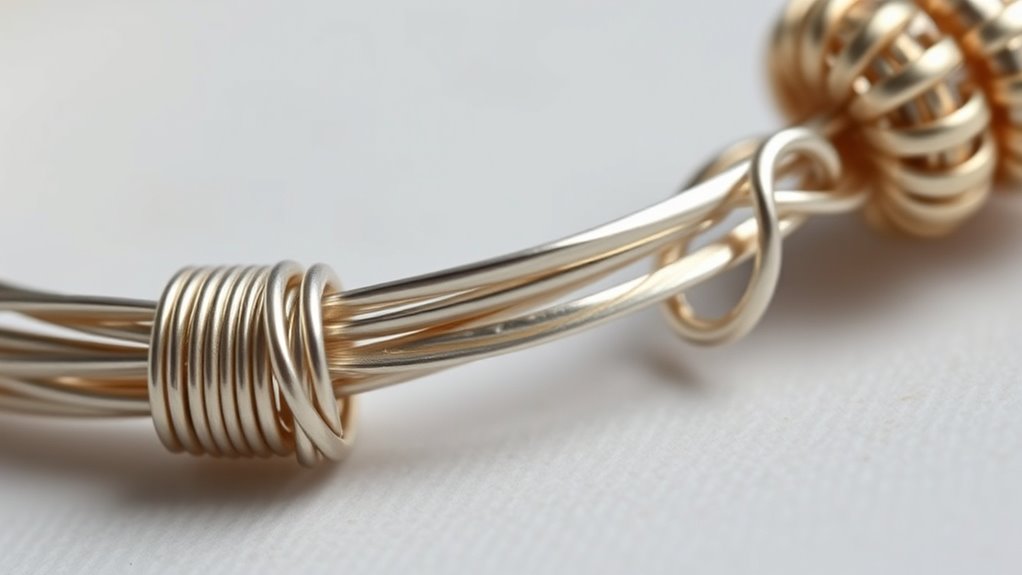
Another essential safety tip is to be mindful of the wire gauges you’re using. Thinner gauges (like 24 or 26 gauge) are more delicate and easier to manipulate for detailed work, but they can be more prone to breaking if not handled carefully. Thicker gauges (such as 16 or 18 gauge) are sturdier and better suited for structural elements like clasps or frameworks. Always confirm you’re using the right gauge for your specific design to prevent breakage or injury. When wrapping or shaping wire, work slowly and steadily, avoiding excessive force that could cause the wire to snap or fly off unexpectedly. By understanding the different metal types, practicing safety tips, and choosing appropriate gauges, you set yourself up for successful jewelry projects that are both beautiful and safe to wear. With attention to these details, you’ll develop your skills and create stunning pieces that showcase your craftsmanship.

FIVEIZERO Stainless Steel Wire for Jewelry Making,Include 18/20/22/24/26/28 Gauge 304 Stainless Steel Beading Wire Thin Metal Craft Wire for Necklace,Bead Stringing,DIY Jewelry,Floral and Home Crafts
1. Premium 304 Stainless Steel Wire: Made of high-quality 304 stainless steel wire for jewelry making, this wire…
As an affiliate, we earn on qualifying purchases.
As an affiliate, we earn on qualifying purchases.
Frequently Asked Questions
What Tools Are Essential for Wire Jewelry Making?
You need essential tools like pliers, wire cutters, and a mandrel to shape your jewelry. To maintain wire tension, use smooth, rounded nose pliers for secure bends. Keep your workspace organized with storage solutions like small containers or trays to prevent tangles and lost pieces. A jeweler’s bench pin and a ruler help with precise measurements. These tools guarantee your wire work stays neat, efficient, and professional-looking.
How Do I Choose the Right Wire Gauge for My Project?
Did you know that most jewelry wire gauges range from 10 to 24? When selecting wire thickness, understanding gauge standards helps you choose the right gauge for your project. For sturdy components like clasps, go for thicker wire, while delicate wraps need thinner gauges. Always consider the jewelry’s design and function, and test different gauges if unsure — your project will thank you for choosing the perfect wire!
Can I Reuse or Recycle Wire Findings?
Yes, you can recycle wire findings and reuse jewelry components. Recycling wire findings involves cleaning them thoroughly to remove any tarnish or residue, then shaping or repurposing them for new projects. Reusable jewelry components save you money and reduce waste. Just make certain the findings are still sturdy and undamaged before incorporating them into your designs. With proper cleaning and care, recycling wire findings makes your jewelry making more sustainable and eco-friendly.
What Safety Precautions Should I Take When Working With Wire?
Think of safety as your trusty shield in your jewelry-making journey. Always wear safety eyewear to protect your eyes from flying wire fragments and guarantee proper ventilation to avoid inhaling fumes or dust. Keep your workspace tidy, handle sharp tools carefully, and avoid rushing. By taking these precautions, you create a safe environment where your creativity can flourish without unnecessary risks.
How Do I Prevent Wire From Kinking or Breaking?
To prevent wire from kinking or breaking, use gentle wire bending techniques, avoiding sharp angles that stress the material. Opt for coated wires, like nylon or rubber-coated options, which add flexibility and reduce damage. Use appropriate tools, like round-nose pliers, and work slowly to maintain control. Regularly check your wire for weak spots, and avoid over-tightening wraps to keep your jewelry sturdy and intact.

YQANDL 2-in-1 Jewelry Pliers & Wire Looping Tool, High-Carbon Steel Bail Making Pliers with 2-9mm Adjustable Jaws, Professional Hand Wire Wrapping Jewelry Making Supplies
1. MULTI-FUNCTION JEWELRY PLIERS: 2-in-1 bail making & wire looping pliers with 2-9mm adjustable stepped jaws, designed to…
As an affiliate, we earn on qualifying purchases.
As an affiliate, we earn on qualifying purchases.
Conclusion
Just like a skilled artist shapes their masterpiece, your wire work transforms raw materials into stunning jewelry. Remember, every wrap and gauge choice reflects your unique vision—an echo of the ancient artisans whose craft has endured through ages. Embrace each bend and twist as a step toward mastery, knowing that your creations carry the timeless spirit of craftsmanship. In this dance of wire and design, you’re weaving your own story into the fabric of jewelry history.

Csdtylh 210Pcs Pendant Trays Kit, Bezel Pendant Trays Charms Bulk with Glass Cabochon and Necklace Cords Set for Homemade Necklaces, Jewelry Making, DIY Crafts, Resin Art and Paint Pour Skins
Package Include: The pendant trays comes with everything you will need. Each pendant trays kit include 70 pcs…
As an affiliate, we earn on qualifying purchases.
As an affiliate, we earn on qualifying purchases.

Adabele 5 Feet Authentic Sterling Silver Jewelry Wire Dead Soft Round Beading Wire (0.4mm/26 Gauge) Hypoallergenic Nickel Free for DIY Craft Jewelry Making SS281-0.4
Material: real solid 925 sterling silver; sterling silver is hypoallergenic, nickel free and lead free, a good choice…
As an affiliate, we earn on qualifying purchases.
As an affiliate, we earn on qualifying purchases.