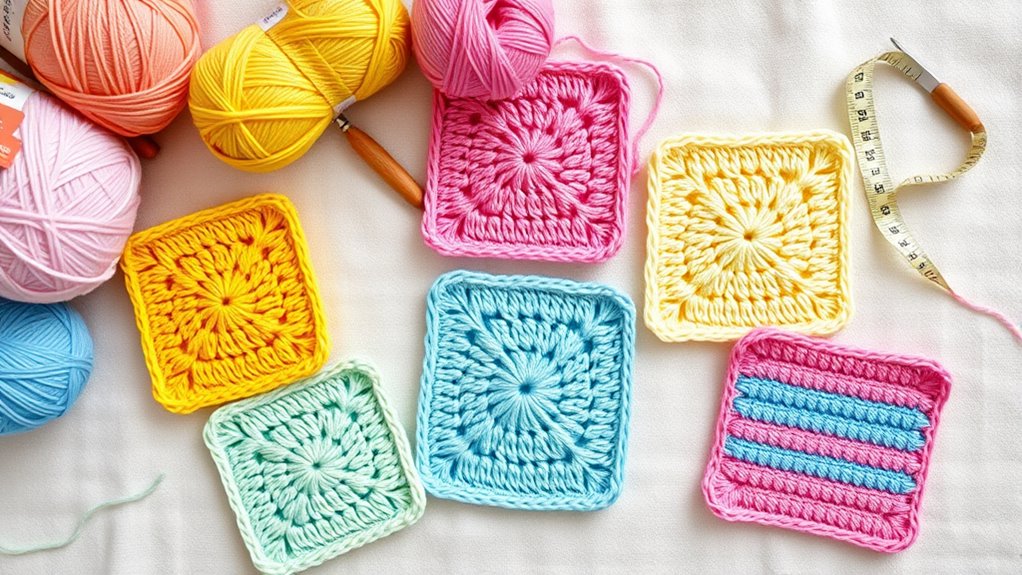

If you’re starting out with crochet, try beginner-friendly patterns like simple scarves, dishcloths, or small blankets that use basic stitches like single and half-double crochet. Repetition and straightforward designs help build your confidence while letting you practice stitch consistency. Using soft, forgiving yarns makes your projects look polished. Keep experimenting with stitch variations, and you’ll quickly develop your skills. Stay with us to discover more easy ideas that boost your crochet journey even further.
Key Takeaways
- Choose simple, repetitive stitch patterns like single or half-double crochet for easy memorization.
- Use medium-weight, forgiving yarns such as acrylic or cotton blends to ensure smooth stitches.
- Incorporate basic shapes like squares, rectangles, or circles to create versatile beginner-friendly projects.
- Experiment with stitch variations gradually to add texture without complicating the pattern.
- Opt for small, manageable projects like dishcloths, coasters, or scarves to build confidence and skill.

Are you searching for fresh crochet pattern ideas to inspire your next project? If so, you’re in the right place. As a beginner, choosing the right yarn and mastering simple stitch variations can make all the difference in creating satisfying projects that boost your confidence. When it comes to yarn selection, opt for medium-weight, soft yarns like acrylic or cotton blends. These fibers are forgiving, easy to work with, and produce clean, even stitches. Avoid thin or textured yarns until you get comfortable with basic techniques. Picking the right yarn not only makes your work easier but also guarantees your finished piece looks polished and professional, encouraging you to keep exploring new patterns.
Once you’ve selected your yarn, focus on stitch variations that are beginner-friendly yet versatile. The classic single crochet and half-double crochet stitches are ideal starting points—they’re simple to learn, create dense fabric, and give you a solid foundation. As you become more comfortable, incorporate basic stitch variations like the double crochet or the treble crochet to add texture and interest to your projects. These stitches are slightly taller, allowing you to work up patterns quickly and see progress fast. Use stitch variations to add visual interest to simple shapes, such as scarves, dishcloths, or small coasters. Playing with different stitch techniques can also help you understand tension and gauge, which are essential for creating consistent, professional-looking projects.
Many beginner-friendly patterns rely on repetitive stitch sequences, making it easier to memorize and develop muscle memory. For example, a simple scarf pattern might involve alternating rows of single crochet and half-double crochet stitches, creating a subtle texture that’s easy to follow. As you gain confidence, experiment by combining stitch variations within the same project. This not only elevates your work but also helps you learn how different stitches interact and influence the overall look and feel of your piece. Remember, consistency is key, so take your time with each stitch, and don’t hesitate to undo and redo if something doesn’t look quite right.
Frequently Asked Questions
What Types of Yarn Are Best for Beginner Crochet Projects?
For beginner crochet projects, you should choose soft yarns like acrylic or wool blends, which are easy to work with and gentle on your hands. Budget-friendly options are widely available and come in various colors and textures, making them perfect for practice. These yarns help you learn stitches comfortably without frustration, ensuring you enjoy your first projects while building confidence. Look for medium weight yarns, such as worsted weight, for the best experience.
How Do I Fix Common Mistakes in Beginner Crochet?
Fixing mistakes in your crochet might feel like trying to solve a giant puzzle, but don’t panic! To fix tension issues, gently unravel the stitches and try again, keeping your tension even. For missed stitches, carefully unpick those few rows and redo them, ensuring you don’t distort your work. Patience is key—each correction makes you a better crocheter, so embrace the learning journey with confidence!
What Tools Do I Need to Start Crocheting?
You need a few essential tools to start crocheting. First, pick a crochet hook size suitable for beginners, typically a 5.5mm or H-8, which works well for most yarns. Then, choose yarn based on its weight classification—like worsted or medium weight yarn—because it’s easier to handle. Also, grab scissors, a tapestry needle, and stitch markers to help your project. These tools make your crochet journey smooth and enjoyable.
How Long Does It Typically Take to Complete a Beginner Project?
It usually takes about a few hours to a weekend to complete a beginner project, depending on your project timelines and your skill development. As you practice, you’ll notice your speed improves, making future projects quicker and easier. Don’t rush—focus on enjoying the process and learning new stitches. With patience, you’ll see steady progress, and completing your first crochet project will boost your confidence and inspire you to try more complex patterns.
Are There Any Online Resources for Learning Basic Crochet Techniques?
You can’t beat the internet for learning crochet basics. Video tutorials are a treasure trove, guiding you step-by-step through techniques like chaining and single crochet. Join crochet communities online—they’re great for advice, encouragement, and sharing your progress. These resources are a lifesaver, helping you pick up skills faster and stay motivated. Jump in, ask questions, and soon you’ll be creating beautiful projects with confidence!
Conclusion
Whether you’re just starting out or looking for quick projects, these 24 beginner-friendly crochet patterns are perfect for building confidence. Did you know that over 60% of new crafters find that simple, manageable projects help them stay motivated? So grab your hook, choose a pattern, and enjoy the process. With patience and practice, you’ll be amazed at what you can create—happy crocheting!