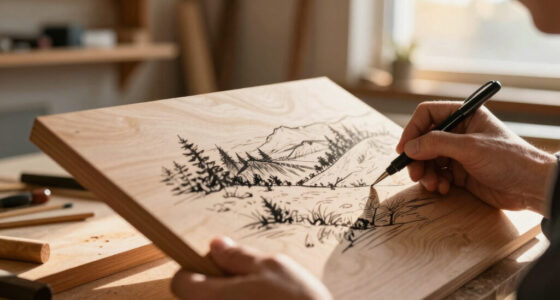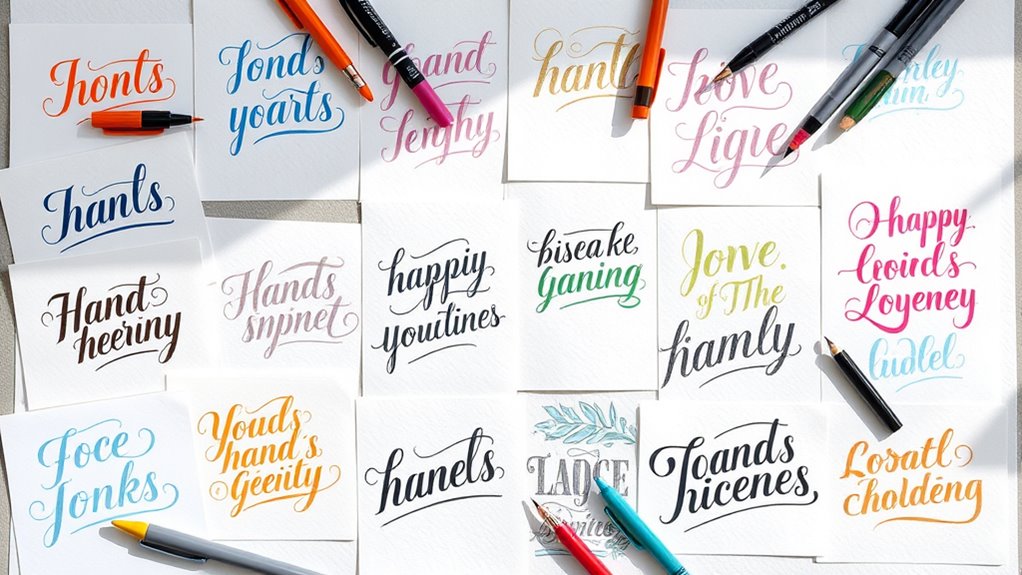

Explore a variety of calligraphy and hand lettering projects to boost your skills, such as creating wall art, designing greeting cards, or illustrating inspirational quotes. Experiment with different lettering techniques, incorporate decorative elements, and play with layouts to develop your personal style. Practice lettering on journals or scrapbooks, and share your work on social media for feedback. Keep experimenting and refining—more ideas await if you continue exploring creative projects!

Get business pricing on tools and workshop supplies
- Business-only prices and quantity discounts
- Tax-exempt purchasing
- Multiple users, one account, clear invoices
Key Takeaways
- Create personalized wall art featuring inspirational quotes with decorative lettering and embellishments.
- Design custom greeting cards using varied lettering styles and layout techniques for special occasions.
- Develop quote journals or scrapbooks to practice different lettering methods and track progress over time.
- Craft floral or illustrative borders around quotes to enhance visual appeal and develop composition skills.
- Make decorative banners or banners for events, combining layered lettering and framing for impactful displays.
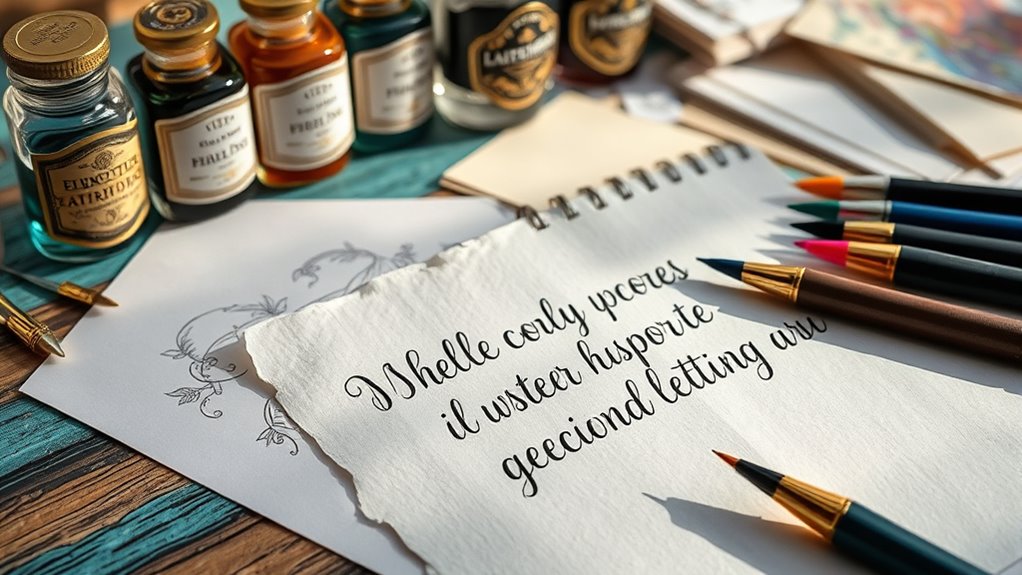
Are you looking for fresh inspiration to elevate your calligraphy and hand lettering skills? If so, exploring new projects can be just what you need to push your creativity further. One of the most engaging ways to grow is by experimenting with different lettering techniques. These techniques allow you to develop your style, add variety to your work, and understand the nuances of each stroke and letterform. For example, try practicing brush lettering with thick and thin strokes, or explore faux calligraphy to mimic traditional styles easily. Incorporate shading, embellishments, and decorative elements to make your work stand out. When you’re working with inspirational quotes, you get the perfect opportunity to combine meaningful words with creative lettering styles. Choose quotes that resonate with you or inspire your audience, and then focus on highlighting key words using contrasting styles or colors. This not only enhances the visual impact but also deepens your connection to the message.
Creating quote-based projects lets you experiment with layout and composition as well. Play with different alignments, spacing, and framing to see what best complements the sentiment of the words. You might try wrapping quotes around illustrations, integrating floral borders, or using banners and banners to frame your text. These approaches help you develop a sense of balance and hierarchy in your lettering projects. Using inspirational quotes is also a fantastic way to practice consistency and precision, as you’ll want each letter to be clear and expressive. This focus on readability combined with artistic flair sharpens your overall calligraphy skills. Additionally, exploring various styles can help you understand the different effects achieved through lettering techniques and how they influence the overall mood of your work.
Experiment with layout, framing, and spacing to enhance your quote-based lettering projects.
Furthermore, turning your favorite quotes into wall art or greeting cards can be especially rewarding. Creating personalized pieces for friends or family lets you share your talent while practicing different styles and layouts. You might also consider making a quote journal or scrapbook, where you collect and decorate quotes that inspire you. This ongoing project helps you track your progress and experiment with new techniques without pressure. Furthermore, sharing these projects on social media or in local art fairs can boost your confidence and connect you with other lettering enthusiasts.
Ultimately, immersing yourself in projects centered around inspirational quotes and diverse lettering techniques keeps your practice fresh and exciting. It challenges you to refine your skills, discover new styles, and enjoy the process of turning words into art. Whether you’re creating a motivational wall piece or designing a heartfelt card, each project becomes a stepping stone toward becoming a more confident and versatile calligrapher or hand letterer.
brush lettering set for beginners
As an affiliate, we earn on qualifying purchases.
As an affiliate, we earn on qualifying purchases.
Frequently Asked Questions
What Are the Best Tools for Beginners in Calligraphy?
You’ll want to start with basic tools like ink brushes and lettering stencils. Ink brushes are great for practicing strokes and creating varied line thicknesses, making your lettering more dynamic. Lettering stencils help you learn consistent shapes and letter forms, building confidence early on. These tools are affordable, easy to use, and perfect for beginners to explore different styles while developing your skills.
How Can I Improve My Hand Lettering Skills Quickly?
To improve your hand lettering skills quickly, practice consistency daily and focus on developing muscle memory. Explore tutorials online to learn new techniques and styles, and try replicating different letterforms to expand your skills. Use quality tools suited for beginners, like fine-tipped pens and smooth paper. Keep challenging yourself with new projects, and don’t get discouraged by mistakes—they’re part of the learning process.
Are There Specific Paper Types Recommended for Calligraphy Projects?
Think of your paper as the stage for your ink’s performance. For smooth, graceful strokes, choose paper with a slight texture, like cold-pressed watercolor paper, which helps control ink absorption. Avoid rough or highly textured paper that can cause bleeding or feathering. Opt for quality, bleed-proof paper designed for calligraphy, ensuring your ink flows seamlessly, and your lettering remains crisp and vibrant—your perfect canvas for artistic expression.
How Do I Choose the Right Style for My Project?
To choose the right style for your project, start by considering your overall theme and mood. Think about how different font styles match your project’s tone—elegant scripts for formal events or playful lettering for casual designs. Experiment with various styles to see what resonates most with your vision. Matching your chosen style to your project theme helps create a cohesive and impactful final piece.
Can I Combine Digital and Traditional Calligraphy Techniques?
Absolutely, you can combine digital and traditional calligraphy techniques! Imagine a world where digital integration transforms your art into a stunning hybrid masterpiece. You’ll blend the organic feel of hand lettering with the precision of digital tools, creating endless possibilities. This fusion lets you experiment wildly, adding effects or edits effortlessly. Embrace hybrid techniques and push your creative boundaries, making your work uniquely yours and visually breathtaking.
Conclusion
Don’t let the fear of lacking artistic talent hold you back. With these ideas, you’ll find that anyone can create beautiful calligraphy and hand lettering—it’s all about practice and imagination. Picture yourself filling a blank card with elegant words or transforming a simple journal page into a stunning masterpiece. So grab your pens, trust your instincts, and enjoy the process. Your unique style is waiting to shine through these creative projects!
Fall yard work Picks
leaf blowers
As an affiliate, we earn on qualifying purchases.