TL;DR

Get business pricing on tools and workshop supplies
- Business-only prices and quantity discounts
- Tax-exempt purchasing
- Multiple users, one account, clear invoices
A maker is using Google’s Gemini to help design and 3D-print components for a Fallout-inspired Halloween prop with his son. The AI generated OpenSCAD code that helped produce usable models after revisions, but it also ignored some design instructions and made errors; the project is still unfinished.
A maker is using Google’s Gemini to help design and 3D-print components for a Fallout-inspired Halloween prop he is building with his son, reporting that AI-generated OpenSCAD code helped him move from an idea to workable prototypes after several rounds of revisions. The project remains in progress, and the maker says the generated designs needed correction and did not resolve the broader challenge of fitting the parts into a cohesive assembly.
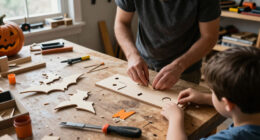
The project began after the maker’s son chose a Fallout 4-themed costume. A full DIY power-armor build was judged impractical on the available schedule, so the plan shifted toward a character costume and a homemade prop. A delayed motorcycle chest protector also changed the costume plan; the maker said foam and craft materials may be used instead. For headwear, he expects a Milwaukee hard hat and a flashlight attached with duct tape to create a scavenged appearance.
The maker focused on a prop that could make the costume stand out. He used Gemini to generate code for a truncated-cone component with a mounting ring, settling on a design made from two connected truncated cones. The code could be adjusted through parameters, letting him change dimensions without building the shape entirely from scratch. He said a print made with wet filament was good enough to inform the next version, which is planned to be larger and include holes for attaching it to a wooden box.
AI output required substantial iteration. The maker said Gemini ignored instructions about keeping side arms flush and limiting pill-shaped holes to the main face, and added chamfers he did not want. He later changed code parameters himself, including the number of mounting-plate holes and the size of slots in vertical columns. He is also printing a low-density version of another part and may move some designs into Fusion or similar software for more direct control.
AI as a Workshop Design Aid
The account offers a practical example of AI being used not to produce a finished object independently, but to help a maker cross the gap between a rough idea and a testable design. Parametric code gave the maker a way to alter dimensions and inspect geometry before committing to a final print. For people who find it difficult to model unfamiliar shapes, that can make early experimentation more accessible.
The limits are equally relevant. The maker still had to identify incorrect features, revise the code, test prints and plan how separate parts would fit together. The AI did not settle the design or turn the prop into a finished product. Its value in this project was helping with specific modeling steps, while human judgment and further fabrication remained necessary.
beginner FDM 3D printer for cosplay props
As an affiliate, we earn on qualifying purchases.
As an affiliate, we earn on qualifying purchases.
From Costume Idea to Printed Parts
The maker says he is comfortable modeling objects he has made before, but finds new designs harder when the intended shape is not fully worked out. That challenge is central to this project: the prop’s design still exists largely in his imagination, and translating it into connected, buildable components is more difficult than creating a single part.
He considered having AI break down a fantasy tool shown on game-related wikis into printable subassemblies, but found the resulting breakdown unhelpful. It did, however, support an earlier idea to use mounting pins for glued assembly. The maker is instead leaning toward a more flexible prop design—possibly a synth, ghoul or mutant detector—rather than trying to reproduce a specific in-game object. He says his son can decide what to call it once they build it.
“The AI made a lot of mistakes, and I’m also learning how to better constrain dimensions in my prompts.”
— The maker, in the ToolGuyd report
The Prop Is Still a Prototype
The final design, name and function of the prop have not been settled. The maker says the current approach is to attach individually designed parts to a small wooden box, possibly using screws, glue or other adhesives, but he has not described a completed assembly. It is also unclear whether the current prints will fit the final build or whether he will remodel parts in other software.
The report does not give a final cost, a completed print, or a confirmed Halloween deadline for the finished prop. The maker said time was running short and that he hoped to make a rough first version for the holiday, then refine it if time allowed. That outcome remains uncertain.
A Rough Build Before Halloween
The immediate plan is to test the low-density print and use the results to refine the prop’s dimensions and assembly. The maker expects to attach components to a small wooden box and may add external wires, following his son’s preference. Some parts could be redesigned manually in Fusion or similar software, particularly if more control over dimensions and how the pieces fit together is needed.
For now, the target is a rough first-version prop that can be built in time for Halloween. The maker says he will consider refining it afterward, but has not confirmed what the finished version will include or whether the current design will be retained.
Key Questions
What is the maker building?
He is working with his son on a Fallout-inspired Halloween costume and prop. The prop may become a fictional detector, but its final name and design are undecided.
How is Gemini being used?
The maker used Gemini to generate OpenSCAD code for printable components, including a pair of connected truncated cones. He adjusted code parameters and plans to test further prints.
Did the AI produce a finished design?
No. The maker said the output contained errors, including features that did not follow his instructions. He had to iterate, correct parameters and consider other modeling software.
Is the prop finished?
No. The project is still at the prototype stage. The maker hopes to build a rough version in time for Halloween, but the final assembly and whether it will be completed on schedule remain unclear.
Source: rss
Fall Picks
fall essentials
As an affiliate, we earn on qualifying purchases.