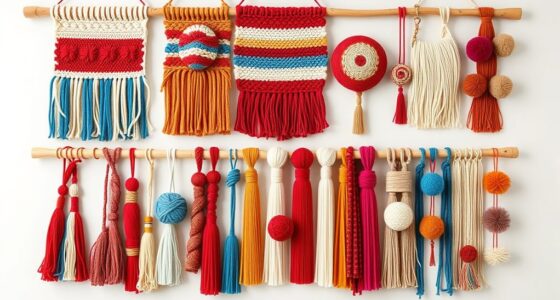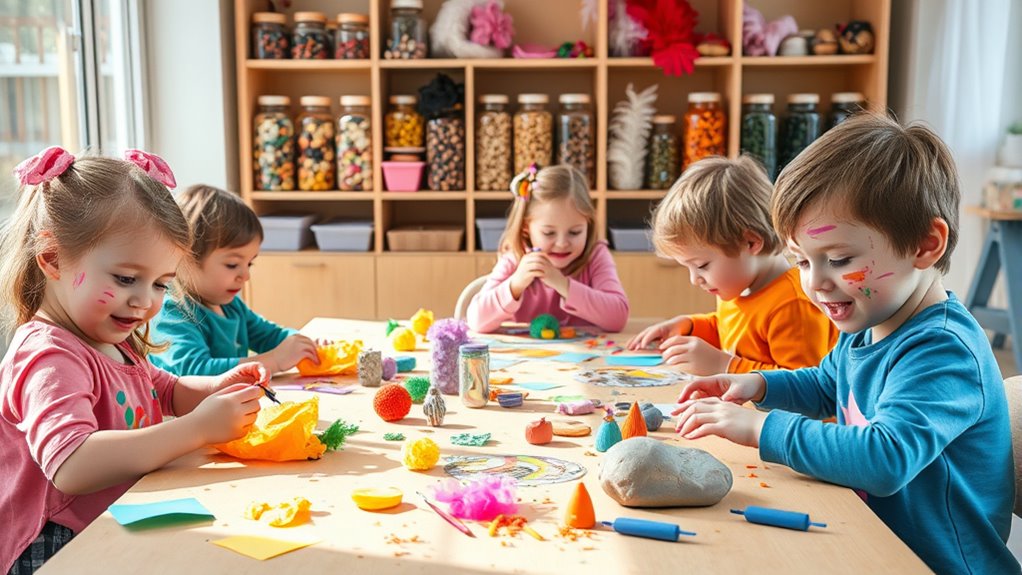

You can create fun, imaginative kids’ crafts using just everyday household and natural items—no fancy supplies needed. Think upcycled cardboard masks, leaf art, painted rocks, pinecone animals, or homemade bird feeders from recycled bottles. Pressed leaves, sticks, and flowers make beautiful decorations, while homemade glue and natural dyes keep projects safe and eco-friendly. If you keep exploring, you’ll discover many simple, budget-friendly ideas to inspire creativity and sustainability in every craft session.
Key Takeaways
- Use recycled household items like cardboard, bottle caps, and containers for creative projects.
- Collect natural materials such as leaves, sticks, and rocks for eco-friendly crafts.
- Utilize simple, safe art supplies like crayons, watercolors, and homemade dyes.
- Focus on activities like collages, leaf rubbings, and nature-inspired decorations.
- Emphasize hands-on, process-driven crafts that require minimal or no fancy supplies.
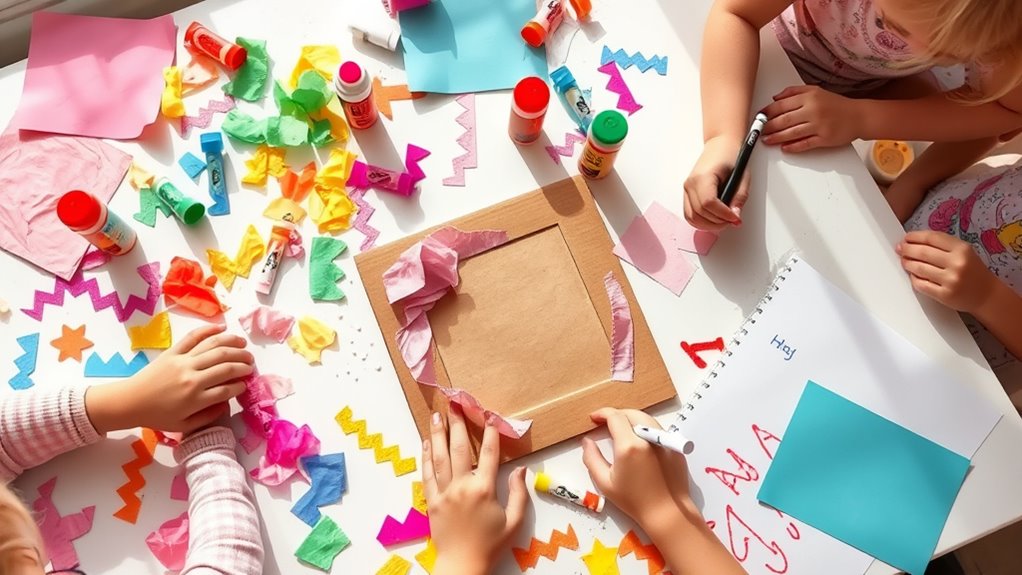
Getting kids involved in crafts doesn’t have to mean buying expensive supplies. Sometimes, the best projects come from what you already have around the house or outside in nature. Using recycled materials is a fantastic way to spark creativity while teaching kids about sustainability. Things like cardboard boxes, empty containers, bottle caps, and scrap paper can become the foundation for endless craft ideas. For instance, cardboard can be transformed into masks, castles, or animals, and all you need is some imagination and a bit of glue or tape. Recycling not only saves money but also encourages kids to see everyday objects in a new light, fostering their creativity and environmental awareness.
Get creative with recycled household items to inspire sustainable, budget-friendly kids’ crafts.
Nature-inspired crafts are another fantastic avenue that requires minimal supplies. Take a walk outside and collect leaves, pinecones, rocks, sticks, or flowers—these natural treasures can be turned into beautiful artwork. Kids love creating with what they’ve found, making sun catchers with leaves pressed onto paper or painting rocks to look like animals or characters. Sticks can become picture frames or fairy wands, and pinecones can be turned into adorable animals or holiday decorations. Not only does this activity connect children with nature, but it also helps them develop an appreciation for the outdoors while keeping craft projects simple and affordable.
To keep things easy, you don’t need fancy paints or glitter. Instead, use what’s available—watercolors, crayons, or even natural dyes made from berries or onion skins. These options are often safer and more eco-friendly, giving kids a chance to experiment with colors and textures without the mess or expense of commercial supplies. For glue, a simple homemade paste made from flour and water works just as well as store-bought glue and is safer for young children. You can also reuse old magazines or newspapers for collage projects, creating vibrant, textured artwork that’s both fun and eco-conscious. Additionally, exploring recycled materials for crafts can inspire kids to think creatively about reusing items in new ways.
The key is to focus on the process rather than perfection. When kids work with recycled materials and nature-inspired items, they learn resourcefulness and develop their fine motor skills through hands-on activities. Plus, these projects can be easily tailored to any age or skill level. Whether it’s creating a collage from magazine cutouts, building a bird feeder from recycled bottles, or making a leaf rubbing masterpiece, these crafts prove that you don’t need fancy supplies to have fun and create meaningful art. With a little imagination and a few natural or recycled items, you can keep your kids happily engaged in creative projects that are both inexpensive and environmentally friendly.
Frequently Asked Questions
Can These Crafts Be Suitable for All Age Groups?
Yes, these crafts can be suitable for all age groups if you consider age appropriateness and skill differentiation. You can adapt the complexity to match different ages, making it fun and challenging for everyone. Younger kids might enjoy simple activities like coloring, while older kids can try more intricate projects. By tailoring the crafts, you guarantee everyone stays engaged and benefits from the creative experience.
How Much Time Do These Craft Projects Typically Take?
The activity duration for these craft projects typically ranges from 15 minutes to an hour, depending on the complexity. Timing estimates vary based on the child’s age and the craft’s difficulty, so you can plan accordingly. For quick fun, choose simpler activities, while more detailed projects may take longer. Keep flexible, and enjoy the process without stressing about precise timing estimates.
Are These Activities Safe for Young Children?
Did you know that 85% of childhood accidents happen during craft activities? You should always guarantee these activities are safe for young children by using non-toxic materials and providing age-appropriate supervision. Keep sharp tools, small parts, and choking hazards out of reach, and choose simple projects suitable for their age. This way, your kids can enjoy creative fun while staying safe and protected.
Can These Crafts Be Easily Cleaned or Reused?
Yes, these crafts are usually easy to clean up and can often be reused. You can choose activities with reusable materials like paper, fabric scraps, or washable paints, making messy cleanup simpler. Encourage your kids to put supplies away after each project, and opt for washable or non-permanent materials to keep things manageable. Reusing supplies not only reduces waste but also makes crafting more convenient and fun for everyone.
What Are Some Ways to Adapt These Ideas for Different Skill Levels?
To gracefully navigate craft difficulty and skill differentiation, you can tailor activities by adjusting complexity levels. For beginners, simplify steps or use larger materials, while encouraging advanced kids to add intricate details or explore new techniques. Providing optional challenges or guiding them through more complex versions helps accommodate various skill levels, making the craft experience enjoyable and inclusive for everyone. This thoughtful approach fosters confidence and creativity across all ages.
Conclusion
Now that you have these creative ideas up your sleeve, you’re all set to keep the kids busy without breaking the bank. Remember, sometimes the best crafts come from simple materials and a little imagination. Don’t be afraid to think outside the box—after all, it’s the little things that often make the biggest splash. So, gather your supplies, get those hands messy, and enjoy the fun. The sky’s the limit when creativity is your guide!