
TL;DR

Get business pricing on tools and workshop supplies
- Business-only prices and quantity discounts
- Tax-exempt purchasing
- Multiple users, one account, clear invoices
In 2018, enthusiasts and historians examined Soviet control rooms, revealing their distinctive vintage design and technological layout. This development offers insights into Cold War-era engineering and aesthetics.
In 2018, a series of exhibitions and documentaries highlighted the vintage aesthetic and engineering of Soviet control rooms, capturing the interest of historians, engineers, and design enthusiasts worldwide. These control rooms, once central to Soviet military and space operations, are now valued for their distinctive design and technological heritage, offering a glimpse into Cold War-era innovation.
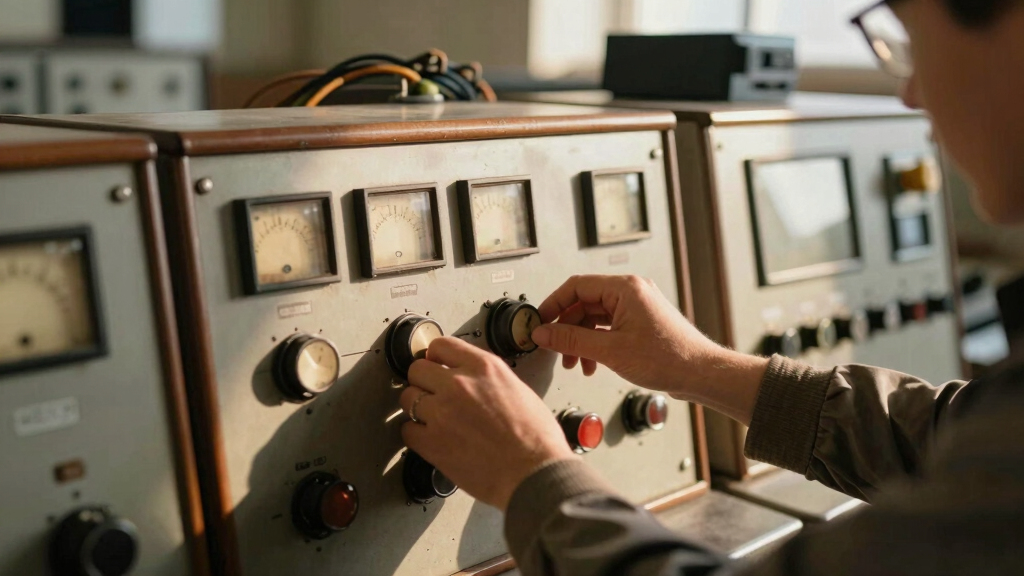
Throughout 2018, museums and private collectors showcased preserved Soviet control rooms, emphasizing their distinctive vintage design characterized by large analog consoles, numerous dials, switches, and monochrome screens. These control rooms served critical functions in managing missile silos, space missions, and military communications during the Cold War.
Experts note that the aesthetic of these control rooms reflects the technological standards of the time, with a focus on robustness and simplicity rather than modern digital interfaces. Many of these rooms have been restored or reconstructed for exhibitions, providing a tangible link to the Soviet Union’s strategic infrastructure.
According to curator Elena Ivanova of the Moscow Museum of Cold War Technology, “These control rooms are not just relics; they are symbols of a technological era that prioritized durability and functionality, which still influence design thinking today.”
Historical and Cultural Impact of Soviet Control Room Design
The renewed focus on Soviet control rooms in 2018 underscores their cultural and technological significance as symbols of Cold War history. They reveal how the USSR approached complex military and space operations with a distinctive aesthetic that combined functionality with a unique industrial style.
Understanding these control rooms helps contextualize Soviet technological ambitions and strategic priorities. They also serve as a reminder of the Cold War’s intense technological competition, influencing current discussions on military and space technology development.
As an affiliate, we earn on qualifying purchases.
Soviet Control Rooms: From Cold War to Modern Exhibitions
During the Cold War, Soviet control rooms were vital hubs for managing missile launches, space missions, and military communications. Many of these facilities were classified, but some have been declassified or preserved for historical purposes. Throughout 2010s, interest grew in documenting and exhibiting these sites, driven by historians and enthusiasts eager to preserve Cold War heritage.
In 2018, several exhibitions across Russia and Europe showcased reconstructed or preserved control rooms, emphasizing their design and technological features. This movement reflects a broader effort to understand and interpret Soviet technological achievements and their aesthetic qualities.
“The Soviet control rooms reflect a unique blend of engineering pragmatism and industrial aesthetic that was central to Cold War strategy.”
— Dr. Alexei Petrov, Cold War historian
Remaining Questions About Preservation and Access
It is not yet clear how many Soviet control rooms remain fully accessible or preserved for public viewing. Some sites are still classified, and others are in private collections or deteriorating. Details about ongoing preservation efforts are limited and vary by location.Future Preservation and Educational Initiatives
Efforts are underway in Russia and internationally to preserve more Soviet control rooms and incorporate them into educational exhibits or virtual tours. Researchers and historians aim to document their technological features comprehensively, but funding and access remain challenges. Expect more exhibitions and digital archives to emerge in the coming years, helping to preserve this Cold War heritage.
Key Questions
Why are Soviet control rooms considered historically significant?
Soviet control rooms are significant because they represent Cold War-era engineering, strategic military planning, and distinctive industrial design, offering insights into Soviet technological ambitions.
Are any Soviet control rooms still operational today?
Most control rooms are no longer operational and have been decommissioned or preserved as historical sites. Their primary current role is educational and commemorative.
How do modern control rooms differ from Soviet-era designs?
Modern control rooms feature digital interfaces, automation, and ergonomic designs, contrasting with the analog, bulky consoles of Soviet control rooms, which prioritized durability and simplicity.
Can the public visit Soviet control rooms today?
Some control rooms are accessible through museums or private collections, but many remain classified or inaccessible due to security reasons. Virtual tours are increasingly being developed.
What is the main challenge in preserving these control rooms?
The main challenges include deterioration over time, limited funding for preservation, and restrictions on access due to security and classification concerns.
Source: hn
Halloween Picks
halloween
As an affiliate, we earn on qualifying purchases.