
TL;DR

Get tools and workshop supplies delivered free — and shop member deals
- Fast, free delivery on millions of items
- Access to Prime Big Deal Days deals on October 6–7
- Prime Video, Amazon Music and more included
A Hunker report shows YouTube creator Yoduvh Essentials remaking an old dining chair with pool noodles, upholstery foam and fabric. The project relies on a sound chair frame and adhesive suited to the foam; the source does not give a cost, completion time or durability assessment.
YouTube creator Yoduvh Essentials used pool noodles, upholstery foam and fabric to remake an old dining chair as a rounded accent seat, according to a Hunker report. The project offers a way to reuse a chair with a sturdy frame, while the material choices—especially the adhesive—affect whether the foam can be attached without damage.
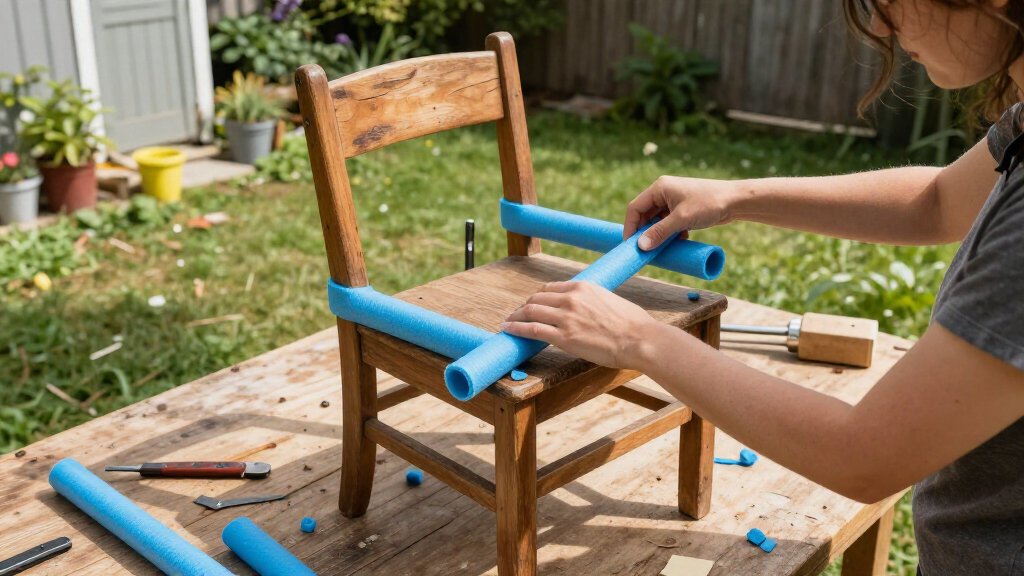
The makeover starts with stripping the chair and checking its frame. The noodles are cut or arranged around sections of a hula hoop to form curved shapes, then secured to the wood with screws. Cardboard can help create the rounded outline. Hunker says a curved iron pipe or flexible tubing made from polyethylene, high-density polyethylene or polypropylene can stand in for the hoop.
For the seat and back, the creator layers upholstery foam to build up a softer, fuller shape. Batting goes over the foam, followed by upholstery fabric. A staple gun secures the covering; screws and washers can be used to form tufting across the upholstered sections. The fabric is then fastened and trimmed, with decorative trim, crystal buttons or small gems offered as optional finishing touches.
Adhesive compatibility is a practical concern. Hunker notes that pool noodles are often made from polyethylene, which can be difficult to bond. It says common Gorilla Glue and cyanoacrylate-based super glue are not recommended for polyethylene, while very hot glue can melt the material. The report points to spray adhesives made for polyethylene foam or a low-temperature glue gun, and advises checking compatibility with both the foam and the surface being joined.
A Second Use for a Sturdy Chair
The project combines furniture reuse with a visible change in shape: a plain dining chair can become a more padded accent piece without replacing its wooden base. That option may appeal to people who have a chair that no longer suits a room but whose frame remains sound. The source presents the makeover as a DIY possibility; it does not provide a price comparison with buying a new chair or a tested estimate of how long the finished piece lasts.
Its practical lesson is that the materials and the condition of the chair matter as much as the decorative result. A weak frame or unsuitable adhesive could undermine the work. The project also calls for tools such as a drill or screwdriver, screws, washers, cutting and measuring tools, and a staple gun, so readers would need to account for those supplies alongside the noodle, foam, batting and fabric.
As an affiliate, we earn on qualifying purchases.
How the Chair Gets Its Curves
Hunker describes a sequence that alters the frame’s outline before adding upholstery. After removing the old covering, the maker attaches curved noodle sections to the wood, then layers foam over the seat and back. The batting and fabric cover those added shapes, giving the chair a more rounded appearance. Decorative trim is optional; it is not needed to build the seat or back.
The report advises inspecting the chair after removing its upholstery. Loose joints or other damage should be repaired before the makeover begins, and the project is better suited to a chair with sound underlying structure. Hunker does not give measurements, a full build plan for a specific chair model, or a detailed account of how each component performs over time.
Durability and Project Costs
The report does not state the chair’s age, the cost of the materials, the time required, or whether the finished chair was tested under regular use. It also does not provide a direct quotation from Yoduvh Essentials, so the material guidance and project description here are attributed to Hunker’s account rather than presented as independently verified testing.
Adhesive performance can depend on the noodle’s exact foam and the material it must bond to. Hunker advises checking product compatibility, but does not name a specific adhesive brand or product for this build. The source also does not describe weight limits or confirm whether the altered chair is intended for everyday seating.
Inspect Before Building
Anyone considering the project can begin by removing the old upholstery and checking for loose joints or frame damage. Repairs should come before adding noodles and foam. Next, identify the noodle material and choose an adhesive labeled for that foam and the surface being attached; test-fit the curved support and plan the upholstery layers before cutting fabric.
The source gives no announced follow-up or further milestone for the creator’s project. For readers, the next step is to assess whether their chair and available tools fit the method, then adapt the listed materials to the frame. The result will depend on the chair’s condition, the fit of its new supports and the way the upholstery is secured.
Key Questions
What materials does the chair makeover use?
The listed materials include pool noodles, upholstery foam, batting and fabric, plus a hula hoop or a flexible substitute for shaping. Screws, washers, a staple gun and cutting tools are used during assembly; decorative trim and gems are optional.
What glue works with pool noodles?
Hunker recommends looking for spray adhesive designed for polyethylene foam or using a low-temperature glue gun. Check the product label for compatibility with the noodle’s foam and the surface it will attach to.
Can any old chair be used?
The report advises checking the chair after removing its upholstery and repairing loose joints or other damage first. The project is intended for a chair with a frame that remains in good condition.
How long does the project take, and what does it cost?
Hunker does not state a project duration or total cost. The amount may depend on the chair, the materials already available and the decorative details chosen.
Source: rss
Halloween Picks
halloween
As an affiliate, we earn on qualifying purchases.