
Before bringing a kiln into your home studio, make certain you have proper ventilation to safely vent fumes and hazardous gases. Use safety gear, place the kiln on a stable, heat-resistant surface, and keep it away from combustibles. Check that your electrical system can handle the load, follow maintenance guidelines, and be aware of safety codes. Proper planning doesn’t just protect your space; it guarantees safe, successful firing—plus, you’ll discover key details if you keep exploring.

Get business pricing on tools and workshop supplies
- Business-only prices and quantity discounts
- Tax-exempt purchasing
- Multiple users, one account, clear invoices
Key Takeaways
- Ensure proper ventilation to safely manage fumes, smoke, and hazardous gases during firing.
- Place the kiln on a stable, heat-resistant surface away from flammable materials.
- Verify your home’s electrical system can support the kiln’s power requirements.
- Implement safety measures, including protective gear, fire extinguishers, and clear safety protocols.
- Research local safety codes and regulations to ensure legal compliance and safe operation.
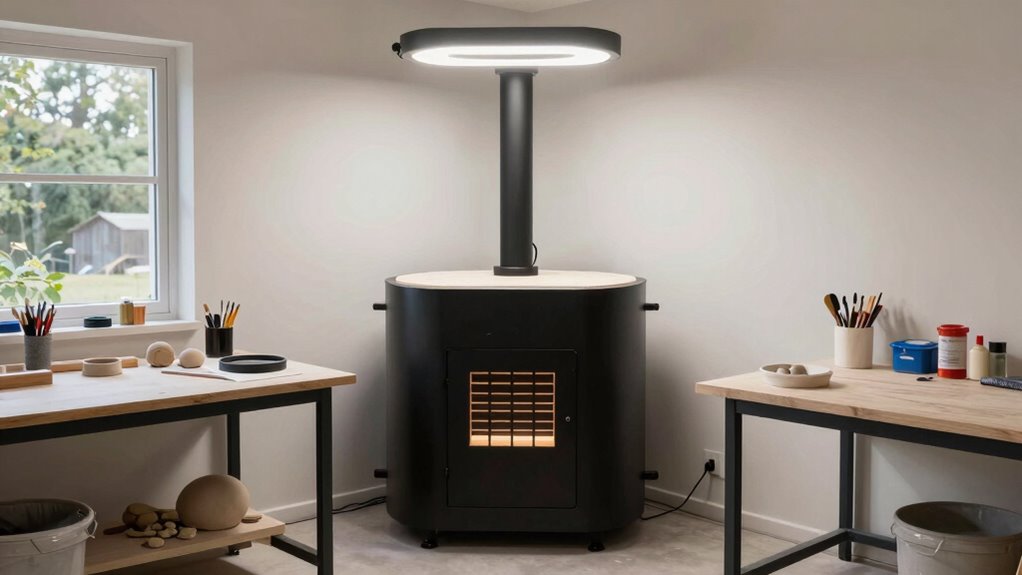
Bringing a kiln into your home studio can expand your creative possibilities, but it’s crucial to understand what’s involved before making the leap. One of the most critical considerations is ventilation requirements. Kilns produce fumes, smoke, and potentially hazardous gases during firing, so proper ventilation isn’t just a safety measure—it’s a necessity. You’ll need to assess your space carefully to guarantee there’s enough airflow to carry fumes outside or through a filtration system. Installing a dedicated vent or exhaust system might be required, especially if you plan to fire at high temperatures regularly. Without adequate ventilation, harmful fumes could accumulate, putting your health at risk and violating local safety codes.
Proper ventilation is essential for safe kiln operation and health protection in your home studio.
Alongside ventilation, safety precautions are paramount. Operating a kiln involves high temperatures that can cause severe burns or fires if not managed correctly. You should invest in safety gear such as heat-resistant gloves, eye protection, and protective clothing. Make sure your kiln is placed on a stable, heat-resistant surface, away from combustible materials. Keep a fire extinguisher nearby, and familiarize yourself with emergency procedures in case of malfunction or fire. Regularly inspecting your kiln for cracks, wear, or electrical issues will help prevent accidents before they happen. Also, ensure your home’s electrical system can handle the kiln’s power demands—an overloaded circuit can lead to shorts or fires.
Another safety aspect involves understanding the kiln’s operation and maintenance. Read the manufacturer’s instructions thoroughly and keep a detailed log of firing cycles and maintenance checks. It’s critical to be aware of the kiln’s temperature controls and safety shut-off features. Properly ventilating your workspace and following safety precautions helps prevent exposure to potentially toxic fumes and reduces fire risks. Additionally, consider your home layout; a dedicated, well-ventilated room with minimal clutter is ideal. Don’t forget to inform household members about kiln safety procedures and establish clear boundaries to keep curious children or pets away from the equipment.
Before bringing a kiln into your home studio, you need to plan carefully. Factor in ventilation requirements to keep the space safe, and always adhere to safety precautions to prevent accidents. Also, researching local safety codes related to home kilns can help you stay compliant and avoid legal issues. By taking these steps seriously, you’ll create a safe environment that allows you to explore your ceramic art without unnecessary risks. Proper planning not only safeguards your health but also ensures your kiln operates efficiently, giving you peace of mind to focus on your craft.
As an affiliate, we earn on qualifying purchases.
Frequently Asked Questions
How Much Does a Typical Home Kiln Cost?
A typical home kiln costs between $500 and $3,000, depending on size and features. You need to take into account fire safety and ventilation requirements, as kilns generate high heat and fumes. Cost considerations also include ongoing expenses like electricity and maintenance. Before purchasing, make sure your space can handle the kiln safely, and always follow safety guidelines to prevent accidents and protect your home.
What Are the Best Ventilation Options for a Home Kiln?
While the glow of your kiln warms your studio, proper ventilation systems keep air quality safe. You should consider installing an exhaust fan or vent hood that directs fumes outdoors, ensuring harmful particles don’t linger. An air filtration system can also improve air quality, especially in small spaces. Combining these options creates a safer environment, letting you focus on your art without worry about hazardous fumes or inadequate airflow.
How Much Space Does a Kiln Require?
A kiln typically needs about 3 to 4 feet of clearance around it for safe operation and maintenance. You’ll want enough space to easily access controls for temperature regulation and perform kiln maintenance. Guarantee proper ventilation and avoid placing it near combustible materials. Adequate space helps maintain consistent temperature control, prevents overheating, and makes cleaning or repairs easier, keeping your kiln safe and functional for your creative projects.
Are There Safety Certifications for Home-Use Kilns?
Think of safety certifications as the shield guarding your creative fire. Yes, some home-use kilns come with certification standards that guarantee safety concerns are addressed, giving you peace of mind. Always check for recognized safety standards, like UL or CE marks, before purchasing. These symbols act as a beacon, guiding you to select a kiln that meets essential safety requirements, keeping your studio secure while you craft.
Can I Operate a Kiln Independently or Need Professional Help?
You can operate a DIY kiln independently if you understand kiln safety thoroughly. It’s crucial to follow all safety guidelines and manufacturer instructions to prevent accidents. However, if you’re unsure or new to firing, seeking professional help is wise. Proper training ensures safe operation and helps you avoid hazards. Always prioritize safety, especially when handling high temperatures, and regularly inspect your kiln for any issues before use.
Conclusion
Bringing a kiln into your home studio transforms your space into a fiery forge of creativity. As the sparks fly and the heat radiates, you become part of a timeless craft, shaping not just clay but your artistic journey. Remember, safety and patience are your best tools—like tending a gentle flame, nurturing your craft with care guarantees your passion burns bright. Embrace the heat, and let your art rise anew with every firing.
Fall yard work Picks
leaf blowers
As an affiliate, we earn on qualifying purchases.