
When humidity gets too high or low, your supplies can suffer from rust, mold, or warping. You need to monitor your environment with tools like hygrometers and keep humidity within 40-60%. Use dehumidifiers in humid spaces and humidifiers in dry ones, along with proper ventilation. Sealing your workspace and maintaining consistent temperature also help protect your projects. Stay ahead of these issues to keep your supplies safe, and you’ll discover more ways to stabilize your environment.
Key Takeaways
- Maintain humidity levels between 40-60% using dehumidifiers or humidifiers to prevent material damage.
- Use hygrometers to monitor real-time humidity and adjust climate controls promptly.
- Seal workspaces with insulation and vapor barriers to stabilize environmental conditions.
- Ensure proper ventilation to reduce stale, moisture-laden air and prevent mold growth.
- Regularly inspect and maintain climate control devices to ensure consistent environment stabilization.
Creating a stable environment is fundamental for makers who work with sensitive materials or intricate electronics. When humidity levels fluctuate wildly, they can cause serious problems, from corrosion to warping, and even degrade your supplies over time. That’s where humidity mitigation becomes a key part of your workshop setup. You need to control the moisture in the air to prevent damage and guarantee your projects turn out as planned. Environment stabilization isn’t just about comfort; it’s about maintaining the integrity of your work and the longevity of your tools and materials.
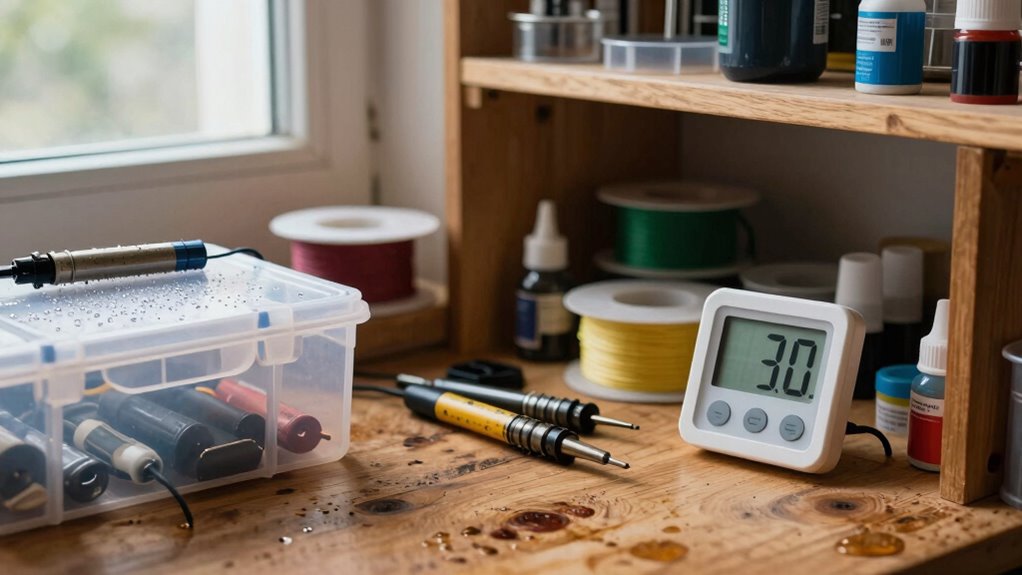
Managing humidity effectively starts with understanding your space’s specific needs. Too much moisture in the air can lead to rust on metal parts, mold on paper or cloth, and swelling or warping of wood or plastic components. Conversely, if the air is too dry, electronics might become static-sensitive, and certain adhesives or paints won’t cure properly. By keeping humidity levels within an ideal range—usually between 40% and 60%—you create an environment where your supplies remain steady and reliable. This requires consistent monitoring, ideally with a hygrometer, so you’re always aware of the current conditions. Incorporating environmental monitoring tools helps you track these fluctuations in real-time and respond proactively.
Once you know your baseline, you can implement solutions for environment stabilization. Dehumidifiers are a popular choice for reducing excess moisture, especially in humid climates. They pull moisture from the air and help keep humidity levels in check. If you’re in a dry environment, a humidifier might be necessary to add moisture. Air purifiers with humidity control features also help create a balanced environment, minimizing fluctuations that could damage sensitive components. Additionally, sealing your workspace with proper insulation and vapor barriers helps maintain consistent humidity levels and protects against external weather influences. Proper climate control measures are essential for safeguarding your workspace and supplies. Utilizing humidity sensors can help you keep precise tabs on environmental conditions and respond proactively. Regular maintenance of these devices ensures accurate readings and reliable performance.
Temperature control plays an essential role alongside humidity mitigation. High temperatures can increase humidity levels and accelerate material degradation, so maintaining a stable temperature contributes to overall environment stabilization. Ventilating your workspace regularly allows fresh air in and prevents stale, moisture-laden air from lingering. It’s also wise to store supplies in airtight containers with desiccants, which absorb residual moisture, especially for delicate parts like circuit boards or dried chemicals. Regularly checking and adjusting your climate control equipment ensures your environment remains within the optimal range—especially during seasonal changes or weather shifts. Paying attention to seasonal fluctuations can help prevent unexpected environmental stressors from damaging your projects.
Ultimately, creating a stable environment for your projects requires ongoing attention. Regularly check and adjust your humidity and temperature controls to adapt to seasonal changes or weather shifts. By implementing reliable humidity mitigation measures and focusing on environment stabilization, you protect your supplies, extend the lifespan of your tools, and ensure that every project you undertake is built on a solid, consistent foundation.
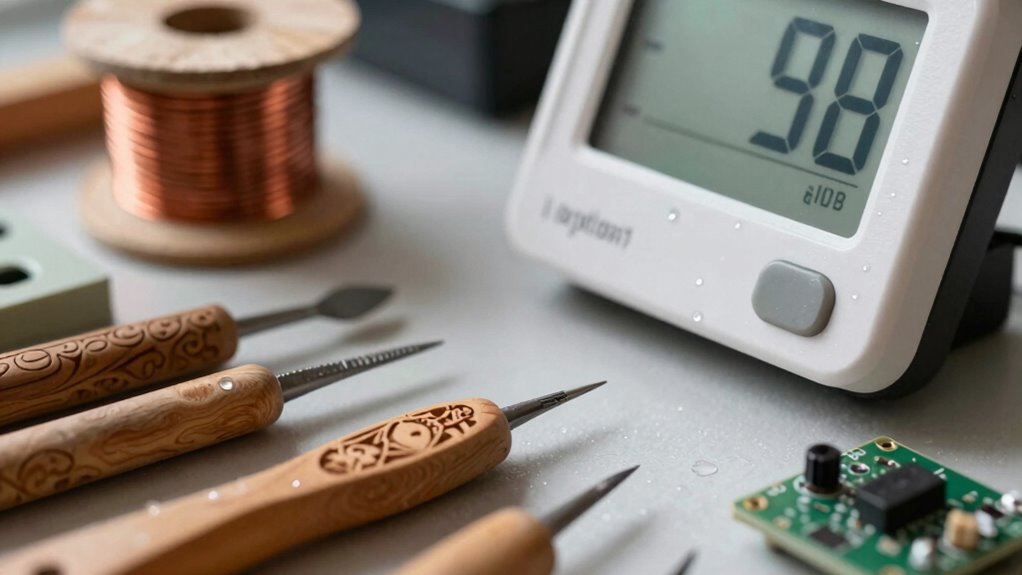
digital hygrometer for humidity monitoring
As an affiliate, we earn on qualifying purchases.
As an affiliate, we earn on qualifying purchases.
Frequently Asked Questions
How Do I Measure Indoor Humidity Accurately?
You can measure indoor humidity accurately by using a digital hygrometer or a sensor with proper calibration. Make certain to calibrate your sensor regularly to ensure precision, especially if you’re dealing with sensitive supplies. To account for humidity buffering, place the sensor away from direct moisture sources or vents. Regular calibration and proper placement help you monitor humidity levels effectively, preventing damage from excess moisture.
What Are the Best Affordable Climate Control Options?
Think of affordable climate control options like a trusty sidekick for your workspace. You can start with humidity sensors to keep an eye on moisture levels, and a dehumidifier to act when humidity rises. For budget-friendly choices, consider portable dehumidifiers that are easy to maintain and energy-efficient. Regular dehumidifier maintenance guarantees it runs smoothly, helping you protect your supplies without breaking the bank.
How Often Should I Monitor Humidity Levels?
You should monitor humidity levels at least daily, especially if you’re working on sensitive supplies. Don’t fall for humidity myths that suggest conditions are always stable; climate myths can lead you to overlook fluctuations. Regular checks help you catch issues early and maintain ideal conditions. Use a reliable hygrometer, and adjust your climate control systems as needed. Staying vigilant ensures your supplies stay in top shape, avoiding the damage humidity can cause.
Can DIY Climate Control Solutions Be Effective?
Yes, DIY climate control solutions can be effective if you use reliable humidity sensors and build your own dehumidifiers. By monitoring humidity levels closely, you can adjust your setup as needed to maintain ideal conditions. While DIY methods might not be as precise as commercial systems, they can considerably reduce humidity and protect your supplies, especially if you regularly check sensors and tweak your dehumidifier design for better performance.
How Does Temperature Affect Humidity Control?
Temperature has a direct impact on humidity control because it influences humidity fluctuation. When temperatures rise, the air can hold more moisture, increasing humidity levels, which can damage your supplies. Conversely, lowering the temperature helps reduce humidity by decreasing moisture capacity. To maintain stable humidity, you need to manage temperature carefully, as even small changes can cause fluctuations that harm your materials. Consistent temperature control keeps humidity stable and protects your supplies.
Conclusion
When humidity rises, it can wreak havoc on your supplies—causing rust, warping, or mold. But don’t dismiss the idea that climate control isn’t worth the effort; studies show that maintaining stable humidity levels considerably extends your materials’ lifespan. By investing in a dehumidifier or humidifier, you create a controlled environment that keeps your projects pristine. Think of it as giving your supplies a protective shield—so your creativity can thrive without weather-related setbacks.