Choosing the right workholding system should guide your CNC purchase because it directly affects your machine’s accuracy, safety, and efficiency. Proper workholding guarantees precise tool alignment, reduces material deformation, and minimizes downtime. It also keeps your operators safe by preventing part ejection or slips. When you select the right workholding, you optimize your CNC’s performance now and for future projects. Keep exploring to discover how to make the best match for your specific needs.
Key Takeaways
- Proper workholding ensures precise tool alignment, improving part quality and reducing rework.
- Compatibility with materials and machine capabilities minimizes setup time and prevents part deformation.
- Secure fixtures enhance safety and enable higher machining speeds, reducing operational risks.
- Effective workholding increases efficiency, throughput, and supports future equipment upgrades.
- It directly impacts overall CNC performance, reliability, and long-term cost savings.

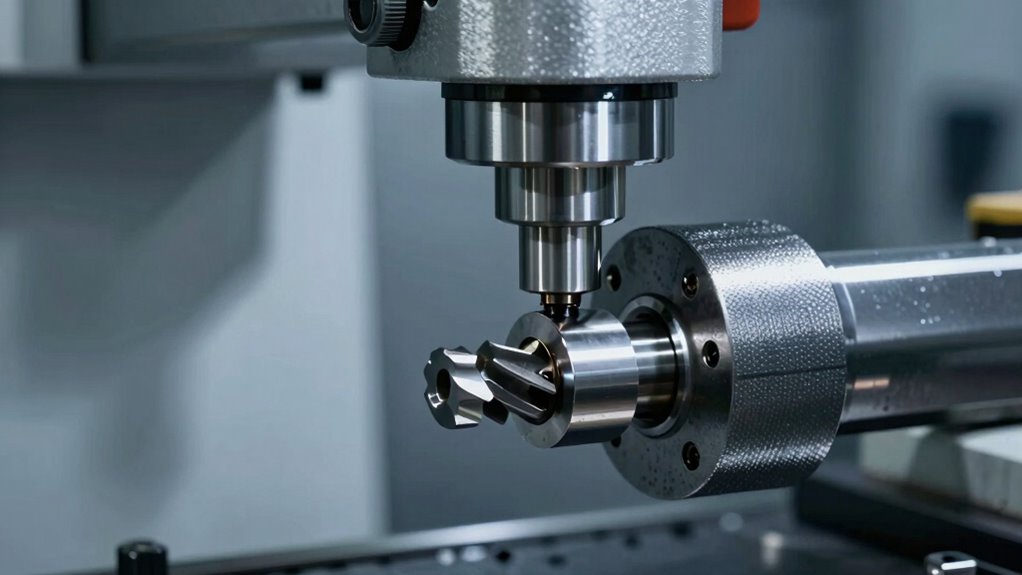
Choosing the right workholding solutions and CNC machine is indispensable for guaranteeing precision, efficiency, and safety in your manufacturing process. When selecting your equipment, you need to consider how well the workholding setup will support accurate tool alignment. Proper tool alignment is essential because even slight deviations can lead to poor surface finishes, dimensional inaccuracies, or tool wear, ultimately affecting your product quality. If your workholding system isn’t designed to hold parts securely and in the correct orientation, you’ll spend more time correcting errors or reworking finished pieces. Making sure that your workholding solutions facilitate consistent tool alignment means your CNC machine can perform at its highest precision, reducing scrap rates and increasing throughput.
Choosing the right workholding ensures precision, safety, and efficiency in CNC machining.
Material compatibility should also influence your purchase decision. Not all workholding options are suitable for every material, whether you’re working with aluminum, steel, plastics, or composites. Some clamping methods might apply excessive pressure or cause deformation in softer materials, while others might not provide enough grip for heavier, denser materials. You need a workholding solution that matches the specific material properties you’re working with, so the parts stay stable during machining without risking damage. This compatibility minimizes the risk of material distortion, improves surface finishes, and guarantees your CNC machine operates efficiently without interruptions caused by misplaced or slipping parts. Additionally, understanding workholding and CNC compatibility can help you optimize your setup for different jobs and materials.
Beyond tool alignment and material compatibility, you should also evaluate how your workholding solution integrates with your CNC machine’s capabilities. A poorly matched system can lead to increased setup times or even machine collisions. For example, if the workholding device extends too far or isn’t properly aligned, it can interfere with the toolpath or limit access to certain areas of your part. That’s why choosing a workholding system that’s designed to complement the size and movement range of your CNC machine is essential. It streamlines your workflow, reduces downtime, and helps you maximize your machine’s potential. Ensuring workholding system compatibility with your CNC machine’s specifications is a crucial step to avoid costly modifications or adjustments later. When considering workholding solutions, it’s also important to ensure they are adaptable to future upgrades or changes in your production needs.
Safety is another key factor. An inadequate workholding system can be dangerous, especially if parts aren’t held securely during high-speed machining. Loose or unstable parts can become projectiles, risking injury and damaging your machine. Reliable workholding solutions ensure parts are firmly secured, allowing you to operate confidently at higher speeds and feeds, which boosts productivity. Incorporating proper safety measures in your workholding setup can further mitigate risks and promote a safer working environment.
Ultimately, your choice of workholding should be a primary consideration in your CNC purchase decision. It’s not just about the machine’s capabilities but also about how well your workholding solutions support precise tool alignment, material compatibility, and safe operation. When you prioritize these factors, you set yourself up for a smoother, more efficient, and safer manufacturing process.
CNC workholding fixtures
As an affiliate, we earn on qualifying purchases.
As an affiliate, we earn on qualifying purchases.
Frequently Asked Questions
How Does Workholding Impact Machining Accuracy?
Workholding directly impacts machining accuracy because it guarantees material stability during cutting, preventing vibrations and movement that can distort your parts. Precise clamping maintains consistent positioning, reducing errors and improving surface finish. When you prioritize quality workholding, you enhance overall precision, leading to tighter tolerances and higher-quality outcomes. Proper workholding is essential to achieving reliable, accurate CNC machining results and avoiding costly rework or scrap.
What Are the Cost Differences Between Various Workholding Options?
You’ll find that cost differences between workholding options can be significant, with basic vises costing around $200 and advanced fixtures exceeding $2,000. Your choice depends on material compatibility and precision needs. For softer materials, simpler, lower-cost fixtures work well, but for tougher metals, investing in more durable, high-precision workholding pays off. A thorough cost comparison guarantees you select the right balance between affordability and performance for your machining tasks.
How Does Workholding Influence CNC Machine Setup Time?
Workholding greatly impacts your CNC setup time through clamping stability and fixture compatibility. When your workpieces are securely clamped, you spend less time adjusting and reworking during setup. Proper fixture compatibility ensures quick, easy changes between jobs, reducing downtime. By choosing workholding with reliable clamping stability and versatile fixtures, you streamline your setup process, saving time and increasing overall productivity on your CNC machine.
Can Workholding Solutions Be Customized for Specific Projects?
Yes, you can customize workholding solutions for specific projects. By focusing on clamping versatility and fixture adaptability, you guarantee your workholding fits unique part geometries and machining needs. Custom fixtures allow you to optimize stability, reduce setup time, and improve accuracy. Investing in adaptable workholding means you can easily modify or create fixtures tailored to each project, enhancing efficiency and precision without needing entirely new solutions for every job.
What Safety Considerations Are Associated With Different Workholding Methods?
You should prioritize clamping safety and fixture stability when selecting workholding methods. Always guarantee clamps are securely fastened to prevent slipping or ejection during machining. Use fixtures that are stable and properly aligned to avoid vibration or movement, which can cause accidents. Regularly inspect all workholding components for wear or damage, and follow manufacturer safety guidelines. These precautions help protect you from injuries and ensure precise, safe machining.
precision CNC vise clamps
As an affiliate, we earn on qualifying purchases.
As an affiliate, we earn on qualifying purchases.
Conclusion
Remember, your workholding choices can make or break your CNC efficiency. Did you know that improper workholding can reduce machining accuracy by up to 50%? That’s a significant impact on quality and productivity. By prioritizing the right workholding solutions, you guarantee your CNC machine runs smoothly, produces precise parts, and maximizes your investment. So, don’t overlook this vital factor—your overall success depends on it. Make workholding a key part of your purchase decision.
material-specific workholding solutions
As an affiliate, we earn on qualifying purchases.
As an affiliate, we earn on qualifying purchases.
CNC machine setup accessories
As an affiliate, we earn on qualifying purchases.
As an affiliate, we earn on qualifying purchases.