
To craft safely at home, guarantee you work in a well-ventilated space by opening windows or using fans and air purifiers to reduce fumes and dust. Always wear PPE like goggles, masks, and gloves to protect your eyes, lungs, and skin from chemicals. Opt for non-toxic, eco-friendly materials whenever possible, and store hazardous supplies properly. Staying mindful of safety throughout your projects helps prevent accidents—more tips are just ahead to keep your hobby both fun and safe.
Key Takeaways
- Always work in a well-ventilated area, using open windows, fans, or air purifiers to reduce fumes and dust.
- Wear appropriate PPE such as safety goggles, masks, and gloves to protect against chemicals and debris.
- Choose non-toxic, water-based, or eco-friendly materials like low-VOC paints and safe adhesives.
- Maintain a clean, organized workspace to prevent accidental exposure and ensure safe handling of materials.
- Follow safety instructions on all crafting products and store hazardous materials securely out of reach.
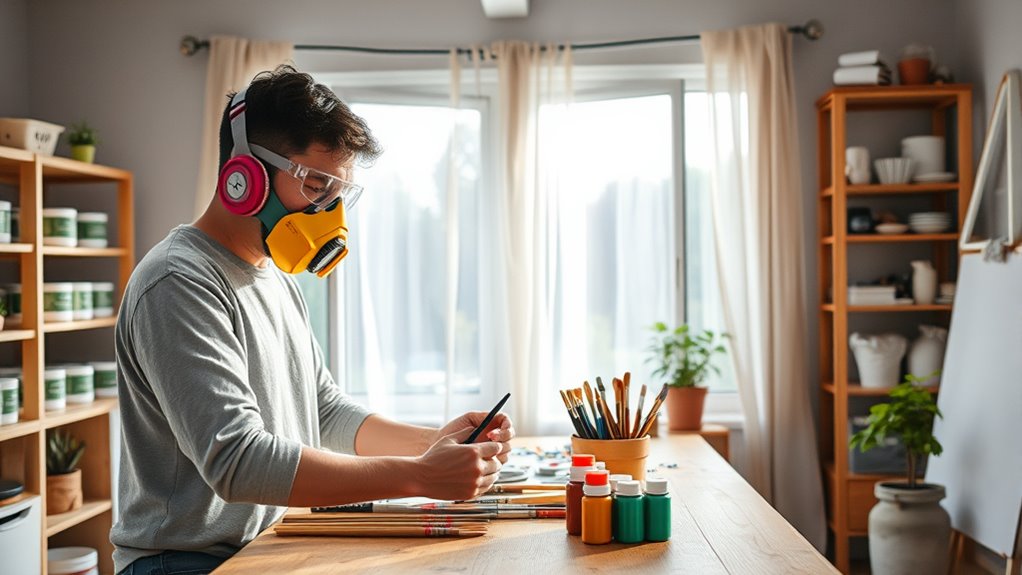
Have you ever wondered how to enjoy crafting safely at home? It’s easy to get caught up in the creative process and forget about potential hazards. But prioritizing safety means you need to be mindful of proper safety gear and effective ventilation techniques. When you’re working with paints, glues, or other chemicals, wearing the right safety gear isn’t just a recommendation — it’s essential. Safety goggles protect your eyes from splashes or fumes, while masks or respirators help prevent inhaling harmful particles or fumes. Gloves are also a smart choice when handling adhesives or dyes, especially if you have sensitive skin. These protective items create a barrier that keeps you safe from irritation or accidental ingestion of hazardous substances.
Prioritize safety with proper gear like goggles, masks, and gloves when crafting to protect yourself from hazards.
Equally important is establishing good ventilation techniques in your workspace. Many crafting materials emit fumes or dust that can be harmful if inhaled over time. To minimize these risks, always work in a well-ventilated area. Open windows and use fans to create a steady airflow that carries fumes away from your breathing zone. If possible, set up your crafting station near an open window or door, and consider using exhaust fans or air purifiers equipped with HEPA filters. These devices can considerably reduce airborne contaminants and improve air quality. When working with strong-smelling or toxic substances, take regular breaks outside or into a well-ventilated space to give your lungs a breather. Remember, good ventilation isn’t just about comfort; it’s about safeguarding your respiratory health.
Be proactive about understanding the materials you’re using. Read labels and follow safety instructions carefully. Non-toxic alternatives are increasingly available and can make your crafting safer and more eco-friendly. For instance, opt for water-based paints instead of solvent-based ones, and choose glues that are labeled non-toxic. This not only reduces your exposure to harmful chemicals but also makes cleanup safer and easier. Keep your workspace organized so that hazardous materials are stored securely, away from children or pets, and always dispose of waste properly. Having a dedicated, well-ventilated crafting area shows you’re taking your safety seriously, allowing you to focus on your projects without worry. Additionally, understanding air purifier maintenance and filter replacement schedules can help ensure your workspace remains safe and free from airborne contaminants.
Ultimately, crafting safely at home is about being mindful and prepared. Using the right safety gear and practicing good ventilation techniques protect your health and help you enjoy your creative hobbies for years to come. It’s a simple investment of time and effort that makes a big difference in ensuring every crafting session is safe, fun, and fulfilling.
Frequently Asked Questions
How Do I Identify Non-Toxic Craft Supplies?
To identify non-toxic craft supplies, always check labels for certifications like ASTM D-4236 or AP (approved product). Look for non-toxic dyes, which are clearly labeled, and choose safe material sources such as organic fabrics or sustainably sourced woods. Avoid products with strong chemical odors or vague ingredients. When in doubt, research brands’ safety standards online and opt for those committed to non-toxic, environmentally friendly options to keep your crafting safe and enjoyable.
What Are the Best Ventilation Methods for Small Spaces?
A stitch in time saves nine, so prioritize good airflow management. For small spaces, use ventilation fans to quickly circulate air and reduce fumes. Keep windows open whenever possible, and position fans near vents or open windows to create cross-ventilation. Combining natural airflow with powered ventilation guarantees your space stays fresh and safe. Regularly check that fans are working efficiently, and consider air purifiers for added protection.
Are There Eco-Friendly PPE Options Available?
Yes, eco-friendly PPE options are available. You can choose masks and gloves made from recyclable materials or biodegradable options, which diminish environmental impact. Look for products labeled as compostable or made from plant-based materials. These choices help protect both your health and the planet, guarantee your crafting remains sustainable. Always verify the certifications to ensure the PPE meets safety standards while being eco-conscious.
How Often Should I Replace My Craft Masks?
Time flies when you’re busy crafting, so it’s important to stay on top of mask maintenance. You should replace your craft masks every 30 to 50 uses, or when they show signs of wear and tear. For reusable options, wash them regularly and inspect for damage. Don’t wait until they’re worn out; keeping your masks in good shape guarantees they continue to protect you effectively.
Can I Safely Use Homemade Cleaning Solutions During Crafting?
Yes, you can safely use homemade cleaning solutions during crafting if you choose DIY disinfectants with natural ingredient swaps like vinegar, baking soda, or lemon juice. Just guarantee you research proper ratios and avoid mixing harsh chemicals. Always test a small area first to prevent damage, and keep your workspace well-ventilated. Using these natural options helps protect your health and maintains a safe crafting environment.
Conclusion
By prioritizing proper ventilation, wearing the right PPE, and choosing non-toxic materials, you create a safe crafting environment that’s like a well-guarded fortress. Think of your workspace as a sanctuary where creativity thrives without harm. When you take these simple steps, you’re not just protecting yourself—you’re building a foundation for enjoyable, worry-free projects. Keep safety in mind, and your crafting journey will be a colorful adventure, not a risky gamble.