Choosing the wrong laser—whether diode, CO2, or fiber—can cost you time, money, and quality. Diodes excel in precision but may have higher replacement costs, while CO2 lasers handle thicker, non-metal materials but require more maintenance. Fiber lasers offer high speed and fine detail with low upkeep. To avoid costly mistakes, it’s essential to match your laser type to your materials and goals—more insights await if you keep exploring.
Key Takeaways
- Choosing the wrong laser type can lead to inefficiencies, higher maintenance costs, and compromised product quality.
- Diode lasers are costly upfront and less suitable for cutting thick or non-metallic materials.
- CO2 lasers require more maintenance, increasing operational downtime and long-term expenses.
- Fiber lasers offer high precision and low maintenance but may have limited effectiveness on certain materials.
- Selecting the appropriate laser depends on material compatibility, desired quality, speed, and overall cost efficiency.
What Are the Main Differences Between Diode, CO2, and Fiber Lasers?

Diode, CO2, and fiber lasers each have distinct characteristics that make them suitable for different applications. When considering laser beam characteristics, diode lasers produce a highly focused, narrow beam ideal for precision tasks, while CO2 lasers emit a broader, powerful beam suitable for cutting thicker materials. Fiber lasers offer a versatile beam with high efficiency and excellent quality, making them great for detailed work and high-speed processing. Maintenance requirements also differ; diode lasers generally need minimal upkeep but can be costly to replace, CO2 lasers require regular calibration and cleaning of optics, and fiber lasers are known for low maintenance due to their robust fiber-optic design. Understanding these differences helps you choose the right laser type for your specific needs. Additionally, the contrast ratio of a laser can influence the clarity and sharpness of the output, especially in detailed applications. Moreover, considering the energy efficiency of each laser type can significantly impact your operational costs and environmental footprint over time.
How Do Laser Types Impact Cost and Efficiency?
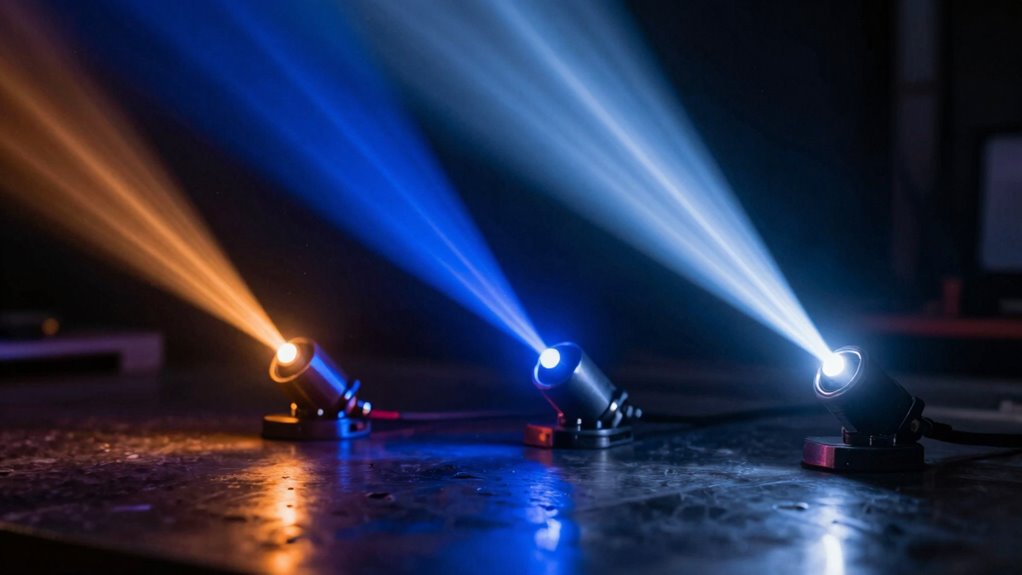
The choice of laser type directly influences both the initial investment and ongoing operational costs. For example, diode lasers typically have higher upfront costs but lower energy consumption, leading to savings over time. Fiber lasers are known for their low maintenance requirements, which reduces downtime and labor expenses. In contrast, CO2 lasers may require more frequent laser maintenance, increasing long-term costs. Energy consumption plays a considerable role in efficiency, as lasers with lower power use can cut operational expenses notably. Your decision should consider not just the purchase price but also how energy-efficient the system is and how much you’ll spend on laser maintenance over its lifespan. Making the right choice impacts your bottom line by balancing initial costs with ongoing savings. Additionally, laser maintenance considerations can significantly affect overall operational expenses, emphasizing the importance of choosing a system with manageable upkeep. Moreover, understanding the performance metrics can help you evaluate and compare different laser systems more effectively. Being aware of net worth or individual success stories can also provide insights into the stability and reputation of a brand or technology. Evaluating cost of ownership ensures that your investment aligns with long-term financial goals and operational efficiency. Considering technology advancements can further help you select a laser that remains competitive and up-to-date in the evolving market.
How Do Laser Types Affect Quality, Speed, and Precision?

Choosing the right laser type doesn’t just impact costs; it also determines the quality, speed, and precision of your cutting or engraving processes. Laser beam coherence plays a crucial role here—more coherent beams produce cleaner, more detailed results. For example, fiber lasers have highly coherent beams that deliver sharp edges and fine details, ideal for precision work. The wavelength impact is equally important; shorter wavelengths, like those in fiber lasers, are better suited for cutting metals, providing faster speeds and cleaner cuts. Conversely, CO2 lasers with longer wavelengths excel in engraving and cutting non-metals. Understanding these factors helps you select a laser that maximizes quality and efficiency, ensuring your projects meet exact specifications without unnecessary delays or rework.
What Factors Should You Consider When Choosing a Laser for Your Application?
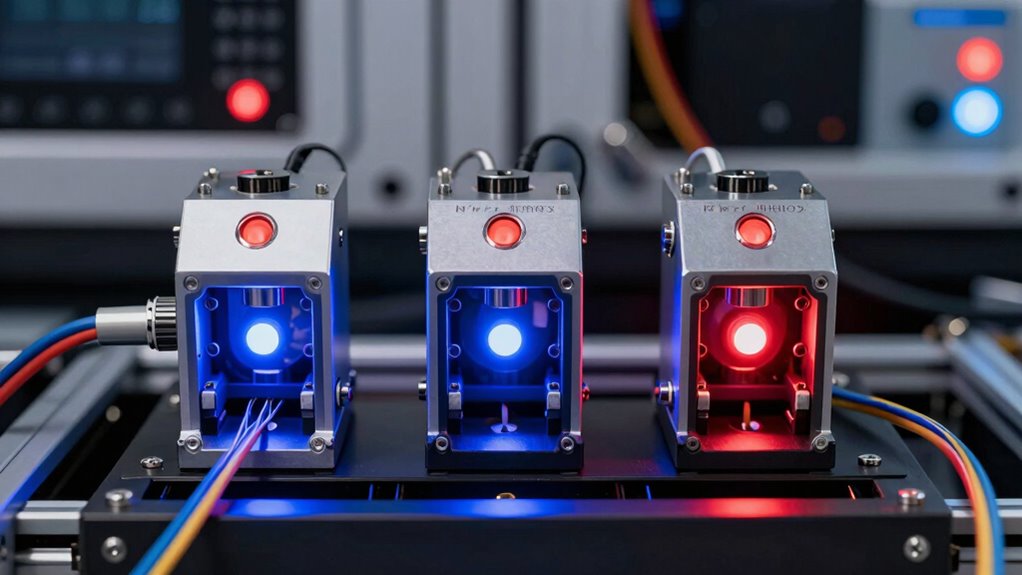
When selecting a laser for your application, it’s essential to evaluate your specific needs and priorities. Consider material compatibility—some lasers work better with metals, plastics, or organic materials. Additionally, assess maintenance requirements; simpler systems save time and reduce costs. To help, here’s a quick comparison: Home Charging, Simplified. Understanding the thermal behavior of different laser types can also influence your choice, especially regarding precision and heat management. A thorough understanding of gelato flavors can help you appreciate the variety and quality of different options in the market. Moreover, evaluating the free floating capabilities of laser systems can help optimize performance and flexibility in various environments. Recognizing how different laser types manage heat dissipation is crucial for maintaining system longevity and performance.
Tips to Avoid Costly Mistakes When Picking Your Laser Technology
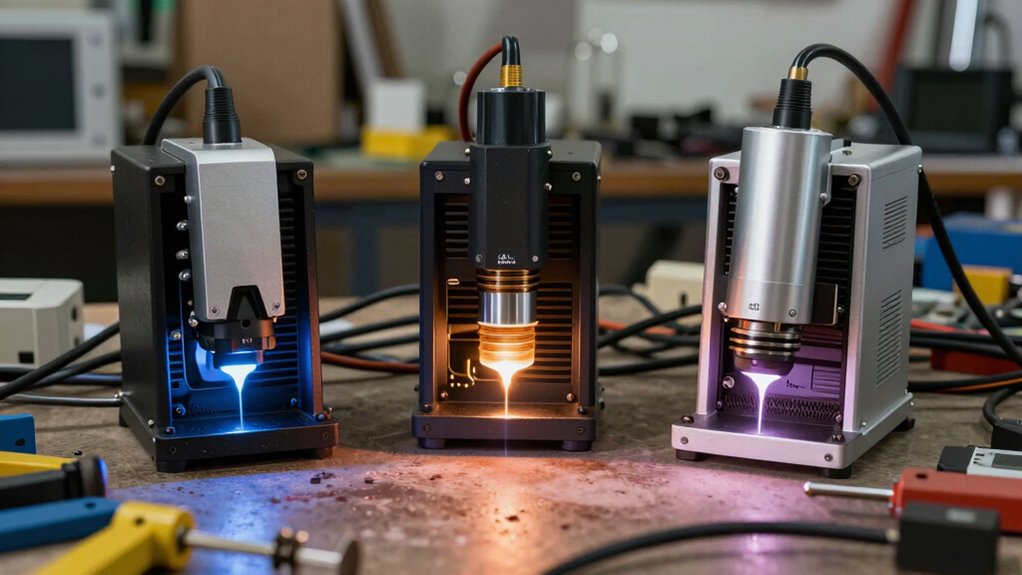
To avoid costly mistakes when selecting your laser technology, it’s essential to thoroughly assess your application’s specific requirements and long-term goals. Consider how often you’ll need laser maintenance and how accessible repairs will be, as these impact ongoing costs. Safety precautions are critical; make sure your chosen laser complies with safety standards and that you’re prepared to implement proper safety measures for operators. Avoid rushing the decision—research different types, their capabilities, and limitations. Misjudging power needs or overlooking maintenance requirements can lead to wasted time and money. Investing in a laser that matches your workflow, with appropriate safety protocols, helps prevent downtime, safety hazards, and costly upgrades down the line. Careful planning now saves significant expenses later. Additionally, understanding navigation and mapping capabilities can ensure your laser system integrates smoothly into your existing setup and reduces operational hiccups. Being aware of long-term operational costs can further help you make a more informed choice, avoiding unexpected expenses down the road. Conducting a comprehensive cost-benefit analysis can also highlight potential hidden expenses and ensure the best value for your investment.
Frequently Asked Questions
Which Laser Type Has the Lowest Maintenance Requirements?
They say “a stitch in time saves nine,” and that’s true for choosing a laser with low maintenance. Fiber lasers have the lowest maintenance requirements, thanks to their durability and fewer moving parts. They’re highly power-efficient, reducing downtime and costly repairs. If you want a laser that keeps working without constant upkeep, fiber lasers are your best bet, maximizing uptime while minimizing maintenance hassle and expenses.
How Does Laser Wavelength Influence Material Compatibility?
Your choice of laser wavelength directly affects material compatibility because it influences the wavelength material interaction and laser absorption properties. A wavelength that matches a material’s absorption spectrum guarantees efficient energy transfer, resulting in cleaner cuts and better productivity. For example, CO2 lasers work well with non-metallic materials, while fiber lasers excel with metals. Choosing the right wavelength maximizes efficiency, reduces waste, and minimizes maintenance costs.
Can Different Laser Types Be Combined in a Single Production Line?
Imagine your production line as a symphony orchestra—different instruments working together in harmony. Yes, you can achieve multi laser integration, combining diode, CO2, and fiber lasers in a single line. This boosts production line flexibility, allowing you to handle diverse materials and tasks efficiently. By coordinating various laser types, you create a versatile setup that adapts to evolving needs, saving time and reducing costs while enhancing overall performance.
What Are the Environmental Impacts of Each Laser Type?
You should consider the environmental impacts of each laser type, especially energy consumption and recyclability. Fiber lasers use less energy than CO2 or diode lasers, making them more eco-friendly. Diode lasers are highly recyclable due to their modular design, reducing waste. CO2 lasers consume more power and have less recyclable components. Choosing a laser with lower energy use and better recyclability helps reduce your environmental footprint and operational costs.
How Do Future Technological Advancements Affect Laser Selection?
Like a river carving new pathways, laser innovation constantly reshapes your options. Future advancements can make certain laser types more efficient or versatile, breaking down current technological barriers. You should stay informed, because evolving technology might shift your ideal choice, saving time and money. Embracing these changes guarantees you adapt quickly, making smarter decisions that align with upcoming innovations rather than sticking with outdated or less suitable laser options.
Conclusion
Choosing the right laser can save you thousands in the long run—did you know that using an unsuitable laser type can increase costs by up to 40%? By understanding the differences between diode, CO2, and fiber lasers, you guarantee faster, higher-quality results without wasting time or money. Make an informed decision now, and you’ll boost your productivity and profitability while avoiding costly mistakes that could set your project back months.