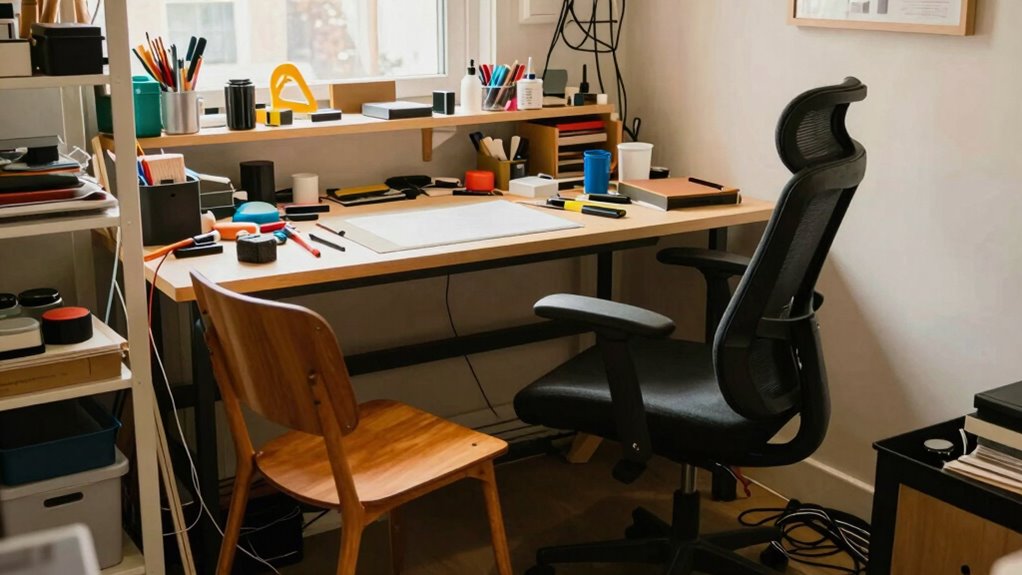

Over time, you might unknowingly introduce ergonomic mistakes into your craft space, like cluttered surfaces that force you to reach or twist awkwardly, or work surfaces set too high or low, causing strain. Reaching for tools placed far away or poor workspace organization can lead to muscle fatigue and discomfort. Small habits, like ignoring ergonomic accessories or neglecting proper posture, can add up. Keep an eye on these issues to protect your body—you’ll find more helpful tips ahead.
Open a free Amazon Business account
Business pricing, bulk buying and tax-exempt orders.
As an affiliate, we earn on qualifying purchases.
Key Takeaways
- Over time, cluttered surfaces and distant supplies increase unnecessary reaching and awkward postures.
- Incorrect workspace height causes hunching or stretching, leading to neck and back strain.
- Repetitive movements and poor organization contribute to muscle discomfort and joint strain.
- Failing to incorporate ergonomic tools like supports and adjustable surfaces worsens long-term discomfort.
- Neglecting regular workspace maintenance allows ergonomic issues to develop gradually.
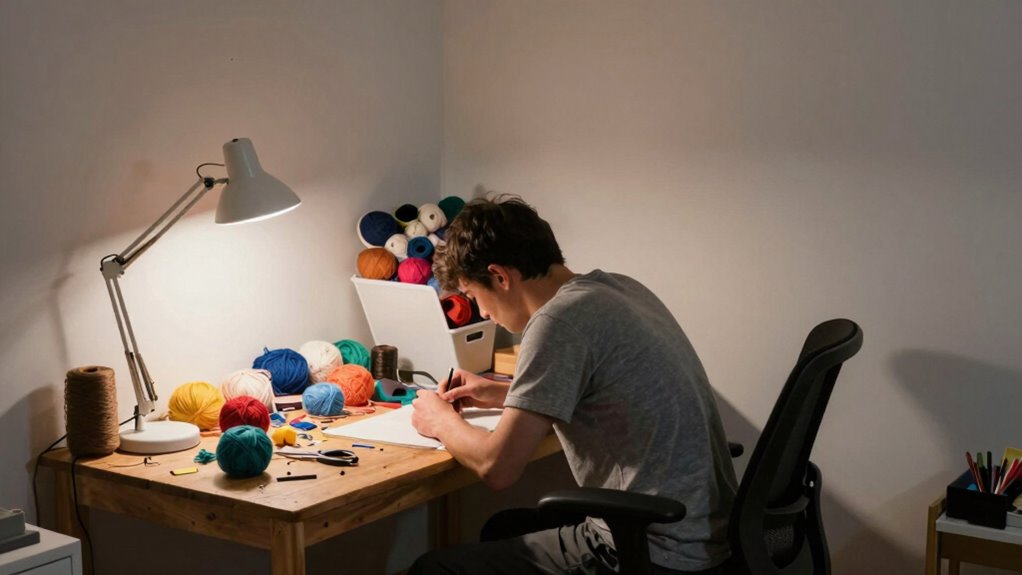
Workspace organization plays a vital role in maintaining good ergonomics. When your supplies are cluttered or placed far from your work area, you tend to stretch, reach, or twist in awkward ways. Over time, these movements strain your muscles and joints, leading to discomfort. To prevent this, organize your craft room so essential tools and materials are within easy reach. Use storage solutions like drawers, shelves, or organizers that keep everything accessible and at a comfortable height. This way, you avoid unnecessary bending or reaching that can cause back and shoulder pain. Keeping your workspace tidy not only improves efficiency but also supports ergonomic health by reducing unnecessary movement. Proper workspace ergonomics can significantly decrease the risk of developing chronic pain or strain-related issues. Regularly assessing and adjusting your workspace layout can help prevent these issues from becoming chronic.
Another common mistake is working at a desk or table that isn’t suited to your height. If your workspace is too high or too low, you’ll find yourself hunching over or stretching awkwardly, which increases strain on your neck and back. Adjust your workspace to match your body’s natural position—your elbows should rest comfortably at a 90-degree angle when working. Consider ergonomic tools like adjustable chairs or height-friendly work surfaces to create a more supportive environment. Proper workspace organization also means keeping your workspace tidy, reducing the need to twist or reach over cluttered surfaces, which can cause unnecessary discomfort over time. Additionally, choosing ergonomic tools designed for extended use can help alleviate fatigue and prevent strain during long crafting sessions. Incorporating ergonomic accessories such as footrests or lumbar supports can further improve comfort and posture in your craft space.
As an affiliate, we earn on qualifying purchases.
Frequently Asked Questions
How Can I Tell if My Craft Room Setup Causes Discomfort?
You’ll notice discomfort if you experience persistent pain, stiffness, or numbness while crafting. To identify if your setup causes this, focus on posture correction—are you leaning forward or hunching? Also, check your workspace organization—are frequently reaching or twisting? Adjust your chair height, keep tools within easy reach, and sit with your back supported. These changes can improve comfort and prevent ergonomic issues over time.
What Affordable Solutions Improve Ergonomic Safety in Craft Rooms?
You don’t need costly upgrades to boost your craft room’s ergonomic safety. Start with budget-friendly modifications like adjustable chairs, cushioned mats, or ergonomic accessories such as wrist supports and proper lighting. These simple changes reduce strain and improve comfort, helping you craft longer without discomfort. By investing a little now, you create a healthier workspace that supports your creativity and prevents future aches and pains.
How Often Should I Reassess My Craft Room Ergonomics?
You should reassess your craft room ergonomics every six months to guarantee comfort and safety. Check that your ergonomic chair supports your back properly, and adjust your workspace lighting to reduce eye strain. As you use your space, monitor for any discomfort or fatigue, and make adjustments accordingly. Regular evaluations help prevent long-term issues, keeping your craft room safe and comfortable for ongoing projects.
Are There Specific Ergonomic Tools Recommended for Crafters?
Think of ergonomic tools as your craft room’s best friends, boosting your crafting comfort. You should consider ergonomic scissors with cushioned handles, adjustable craft chairs that support your back, and wrist rests to prevent strain. These tools help reduce fatigue and prevent injury, making your crafting experience more enjoyable. Prioritizing ergonomic tools guarantees you stay comfortable and able to create for hours without discomfort or pain.
What Are Signs of Long-Term Ergonomic Issues From Crafting?
You might notice long-term ergonomic issues from crafting if your posture habits cause persistent discomfort or pain, especially in your neck, shoulders, or back. Poor tool ergonomics can lead to repetitive strain injuries or joint soreness. Keep an eye out for fatigue after crafting sessions or numbness in your hands. Addressing these signs early by improving your posture habits and selecting ergonomic tools can help prevent long-term problems.
Conclusion
Ignoring ergonomic pitfalls in your craft room is like planting seeds of discomfort that grow into stubborn pain and fatigue. But with a few mindful adjustments, you can turn your workspace into a cozy sanctuary where creativity flows freely, and aches stay at bay. Think of your craft room as a well-tuned instrument—when everything’s aligned just right, your inspiration sings and your body stays in harmony, ready to craft your masterpiece without missing a beat.
NFL season / tailgating Picks
team gear
As an affiliate, we earn on qualifying purchases.