
The “invisible setting” on your heat press controls the pressure you apply during transfers, impacting how evenly force is distributed. If it’s too high or low, it can cause poor adhesion, cracking, or incomplete designs, ruining your results. Regularly checking and adjusting this setting guarantees consistent, professional-looking transfers and longer-lasting results. Want to guarantee flawless transfers every time? Keep exploring to discover the best techniques for maintaining proper pressure.
Key Takeaways
- The “invisible pressure setting” controls the force applied during pressing, impacting transfer adhesion and durability.
- Proper calibration of this unseen setting ensures even force distribution, preventing ghosting or incomplete transfers.
- Mismanagement or neglect of the invisible pressure can cause ink bleed, cracking, or poor adhesion over time.
- Regular testing with gauges or test sheets helps maintain accurate invisible pressure levels for consistent results.
- Inconsistent or incorrect invisible pressure settings are a common cause of transfer failures and ruined designs.

MEANLIN MEASURE 0-160Psi Thermal Pressure Gauge,0-250℉ 1/4" NPT 2.5" FACE DIAL, Boiler Temperature Pressure Gauge with Reset Pointer, with 1/2" NPT and 3/8" NPT Hex Bushing, Lower Mount
【Product Name】Thermal Pressure Gauge
As an affiliate, we earn on qualifying purchases.
As an affiliate, we earn on qualifying purchases.
Why Is Proper Heat Press Pressure Important for Perfect Transfers
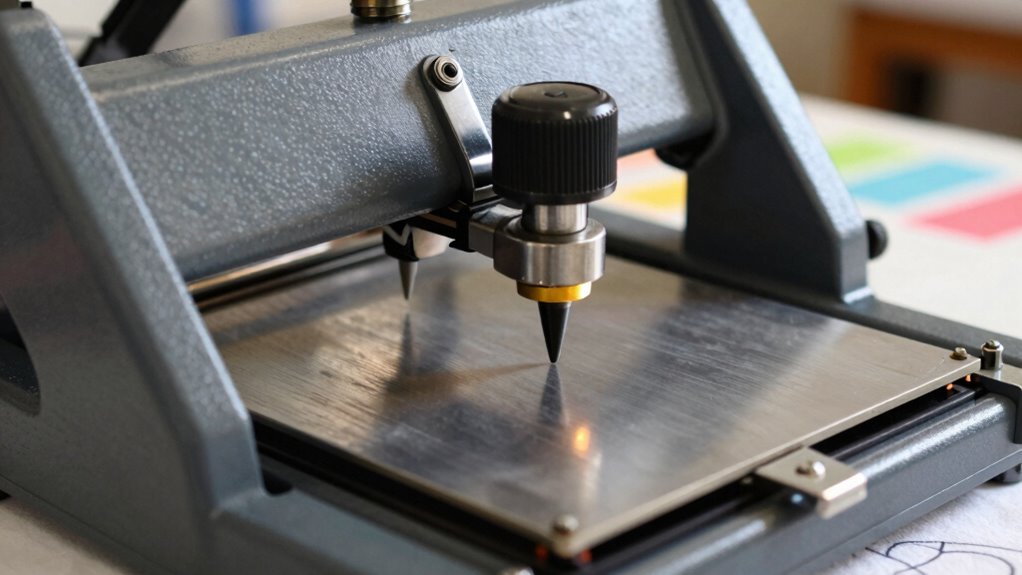
Proper heat press pressure is essential because it directly affects the quality of your transfers. When you calibrate the pressure correctly, you ensure even contact between the transfer and the substrate, which is vital for consistent results. Proper pressure helps optimize transfer durability, meaning your design stays vibrant and intact over time. Too much pressure can cause ink bleed or distortion, while too little pressure results in incomplete transfers that peel or fade quickly. Regular pressure calibration ensures your heat press applies the right amount of force, preventing these issues. Additionally, pressure consistency is crucial for achieving professional-grade results in every press. By maintaining accurate pressure settings, you improve the overall quality of your transfers and extend their lifespan, giving you professional results with every press. consistent results are the foundation of a successful heat transfer process, and understanding the thermal behavior of materials plays a key role in this. Proper calibration also accounts for material variability, ensuring each transfer meets high standards regardless of the substrate used. Incorporating smart automation features can help maintain consistent pressure settings over time, reducing manual adjustments and improving transfer quality.

Soldering Iron Kit, 80W 110V Fast Heat up in 10s LCD Digital Adjustable Temperature Soldering Gun Thermostatic Soldering Kit for Electronic
1️⃣[Upgrade & Heat up Quickly]: This soldering iron adopts a premium ceramic core with 80w High Power, which…
As an affiliate, we earn on qualifying purchases.
As an affiliate, we earn on qualifying purchases.
What Is the Invisible Pressure Setting on Your Heat Press?
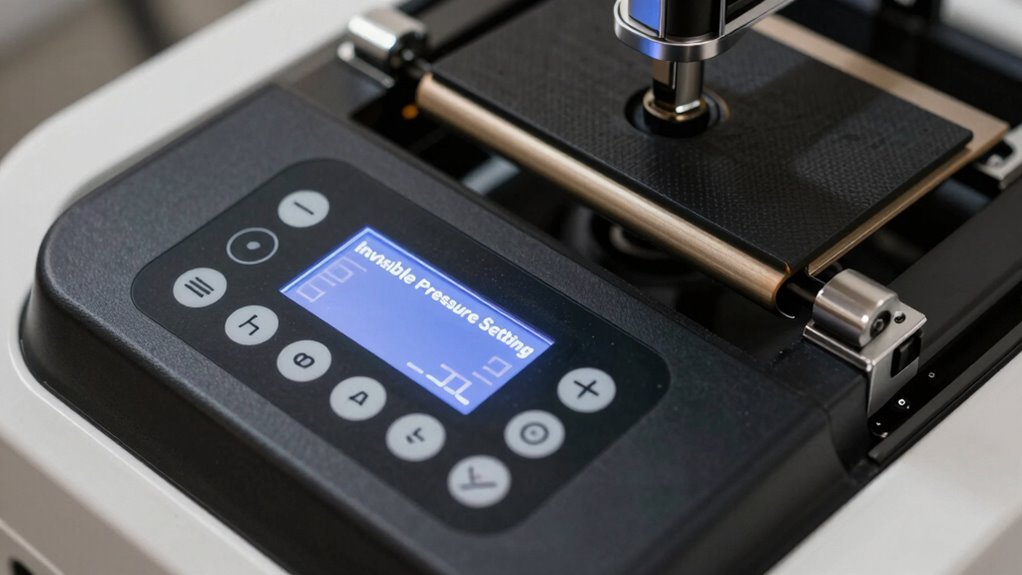
Have you noticed an adjustment knob or setting labeled “invisible pressure” on your heat press? This setting controls the force applied during transfer without being obvious like the main pressure dial. It directly impacts the quality of your transfer, making it essential to understand its function and how it influences your results. Properly managing this pressure setting can help prevent common issues like ghosting or incomplete transfers. Understanding the pressure calibration ensures consistent results across different projects and materials. Additionally, awareness of how projector contrast ratio affects image depth can be analogous to understanding how pressure variations influence transfer clarity and detail. Recognizing the precious metal investment options can also help you make more informed choices in your overall investment strategy. To achieve optimal results, regularly perform pressure testing and calibration checks are recommended to maintain accuracy and consistency.
Definition and Functionality
Ever wonder what the invisible pressure setting on your heat press is doing? It’s all about pressure calibration—an unseen adjustment that influences how evenly force is applied during transfers. This setting guarantees consistent pressure, which is vital for transfer durability. When properly calibrated, it guarantees your designs adhere correctly without damaging the substrate. Proper air purifier maintenance can help ensure your workspace remains free of dust that might affect equipment performance. Additionally, understanding pressure uniformity is essential for achieving professional results in heat pressing.
Impact on Transfer Quality
The invisible pressure setting on your heat press plays a crucial role in ensuring the quality of your transfers. Proper pressure calibration is essential because too little pressure can cause poor adhesion, leading to incomplete or cracked designs. Conversely, excessive pressure may cause damage to the transfer or fabric, reducing transfer durability over time. Inconsistent pressure settings often go unnoticed but can markedly impact the overall finish. When pressure isn’t evenly calibrated, transfers may peel or fade prematurely, compromising your work’s professionalism. To maintain high-quality results, regularly check and adjust your heat press’s pressure setting, ensuring it’s appropriate for each material and transfer. Pressure calibration is vital for achieving consistent and professional results, as it directly affects the transfer’s adhesion and longevity. Maintaining even pressure across the entire surface ensures uniform contact, which is essential for a flawless finish. Consistent pressure not only improves transfer quality but also helps prevent material damage, ensuring a longer-lasting and more professional-looking finished product. Additionally, understanding pressure distribution can help prevent uneven wear on your equipment and improve overall transfer consistency. Doing so guarantees better transfer durability and a consistently professional appearance.

Dazoratix Test Day Iron on Transfers – 20 Sheets Testing DTF Ready to Press Heat Patches for Teacher T Shirts Vinyl Stickers You Got This Decals for Clothes Hoodies Bag DIY Crafts Applique Decorations
Test Day Iron on Transfers: This Test Day iron on transfers set includes 20 sheets in a convenient…
As an affiliate, we earn on qualifying purchases.
As an affiliate, we earn on qualifying purchases.
How Do You Check and Adjust Heat Press Pressure?
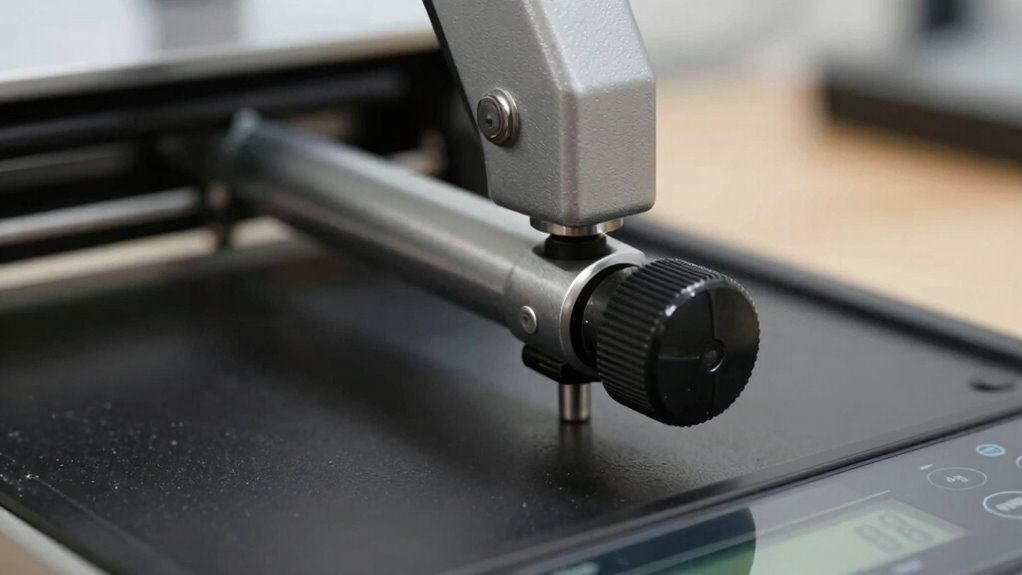
To guarantee your heat press is applying the right pressure, you need to check its consistency regularly. Adjust the pressure carefully, so it matches the material and transfer requirements. Properly managing these steps guarantees even, high-quality results every time. Regularly monitoring and adjusting the pressure settings helps maintain optimal performance and prevents issues caused by uneven pressure. Ensuring the body jewelry measurements are correct can also impact overall transfer results, especially when dealing with layered or delicate designs. Additionally, understanding how to measure and calibrate your heat press ensures ongoing accuracy in pressure application, much like how robotic navigation benefits from precise calibration to optimize performance. Maintaining consistent pressure is essential for preventing transfer failures and achieving durable, vibrant designs.
Checking Pressure Consistency
Checking the pressure on your heat press is crucial to guarantee consistent and high-quality transfers. To assure pressure uniformity, regularly perform pressure calibration tests across the platen. Use a pressure-sensitive tool or a test sheet with a pressure gauge to verify that the force is evenly distributed. Consistent pressure helps prevent uneven transfers and minimizes the risk of ghosting or incomplete designs. When checking, press the tool or sheet in different areas of the platen, noting any discrepancies. If you notice uneven pressure, you may need to re-calibrate or adjust your press. Maintaining pressure consistency ensures each transfer has the same quality, reducing waste and rework. Regular checks are a simple way to keep your heat press functioning at its best. Additionally, understanding and testing pressure distribution with simple tools can help you identify and correct issues before they affect your final product. Incorporating pressure mapping techniques can further enhance your ability to achieve optimal transfer results.
Adjusting Pressures Properly
Ensuring your heat press applies the correct pressure requires both checking and adjusting the settings carefully. To do this, start with pressure calibration, ensuring the gauge matches the actual force. Next, adjust the foam pad if needed; it influences pressure distribution. To check, place a piece of paper or a test material and close the press to see if the pressure is even. If uneven, tweak the foam pad or calibration settings. Proper adjustment prevents transfer failures caused by too much or too little pressure. Use this simple guide: industry trends. Regularly inspecting and maintaining your heat press ensures consistent results and prolongs the equipment’s lifespan, aligning with industry standards. Additionally, consulting your heat press’s user manual can provide specific guidance tailored to your model and improve overall equipment performance. Monitoring the pressure settings regularly helps maintain optimal transfer quality over time. Recognizing the importance of consistent pressure is crucial for achieving high-quality transfers every time.

VEVOR Heat Press 16×24, 1700W Power Heat Press Machine, Fast Heating, High Pressure Heat Press Machine for T-Shirt, Digital Industrial Sublimation Printer for Heat Transfer Vinyl, Easy to Use, Black
16 x 24inch Heat Press: The larger heating pad, 16 x 24 in / 40.6 x 61 cm,…
As an affiliate, we earn on qualifying purchases.
As an affiliate, we earn on qualifying purchases.
How Can You Tell If Your Heat Press Pressure Is Too High or Too Low?
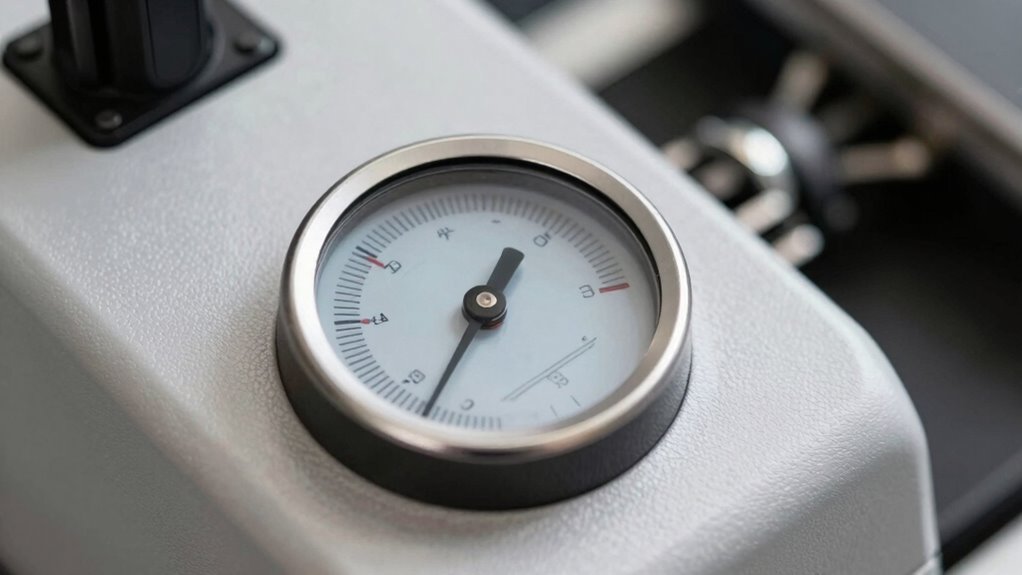
Wondering how to tell if your heat press pressure is set correctly? One key indicator is transfer adhesion. If your design isn’t sticking well or peeling easily, your pressure might be too low. Conversely, if the transfer blisters or appears overly flattened, the pressure could be too high. Proper pressure calibration guarantees consistent results, so check your press’s pressure settings regularly. A good test is to press a scrap piece and see how well the transfer adheres after peeling. If it’s loose or uneven, adjust accordingly. Remember, ideal pressure produces a firm, even contact without damaging the material or transfer. Paying close attention to transfer adhesion helps you identify if your pressure needs fine-tuning for perfect results.
How Excessive or Insufficient Pressure Ruins Your Transfers
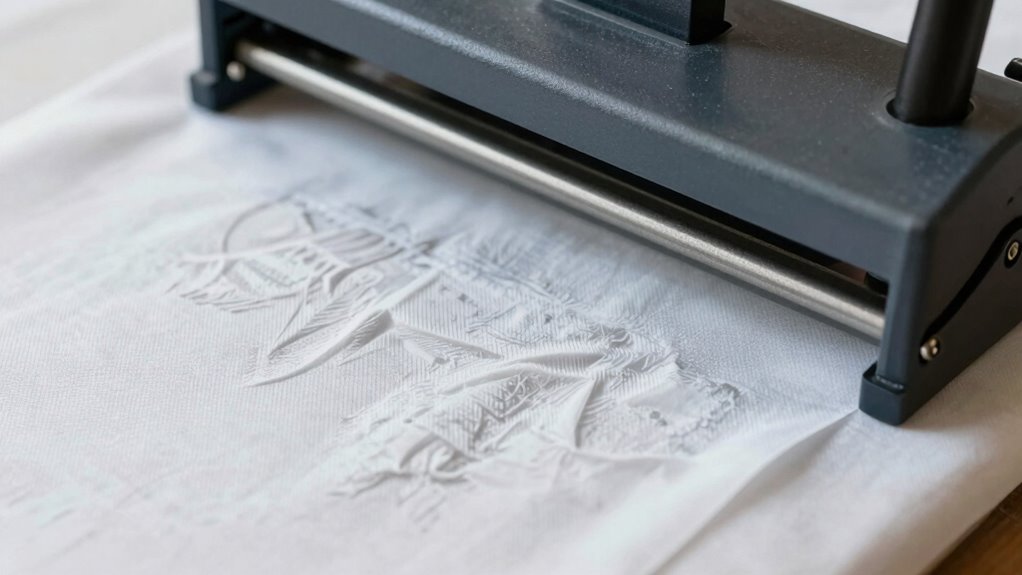
When your heat press pressure is off, it can directly damage your transfers and ruin your projects. Too much pressure can crush the transfer, causing it to crack or peel prematurely, while insufficient pressure leaves the design under-pressed, leading to poor adhesion and reduced transfer durability. Proper pressure calibration guarantees that your transfer bonds evenly to the substrate, maximizing its lifespan. Excessive pressure can also cause ink to bleed or transfer unevenly, creating a blurry or distorted image. Conversely, insufficient pressure may result in incomplete transfer, making the design vulnerable to peeling or fading over time. Achieving the right pressure is essential for maintaining transfer quality and durability, so always double-check your settings before pressing. Proper calibration prevents damage and ensures professional results every time.
How to Keep Your Heat Press Pressure Consistent Every Time
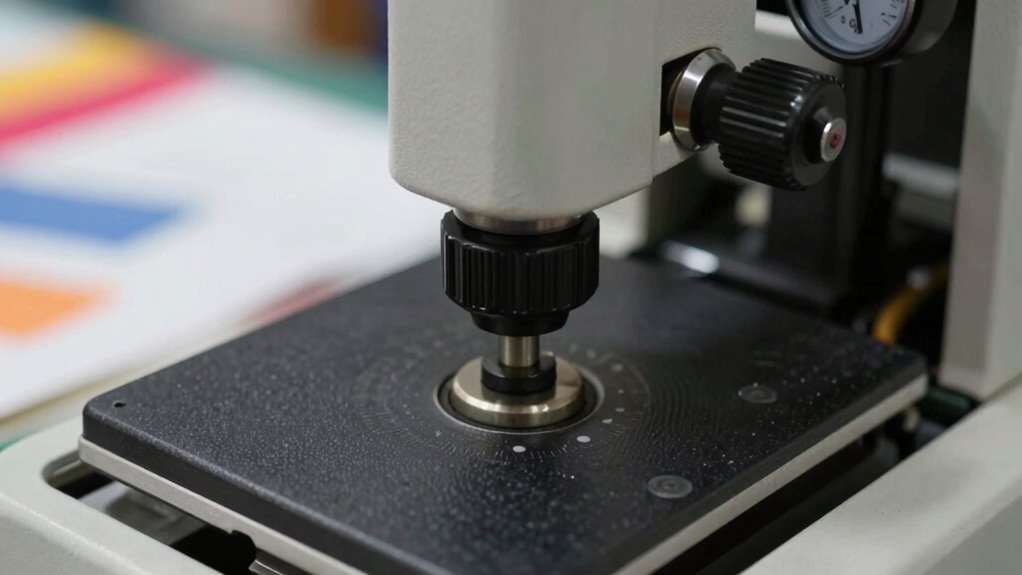
Maintaining consistent heat press pressure is essential for achieving professional-quality transfers every time. To do this, regularly perform pressure calibration to ensure your machine applies the correct force. Proper machine maintenance, like cleaning the plates and checking hinges, keeps your press functioning smoothly and prevents pressure fluctuations. Use a digital pressure gauge or a simple test method—such as placing a shim or a piece of paper—to verify pressure consistency. Record your calibration settings to maintain uniformity across sessions. Here’s a quick overview:
| Action | Tip |
|---|---|
| Pressure calibration | Check and adjust often for accuracy |
| Machine maintenance | Keep plates clean and hinges tight |
| Consistent setup | Use same pressure settings each time |
| Verification | Test with paper or gauge regularly |
Following these steps helps you achieve reliable, high-quality transfers every time.
Common Mistakes That Affect Heat Press Pressure and How to Fix Them
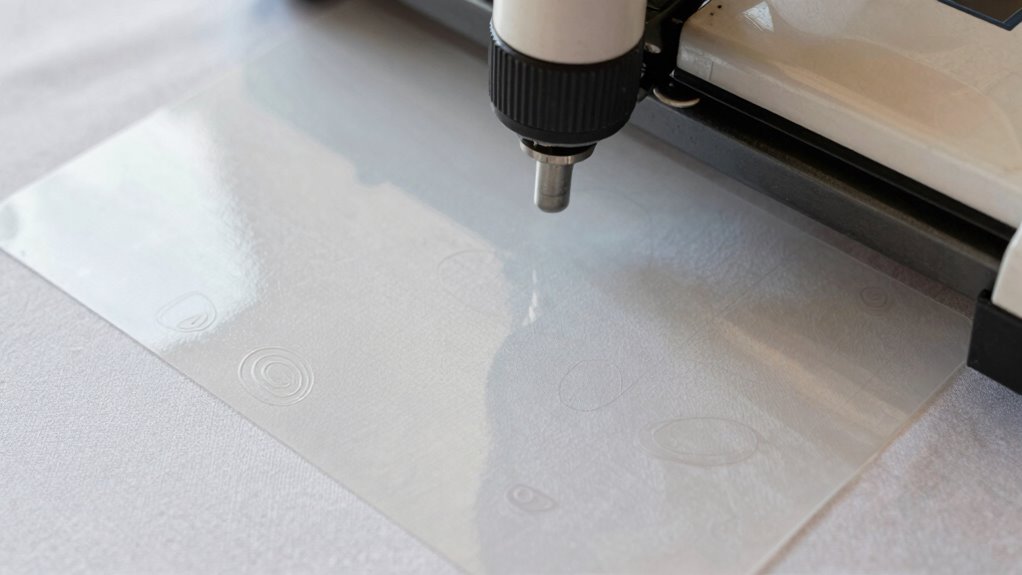
One common mistake that can negatively impact heat press pressure is neglecting to properly calibrate the machine before each use. Without correct pressure calibration, you risk uneven or insufficient pressure, which can ruin transfers. Make certain your press is calibrated regularly, checking that the pressure settings match manufacturer recommendations. Additionally, foam pad adjustment plays a vital role; an improperly aligned or worn foam pad can cause inconsistent pressure distribution. Always inspect and replace worn foam pads, and make sure they’re properly positioned before pressing. Failing to do these steps often results in pressure issues that compromise transfer quality. Taking time to calibrate your machine and adjust the foam pad correctly ensures even pressure, leading to better, more consistent results every time.
Troubleshooting Transfer Failures Caused by Incorrect Pressure
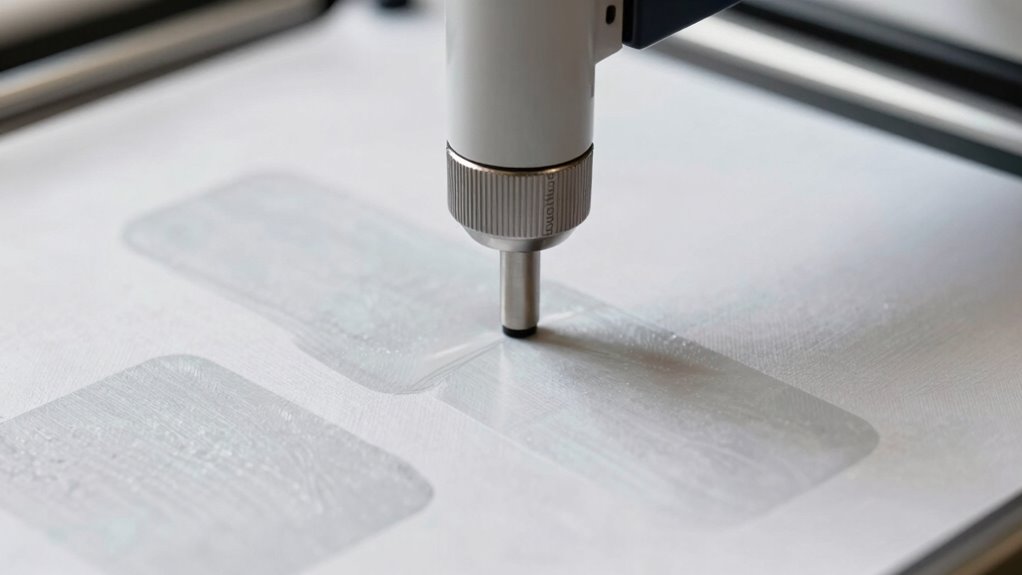
Incorrect heat press pressure is a common cause of transfer failures, leading to incomplete or uneven transfers. To troubleshoot, start with pressure calibration—ensure your press’s gauge is accurate and consistent. If pressure is too light, transfers may be incomplete; too heavy, and transfers can be distorted or damaged. Next, check your press pad selection. Using the wrong pad thickness can affect pressure distribution, causing uneven results. Make sure you’re using the appropriate pad for your transfer and substrate. Adjust the pressure accordingly, and re-calibrate if needed. Consistently monitoring these settings helps prevent transfer failures caused by inaccurate pressure. Proper pressure calibration combined with correct press pad selection ensures even, successful transfers every time.
Frequently Asked Questions
Can Heat Press Pressure Vary Between Different Types of Transfers?
Yes, heat press pressure can vary between different types of transfers. You need to modify the pressure based on transfer adhesion and material flexibility. For example, delicate transfers or flexible materials require lighter pressure to prevent damage, while thicker or less flexible transfers need firmer pressure for proper adhesion. Always test and follow manufacturer recommendations to guarantee your transfers adhere correctly without ruining the design or material.
How Does Pressure Impact the Longevity of Transfers?
You’ll find that proper pressure substantially impacts the longevity of your transfers. Applying the right pressure enhances transfer adhesion, ensuring it bonds well without damaging the material. Too much pressure can cause transfer cracking or peeling, especially if the transfer isn’t compatible with the material. Conversely, insufficient pressure leads to poor adhesion, reducing durability. Adjusting the pressure based on material compatibility and transfer type helps your designs last longer and look better over time.
Is There a Recommended Pressure Setting for Delicate or Thick Materials?
For delicate materials, you should use lower pressure settings to prevent damage, while thick materials benefit from higher pressure for better adhesion. Adjust the pressure based on the material’s sensitivity, guaranteeing it’s firm but not excessive. Always perform a test press to find the ideal pressure adjustment. This approach helps protect the transfer and ensures a professional finish without risking damage to the fabric or transfer.
Can Ambient Temperature Affect Heat Press Pressure Calibration?
Ambient temperature fluctuations can affect your heat press’s calibration accuracy. When temperatures vary, the machine’s internal components may respond differently, causing inconsistent pressure application. To maintain ideal results, regularly check and recalibrate your heat press, especially in environments with unstable temperatures. Keeping the workspace climate-controlled helps ensure consistent pressure settings, preventing transfers from being ruined due to invisible factors like temperature changes.
How Often Should I Recalibrate My Heat Press for Consistent Pressure?
Perfectly calibrate your press periodically to prevent poor prints. Generally, you should check the pressure gauge accuracy and recalibrate every 25 to 50 uses or monthly, whichever comes first. This consistent calibration frequency guarantees precise pressure application, preventing problems like uneven transfers. Regularly verifying your heat press’s calibration keeps your creations consistent, confident, and correct, avoiding costly mistakes caused by unnoticed pressure discrepancies.
Conclusion
Now, next time you press, remember that invisible pressure is just as vital as what you see. Sometimes, a tiny tweak can make all the difference between a flawless transfer and a costly mistake. It’s funny how the smallest details—like that hidden setting—can catch you off guard. Stay vigilant, keep your pressure consistent, and you’ll find your transfers improving every time. After all, perfect results often come from paying attention to those little, invisible pressures.