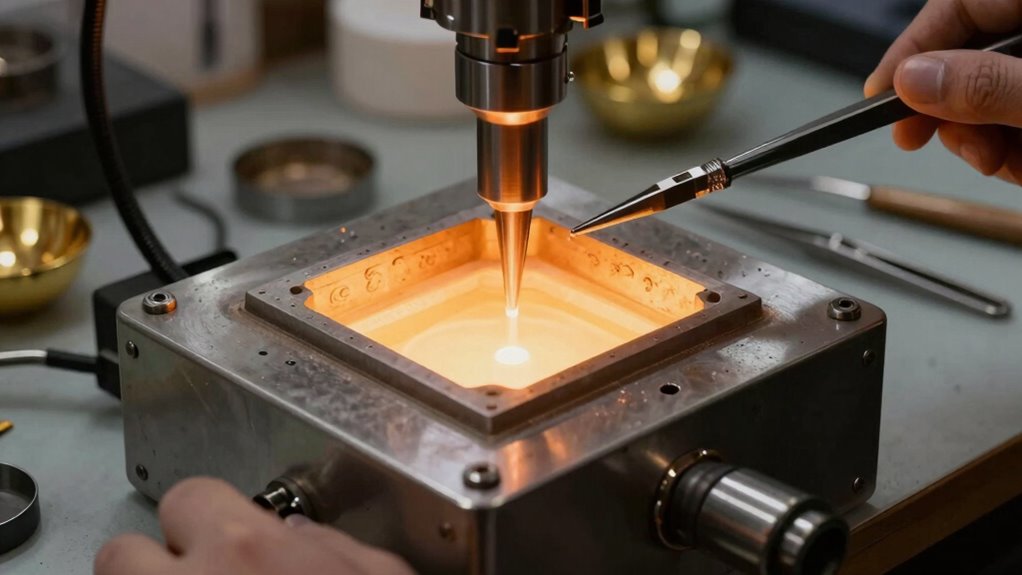

If you enjoy crafting detailed, intricate designs and experimenting with glazes or textures, a kiln is your best fit, offering versatility for firing ceramics or enamels. On the other hand, if you prefer creating multiple identical pieces with high precision and complex metal shapes, casting is ideal, especially for jewelry with detailed metalwork. Each setup aligns with different styles and techniques—keep exploring to discover which path suits your creative goals best.

Get business pricing on tools and workshop supplies
- Business-only prices and quantity discounts
- Tax-exempt purchasing
- Multiple users, one account, clear invoices
Key Takeaways
- Choose a kiln if you want versatile firing options for ceramics, enameling, or stress relief in metals.
- Opt for casting if you prefer creating intricate, detailed jewelry with multiple identical pieces.
- Consider a kiln for experimenting with glazes, textures, and finishing effects on various materials.
- Select casting for producing complex designs with high precision and consistency.
- Match your style to the workflow: casting suits small-scale, detailed projects; kilns suit broader firing techniques.
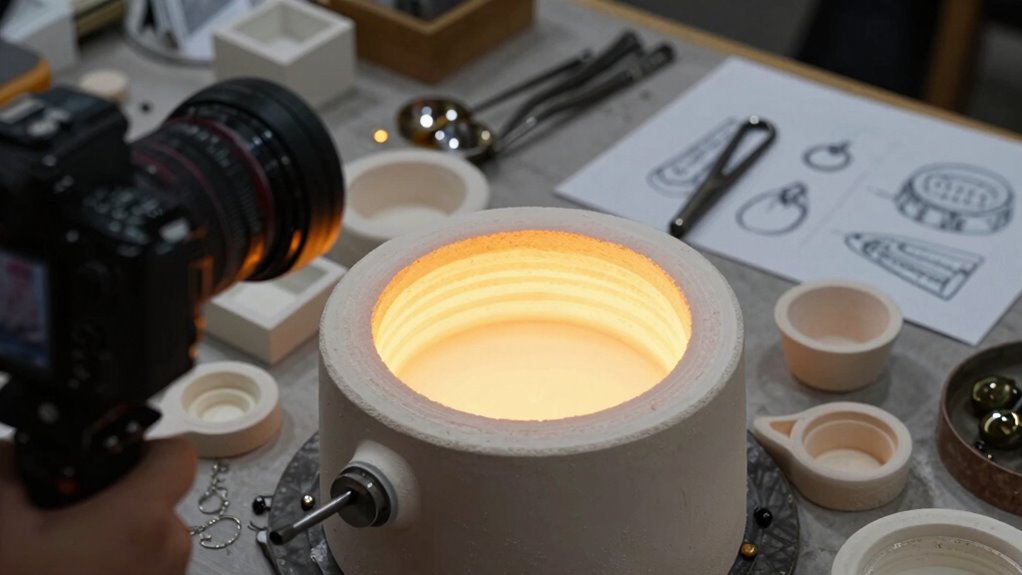
When choosing between these setups, understanding their differences is essential for achieving the best results in your metalworking or ceramics projects. If you’re passionate about jewelry design, your choice can significantly influence your creative process and the quality of your finished pieces. A kiln is primarily used for firing ceramics or heat-treating metals, while a casting setup involves melting and pouring metals into molds to create detailed jewelry components. Recognizing how each tool aligns with your goals helps you select the right equipment and optimize your material selection.
If your focus is on jewelry design that emphasizes intricate details and custom shapes, a casting setup might be more suitable. Casting allows you to create complex designs by pouring molten metal into molds, which can be made from wax or other materials. This process opens up a world of possibilities for unique, detailed jewelry pieces. Material selection is crucial here; you need to choose metals with the right melting points and properties, such as silver, gold, or bronze. Casting gives you the flexibility to work with these materials efficiently, especially if you plan to produce multiple pieces with consistent detail.
On the other hand, a kiln is invaluable if you prefer working with ceramic components or need to heat-treat metals to achieve specific finishes or properties. When working with ceramics in jewelry design, the kiln fires your pieces, transforming raw clay or ceramic clay into durable, finished elements. For metals, a kiln can be used for annealing, stress relief, or firing enamels, enabling smooth finishes and vibrant colors. Material selection in this context involves choosing suitable clays, glazes, or metals that can withstand high firing temperatures without degradation. Additionally, understanding the firing temperature of various materials is essential to prevent damage or failure during the process. Properly managing the firing process can also influence the color and texture of your finished pieces, adding to their uniqueness. Knowing the thermal properties of your materials helps ensure your pieces come out as intended without cracking or warping. Furthermore, mastering the firing schedule is key to achieving consistent results and avoiding defects.
Choosing between these setups also depends on your workflow and the scale of your projects. If you’re creating small, detailed pieces with a lot of mold work, casting might streamline your process. Conversely, if you enjoy experimenting with different firing techniques, glazes, or ceramic textures, a kiln offers more versatility. Both tools require some investment and learning, but understanding their roles in jewelry design and material selection helps you make an informed decision. Consider your style, the complexity of your designs, and the materials you want to work with, and you’ll find the setup that best complements your creative journey.
electric kiln for ceramics and enameling
As an affiliate, we earn on qualifying purchases.
As an affiliate, we earn on qualifying purchases.
Frequently Asked Questions
What Safety Precautions Are Essential for Kiln Use?
You should always wear safety gear like heat-resistant gloves, goggles, and a dust mask when using a kiln to protect yourself from heat and fumes. Make certain proper ventilation requirements are met to avoid inhaling harmful fumes. Keep the area clear of flammable materials, and never leave the kiln unattended while it’s firing. Regularly inspect the kiln for any damage, and follow the manufacturer’s safety instructions to prevent accidents.
How Much Space Is Needed for Casting Equipment?
You’ll need at least a 4×4-foot space for casting equipment, but larger areas are better if you work with multiple material types or larger pieces. Don’t forget, proper space permits safe equipment maintenance and easy movement. Overcoming the misconception that casting needs little room, ample space ensures you can work efficiently, handle different materials, and keep your setup safe and organized, making your jewelry-making process smoother and more enjoyable.
What Is the Typical Cost Difference Between Kiln and Casting Setup?
The pricing comparison shows that a kiln typically costs between $1,000 and $4,000, while a casting setup generally ranges from $3,000 to $10,000 or more. Your equipment investment depends on the quality and features you choose. For beginners, a kiln is a more affordable entry point, but if you’re serious about casting, investing in a full setup can save you money long-term and expand your creative options.
Can Beginners Easily Learn Both Techniques?
As a beginner, you can learn both glass fusing and wax model making, but it takes time and practice. Glass fusing involves working with a kiln, which is straightforward once you understand safety and temperature control. Wax model making introduces casting techniques, requiring patience and attention to detail. Starting with simple projects helps you build confidence in both techniques, making it easier to explore jewelry creation through either method.
Which Method Offers More Design Flexibility?
Coincidences often highlight hidden potentials, much like how your choice impacts your artistry. Casting offers greater design versatility and artistic freedom, allowing you to create intricate details and complex forms with ease. A kiln might limit certain techniques but excels in unique firing processes. If you crave diverse, detailed designs, casting suits you best. For more experimental, hands-on approaches, a kiln could reveal new creative possibilities.
Conclusion
Ultimately, choosing between a kiln and a casting setup depends on your unique style and goals. Think of it as selecting the brush that best paints your artistic vision — each tool offers a different palette of possibilities. Embrace the journey, for in mastering either path, you discover not just technical skill, but your true creative voice. After all, isn’t art about expressing who you are, one piece at a time?
Fall Picks
fall essentials
As an affiliate, we earn on qualifying purchases.