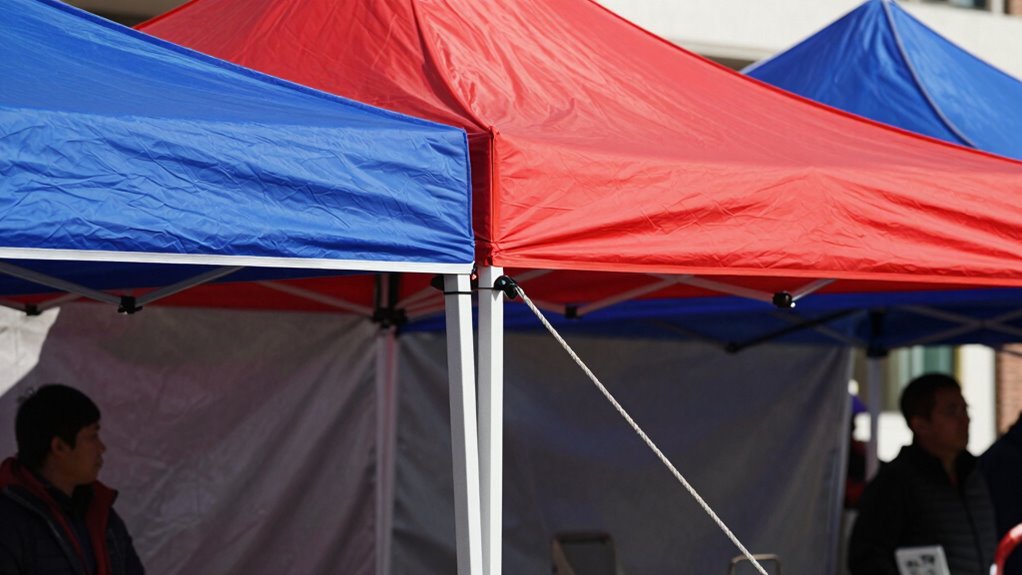
To keep your pop-up canopy from flying away, always check wind conditions before setup, avoiding winds over 15 mph. Secure your canopy with sturdy frames, wind vents, and heavy weights like sandbags or concrete blocks, evenly distributed along the legs. Use proper anchoring techniques, such as stakes or weighted anchors, and tighten tie-downs regularly. If gusts pick up or signs of instability appear, dismantle your canopy immediately. Continue exploring for proven strategies to prevent wind from ruining your booth.
Key Takeaways
- Check weather forecasts and avoid setup if wind exceeds 15 mph to prevent canopy damage or accidents.
- Use sturdy frames, reinforced fabric, and incorporate wind vents to improve wind resistance.
- Secure canopies with heavy weights, sandbags, or concrete blocks, distributing them evenly around all legs.
- Continuously monitor wind conditions and dismantle or stabilize the canopy if gusts reach 15-20 mph.
- Always anchor securely, stabilize each corner before raising, and work with a team for safe setup and breakdown.
Why Wind Safety Matters When Using Your Pop-Up Canopy

Wind safety is essential because a sudden gust can turn your pop-up canopy into a dangerous projectile. Checking weather forecasts helps you anticipate wind conditions, so you can decide whether to set up or postpone your event. Strong winds can catch your canopy unexpectedly, especially if the canopy materials aren’t suited for high wind resistance. Lightweight fabrics and flimsy frames are more likely to collapse or be blown away, risking injury or property damage. By understanding weather predictions, you can avoid setting up in unfavorable conditions, ensuring your safety and protecting your equipment. Proper material selection based on wind resistance ratings can further reduce risk during gusty days. Additionally, being aware of wind resistance ratings can guide you in choosing canopies that are better suited for windy environments. Always review the forecast before pitching your canopy, especially during windy seasons, so you can take appropriate precautions and prevent accidents caused by unexpected gusts. Familiarizing yourself with canopy construction can also help you identify models designed for more challenging weather conditions, especially when combined with additional safety accessories like weights or tie-downs. Knowing the testing standards for wind resistance can help you select products that meet safety benchmarks, providing extra confidence in your setup.
How to Check Wind Conditions Before Setting Up Your Canopy
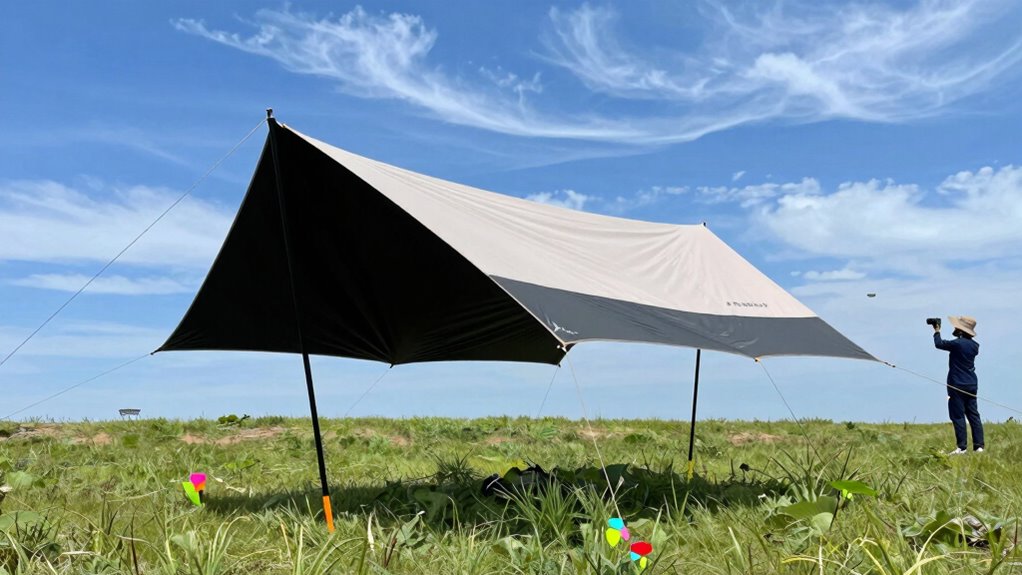
Before setting up your canopy, it’s important to assess the current wind conditions to guarantee safety. Check the latest weather forecast for updates on wind speed and gusts. Ideally, avoid installing your canopy if wind speeds exceed 15 mph, as higher speeds increase risks. Use a portable anemometer to measure wind speed directly on-site. Additionally, observe the sky and surroundings for signs of gusts or sudden changes. Keep this quick reference in mind:
| Weather Condition | Wind Speed (mph) | Recommended Action |
|---|---|---|
| Calm | 0-5 | Safe to set up |
| Light breeze | 6-10 | Proceed with caution |
| Moderate breeze | 11-15 | Consider delaying setup |
| Strong breeze | 16-20 | Postpone setup until calmer |
| Gale or storm | 21+ | Do not set up |
Being vigilant helps prevent accidents and keeps your booth secure. Maintaining awareness of wind conditions is essential for safe setup and operation. Always remember that proper setup procedures can make a significant difference in ensuring the stability of your canopy. Recognizing signs of gusts can help you make timely decisions to prevent accidents. Additionally, understanding how changing wind patterns can suddenly affect your setup is crucial for safety. Monitoring weather updates regularly can help you anticipate sudden shifts in wind behavior.
Choose a Wind-Resistant Canopy and Frame for Outdoor Events
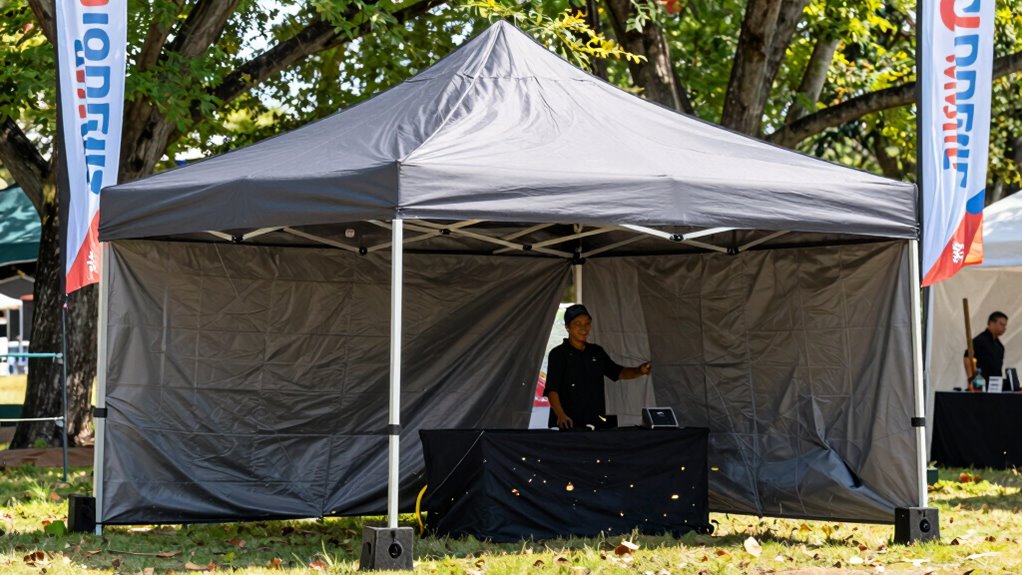
Choosing a wind-resistant canopy and frame is essential for guaranteeing safety and stability during outdoor events. Focus on fabric durability to withstand gusts without tearing or flapping excessively, which helps maintain the canopy’s integrity. Look for high-quality materials like polyethylene or polyester with reinforced seams for added strength. Equally important are the frame materials; sturdy options like powder-coated steel or aluminum provide durability and resistance to rust and bending. These materials help your canopy stand firm against wind forces. Avoid lightweight or flimsy frames that can easily bend or break. Investing in a well-designed wind-resistant canopy with durable fabric and robust frame materials ensures your booth stays upright, giving you peace of mind and a safer setup during outdoor activities. Incorporating outdoor equipment designed for wind resistance can further improve your setup’s stability and safety. Additionally, selecting canopies with wind vents can help reduce internal pressure and prevent uplift during strong gusts. Proper anchoring and weight distribution are also crucial to prevent your canopy from shifting or toppling in high winds. Using anchoring systems specifically designed for windy conditions can significantly enhance overall stability.
How to Secure Your Canopy With Weights and Anchors
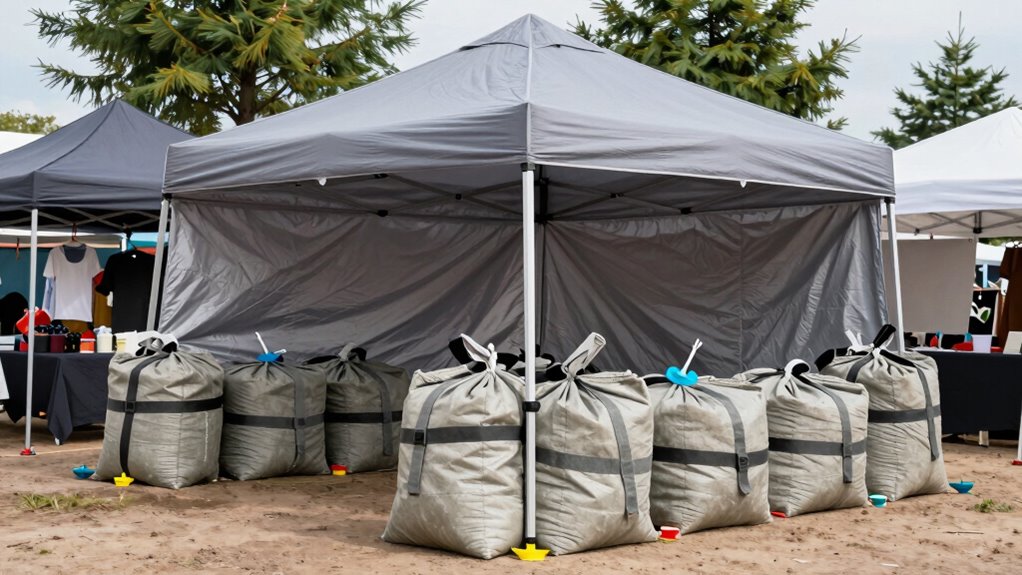
Securing your canopy with weights and anchors is essential to prevent it from lifting or shifting during strong gusts. Start by selecting the right materials for weights, such as sandbags, water weights, or concrete blocks, that are durable and easy to handle. Proper material selection guarantees stability without damaging your canopy or surface. Focus on weight distribution by placing weights evenly along the legs and corners of your canopy. This balanced approach helps maintain stability and prevents tipping. Make sure weights are secure, and avoid concentrating too much weight in one area. By choosing the right materials and distributing weight effectively, you’ll enhance your canopy’s stability and reduce the risk of it being blown away. Additionally, understanding wind safety principles can help you anticipate and react to changing weather conditions more effectively.
Best Techniques for Anchoring Your Canopy to the Ground
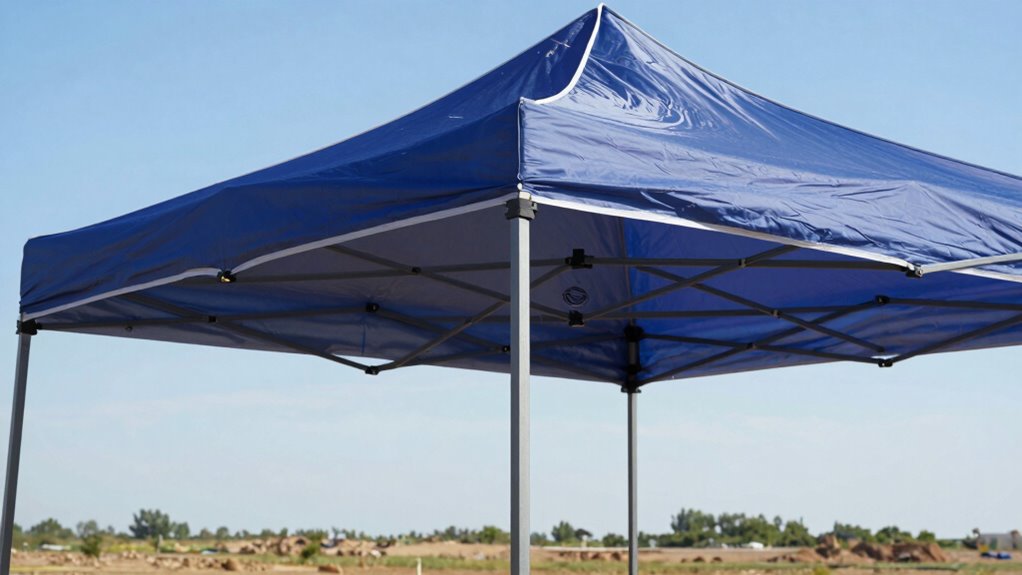
Anchoring your canopy securely to the ground is vital for preventing it from shifting or collapsing in strong winds. Proper anchoring reduces the risk of wind-related accidents and ensures your canopy remains in place during events. To achieve this, regularly inspect your anchors and maintain your canopy to keep everything in optimal condition. Using easy-to-follow guidance can help you identify the best anchoring methods for your specific situation. Consider these best techniques:
- Use heavy-duty stakes or anchors suited for your ground type.
- Combine weights with anchors for extra stability.
- Check that all tie-downs are tight and secure before wind picks up.
- Remember that wind safety is essential to protect both your equipment and your guests.
- Regularly reviewing anchoring techniques can improve overall stability and safety during windy conditions.
- Incorporating ground condition assessment into your preparation can further enhance your safety measures.
How to Use Tie-Downs and Ropes to Keep Your Canopy Stable
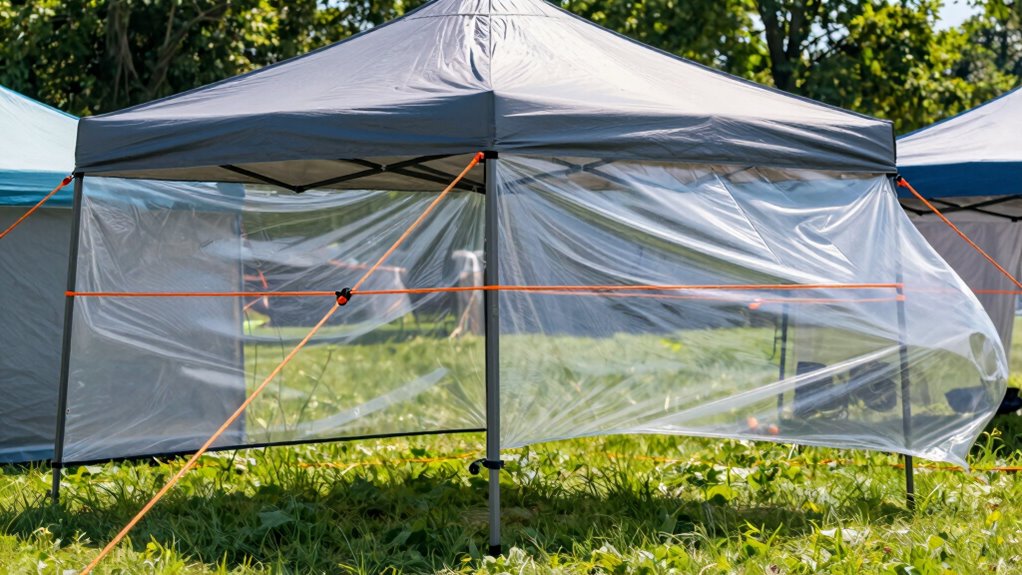
Using tie-downs and ropes effectively is essential for maintaining your canopy’s stability in windy conditions. Start by selecting the right ropes—nylon or polyester are durable choices that resist stretching. When attaching ropes, use proper tightening techniques to prevent slack, which can cause flapping or lifting. Secure the ropes tightly to anchor points on your canopy frame and the ground stakes or weights. Consistently check tension, ensuring ropes are snug but not overly tight, to avoid stressing the frame. Adjustments may be needed if wind conditions change. Proper rope selection and effective tightening techniques help distribute wind force evenly, reducing the risk of your canopy tipping or flying away. Remember, well-secured tie-downs are your best defense against sudden gusts. Incorporating proper tensioning methods and appropriate anchoring techniques can further improve stability and safety during gusty weather, especially when using wind-resistant equipment to enhance overall security.
Signs It’s Time to Take Down Your Canopy to Prevent Damage
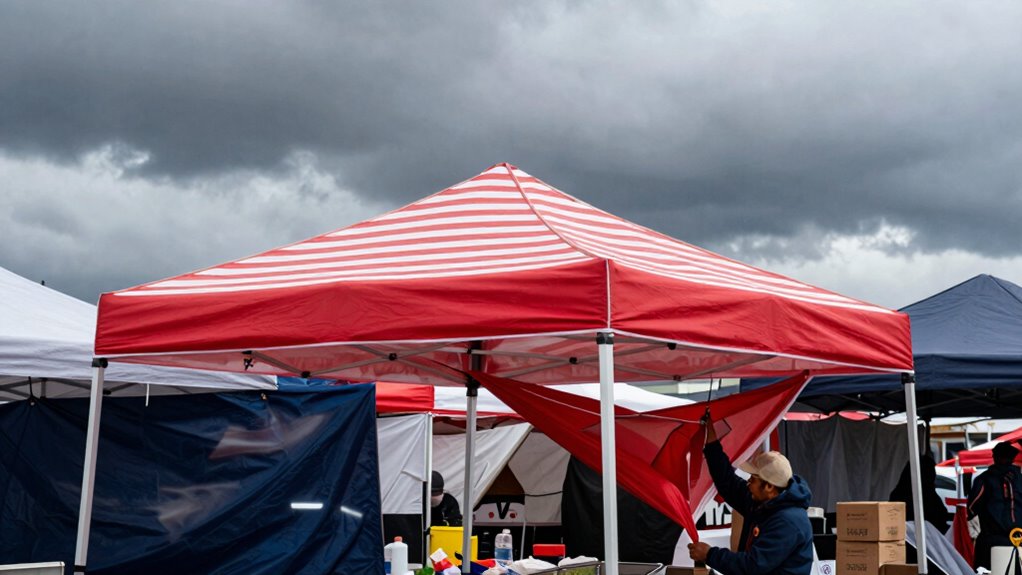
If you notice strong winds picking up or persistent gusts, it’s a clear sign you should take down your canopy. These sudden movements can easily damage the frame or fabric if left unattended. Staying alert to wind conditions helps protect your equipment and keeps everyone safe. Additionally, understanding wind safety measures can prevent accidents and ensure your event runs smoothly. Taking proactive steps, such as securing loose items and monitoring security zone info, can further mitigate risks during windy conditions. Incorporating smart weather alerts can also help you stay informed about changing conditions and respond promptly. Recognizing signs of wind stress on your canopy allows you to act before potential damage occurs. Being aware of indoor air quality factors can also help you make better decisions about your outdoor setup.
Strong Winds Signs
Strong winds can quickly turn a stable canopy into a dangerous hazard, so recognizing the signs that indicate it’s time to take it down is essential. If you’re using an indoor setup or measuring wind speed, stay alert to subtle changes. When wind speeds reach about 20-25 mph, it’s time to act. Signs include:
- Canopy fabric fluttering or straining against the frame
- Sudden, persistent rattling sounds
- Feeling resistance or movement when you gently tug or stabilize it
- Remember that staying aware and prepared for changing weather conditions can help prevent accidents before they happen.
Even if the wind isn’t strong enough to trigger a wind speed measurement device, these signs show your canopy might be at risk. Always prioritize safety—if you notice any of these, it’s best to take down your canopy before damage occurs.
Persistent Gust Alerts
Persistent gusts can catch you off guard, rapidly increasing wind pressure on your canopy. When the weather forecast predicts sustained wind speeds or sudden gusts, it’s time to pay attention. Signs like your canopy rocking or flapping more intensely indicate it’s risking damage. If wind speeds reach or exceed your canopy’s safe limit—usually around 20-25 mph—consider taking it down. To help you stay alert, here’s a quick guide:
| Wind Speed | Action |
|---|---|
| 10-15 mph | Monitor conditions closely |
| 15-20 mph | Prepare to secure or dismantle |
| 20+ mph | Take down the canopy immediately |
Persistent gust alerts are your cue to act before your canopy becomes a casualty of the wind.
Tips for Setting Up and Breaking Down Safely in Windy Conditions
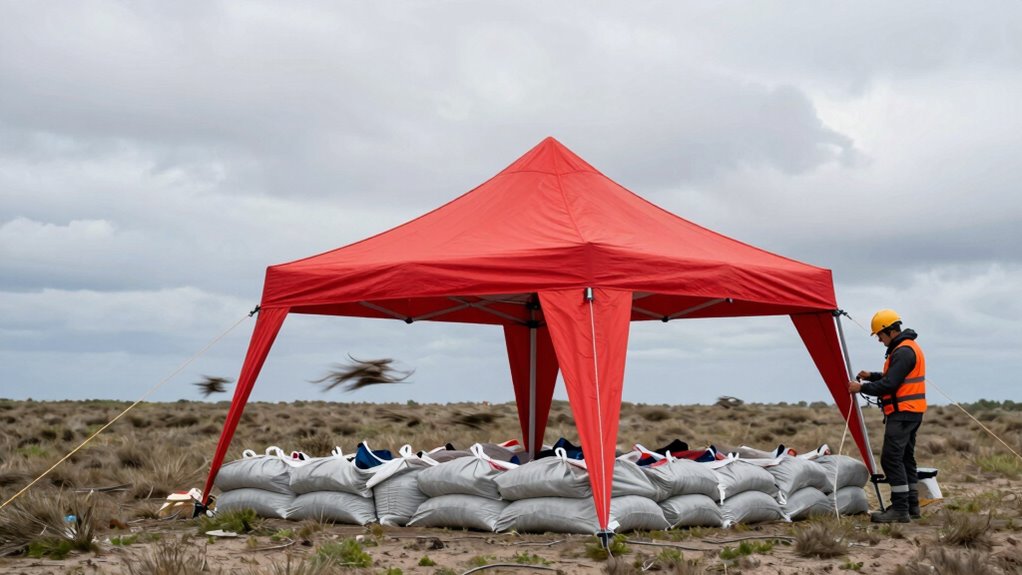
Setting up and breaking down a pop-up canopy in windy conditions requires extra caution to prevent accidents or damage. To guarantee safety, consider factors like the pop up canopy design and how it performs in outdoor event planning. When setting up, secure the canopy with heavy weights or sandbags, especially if the wind picks up unexpectedly. Always stabilize each corner before raising the frame fully. For breaking down, deflate and collapse the canopy quickly while it’s still stable to avoid it catching the wind.
- Use stakes or weights to anchor the canopy firmly
- Avoid setting up on uneven or open terrain
- Work with a team to manage the canopy more safely
Following these tips helps keep your booth standing and your event safe, even in unpredictable wind conditions.
Common Mistakes That Make Your Canopy Vulnerable in Wind
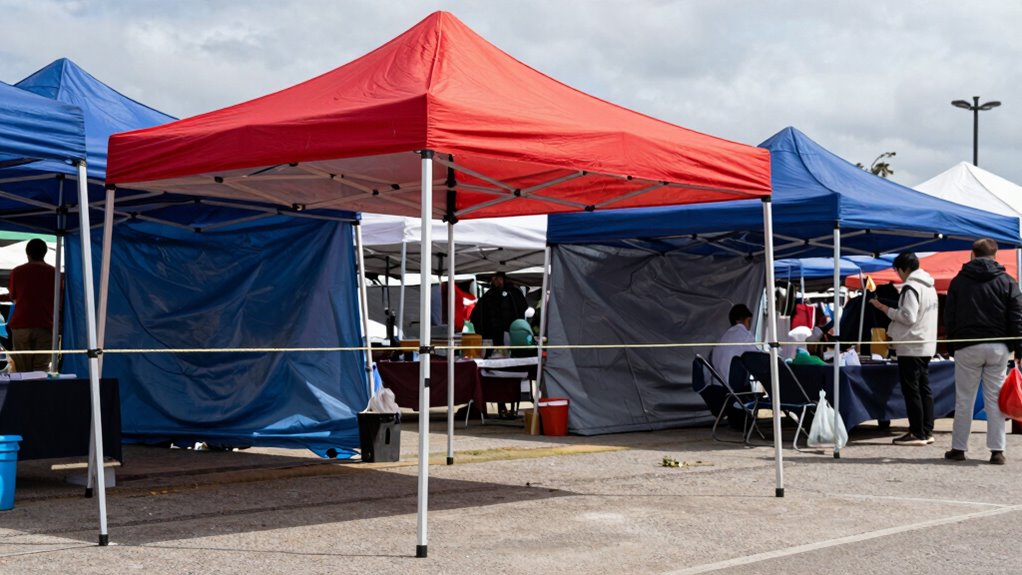
One common mistake is ignoring current wind conditions, which can catch you off guard and damage your canopy. Using improper or unsecured anchors also leaves your tent vulnerable to strong gusts. To keep your canopy safe, always check the weather and guarantee your anchors are correctly installed.
Ignoring Wind Conditions
Many people underestimate how quickly wind can pick up, leaving their canopies vulnerable to damage. Ignoring wind conditions is a common mistake that can cause your booth to collapse or fly away. Before setting up, check the forecast and adjust your setup accordingly. Proper weight distribution is essential—distribute weight evenly across all legs to improve stability. Also, choose a canopy with durable material that can withstand gusts.
Consider these points:
- Failing to monitor wind increases the risk of toppling or tearing.
- Using insufficient weight distribution makes the structure unstable.
- Selecting flimsy materials reduces overall durability in windy conditions.
Improper Anchor Usage
Improper anchor usage is a common mistake that leaves your canopy vulnerable in windy conditions. If you don’t use the right anchors or don’t stake them properly, you risk anchor failure, which can cause your canopy to lift or collapse. Improper staking weakens the foundation, making it easier for gusts to push the structure out of place. Always choose anchors suited for your terrain—sand, grass, or pavement—and verify they’re driven deep into the ground. Don’t just loosely stake; tighten and secure all anchors firmly. Relying on inadequate or poorly placed anchors increases the risk of your canopy flying away or tipping over during a sudden gust. Proper anchoring is essential to keep your booth stable and safe, especially when wind picks up unexpectedly.
What to Do If Your Canopy Starts to Fly Away in Strong Winds
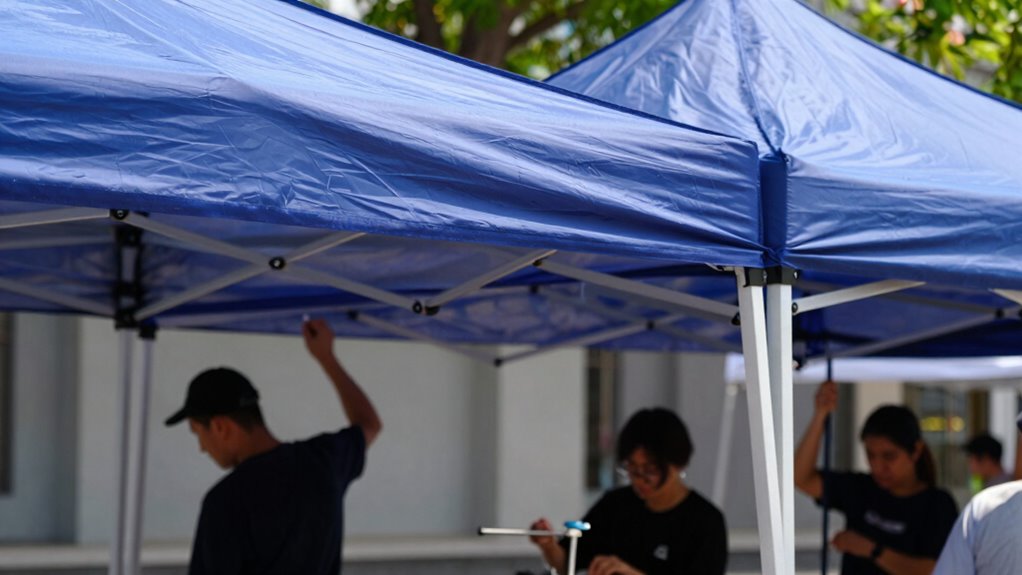
If your canopy suddenly starts to lift or shift dangerously in strong winds, your immediate priority is to act quickly and safely. Recognize that high wind speeds can quickly turn your setup into a hazard. First, try to stabilize the canopy by gripping the frame and lowering it if possible. If it’s clear that the wind is too strong and your canopy material is vulnerable, it’s best to release the canopy to prevent damage or injury. Always keep an eye on the wind conditions before setting up, and have a plan for quick removal. Remember:
- Don’t attempt to fight the wind alone
- Prioritize your safety and that of others
- Dismantle and store the canopy if conditions worsen
Frequently Asked Questions
Can I Repair My Canopy if It Gets Damaged by Wind?
Yes, you can repair your canopy if it gets wind damage. Start with canopy patching for small tears or holes, which is quick and easy. For more extensive damage, consider wind damage repair options like replacing damaged poles or fabric panels. Always inspect for weak points after a wind event, and secure your canopy better next time to prevent further issues. Proper repairs help extend your canopy’s lifespan and maintain safety.
What Are the Best Storage Practices to Prevent Wind Damage?
To prevent wind damage, you should practice proper storage by always using secure straps to keep your canopy tightly rolled or folded. Store it in a dry, cool place away from direct sunlight, which can weaken fabric over time. Make sure the canopy is completely dry before storing to avoid mold. Proper storage not only maintains the canopy’s condition but also guarantees it’s ready to withstand unexpected winds when you set up again.
Are There Specific Canopies Designed for High-Wind Areas?
Yes, there are canopies designed for high-wind areas. Look for models made with wind resistant materials and specialized canopy designs that enhance stability. These canopies often feature reinforced frames, vented roofs, and secure anchoring systems. Choosing a wind-resistant canopy helps guarantee your booth stays upright during gusty conditions, providing safety and peace of mind. Always verify the product specifications to confirm it’s rated for high-wind environments before setting up.
How Often Should I Inspect My Canopy for Wind-Related Wear?
You should inspect your canopy after every event or strong wind gusts—don’t wait too long. Regular canopy maintenance is essential to catch early signs of wind damage that could lead to failure. Look for frayed seams, bent frames, or loose fittings. If you notice any wear or damage, address it immediately. Staying vigilant guarantees your canopy stays secure and ready, preventing surprises that could topple your setup when you least expect it.
Can I Use Additional Household Items to Secure My Canopy Outdoors?
Yes, you can use DIY solutions and household hacks to secure your canopy outdoors. Items like sandbags, heavy household objects, or even filled water bottles work well. You might also consider bungee cords or ropes to anchor the legs to nearby sturdy surfaces. Just make certain whatever you use is heavy and secure enough to withstand wind. These simple hacks help keep your booth stable and prevent it from flying away.
Conclusion
Remember, over 70% of canopy accidents happen in windy conditions. Staying vigilant and following safety tips can prevent your booth from flying away and avoid costly damages. Always check the weather forecast, secure your canopy properly, and know when to take it down. By taking these precautions, you protect your investment and ensure everyone stays safe. Don’t let wind ruin your event—be prepared, stay alert, and keep your booth standing strong!