
To stop scorch marks on blank shirts, always use the right protective paper and set your iron to the correct temperature for the fabric. Keep the iron moving and avoid lingering in one spot. Use pressing or heat transfer paper designed for your fabric type to distribute heat evenly and prevent shiny patches. For more tips on choosing the best paper and temperature combos, continue exploring effective ironing techniques.
Key Takeaways
- Use specialized pressing or heat transfer paper compatible with your fabric to distribute heat evenly and prevent scorch marks.
- Adjust iron temperature according to fabric type, keeping it lower for delicate textiles and higher for cotton or sturdy fabrics.
- Keep the iron moving constantly to avoid heat buildup in one spot, reducing the risk of burning or shiny patches.
- Always match the paper type with the fabric’s heat tolerance, and use a pressing cloth when necessary for extra protection.
- Regularly clean the iron’s soleplate and use distilled water to maintain consistent heat and prevent residue that can cause scorch marks.
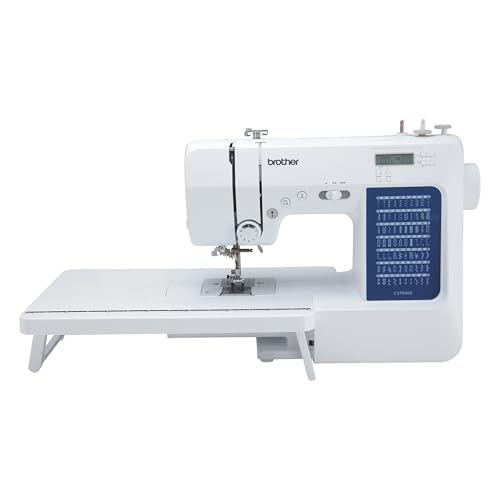
Brother CS7000X Computerized Sewing and Quilting Machine, 70 Built-in Stitches, LCD Display, Wide Table, 10 Included Feet, White
70 UNIQUE BUILT-IN STITCHES: The Brother CS7000X sewing and quilting machine includes 70 built-in stitches including utility, decorative,...
As an affiliate, we earn on qualifying purchases.
Why Do Scorch Marks Appear When Ironing Shirts?
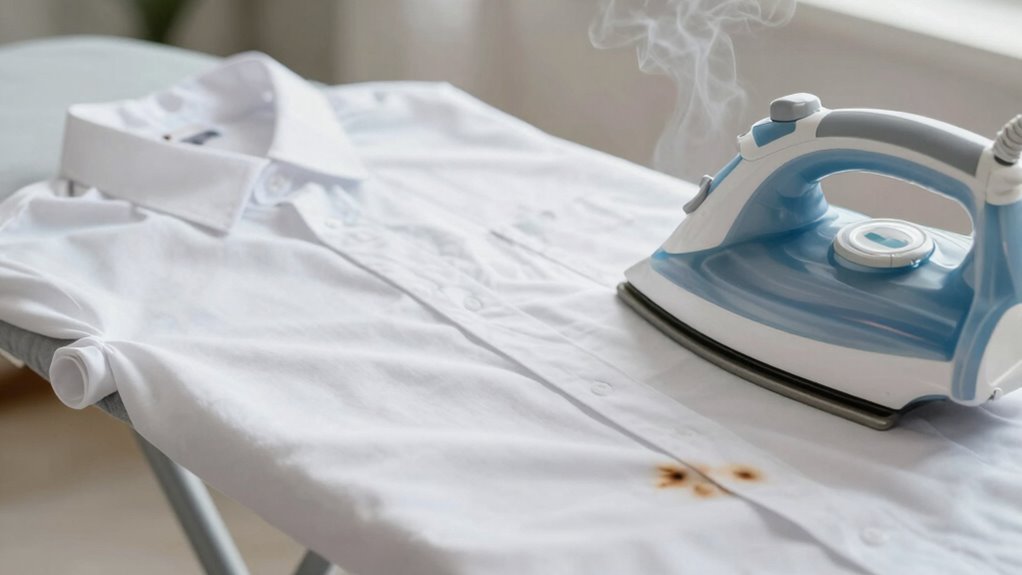
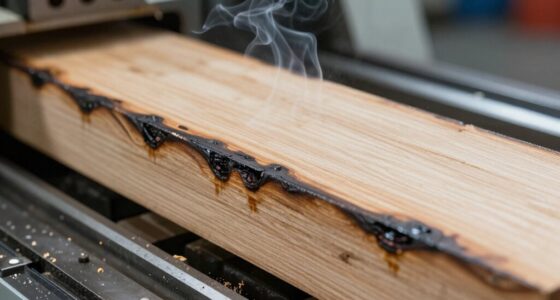
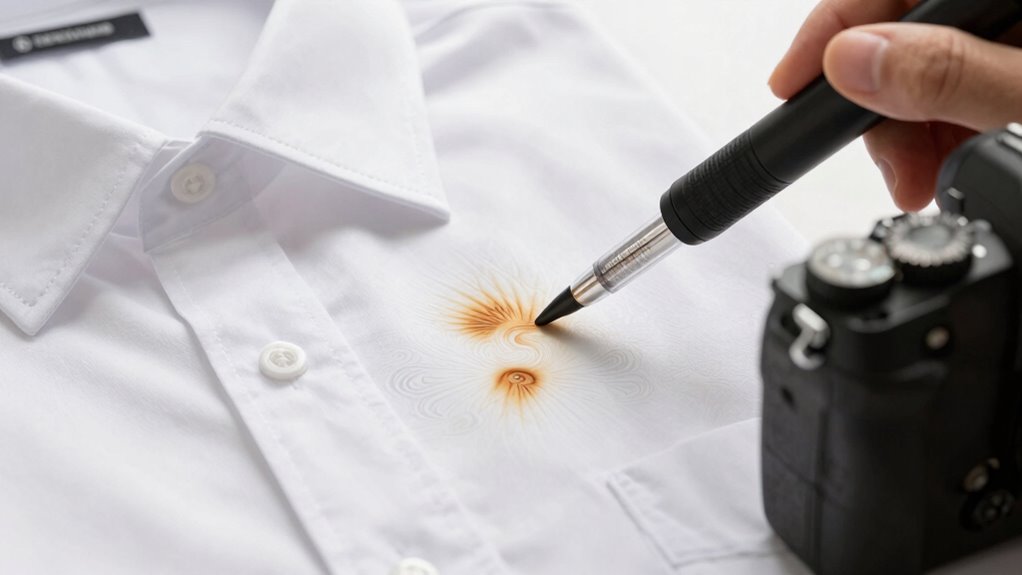
Scorch marks often appear when you’re ironing shirts because the iron gets too hot or stays in one spot for too long. Different fabric textures react differently to heat; delicate fabrics like silk or polyester are more prone to scorching. Ignoring proper ironing etiquette, such as skipping the use of a pressing cloth or not adjusting the temperature, increases risk. When you press too hard or linger in one area, heat builds up, causing visible burn marks. To prevent this, always check the fabric’s heat tolerance and follow recommended settings. Using the right technique and respecting fabric textures can save your shirts from scorch marks, keeping them looking crisp and professional without damaging the material. Proper temperature control and understanding fabric properties are essential for effective ironing. Additionally, using appropriate ironing techniques can further reduce the risk of damage to delicate fabrics. Being aware of the contrast ratio of your iron’s heat settings can help you better match the temperature to different materials, reducing the chance of scorching. Maintaining the airflow around your iron can also help in distributing heat evenly and preventing localized burning. Optimizing your iron’s heat distribution can make a significant difference in preventing scorch marks and prolonging the lifespan of your shirts.

Brother XR9550 Sewing and Quilting Machine, Computerized, 165 Built-in Stitches, LCD Display, Wide Table, 8 Included Presser Feet, White
165 unique built-in stitches: The Brother XR9550 computerized machine includes 110 built-in utility, decorative and heirloom stitches including...
As an affiliate, we earn on qualifying purchases.
How Iron Temperature Affects Your Shirt’s Safety
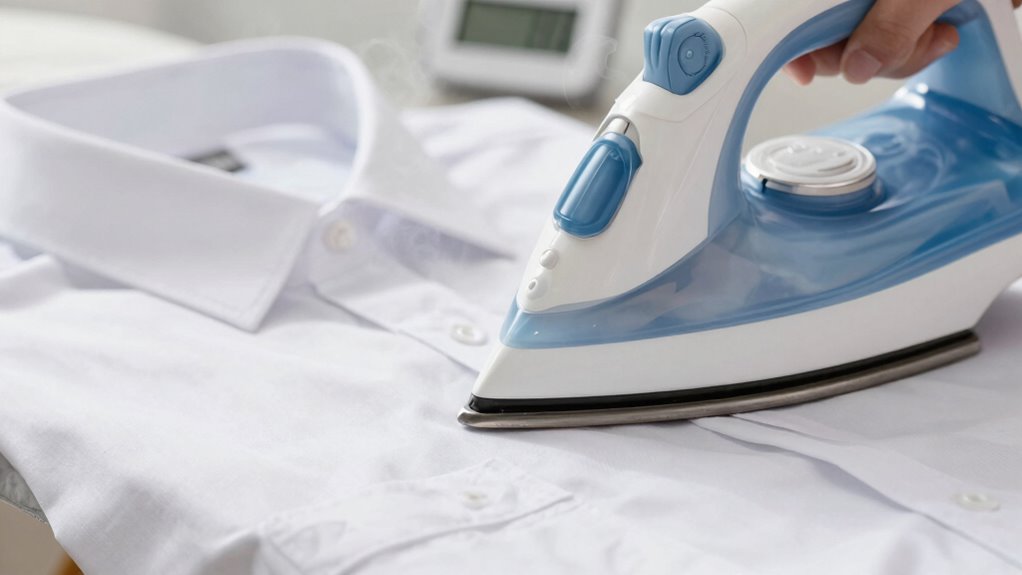
Since using the correct iron temperature is essential, setting your iron too high can quickly damage your shirt’s fibers. Excessive heat causes the delicate fabric fibers to weaken or melt, resulting in scorches or shiny patches. Understanding how heat transfer works helps you prevent damage; lower temperatures reduce the risk of scorching, while higher temps accelerate the transfer of heat into the fabric. Different fabrics need different settings—cotton requires a higher temp, whereas polyester needs a cooler iron. Always check the fabric label and test on a hidden area first. Proper temperature control guarantees efficient pressing without risking burns or permanent damage. Heat transfer principles play a key role in understanding how temperature affects fabric safety. By adjusting your iron correctly, you protect your shirt’s integrity and maintain its appearance longer. Additionally, being aware of fabric care labels ensures you select the optimal temperature and avoid unintended damage. Recognizing fabric heat tolerance helps you choose the safest settings for each material, and understanding how thermal conductivity varies among fabrics can further improve your ironing technique. Moreover, understanding the moisture content of fabrics can influence the ideal temperature setting, preventing damage caused by excessive dryness or dampness.

SINGER Quantum Stylist 9960 Computerized Sewing & Quilting Machine – Metal, Plastic, with Extension Table, Hard Case & Accessories, 600 Stitches, Lettering, LED Light, 1-Step Buttonhole
VERSATILE STITCH OPTIONS: The SINGER Quantum Stylist 9960 offers 600 built-in stitches and 1,172 stitch applications, including essential,...
As an affiliate, we earn on qualifying purchases.
Choosing the Best Paper to Protect Your Clothes
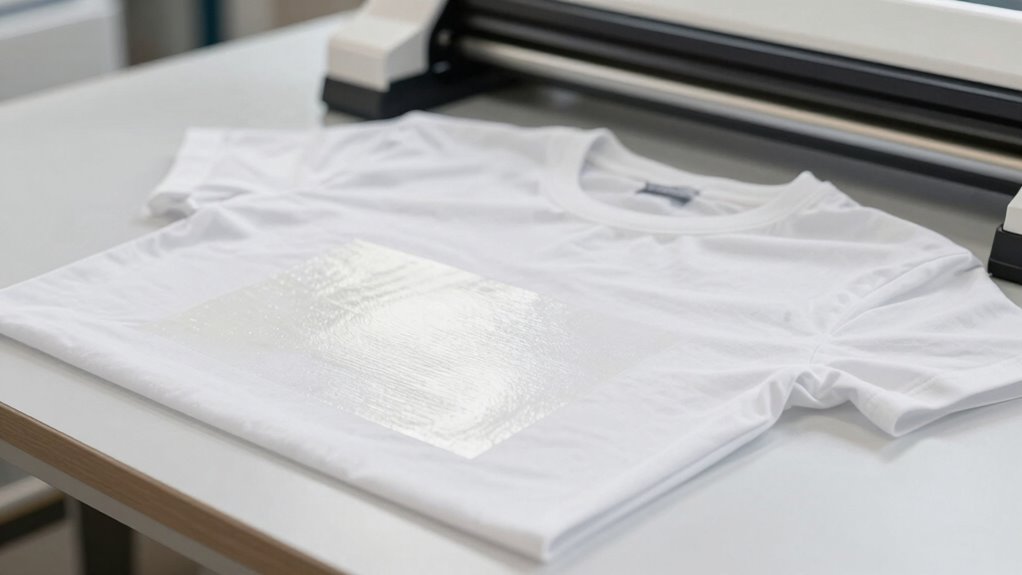
Choosing the right paper to protect your clothes is essential for preventing direct heat contact and avoiding damage. The best paper varies depending on your fabric patterns, as delicate fabrics like silk need gentler protection, while sturdier materials can handle more robust options. Look for heat transfer or pressing papers designed specifically for iron safety, ensuring they won’t stick or cause scorching. Always check that the paper is compatible with your fabric type and pattern to prevent unwanted marks or discoloration. Using high-quality, purpose-made papers helps distribute heat evenly, reducing the risk of scorch marks. Proper workspace setup and technique also play a crucial role in achieving safe and more effective results. Additionally, understanding the heat transfer process can help you select the most suitable paper for your needs. Knowing the material properties of your fabrics allows for better selection of protective papers, minimizing the chances of damage. Being aware of fabric durability can guide you in choosing the right level of protection to extend the lifespan of your shirts. Moreover, selecting papers with heat resistance features can further enhance safety and effectiveness. Remember, selecting proper paper not only safeguards your shirts but also extends their lifespan, making your ironing safer and more effective.

AST&T Heat Press Machine 12" x 10" Portable & Easy Heat Press for T-Shirts, Pillows, Tote Bags & More White (Heat Press)
12 X 10 HEATING PLATE: Easy press 12 inches x 10 inches size (30 .52centimeters x 25.4 centimeters)...
As an affiliate, we earn on qualifying purchases.
How to Use the Right Paper and Temperature Together

To effectively prevent scorch marks, you need to carefully match the paper type with the correct temperature setting on your iron. The fabric composition determines the ideal heat level—delicate fabrics like polyester require lower temperatures, while cotton can handle higher heat. Using the right ironing accessories, such as specialized pressing papers, helps distribute heat evenly and protects the fabric. Always check the garment’s care label for recommended temperature settings. When selecting your paper, choose one designed for your fabric’s heat tolerance. Setting your iron to the appropriate temperature ensures the paper performs its protective role without burning. Proper pairing of paper and temperature minimizes marks and keeps your shirts looking fresh and unblemished. Additionally, understanding the heat tolerance of different fabrics allows you to tailor your approach for optimal results. Being aware of fabric properties can further improve your ironing technique and prevent damage, especially for delicate fabrics that require extra care. Recognizing local automation options, such as smart ironing systems, can enhance efficiency and consistency in your routine. Knowing how to match heat and materials effectively is essential for achieving a professional finish without damage.
Step-by-Step: Preventing Scorch Marks While Ironing

To prevent scorch marks while ironing, you need to follow a few essential steps. Use the right type of paper and keep your iron at the correct temperature for your fabric. Additionally, keep the iron moving constantly to avoid staying in one spot too long. Proper iron temperature control is crucial for protecting your shirts from damage. Being aware of free floating techniques can also help you maintain a safe distance from the fabric, reducing the risk of scorching. Regularly reviewing and adjusting your goal tracking strategy ensures continuous improvement and prevents setbacks.
Use Appropriate Paper Type
Using the right type of paper can make a big difference in preventing scorch marks while ironing. Different fabric types require specific paper compatibility to avoid damage. For delicate fabrics like silk or polyester, choose a thin, non-stick pressing paper that won’t stick or leave residue. For sturdier materials like cotton or linen, you can use thicker, heat-resistant paper to provide a protective barrier. Always check the label or manufacturer’s instructions to guarantee the paper suits your fabric type. Using incompatible paper can cause uneven heat transfer or even burn marks. Selecting the appropriate paper type helps distribute heat evenly and prevents direct contact between the iron and fabric, reducing scorch risk and keeping your shirts looking fresh and unblemished. Additionally, understanding water chemistry can help maintain your iron’s performance and prevent mineral buildup that might contribute to scorching. Proper iron maintenance ensures consistent heat distribution and extends the lifespan of your appliance, especially when combined with the right paper type to protect your garments. Being aware of fabric-specific heat settings can further help avoid damaging delicate textiles. Moreover, choosing the correct ironing technique can also minimize the risk of scorch marks and ensure a smooth, professional finish.
Maintain Correct Iron Temperature
Choosing the right paper type helps protect your fabric, but maintaining the correct iron temperature is equally important for preventing scorch marks. When you set your iron, consider the fabric fibers you’re working with—delicate silks require a lower heat, while cotton and linen tolerate higher temperatures. Always check the fabric’s care label and adjust your iron accordingly, practicing good ironing safety. Using too high a temperature risks burning the fibers, leaving scorch marks that ruin your shirt. Conversely, too low a temperature won’t effectively remove wrinkles. Regularly test the heat on a hidden area if you’re unsure, and never leave the iron unattended while hot. Proper temperature control helps you iron efficiently without damaging your fabric or leaving marks.
Keep Iron Moving Constantly
Keeping the iron moving steadily across the fabric is essential for preventing scorch marks. Constant motion prevents the iron from lingering in one spot, which can burn fabric fibers or cause shiny spots. Adjust your iron pressure appropriately; too much pressure can increase risk, while too little won’t smooth wrinkles effectively. Use a consistent rhythm when ironing to maintain even heat distribution. To help, consider this approach:
| Technique | Benefits |
|---|---|
| Keep Iron Moving | Avoids heat buildup and fabric damage |
| Moderate Iron Pressure | Prevents pressing too hard on fibers |
| Use Light Strokes | Protects fabric fibers and reduces shine |
| Regularly Adjust Speed | Ensures even heat and smooth results |
Common Ironing Problems and How to Fix Them
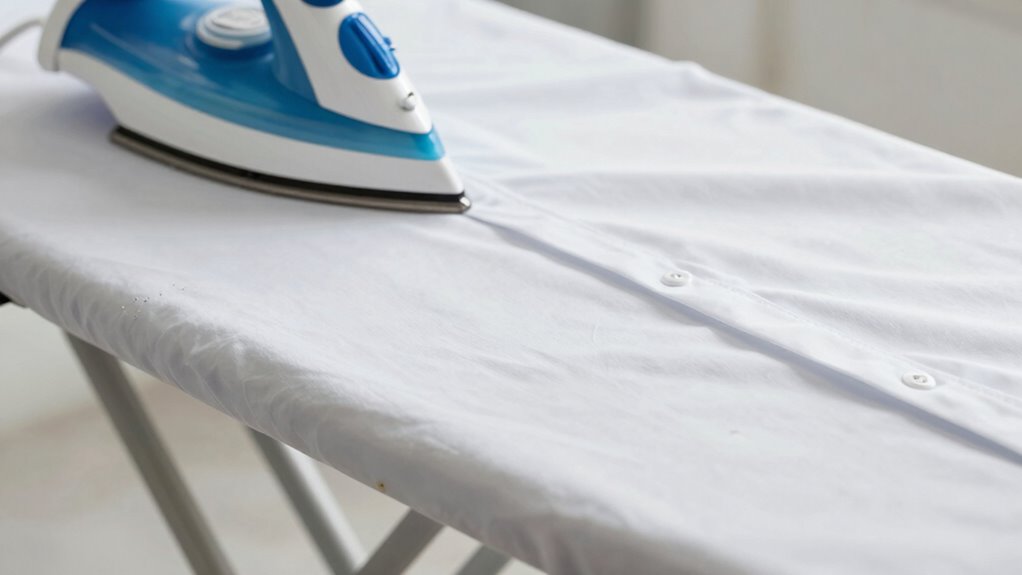
One common ironing problem is scorch marks, which often occur when the iron gets too hot or is left in one spot for too long. Different fabric textures react differently to heat, so knowing your shirt’s material helps prevent damage. For delicate fabrics, use a lower temperature setting and always check the care label first. Iron safety is essential—always keep the iron moving and avoid pressing too hard, which can cause burns. If you notice a scorch mark forming, lift the iron immediately and lower the temperature. Using a pressing cloth can also protect delicate fabrics and distribute heat evenly. Staying mindful of fabric textures and adjusting your iron’s heat accordingly reduces the risk of scorch marks and keeps your shirts looking fresh.
Tips to Maintain Your Iron and Keep Shirts Looking Great
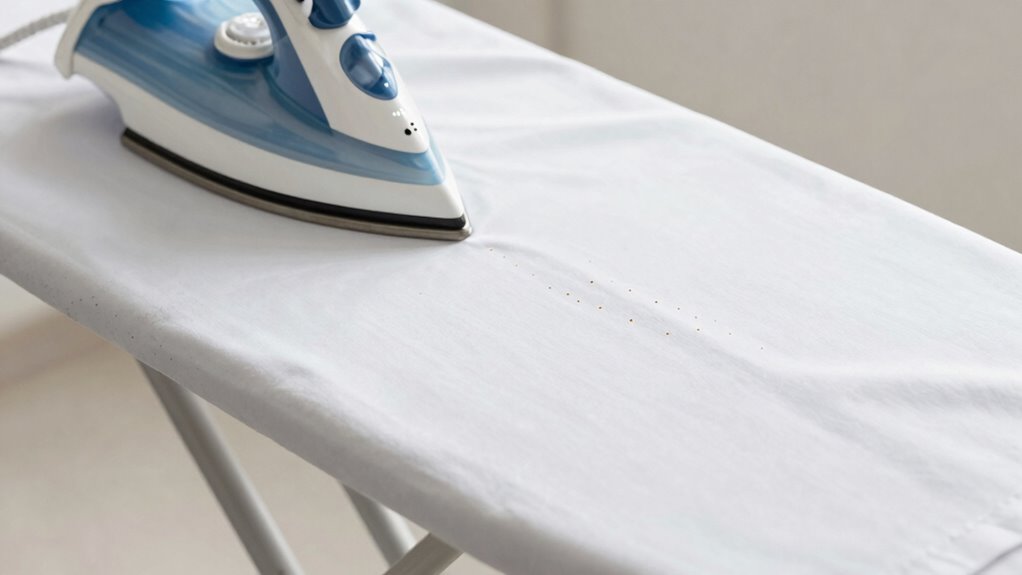
To keep your shirts looking sharp and avoid scorch marks, you need to properly maintain your iron. Always use the right heat settings for different fabrics and clean the iron after each use. Regular upkeep guarantees smooth operation and prevents damage to your clothes.
Regular Iron Maintenance
Regularly maintaining your iron is essential to prevent scorch marks and guarantee your shirts look crisp and professional. Start by cleaning the soleplate regularly to remove residue that can cause sticking or burning. Always prioritize iron safety by unplugging it before cleaning or refilling water to avoid accidents. When selecting fabrics, check the care labels to determine the appropriate heat setting, helping you avoid damage and scorch marks. Use distilled water to prevent mineral buildup, which can interfere with performance. Keep the water tank clean to maintain consistent steam. Inspect the cord for wear or damage and replace if necessary to avoid electrical hazards. Proper maintenance assures your iron functions smoothly, prolongs its lifespan, and keeps your shirts looking their best.
Use Proper Heat Settings
Using the correct heat setting for each fabric is essential to prevent scorch marks and keep your shirts looking sharp. Different fabric types, like cotton, silk, or polyester, require specific heat levels to avoid damage. Check the care label to determine the appropriate setting, usually indicated by low, medium, or high heat. For heat transfer purposes, ensure the iron is set to a temperature suitable for the material to avoid melting or burning. Using too high a temperature on delicate fabrics can cause permanent marks or shine, while too low may not remove wrinkles effectively. Adjust your iron accordingly, and always test a small area first if you’re unsure. Proper heat settings guarantee smooth results and protect your shirts from scorching.
Clean Iron After Use
Cleaning your iron after each use is essential to maintain its performance and prevent stains on your shirts. Regular iron cleaning removes residue, mineral buildup, and fabric fibers that can cause unwanted marks. To do stain removal effectively, let your iron cool completely, then wipe the soleplate with a damp cloth or a mixture of vinegar and water. For stubborn stains, use a soft brush or a commercial iron cleaner designed for stain removal. Make sure to clean around vents and crevices to avoid buildup that can transfer to fabrics. Keeping your iron spotless ensures smooth gliding and prevents scorch marks or shiny spots. Consistent maintenance not only prolongs your iron’s lifespan but also keeps your shirts looking fresh and professionally pressed.
Frequently Asked Questions
Can Different Fabric Types Require Unique Paper and Temperature Settings?
Yes, different fabric types do require unique paper and temperature settings due to fabric compatibility. You should customize the temperature based on the specific fabric you’re working with to prevent scorch marks or damage. Always check the recommended settings for each fabric to ensure proper adhesion and avoid ruining your shirts. Adjusting the paper type and temperature helps you attain the best print quality while protecting your garments.
How Does Humidity Impact Scorch Mark Prevention?
Did you know that high humidity levels can increase scorch mark risks by up to 30%? Humidity impacts scorch mark prevention by affecting moisture control, which is essential during heat transfers. When humidity is too high, excess moisture can cause uneven heat distribution, leading to scorching. To avoid this, you should monitor humidity levels and verify proper moisture control, maintaining a consistent environment for ideal heat transfer and preventing scorch marks.
Are There Eco-Friendly Paper Options for Ironing Protection?
Yes, you can find eco-friendly paper options for ironing protection. Look for biodegradable options made from natural fibers or recycled paper, which reduce environmental impact. These alternatives work just as well to prevent scorch marks while being kinder to the planet. By choosing recycled or biodegradable paper, you help cut down on waste and support sustainable practices, making your ironing routine both effective and environmentally responsible.
What Are the Long-Term Effects of High-Temperature Ironing on Shirt Fabric?
Imagine your shirt as a delicate garden, needing gentle care. High-temperature ironing can cause long-term damage, weakening fibers and leading to fabric softening issues or permanent wrinkles. Over time, this may reduce your shirt’s lifespan and crispness. To keep it looking fresh, avoid excessive heat, and focus on proper wrinkle removal techniques. Protect your shirt’s essentiality, and it’ll stay vibrant and soft for many wears to come.
Can Using the Wrong Paper Damage My Iron Over Time?
Using the wrong paper can harm your iron over time, as poor paper durability may cause residue buildup or clogging. This affects iron safety by decreasing its efficiency and potentially damaging the heating elements. To prevent this, always choose high-quality ironing paper designed for your iron type. Regularly clean your iron and use the correct paper to extend its lifespan and ensure safe, effective ironing.
Conclusion
By mastering the right temperature and paper combo, you’ll keep your shirts looking sharp—no more scorch marks or battle scars from your iron. Think of it like wielding Excalibur with care, ensuring every crease is perfect without damage. With these simple tricks, you’ll be the iron master of your laundry kingdom. Just remember, even the mightiest sword needs a steady hand—so take your time, and your shirts will thank you.