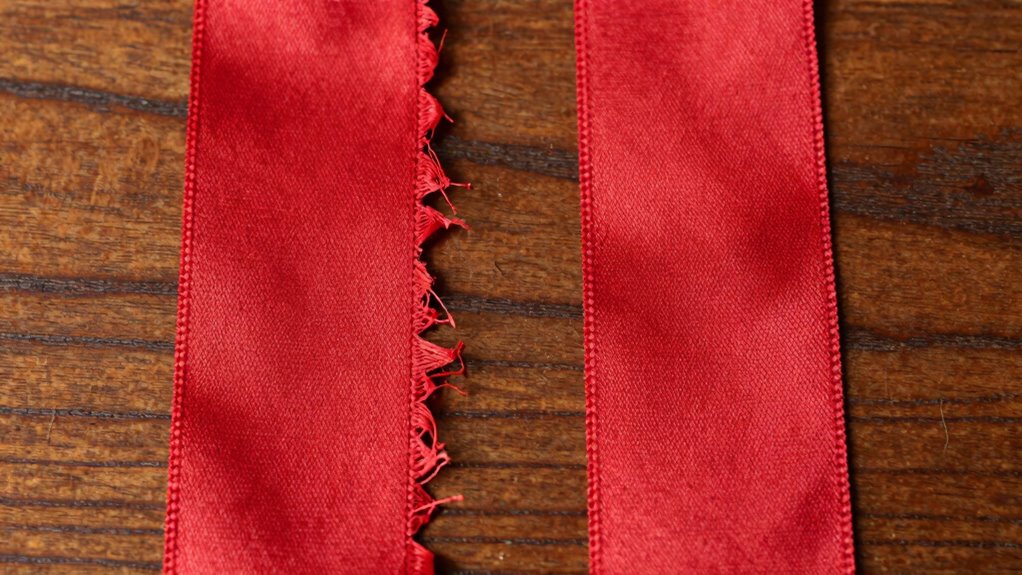

The type of fiber and how you cut the ribbon mainly determine if it frays instantly or stays sharp. Natural fibers like jute or burlap are looser and fray easily, while tightly woven satin or silk resist fraying longer. Using dull scissors or uneven cuts can cause immediate fraying. Proper tools, sharp cuts, and understanding fiber properties all help keep ribbons looking neat and durable. Keep exploring to discover how to choose and handle ribbons better.

Get business pricing on tools and workshop supplies
- Business-only prices and quantity discounts
- Tax-exempt purchasing
- Multiple users, one account, clear invoices
Key Takeaways
- Ribbons made from tightly woven fibers like satin or silk resist fraying better than loose fibers like jute or burlap.
- Using sharp, clean scissors or rotary cutters creates smoother edges that are less prone to fraying.
- Cutting at a 45-degree angle and holding the ribbon taut reduces fiber stress and fraying.
- Applying sealants or fray-prevention treatments prolongs ribbon durability and prevents immediate fraying.
- Proper handling with appropriate tools minimizes fiber damage, maintaining the ribbon’s edge integrity.

Have you ever noticed that some ribbons fray immediately while others stay pristine even after multiple uses? It’s frustrating to work with ribbons that fray quickly, especially when you want a clean, professional look. The reason behind this often boils down to the fiber types and cutting techniques you use. Different fiber types have varying degrees of durability and fray resistance. For example, satin or silk ribbons, with their smooth, tightly woven fibers, tend to hold up well, resisting fraying longer. Conversely, ribbons made from natural fibers like jute or burlap are more prone to fraying because their fibers are looser and less tightly woven. Knowing the fiber types you’re working with helps you choose the right ribbon for your project and can influence how you handle it.
Choosing the right ribbon fiber type is key to preventing fraying and achieving a professional finish.
Your cutting technique plays a vital role in preventing fraying. When you cut ribbons with jagged or uneven scissors, you create frayed edges right away. Sharp, clean cuts are essential—use high-quality scissors or a rotary cutter to guarantee a smooth edge. Cutting at a 45-degree angle not only gives a sharper look but also reduces the likelihood of fraying because it minimizes the exposed fiber edges. Some crafters prefer to cut their ribbons with a craft knife, which provides even more precision and reduces damage to the fibers. Additionally, holding the ribbon taut while cutting can help keep the fibers aligned, resulting in cleaner edges that resist fraying. Proper handling and cutting techniques are key to maintaining a polished appearance. Using the right tools and techniques can also reduce unnecessary stress on the fibers, helping your ribbons stay intact longer. Incorporating fiber properties into your decision-making process can further improve your results. Understanding the fiber composition can help you select the most suitable sealing method for each type of ribbon. Applying a sealant or fray prevention treatment to the edges can also significantly extend the life of your ribbons and keep them looking neat. Properly sealing the edges not only prolongs durability but also enhances the overall finished look of your project.
sharp fabric scissors for ribbon cutting
As an affiliate, we earn on qualifying purchases.
As an affiliate, we earn on qualifying purchases.
Frequently Asked Questions
Do Different Ribbon Materials Affect Fraying?
Yes, different ribbon materials affect fraying because of their fiber weave and material elasticity. Ribbons with a tight fiber weave are less likely to fray, while looser weaves tend to unravel easily. Additionally, materials with high elasticity, like satin or silk, can stretch and fray more quickly than rigid fabrics like grosgrain. Choosing ribbons with a durable fiber weave and appropriate elasticity helps prevent fraying and keeps your projects looking sharp.
Can Storage Methods Influence Ribbon Durability?
Storage methods can markedly influence ribbon durability. Poor storage conditions, like exposure to moisture, heat, or direct sunlight, weaken ribbons over time. Environmental factors such as humidity and temperature fluctuations cause fibers to deteriorate or fray more easily. Conversely, storing ribbons in a cool, dry, and dark place helps preserve their strength. You can extend your ribbons’ life by keeping them in airtight containers or away from harsh environmental influences.
How Does Ribbon Width Impact Fraying?
Ribbon width markedly impacts fraying; narrower ribbons tend to fray more because their edges are more exposed. To prevent this, you should consider edge sealing techniques that reinforce fibers and reduce fraying. Wide ribbons naturally have more surface area, making them less prone to unraveling. Using fiber reinforcement along the edges adds extra durability, especially for narrower ribbons, helping them stay sharp and intact longer.
Are There Specific Tools to Prevent Fraying?
You can prevent fraying by using tools like edge sealing or applying adhesive treatments. Edge sealing, such as using a hot knife or sealing tool, melts the ribbon edges to stop fraying. Adhesive treatments, like fabric glue or fray-check, create a barrier that keeps fibers intact. These tools are effective, easy to use, and considerably extend your ribbon’s lifespan, ensuring it stays sharp and neat for your projects.
Does Dyeing or Printing Affect Ribbon Stability?
Dyeing or printing can impact ribbon stability, especially if colorfastness issues arise. When dyes penetrate deeply, they may weaken the fibers, making the ribbon more prone to fraying or damage over time. You should choose dyes specifically formulated for your ribbon material and perform test runs to guarantee colorfastness. Proper sealing or finishing techniques can also help preserve the ribbon’s integrity, keeping it sharp and durable longer.
Conclusion
Understanding why some ribbons fray instantly while others stay sharp helps you choose the right material for your project. For example, if you’re making a delicate gift bow, selecting a high-quality, tightly woven ribbon can prevent fraying and guarantee a polished look. Remember, paying attention to fabric type and cut can make all the difference. So, next time you craft, pick wisely—your finished piece will thank you with a flawless finish and lasting beauty.
Fall yard work Picks
leaf blowers
As an affiliate, we earn on qualifying purchases.