Having ample table space and organized cabinets is key to creating an efficient sewing setup. It allows you to spread out fabrics, tools, and patterns comfortably, making your workflow smoother. Good storage keeps your workspace tidy and supplies within easy reach, saving you time and effort. Adequate lighting and ergonomic furniture boost comfort and precision. Keep these tips in mind to build a workspace that inspires creativity and productivity—you’ll enjoy sewing even more when you get it right.
Key Takeaways
- Adequate table space ensures comfortable fabric handling and improves workflow efficiency during sewing projects.
- Storage cabinets keep supplies organized, protected, and easily accessible, saving time and reducing clutter.
- Proper table size and cabinets support better workspace flow, making sewing sessions more productive and enjoyable.
- Sufficient space allows for larger projects without constant rearrangement, enhancing project flexibility.
- Well-chosen furniture and storage optimize ergonomics and ventilation, promoting comfort and safety during long sewing sessions.
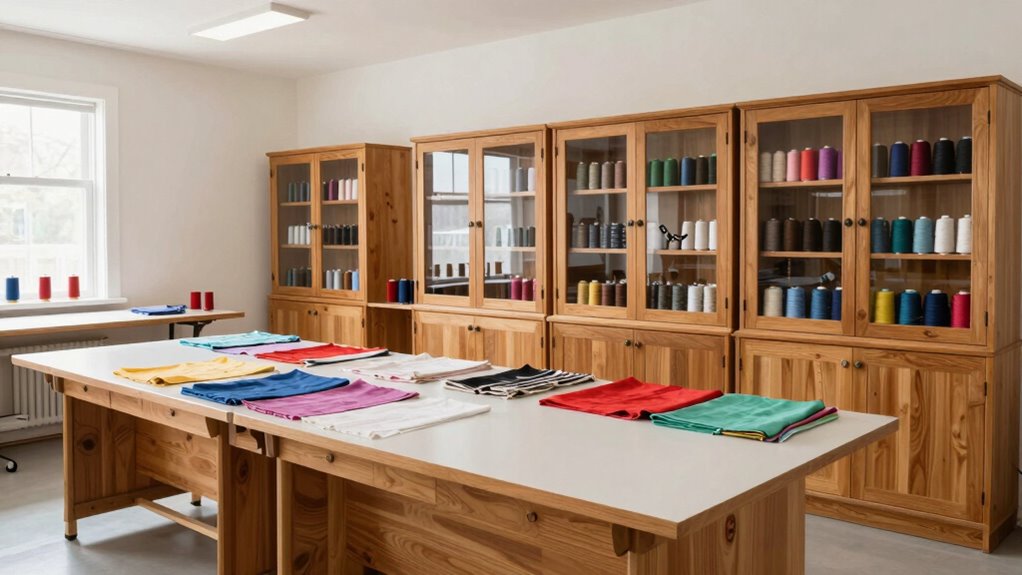
When setting up a sewing space, the importance of adequate table space and storage cabinets can’t be overstated. Your workspace needs to be functional and organized, so you can focus on your projects without feeling cramped or cluttered. Having enough table space allows you to spread out fabrics, patterns, and tools comfortably, making it easier to work efficiently. It also provides room for larger projects, so you’re not constantly shifting things around or feeling restricted. Storage cabinets are equally crucial—they keep your fabric storage organized, protect your supplies from dust, and help maintain a tidy environment. When you have designated spots for your fabric, scissors, threads, and notions, you spend less time searching and more time creating. Proper organization can also boost your productivity by making your workflow smoother. Lighting options play a key role in your sewing setup. Good lighting isn’t just about visibility; it’s about reducing eye strain and ensuring your stitches are precise. When choosing lighting, consider a combination of natural light and adjustable artificial sources. Natural light is ideal during the day, but you’ll also want bright, focused task lighting for evenings or cloudy days. LED strip lights or adjustable desk lamps work well because they direct light exactly where you need it. Proper lighting helps you see fabric colors accurately, which is essential when matching threads or working with delicate fabrics. It also makes your workspace more inviting and comfortable, so you’re motivated to spend time sewing. Additionally, ergonomic considerations such as adjustable chairs and work surfaces can help prevent strain during long sewing sessions. Incorporating ergonomic furniture can greatly improve your comfort and reduce fatigue over extended periods of sewing. In addition, ensuring your workspace has proper ventilation can enhance comfort and safety, especially when working with certain fabrics or adhesives.
Beyond just the physical setup, think about how your space flows. You want your table to be accessible from all sides, giving you room to move around and work comfortably. When planning your fabric storage, consider transparent bins or labeled drawers so you can quickly find what you need without rummaging. This saves you time and keeps your workspace neat. Cabinets should be sturdy and easy to access, with enough space to hold your larger tools, extra fabric bolts, and patterns. Integrating lighting options into your setup can be as simple as installing a bright overhead fixture or adding adjustable lamps that allow you to focus light exactly where you need it.
In the end, choosing the right table space and cabinets, along with proper lighting options, creates a sewing environment that’s both functional and inspiring. It’s about making your workspace work for you—so you can sew more efficiently, stay organized, and enjoy your craft to the fullest.
sewing table with ample workspace
As an affiliate, we earn on qualifying purchases.
As an affiliate, we earn on qualifying purchases.
Frequently Asked Questions
How Do I Determine the Right Size of Table Space for My Projects?
To determine the right size of table space for your projects, consider your typical fabric storage needs and the size of your projects. You want enough room for fabric, tools, and workspace ergonomics, so you don’t feel cramped. Measure your largest project and add extra space for cutting and sewing comfortably. Prioritize a spacious, organized area that keeps everything within reach without causing clutter or discomfort.
What Materials Are Best for Durable Sewing Cabinets?
You should choose sewing cabinets made from sturdy materials like solid wood, high-quality MDF, or metal for durability. These materials withstand the weight of fabric storage and frequent use, ensuring your workspace stays organized. A durable cabinet keeps your sewing area functional and neat, preventing wear and tear. Prioritize quality materials to maintain your workspace organization and protect your investments in fabric and sewing tools.
Can I Customize My Sewing Table and Cabinet Design?
Yes, you can customize your sewing table and cabinet design. Many options offer decor customization, allowing you to choose colors, finishes, and hardware that match your style. You’ll find a variety of aesthetic options to create a sewing setup that feels personal and inspiring. Customizing guarantees your workspace complements your decor while providing functional features tailored to your sewing needs.
How Much Storage Should I Expect in a Sewing Cabinet?
You should expect enough storage in a sewing cabinet for fabric organization, tools, and accessories, typically ranging from multiple drawers to shelves. Consider your sewing room layout to guarantee the cabinet fits comfortably while providing easy access to essentials. Look for options that maximize space without clutter, helping you stay organized and efficient. A well-sized cabinet makes your sewing experience smoother by keeping everything within reach and neatly stored.
Are There Portable Options for Sewing Tables and Cabinets?
Yes, there are plenty of portable options for sewing tables and cabinets. These versatile, lightweight choices promote perfect sewing mobility, making it easy to set up, pack away, and transport your workspace. Portable options provide practical, customizable comfort, allowing you to sew seamlessly anywhere. With innovative designs and compact configurations, you can craft, create, and carry your sewing station wherever your projects take you.
Conclusion
Don’t overlook the importance of ample table space and sturdy cabinets when choosing your sewing setup. While it might seem like a minor detail, these elements make your work more efficient and enjoyable. Sure, some may think a smaller space saves money, but in reality, investing in the right setup prevents frustration and future upgrades. Prioritize your workspace now, and you’ll enjoy smoother sewing sessions and better results in the long run.