
To decide if a slab roller or extruder fits in your studio, consider your space, project types, and flexibility needs. If you work on large, flat pieces or tiles, a slab roller offers consistent thickness and efficiency but needs more space. If you prefer shaping various forms and have limited room, an extruder provides versatility and is more compact. Understanding your workflow will help you choose the best tool. Keep exploring to find out which option suits your studio best.

Get business pricing on tools and workshop supplies
- Business-only prices and quantity discounts
- Tax-exempt purchasing
- Multiple users, one account, clear invoices
Key Takeaways
- Assess the size and space available in your studio to determine if a bulky slab roller fits comfortably.
- Consider the types of projects you primarily work on—flat surfaces or diverse shapes.
- Evaluate your need for consistent thickness versus creative shape versatility.
- Think about workflow efficiency and ease of tool maintenance for long-term use.
- Match the tool’s functionality with your budget, space, and specific project requirements.
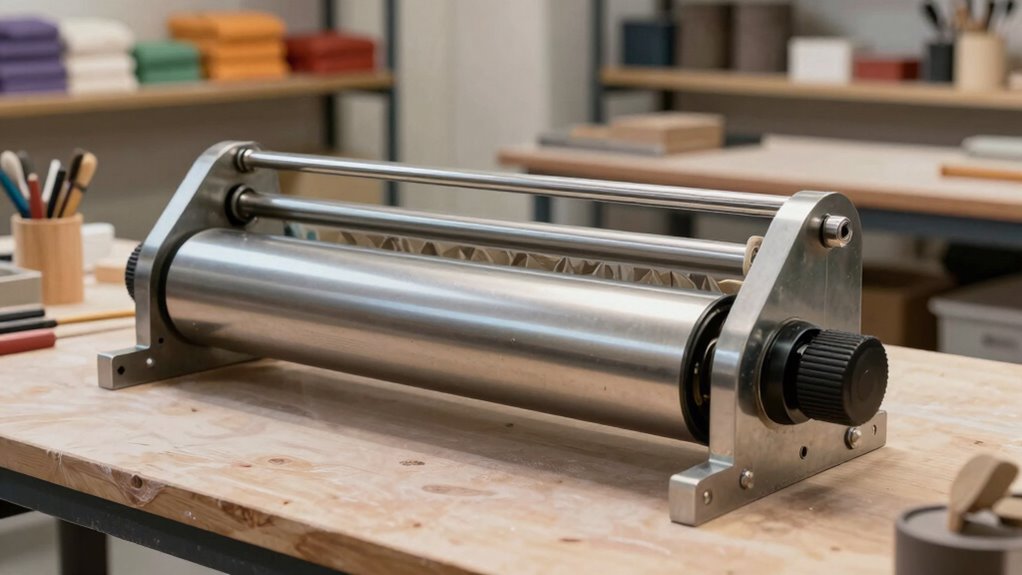
Deciding whether a slab roller or extruder belongs in your studio depends on your specific pottery projects and workflow. Both tools can markedly enhance your production process, but they serve different purposes and come with distinct considerations. When evaluating a slab roller, one of your main concerns should be material versatility. A slab roller allows you to create consistent, even slabs of clay, which are essential for building certain forms or making tiles. If your work involves large, flat pieces or requires precise thickness control, a slab roller can be invaluable. It simplifies the process, saves time, and guarantees uniformity across your projects.
However, a key factor to consider is space requirements. Slab rollers tend to be bulky, often occupying a significant footprint in your studio. If you’re working with limited space, you need to measure carefully before investing. A larger machine might mean sacrificing valuable workspace or storage, so it’s essential to determine whether your studio can accommodate it comfortably. If space is tight, you might opt for a smaller, more portable model or consider alternative methods for rolling slabs, such as hand-rolling with a rolling pin and guides. Additionally, some studios utilize space-efficient tools to maximize workflow without sacrificing functionality.
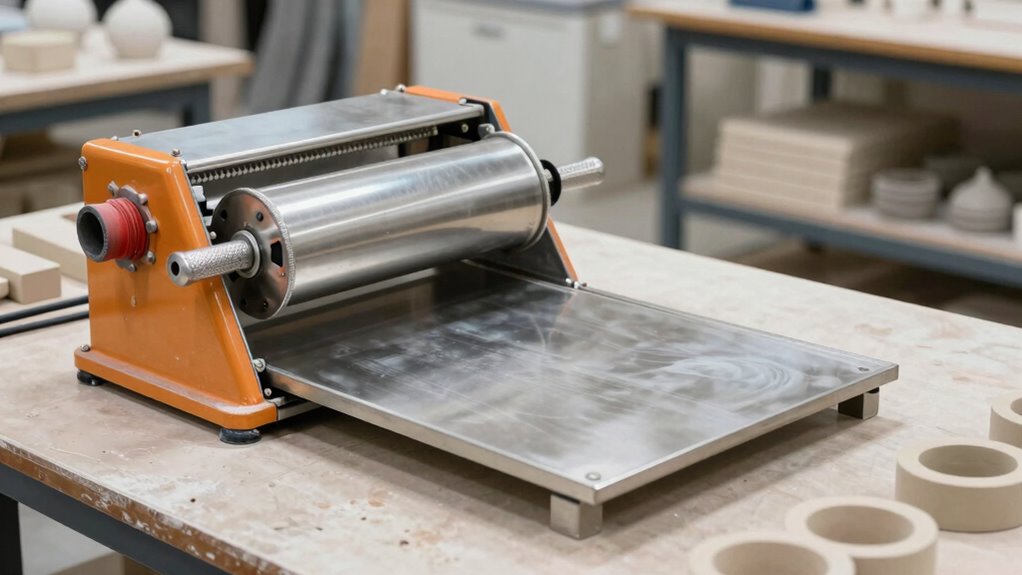
On the other hand, an extruder offers its own set of advantages centered around material versatility. It allows you to create a wide variety of shapes, from coils and ropes to complex forms, by changing out different dies or nozzles. This flexibility can expand your creative possibilities and streamline repetitive processes. If your projects often involve shaping clay into specific forms or producing consistent extrusions, an extruder can improve efficiency and consistency. Plus, many extruders are designed to be more compact, making them suitable for studios with limited space. Choosing the right tool involves understanding the specific features and capabilities that will best fit your creative process.
Space considerations are also essential for extruders. While generally more compact than slab rollers, they still require a designated area for setup and operation. You’ll want to ensure your workspace can accommodate the extruder without disrupting other equipment or work zones. Additionally, think about ease of use and maintenance—an extruder with simple controls and easy cleaning can save you time and frustration. Furthermore, choosing a model with adjustable settings can help you tailor the extrusion process to your specific projects more precisely.
Ultimately, your decision hinges on the types of projects you pursue and how your studio space is configured. If you regularly work with large, flat pieces, a slab roller’s material versatility and precise thickness control might be worth the space it occupies. Conversely, if your focus is on shaping diverse forms and you have limited room, an extruder’s flexibility and compact size could be more practical. Weigh these factors carefully to choose the tool that best complements your studio’s workflow and your creative goals.
As an affiliate, we earn on qualifying purchases.
Frequently Asked Questions
What Is the Typical Cost Difference Between Slab Rollers and Extruders?
A slab roller typically costs between $1,000 and $4,000, while extruders usually range from $300 to $1,200. When doing a price comparison, consider your budget considerations and how often you’ll use each tool. If you’re starting out or have a limited budget, an extruder might be more affordable. However, if you need larger, consistent slabs, investing in a slab roller could be worthwhile.
How Much Space Does Each Machine Require in a Studio?
A slab roller typically requires more space—around 3 to 4 feet wide and 2 to 3 feet deep—making it suitable for larger studio layouts. An extruder is more compact, often fitting into a 2-foot wide space, ideal for smaller setups. When planning your equipment placement, make certain there’s enough clearance for operation and maintenance, and consider your studio’s overall layout to optimize workflow and safety.
Are There Specific Clay Types Better Suited for Each Machine?
Think of your clay as a musical instrument—each type has its unique tone. For slab rollers, smoother clays like porcelain or refined stoneware work best, offering consistent textures for slabs. Extruders handle a wider range, including more textured or groggy clays, perfect for detailed or textured designs. Always consider firing compatibility; some clays withstand high temperatures better, making them ideal for either machine. Choose wisely to guarantee harmony in your studio!
What Maintenance Is Needed for Slab Rollers Versus Extruders?
You need to regularly check the machine durability of both slab rollers and extruders, ensuring all moving parts are well-lubricated. Cleaning procedures involve wiping down surfaces after each use to prevent clay buildup and corrosion. For slab rollers, inspect and replace worn rollers or belts, while extruders may require cleaning of dies and replacing worn parts. Proper maintenance keeps both machines functioning smoothly and extends their lifespan.
Can These Machines Be Used for Detailed Sculptural Work?
You can definitely use these machines for detailed sculptural work, especially when creating a decorative surface with fine detail. The slab roller provides a smooth, even clay sheet that makes intricate textures easier to apply. An extruder shapes complex forms with precision, perfect for adding delicate accents. While they excel at broad forms, combining these tools with hand-sculpting techniques lets you achieve intricate, refined details in your sculptures.
Conclusion
Choosing between a slab roller and an extruder is like selecting the right brush for your masterpiece—you want tools that inspire your vision. If your studio’s heart beats for bold, textured surfaces, a slab roller’s steady rhythm will serve you well. Should your work crave intricate, flowing forms, an extruder’s dance will elevate your craft. Either way, these tools become the brushstrokes that bring your creative soul to life, shaping your unique story.
Fall yard work Picks
leaf blowers
As an affiliate, we earn on qualifying purchases.