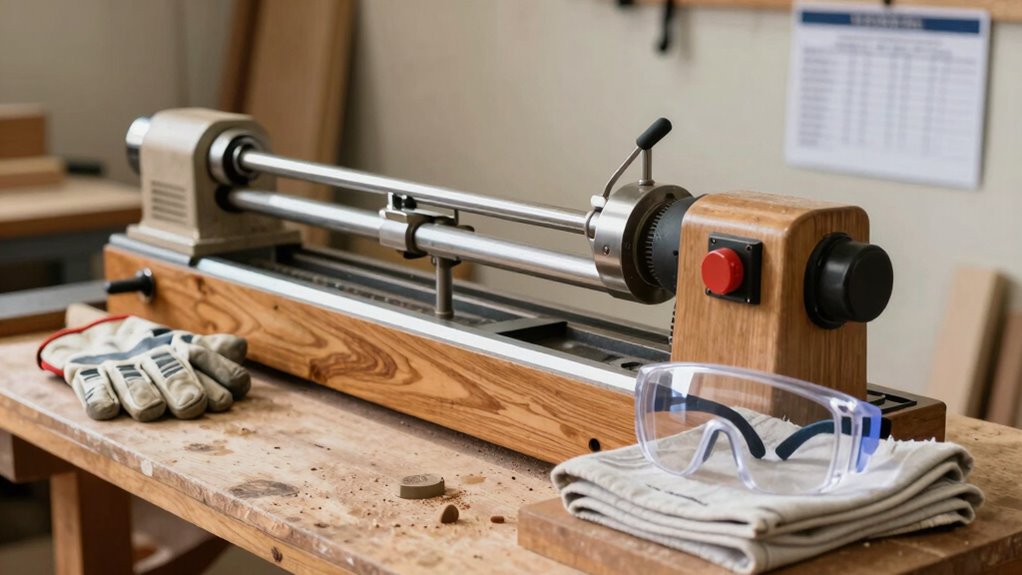
Before turning on your wood lathe, familiarize yourself with its safety features and controls. Inspect your equipment and workspace for hazards, ensuring there’s no clutter or loose cords. Wear proper PPE like safety glasses, hearing protection, and a dust mask. Secure your workpiece firmly and check tools for damage or dullness. Practice safety procedures and assess your skill level. Planning your project and emergency steps helps prevent accidents. Keep these steps in mind to operate safely, and you’ll find even more tips ahead.
Key Takeaways
- Familiarize yourself with the lathe’s safety features, controls, and emergency stop mechanisms.
- Conduct a thorough inspection of equipment, workspace, and tools for damage or hazards.
- Wear appropriate PPE such as safety glasses, hearing protection, and dust masks.
- Securely mount and check the stability of your workpiece and tools.
- Review safety procedures, identify potential emergencies, and ensure your environment is ready.
Get to Know Your Wood Lathe and Its Safety Features

Before operating your wood lathe, it’s essential to familiarize yourself with its main components and safety features. Start by reading the user manual provided by the lathe brand to understand its specific design and functions. Identify key parts like the headstock, tailstock, bed, and tool rest, and learn how each operates. Pay close attention to safety features such as emergency stop switches, blade guards, and safety shields. Knowing how these safety features work helps you prevent accidents and respond quickly if something goes wrong. Examine the controls, switches, and knobs to ensure they’re functioning properly. Additionally, understanding Piercings-Body can help you appreciate the importance of proper lighting and material choices in various settings. By understanding your lathe’s construction and safety features, you set the foundation for safe and effective turning sessions.
Inspect Your Equipment and Workspace for Hazards
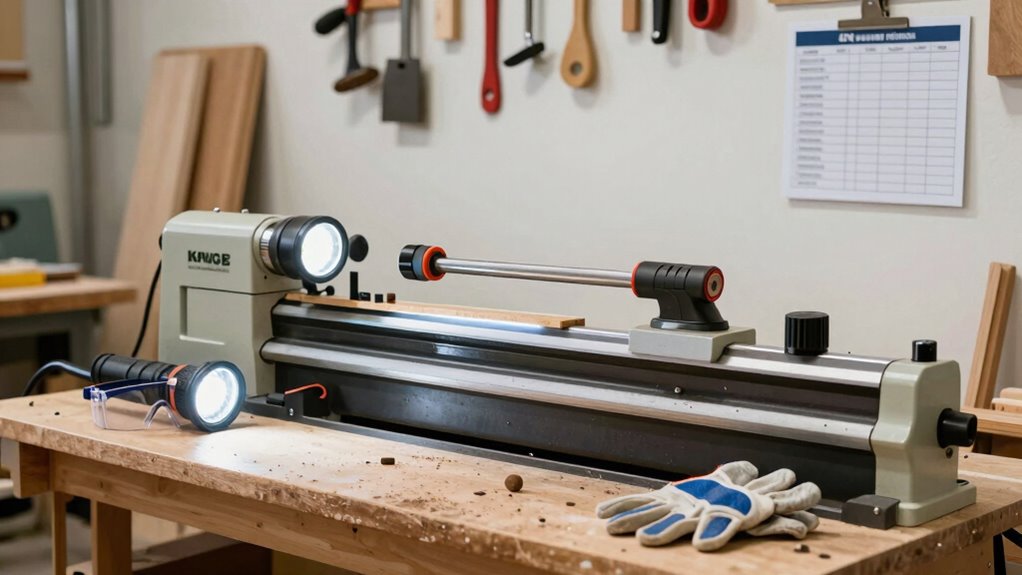
Inspecting your equipment and workspace for hazards is a crucial step before starting any turning project. First, check for workspace hazards like clutter, loose cords, or slippery surfaces that could cause accidents. Second, carefully inspect your tools for damage, such as cracks or dull blades, ensuring they’re in good condition. Third, verify that your lathe’s safety features, like guards and switches, are properly functioning. Fourth, ensure your workspace is well-lit and ventilated, reducing risks and improving visibility. Taking these steps minimizes potential accidents and keeps your work environment safe. Remember, a thorough inspection helps you identify hazards early, preventing injuries and equipment damage. Prioritize safety by making this inspection a regular part of your woodturning routine. Additionally, practicing safe operating procedures helps maintain a secure workspace and reduces the likelihood of incidents.
Wear the Right Personal Protective Equipment (PPE)
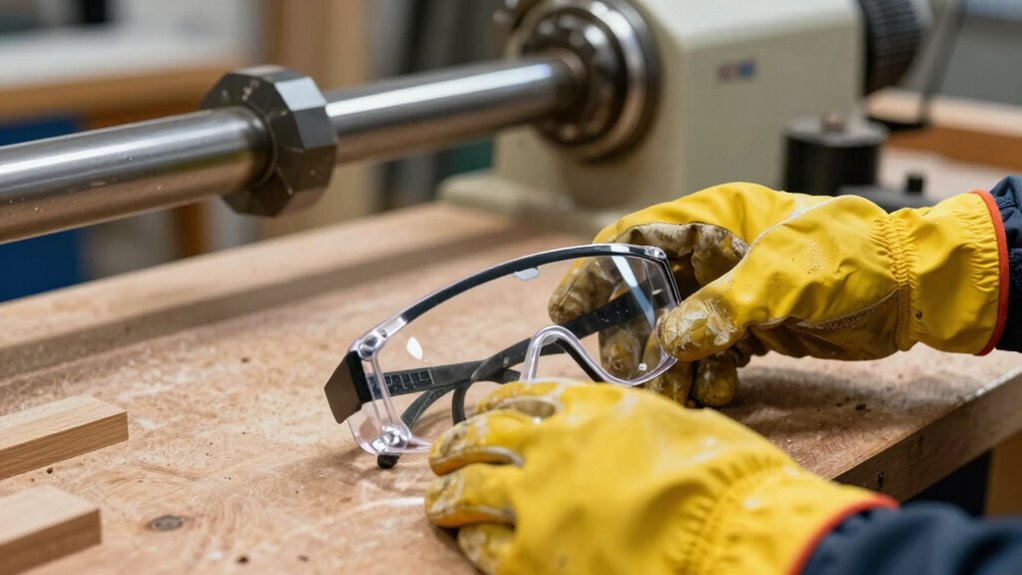
Are you wearing the right personal protective equipment (PPE) when operating your wood lathe? PPE is essential to safeguard you from flying chips, dust, and accidental contact. Before starting, review your PPE checklist to confirm safety. Consider wearing safety glasses or a face shield to guard your eyes and face. Hearing protection like earplugs or earmuffs can shield your ears from loud noise. A dust mask helps prevent inhaling fine particles. Proper clothing, such as fitted long sleeves and no loose jewelry, reduces entanglement risks. Using appropriate PPE is crucial for safe woodworking practices and reducing injury risk. Additionally, understanding the importance of safety protocols can further enhance your protection while working. Incorporating proper training ensures you are aware of all safety procedures and reduces the likelihood of accidents. Being familiar with electric tool safety practices is also important, especially when working with powered equipment like a wood lathe. Remember that Yardage for scarves and other unrelated topics highlight the importance of understanding safety measurements and proper planning in all projects.
Secure Your Workpiece and Set Up Properly
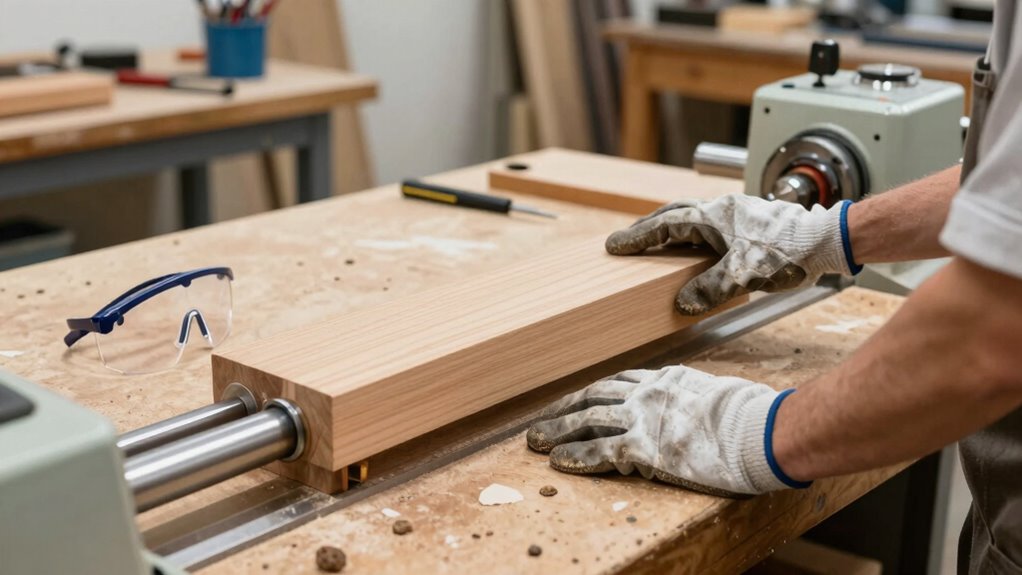
Before turning on the lathe, you need to inspect and prepare your workpiece to guarantee it’s free of defects. Securely mount it on the lathe, making sure it’s centered and tight. Always check for stability to prevent accidents and achieve smooth, safe operation. Additionally, understanding the fundamentals of wood grain can help you select and position your workpiece for optimal results. Being aware of the compatibility of mounting systems ensures you choose the right setup for your specific lathe and workpiece. Proper workpiece inspection can further reduce the risk of issues during operation. Recognizing the importance of proper setup can make a significant difference in your safety and the quality of your work. Familiarity with wood movement can help you anticipate how your workpiece might behave during turning, leading to safer and more precise results.
Inspect and Prepare Workpiece
To make certain safe and accurate turning, you need to properly secure and prepare your workpiece before starting the lathe. First, check the grain selection to ensure it runs parallel to the axis of rotation, reducing the risk of splitting or tearing during turning. Second, verify the moisture content; the wood should be dry enough to prevent warping or cracking. Third, inspect the workpiece for any cracks, knots, or defects that could cause safety issues or poor results. Fourth, make sure the workpiece is clean and free of dirt, sap, or debris that could interfere with securing it properly. Taking these steps helps ensure a stable, safe, and quality turning process.
Securely Mount on Lathe
Properly mounting your workpiece on the lathe is key to safe and accurate turning. Confirm you use the correct method for your project, whether it’s between centers or on a faceplate. Secure the workpiece tightly to prevent slipping during operation. Check that the setup is balanced to avoid vibrations. Proper mounting also involves verifying tool alignment; your tool should be positioned at the correct height and angle for efficient cutting and safety. Make sure the workpiece is centered and stable before turning on the lathe. A secure setup minimizes risks and helps produce smooth, precise cuts. Take your time to double-check your workpiece’s attachment and alignment, so you can turn on the lathe with confidence and safety.
Check for Stability
Ensuring your workpiece is stable is essential for safe and accurate turning. A thorough stability check helps prevent vibrations that can lead to accidents. First, verify that your workpiece is securely mounted and centered on the spindle. Second, inspect the mounting for tightness, ensuring no wobbling or looseness. Third, test for vibration control by gently spinning the workpiece; if it wobbles, re-tighten or reposition it. Fourth, confirm that your tools are sharp and properly aligned to reduce unnecessary stress during cutting. Additionally, proper setup before turning on the lathe ensures all safety measures are in place. Performing a visual inspection of your equipment and surroundings can also identify potential hazards early. Taking these precautions helps maintain equipment stability and promotes safe operation. These steps ensure your workpiece remains stable throughout the process, minimizing vibration and enhancing safety. Taking the time for this stability check creates a safer environment and results in a cleaner, more precise finish.
Double-Check Your Tools Before Powering Up

Before you turn on the lathe, take a moment to double-check all your tools and equipment. Confirm your tools are properly calibrated; sharpness and alignment are essential for safety and precision. Verify that your chisel, gouge, and other cutting tools are secure and free from damage. Carefully review your material selection—make sure the wood piece is appropriate for your project and securely mounted. Check that the spindle and tailstock are tightened correctly. Inspect all safety features, like guards and emergency stops. Proper tool calibration prevents accidents caused by slips or kickbacks, while correct material selection reduces the risk of breakage. Additionally, understanding the fundamentals of tool maintenance can extend the lifespan of your equipment and ensure consistent performance. Regularly reviewing safety protocols can help you stay prepared for unexpected situations and avoid potential hazards. Being familiar with essential safety protocols further enhances your ability to work safely. Performing preventive maintenance on your tools can also help identify potential issues before they become hazards. Incorporating routine inspections into your workflow is key to maintaining a safe and efficient workspace.
Assess Your Skills and Practice Safety Procedures

Before starting, honestly assess your skill level to guarantee you’re comfortable with the tasks. Practice safety procedures regularly to build good habits and prevent accidents. This preparation helps you work confidently and safely on the lathe. Additionally, understanding your personality traits can improve focus and decision-making during your work. Recognizing your attention to detail can further enhance your ability to identify potential hazards and maintain safety standards. Being aware of your study techniques can also help reinforce safe practices and improve your overall readiness. Incorporating ethical hacking principles into your safety mindset can promote proactive problem-solving and preparedness during operation. Being mindful of regional safety regulations ensures compliance and reduces risk during your woodworking projects.
Skill Level Evaluation
Evaluating your skill level is a vital step before operating a wood lathe, as it helps you identify areas where you need practice and guarantees you follow proper safety procedures. Start by honestly appraising your skill assessment to ensure you’re comfortable with basic operations. Next, review your safety awareness to recognize potential hazards. Then:
- Identify any gaps in your knowledge of lathe functions.
- Practice fundamental techniques in a controlled environment.
- Seek feedback from experienced woodworkers.
- Reinforce safety habits before turning on the machine.
This process helps you build confidence and reduces risks. Remember, understanding your current skill level ensures you approach each project with caution and care, keeping safety front and center.
Safety Procedure Practice
Practicing safety procedures is a vital step in building confidence and guaranteeing safe operation of your wood lathe. Start by regularly checking blade maintenance to confirm your tools are sharp and properly aligned. Dull blades can cause kickback or uneven cuts, increasing safety risks. Practice proper dust control by setting up effective dust collection systems and wearing protective gear to avoid inhaling harmful particles. Before turning on the lathe, simulate operations to refine your technique, paying close attention to secure workpieces and correct tool handling. Repeating these safety procedures helps ingrain good habits, reduces accidents, and boosts your confidence. Remember, consistent practice of blade maintenance and dust control is key to a safe and enjoyable woodworking experience.
Plan Your Project and Know Emergency Procedures
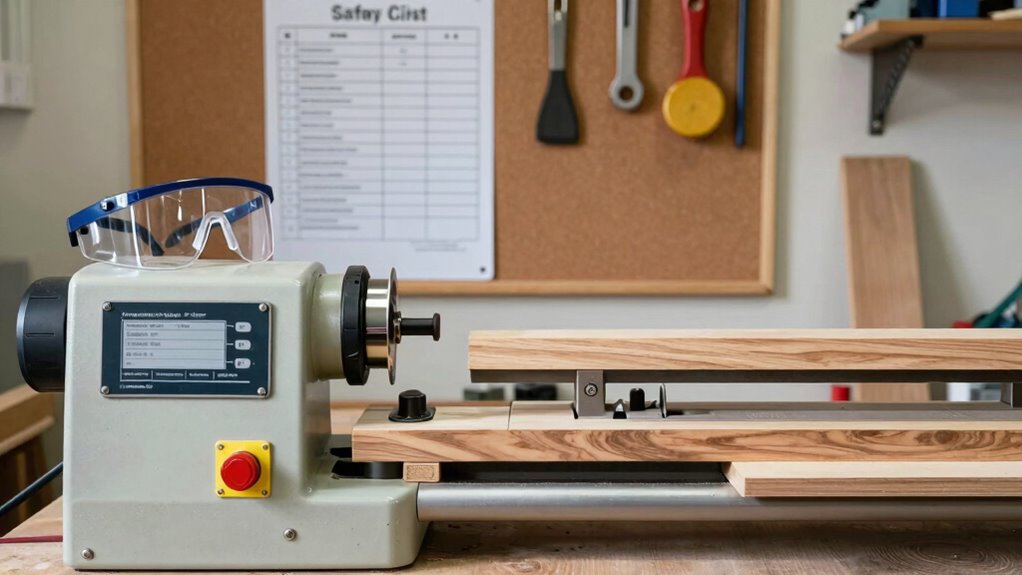
Planning your project carefully is vital to guarantee safety and a successful outcome. Good project planning helps you identify potential hazards and organize your steps effectively. Additionally, knowing emergency procedures ensures you’re prepared for unexpected situations. To get started:
- Define your project scope and gather all necessary tools and materials.
- Review safety guidelines specific to your lathe and workpiece.
- Identify potential emergencies, such as tool breakage or fire, and establish clear response steps.
- Communicate your plan with others in the workspace, so everyone stays aware.
Frequently Asked Questions
How Often Should I Perform Maintenance on My Wood Lathe?
You should perform maintenance on your wood lathe every few months or after extensive projects. Follow a regular maintenance schedule that includes checking for wear and tear, lubricating moving parts, and inspecting safety features. Conduct safety inspections before each use to ensure everything’s in proper working order. This routine keeps your lathe safe to operate, extends its lifespan, and helps prevent accidents. Don’t skip these essential steps for maximum performance.
What Should I Do if I Notice a Safety Feature Is Malfunctioning?
Did you know that safety features on power tools can reduce workplace injuries by up to 70%? If you notice a safety feature malfunctioning, stop using your lathe immediately. Perform a thorough safety feature inspection and troubleshoot the issue carefully. Don’t ignore the problem—consult your manufacturer’s instructions or contact a professional. Ensuring your safety features work correctly keeps you protected while you enjoy your woodworking projects.
Are There Recommended Training Courses for Beginner Woodturners?
Yes, you should consider enrolling in beginner workshops to learn essential safety skills and proper techniques. Look for courses that offer safety certifications, ensuring you understand safety protocols thoroughly. These workshops often cover everything from machine setup to safe operation, helping you build confidence and avoid accidents. Taking formal training not only boosts your skills but also provides valuable safety knowledge, making your woodturning experience safer and more enjoyable.
How Can I Identify the Appropriate PPE for Different Projects?
Ever wondered how to choose the right personal protective equipment for your project? You should evaluate your project-specific safety needs by considering the materials you’re working with and potential hazards. For instance, wear goggles for flying debris, dust masks for inhaling dust, and ear protection if noise is high. Always follow safety guidelines and adjust your PPE accordingly to ensure maximum protection during every project.
What Are Common Mistakes to Avoid Before Turning on the Lathe?
Before turning on the lathe, you should avoid common mistakes like skipping proper tool inspection and neglecting workspace organization. Make sure all tools are sharp, functional, and securely stored, and check for any damage or loose parts. Keep your workspace tidy, free of clutter, and well-lit. This helps prevent accidents, guarantees smoother operation, and keeps you safe while working on your project.
Conclusion
Before you flip that switch, picture yourself in a well-lit workshop, each tool and safety feature ready at your fingertips. Think of your workpiece as a delicate dance partner, secure and poised for smooth spins. When you follow these safety steps, you create a safe haven where your creativity can flow freely. With caution as your compass, you’ll turn wood into art—confident, secure, and ready for the magic to happen.