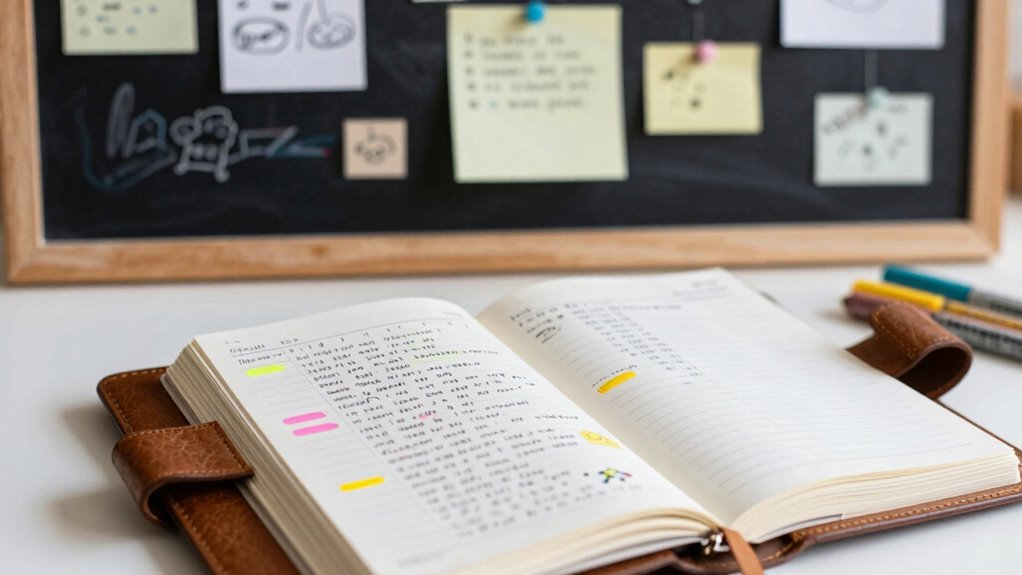

When life feels unpredictable, using paper planners and wall boards helps you stay grounded and connected to your goals. These physical tools offer a tangible way to organize your thoughts, which can boost focus and reduce digital fatigue. They provide quick visual reminders and a sense of control, making it easier to reflect and stay motivated during stressful times. Keep exploring how these simple methods can strengthen your resilience and clarity amidst chaos.

Get business pricing on tools and workshop supplies
- Business-only prices and quantity discounts
- Tax-exempt purchasing
- Multiple users, one account, clear invoices
Key Takeaways
- Physical planning fosters direct engagement, making plans feel more real and immediate without digital distractions.
- Writing and pinning notes provide emotional grounding and a sense of control during stressful times.
- Visual tools like wall boards promote mindfulness, reflection, and clarity amid life’s uncertainties.
- Physical methods are reliable, unaffected by digital failures or fatigue, ensuring consistent organization.
- Tangible plans boost motivation and accountability through emotional resonance and personalized engagement.
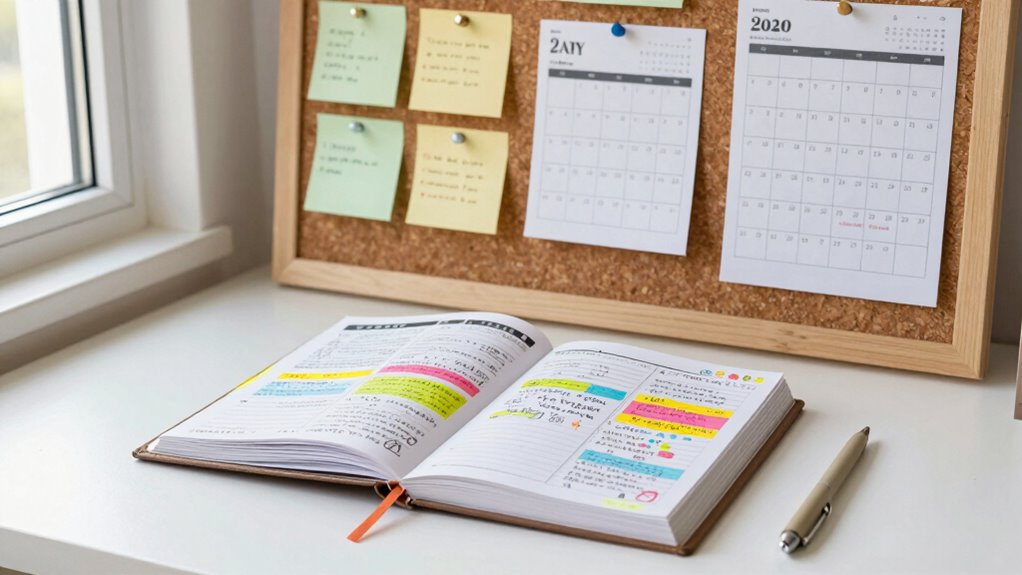
In a world increasingly dominated by digital tools, it’s easy to assume that physical planning methods are outdated, especially during uncertain times. But despite the rise of apps and digital calendars, paper planners and wall boards remain powerful tools, especially when life feels unpredictable. These physical methods offer a level of tangible engagement that digital solutions often lack. When you write things down by hand, you create a direct connection between your thoughts and your actions, making your plans feel more real and immediate. This digital integration, while useful, can sometimes feel impersonal or disconnected, particularly when you’re overwhelmed or anxious. Physical planning allows you to bypass screens and notifications, helping you focus on what really matters without digital distractions.
Physical planning fosters a tangible, mindful connection to your goals, offering clarity and focus beyond digital distractions.
Another key benefit is the emotional impact these methods have. During stressful or uncertain times, the act of writing on paper or pinning notes to a wall can be incredibly grounding. It provides a sense of control and clarity that digital tools may not deliver as effectively. You can customize your planner or wall board to reflect your mood, priorities, or goals, adding a personal touch that makes planning feel more meaningful. The tactile experience of flipping through pages or rearranging sticky notes can be soothing, offering a break from the constant flow of digital information. Physical planners also don’t rely on batteries, Wi-Fi, or software updates, making them reliable when technology fails or when you’re disconnected. Physical planning methods are also less susceptible to digital fatigue, helping you maintain mental clarity during busy or stressful periods. Additionally, the physical act of organizing your plans can foster a sense of mindfulness and intentionality, which is especially valuable in uncertain times.
Moreover, physical planning encourages mindfulness. When you sit down with a paper planner, you’re more likely to reflect on your priorities intentionally rather than rushing through your schedule. This process can help you identify what’s truly important and set realistic expectations, especially during times of upheaval. Wall boards serve a similar purpose, acting as visual reminders that keep your goals front and center, reducing anxiety about forgetting tasks or deadlines. They make your plans visible and accessible, which can boost motivation and accountability.
While digital tools are excellent for quick updates and syncing across devices, they often lack the emotional resonance that physical planning provides. In uncertain times, that emotional connection becomes essential. It reminds you that, despite chaos or change, you have a tangible method to organize your life, stay grounded, and regain a sense of stability. Physical planning methods like paper planners and wall boards aren’t just nostalgic; they’re practical, reliable, and emotionally supportive tools that continue to work when digital solutions might fall short. Incorporating tangible engagement into your routine can also help reinforce your commitment to your goals and foster a sense of accomplishment.
paper planner with customizable pages
As an affiliate, we earn on qualifying purchases.
As an affiliate, we earn on qualifying purchases.
Frequently Asked Questions
How Do Physical Planners Compare to Digital Planning Tools?
Physical planners often excel in offering tactile engagement and instant customization options, which digital tools can’t fully replicate. You can easily jot down notes, highlight, or rearrange pages without digital integration issues. While digital planning provides seamless synchronization across devices, physical planners let you customize layouts and features freely, making them more adaptable during unpredictable times. Your choice depends on whether you prioritize tactile experience or digital integration for convenience.
Are Paper Planners Environmentally Sustainable?
Yes, paper planners can be environmentally sustainable if made from eco-friendly materials like recycled paper or biodegradable components. By choosing products that prioritize sustainable sourcing, you reduce environmental impact. Additionally, practicing recycling—such as reusing pages or recycling old planners—further supports eco-friendliness. While digital tools have their benefits, your mindful use of recycled materials and responsible disposal makes paper planners a greener option.
What Are the Best Materials for Durable Wall Boards?
You’ll find that the best materials for durable wall boards are those that balance strength with eco-friendliness. Look for sustainable materials like bamboo, cork, or recycled wood, which offer natural sturdiness. Opt for waterproof surfaces, such as sealed laminate or coated MDF, to guarantee longevity and resistance to moisture. These choices help your wall boards stay resilient and eco-conscious, even in the busiest, most unpredictable moments of life.
How Can Physical Planning Reduce Stress During Chaos?
Physical planning can reduce stress during chaos by engaging your senses through tactile involvement, which promotes mindfulness benefits. When you write or organize on wall boards, you actively focus on the present moment, helping to clear your mind. This hands-on approach fosters a sense of control and calm, making it easier to navigate unpredictable situations. By physically interacting with your plans, you create a grounding routine that soothes anxiety and enhances mental clarity.
Can Physical Planners Improve Long-Term Goal Tracking?
Yes, physical planners can improve long-term goal tracking by helping you develop strong habits through consistent use. When you write and review your goals regularly, it reinforces your commitment and keeps your aspirations visible. The visual motivation from physical planners makes it easier to stay focused and motivated over time, encouraging habit formation. This tangible approach helps you stay organized, track progress, and adapt your plans as your goals evolve.
Conclusion
Even when life feels unpredictable, sticking to paper planners or wall boards keeps you grounded. Imagine a small business owner who, during uncertain times, relies on physical charts to track orders and deadlines. This simple method offers clarity and control, helping them navigate chaos with confidence. When digital options falter or overwhelm, physical planning tools serve as a steady anchor—proving that sometimes, the old ways are the most reliable in unstable moments.
Columbus Day / Indigenous Peoples' Day Picks
long weekend sales
As an affiliate, we earn on qualifying purchases.