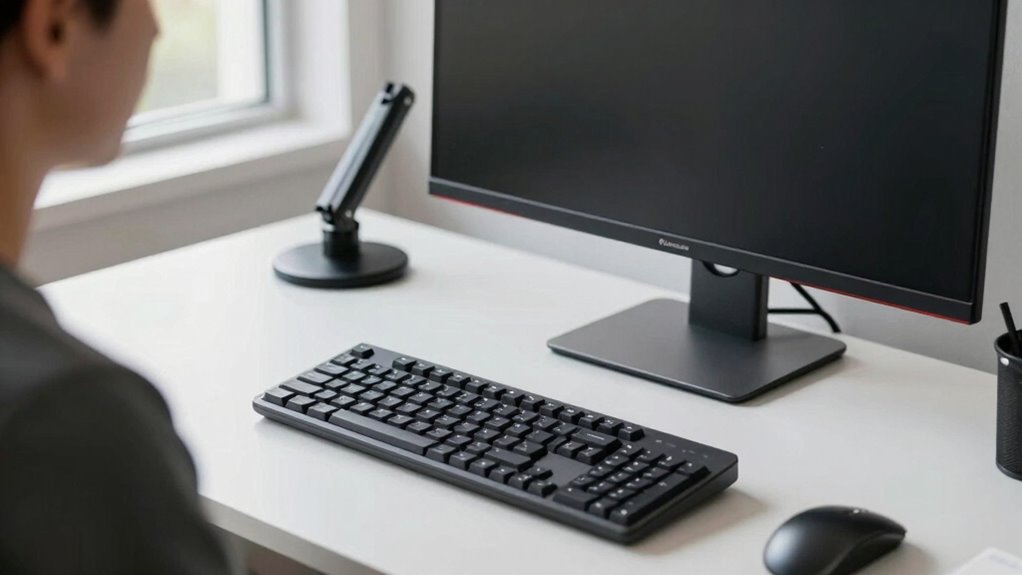

Using ergonomic keyboards and monitor arms helps you avoid hidden costs tied to stress posture, like long-term musculoskeletal issues and fatigue. These tools promote proper alignment, reducing strain on your wrists, neck, and back. Investing in their adjustments can prevent chronic pain and boost your productivity. Staying comfortable at your workspace isn’t just about ease — it’s about safeguarding your health over time. Keep exploring to uncover more ways to optimize your setup and prevent hidden costs.

Get business pricing on tools and workshop supplies
- Business-only prices and quantity discounts
- Tax-exempt purchasing
- Multiple users, one account, clear invoices
Key Takeaways
- Ergonomic keyboards reduce wrist strain, preventing long-term issues like carpal tunnel syndrome caused by poor posture.
- Adjustable monitor arms ensure eye-level screens, minimizing neck tension and promoting proper spinal alignment.
- Poor posture from non-ergonomic setups increases stress, leading to chronic pain and decreased productivity over time.
- Investing in ergonomic tools can lower hidden health costs related to repetitive strain injuries and musculoskeletal disorders.
- Proper ergonomic design supports sustained work performance while preventing stress-related health complications.
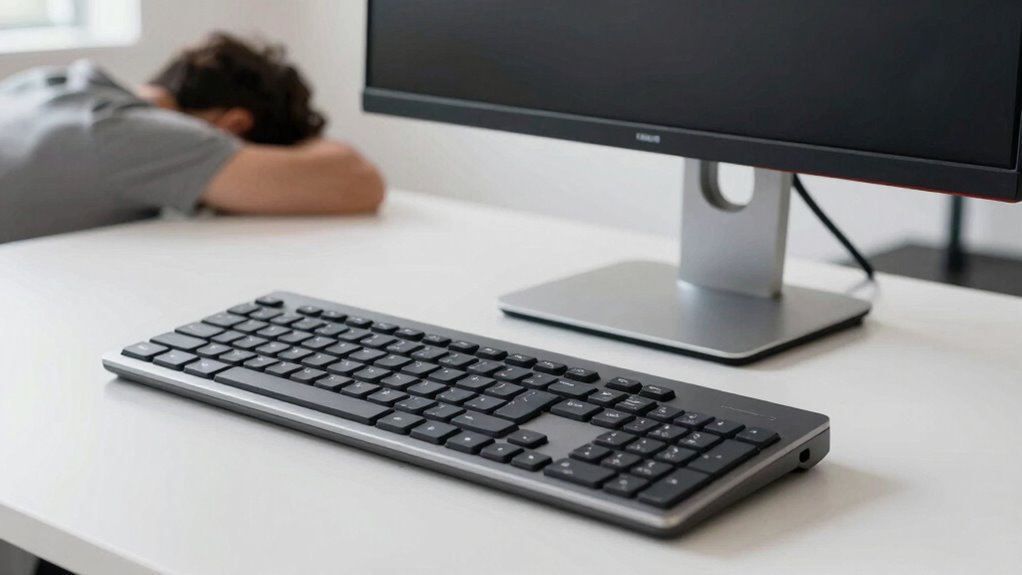
If you spend long hours working at your desk, investing in ergonomic keyboards and monitor arms can make a significant difference in your comfort and productivity. A well-designed workspace isn’t just about style; it’s about supporting your body to prevent strain and long-term health issues. When choosing an ergonomic keyboard, pay close attention to the keyboard layout. An optimized layout reduces the need for awkward wrist movements and minimizes strain on your hands and forearms. Split or curved keyboards, for example, align more naturally with your arm and hand positions, helping you maintain a neutral wrist posture. This simple change can prevent repetitive strain injuries like carpal tunnel syndrome.
Alongside a comfortable keyboard, monitor height adjustment is crucial. When your monitor is positioned too high or too low, you’ll naturally lean forward or crane your neck, causing unnecessary tension in your shoulders and neck muscles. Proper monitor height adjustment ensures your screen is at eye level, allowing you to keep your head aligned with your spine. This setup reduces fatigue and prevents chronic discomfort that can develop over weeks or months. Many monitor arms offer flexible height adjustment, so you can easily tweak your setup as needed. By aligning your monitor correctly, you promote better posture and reduce the hidden costs associated with stress postures—like headaches, eye strain, and musculoskeletal problems. Maintaining proper ergonomic practices can also improve your overall workspace comfort and efficiency. Additionally, regularly taking short breaks from sitting can further reduce strain and improve circulation.
The combination of an ergonomic keyboard and an adjustable monitor arm creates a workspace that adapts to your body rather than forcing you into uncomfortable positions. This tailored approach helps you work longer without fatigue and minimizes the risk of developing chronic pain. When your workspace is ergonomically optimized, you’re less likely to experience the typical discomforts that come from poor posture, such as back pain or repetitive strain injuries. Incorporating ergonomic tools based on design thinking principles can help you identify the best solutions tailored to your needs. Understanding body mechanics can further enhance your ergonomic setup and prevent injuries before they occur. Over time, these small adjustments can save you from costly medical treatments and lost productivity.
Ultimately, prioritizing ergonomic design isn’t just about comfort; it’s about protecting your health in the long run. Proper keyboard layout and monitor height adjustment are simple yet powerful tools to combat the stress posture effects of prolonged sitting and repetitive tasks. By making these investments, you’re not only enhancing your immediate comfort but also safeguarding your well-being, ensuring you can work efficiently and comfortably for years to come.
ergonomic keyboard for wrist pain
As an affiliate, we earn on qualifying purchases.
As an affiliate, we earn on qualifying purchases.
Frequently Asked Questions
How Do Ergonomic Keyboards Differ From Traditional Keyboards?
Ergonomic keyboards differ from traditional ones by promoting better hand posture and offering improved wrist support. They are designed with a split or curved layout, reducing strain on your wrists and hands during extended typing sessions. This design helps prevent stress injuries and fatigue, making typing more comfortable. You’ll notice less discomfort, and your wrists stay in a more natural position, which can boost productivity and prevent long-term health issues.
Are Monitor Arms Adjustable for Different Desk Heights?
Yes, monitor arms are adjustable for different desk heights. They typically feature adjustable heights and angles, allowing you to customize your monitor’s position for ideal comfort. Most monitor arms are designed with desk compatibility in mind, fitting a variety of desk thicknesses and setups. This adjustability helps reduce strain on your neck and eyes, making it easier to maintain proper posture throughout your workday.
What Materials Are Used in Ergonomic Keyboards?
You’ll be amazed at how ergonomic keyboards use diverse, high-quality materials to optimize comfort. Common keyboard materials include durable plastics, aluminum, and rubberized surfaces for grip. The ergonomic design also incorporates soft, cushioned keys and flexible wrist rests, reducing strain. These thoughtful choices not only enhance your typing experience but also prevent fatigue, making your workspace feel like a sanctuary of comfort, all thanks to carefully selected, user-friendly materials.
Can Monitor Arms Reduce Eye Strain?
Yes, monitor arms can reduce eye strain by allowing you to position your screen at eye level, minimizing blue light exposure and screen glare. When you adjust your monitor to the right height and angle, you lessen the need to strain your neck and eyes. This setup helps prevent discomfort and fatigue, making your work more comfortable and reducing long-term stress related to poor visual ergonomics.
Do Ergonomic Keyboards Improve Typing Speed?
Yes, ergonomic keyboards can improve your typing speed. They promote better typing accuracy by encouraging a natural hand and wrist position, reducing fatigue and discomfort. The keyboard layout is often optimized to minimize finger movement, helping you type more efficiently. When your hands are in a comfortable, supported position, you naturally become faster and more precise, making ergonomic keyboards a smart choice for boosting your overall typing performance.
Conclusion
So, you invest in ergonomic keyboards and monitor arms, thinking you’re all set for a perfect workspace. But here’s the irony: even with these upgrades, ignoring your posture still sneaks in, quietly adding stress and discomfort. Sometimes, it’s not the tools but how you use them that counts. So, next time you tweak your setup, remember—true comfort isn’t just about gadgets; it’s about mindfully avoiding the hidden costs of poor posture.
Fall yard work Picks
leaf blowers
As an affiliate, we earn on qualifying purchases.