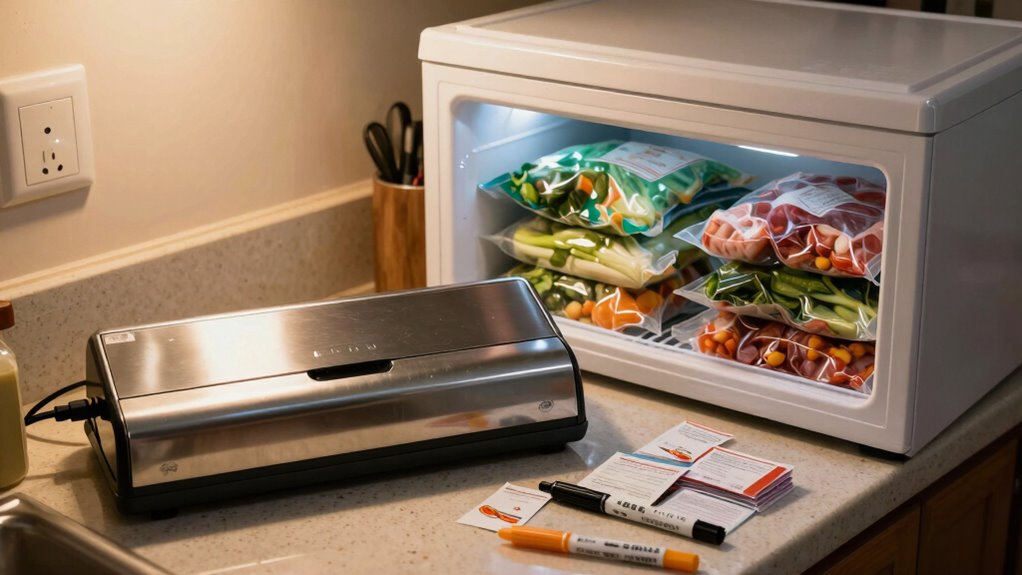

When money and energy feel tight, using vacuum sealers and chest freezers helps you stretch your budget and save power. Seal foods to prevent spoilage, waste, and freezer burn, so you buy in bulk and store seasonal produce longer. Chest freezers offer extra space for bulk items, reducing trips to the store, while energy-efficient appliances lower energy costs. Keep your food fresh and organized with these tools, and you’ll discover more ways to make smart, cost-effective choices.

Get business pricing on tools and workshop supplies
- Business-only prices and quantity discounts
- Tax-exempt purchasing
- Multiple users, one account, clear invoices
Key Takeaways
- Use vacuum sealers to extend food shelf life and reduce waste during tight financial times.
- Combine vacuum sealing with chest freezers to store bulk and seasonal foods efficiently.
- Purchase in bulk during sales to maximize savings and minimize shopping trips.
- Choose energy-efficient appliances to lower electricity costs while maintaining food quality.
- Plan meals ahead to utilize stored foods effectively and avoid unnecessary spending.
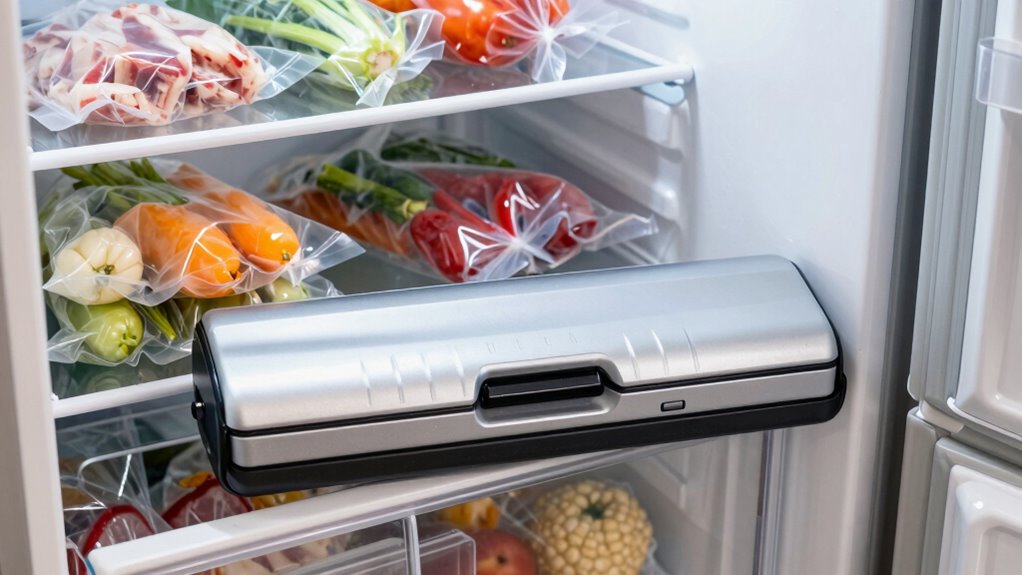
If you’re looking to extend the freshness of your food and maximize storage space, vacuum sealers and chest freezers are essential tools. When money and energy are tight, finding smart ways to store food becomes even more important. These appliances help you do food preservation efficiently, allowing you to buy in bulk and keep your purchases fresh for longer. By sealing your food properly, you prevent freezer burn and spoilage, saving you money and reducing waste. This kind of budget-friendly storage lets you take advantage of sales and seasonal deals, turning bulk buying into a smart financial move.
A vacuum sealer removes air from bags, creating an airtight seal that locks in flavor and nutrition. It’s a simple investment that pays off quickly. When you vacuum seal leftovers, produce, or meats, you stop enzyme activity and bacterial growth that cause spoilage. This means you can store food for weeks or even months without losing quality. Plus, vacuum-sealed items take up less space in your freezer, making it easier to organize and access what you need. You’ll avoid clutter and make the most of every inch of storage, which is especially helpful when energy costs make running a large freezer less appealing. Proper food preservation techniques are essential for maintaining quality and minimizing waste in limited-resource situations.
A chest freezer complements the vacuum sealer by offering extra room to store bulk items, frozen meals, or seasonal produce. Because chest freezers are energy-efficient and hold large quantities, you can buy in bulk when prices drop and store everything neatly for future use. This approach saves you trips to the grocery store and helps you avoid impulse purchases. When energy is limited, a chest freezer can be more economical than multiple small freezers, consuming less power overall and keeping your food safe for longer periods. The combination of vacuum sealing and a chest freezer creates a reliable system for budget-friendly storage, allowing you to plan your meals ahead and reduce waste.
Additionally, understanding energy-efficient appliances can help you make smarter choices when selecting freezers that balance capacity and power consumption, especially when energy costs are high. Together, these tools empower you to make smarter choices with your food budget. They help you stretch your dollars further by enabling you to buy in bulk, preserve seasonal foods, and cut down on trips to the store. When energy costs are high, they also help you manage your power consumption more effectively. Investing in a good vacuum sealer and chest freezer doesn’t just save money—it offers peace of mind, knowing your food stays fresh and safe for as long as needed. This way, you can plan your meals with confidence, even when resources are limited.
vacuum sealer for food preservation
As an affiliate, we earn on qualifying purchases.
As an affiliate, we earn on qualifying purchases.
Frequently Asked Questions
How Long Can Vacuum-Sealed Food Typically Last in the Freezer?
Vacuum-sealed food typically lasts 2 to 3 years in the freezer if stored properly. Your food preservation efforts benefit from effective storage techniques, which prevent freezer burn and maintain quality. By vacuum sealing, you remove air and moisture, extending freshness. Remember, labeling packages with dates helps track storage time. For ideal preservation, keep your freezer at 0°F (-18°C), ensuring your vacuum-sealed foods stay safe and flavorful longer.
Are Chest Freezers More Energy-Efficient Than Upright Models?
Yes, chest freezers are generally more energy-efficient than upright models. Their design allows for better insulation and less air exposure, reducing energy consumption. Plus, they typically offer larger storage capacity, making it easier to store bulk food and save money. You’ll find that chest freezers use less electricity over time, helping you save energy while maximizing storage space—an ideal choice when funds and energy are tight.
What Is the Best Way to Organize a Chest Freezer?
Imagine uncovering hidden savings in your freezer—organization tips reveal this secret. Start with a clear freezer layout, placing frequently used items at the top or front. Use labeled bins or baskets to separate categories, and stack items efficiently. Keep similar foods together, and leave space for air circulation. This method saves energy and time, making your chest freezer more manageable and ensuring your food stays fresh longer.
Can Vacuum Sealers Be Used for Non-Food Items?
Yes, vacuum sealers can be used for non-food preservation and vacuum storage. You can use them to protect important documents, photos, or small household items from moisture, dust, and air damage. Just make certain you use the appropriate bag material, as some are designed specifically for non-food items. This method helps prolong the life of your items and keeps them safe, especially during storage or moving.
How Do I Prevent Freezer Burn on My Stored Food?
To prevent freezer burn, you should focus on proper food preservation and storage techniques. Always remove excess air from your vacuum-sealed packages, as air causes dehydration and ice crystal formation. Use airtight containers or heavy-duty freezer bags, and label everything with dates. Keep your freezer at the right temperature—around 0°F—so food stays fresh longer. These steps help maintain quality and prevent freezer burn effectively.
Conclusion
By investing in a vacuum sealer and chest freezer, you’re wielding tools that can turn your kitchen into a fortress of food security, even when finances and energy feel stretched to the limit. Think of it as your secret weapon against waste and wastefulness, saving you money and peace of mind. With these appliances, you’re not just preserving food—you’re building an unbreakable shield that keeps your pantry stocked and your worries at bay, no matter how tight the budget.
Fall yard work Picks
leaf blowers
As an affiliate, we earn on qualifying purchases.