
TL;DR

Get tools and workshop supplies delivered free — and shop member deals
- Fast, free delivery on millions of items
- Access to Prime Big Deal Days deals on October 6–7
- Prime Video, Amazon Music and more included
Architect Matilde Valagussa of Atelier Zero restored a Milan apartment damaged by a 1980s renovation. The project focused on preserving remaining original features like moldings and parquet while integrating contemporary design. The result blends historical Milanese character with modern functionality for a family of four.
Architect Matilde Valagussa of Milan-based design firm Atelier Zero has completed a restoration project that reinstated the original Milanese character of an apartment previously altered by a 1980s renovation. The project prioritized preserving remaining architectural elements, such as ceiling moldings and paneled doors, while integrating contemporary design to accommodate a family of four. This approach demonstrates how historical features and modern aesthetics can coexist in a single residential space.
The apartment, originally formed by joining two adjoining units, presented a challenge distinct from typical small-space renovations. According to Valagussa, the primary goal was not expanding square footage but creating a cohesive layout from two previously distinct homes. The team avoided extensive structural demolition, instead making careful adjustments to internal architecture to improve flow. This minimal intervention strategy allowed the preservation of surviving original features, including original parquet flooring in the living and dining areas.
Design inspiration was drawn directly from the apartment’s existing proportions and tall doorways. Valagussa noted that the 1980s renovation, while destructive, also offered stylistic references. The team incorporated the freedom of 1980s design, utilizing simple geometries and familiar materials to create surprising combinations. Bold, color-blocked bands were painted onto walls to establish a new architectural language that complements, rather than competes with, the restored period details.
The integration of contemporary design is evident in elements like the kitchen island, which features a rounded top and red metal stilts. This piece reflects the unexpected quality the architect found in 1980s aesthetics. The project successfully balances eclecticism with simplicity, ensuring the space remains true to its Milanese roots while serving the practical needs of modern family life.
Balancing Historical Integrity With Modern Living
This project highlights a growing trend in residential renovation: the preservation of architectural heritage amidst modernization. By choosing to retain original features rather than replacing them entirely, Atelier Zero demonstrates that restoration does not require a return to a static past. Instead, it allows for a dynamic dialogue between eras. For homeowners in historic districts, this approach offers a viable alternative to full gut renovations, potentially reducing waste and preserving cultural identity.
The use of color as a structural tool is particularly significant. Rather than relying on physical partitions, the design uses painted bands to define spaces and guide movement. This technique minimizes construction impact while achieving a strong visual identity. It suggests that interior architecture can be achieved through surface treatment and careful curation of existing elements, offering a cost-effective and less disruptive method for updating older properties.
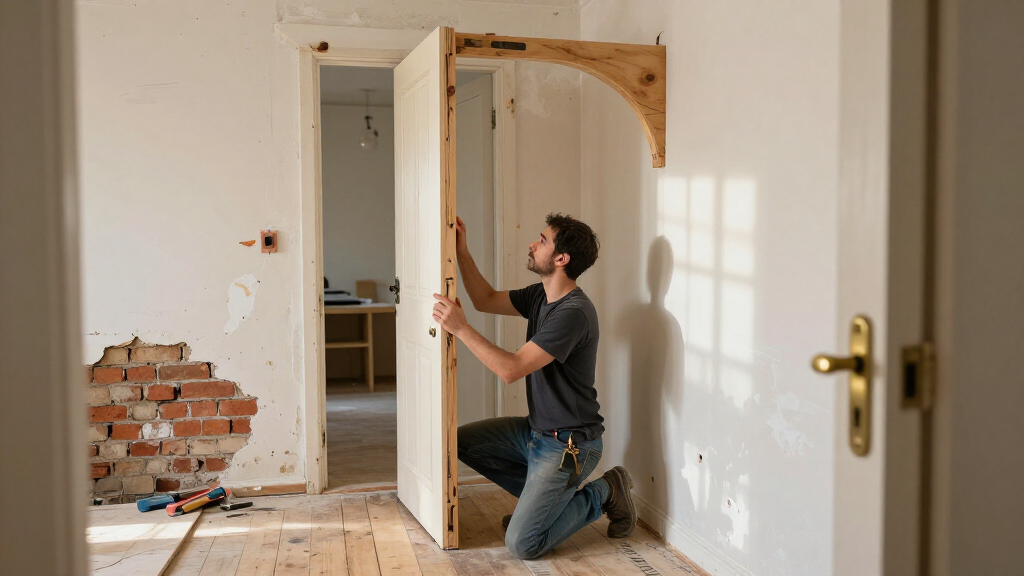
moldings and paneled doors for restoration
As an affiliate, we earn on qualifying purchases.
As an affiliate, we earn on qualifying purchases.
The Impact of 1980s Renovation Trends
Many period properties across Europe suffered from 1980s renovation practices that prioritized modernization over preservation. During this era, original features such as ornate moldings, paneled doors, and traditional flooring were often removed to create smoother, more minimalist interiors. In Milan, this trend stripped many apartments of their unique architectural character. The restoration of this specific apartment serves as a corrective measure, reversing some of these earlier decisions by reinstating what remained and highlighting what was lost.
Milan’s urban fabric plays a crucial role in this context. The city is known for blending historical depth with modern urbanity. Valagussa emphasized that Milan’s beauty is often subtle and requires time to appreciate. This cultural context influenced the design philosophy, aiming to create an interior that reveals itself gradually, much like the city itself. The project reflects a broader shift in Italian design towards respecting local heritage while embracing contemporary global influences.
“The main priority was to bring out the apartment’s traditional Milanese character.”
— Matilde Valagussa, Architect at Atelier Zero
Specifics of Structural Changes Remain Undetailed
While the design approach is clearly articulated, specific details regarding the structural integrity of the joined units are not fully detailed in the available reports. It is unclear exactly how the internal architecture was tweaked to improve flow without knocking through walls, beyond general descriptions of careful adjustments. Additionally, the cost of the restoration and the specific materials used for the new color-blocked bands are not specified. The extent of the 1980s damage beyond the mentioned moldings and doors remains vague, leaving questions about other potential hidden losses in the property.
Future Applications for Heritage Restoration
The completion of this project may influence future renovation guidelines in Milan and other historic European cities. As awareness of architectural heritage grows, more homeowners may seek similar restorative approaches that balance modern functionality with historical preservation. Design firms may increasingly adopt techniques that use color and minimal structural changes to update older properties. Monitoring the long-term durability of the contemporary interventions alongside original features will be relevant for future case studies in sustainable renovation practices.
Key Questions
What original features were preserved in the Milan apartment?
The restoration prioritized preserving ceiling moldings, paneled doors, and original parquet flooring in the living and dining areas. These elements served as the foundation for the new design scheme.
How did the architect incorporate modern design?
Modern design was integrated through color-blocked bands painted on walls and contemporary furniture pieces, such as a kitchen island with red metal stilts. This approach blends eclecticism with the existing historical architecture.
Why was the 1980s renovation considered a problem?
The 1980s renovation removed many unique architectural features that define Milanese character. The restoration aimed to reverse this loss by highlighting surviving original elements and respecting the home’s historical proportions.
Who was the client for this project?
The clients were a family of four. The apartment, created by joining two units, required a layout that improved flow and cohesion for family life without extensive structural demolition.
Source: rss
Halloween Picks
halloween
As an affiliate, we earn on qualifying purchases.