
TL;DR

Get business pricing on tools and workshop supplies
- Business-only prices and quantity discounts
- Tax-exempt purchasing
- Multiple users, one account, clear invoices
A Hunker report describes a DIY approach that connects a pipe to a downspout, buries the extension, and releases runoff farther from the house. The method can conceal exposed piping and help limit puddling or soil erosion, but it depends on a downhill route, a clear outlet, and checking for buried utilities before digging.
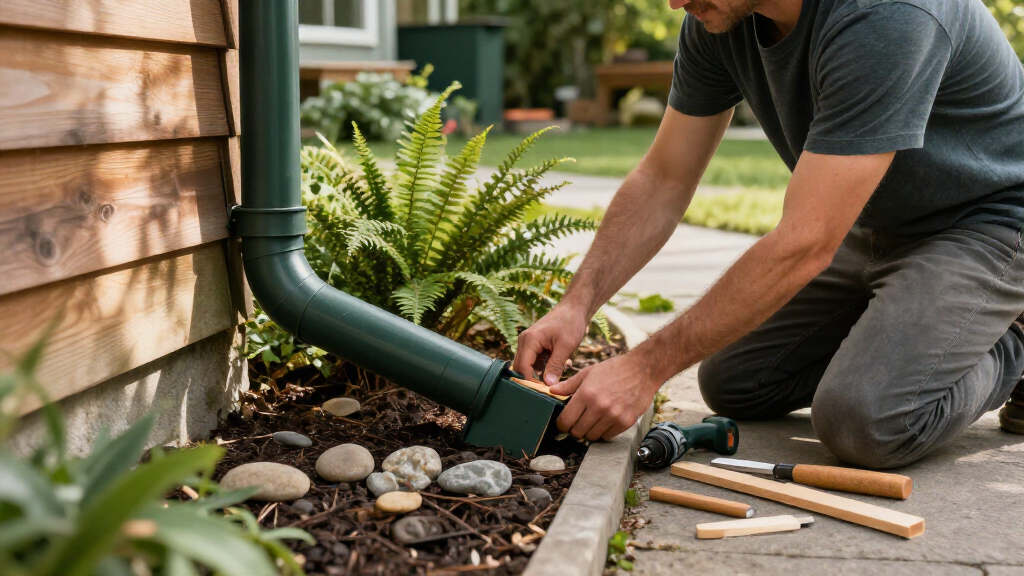
A DIY design described by Hunker hides an extension to a home’s downspout by burying a pipe that carries roof runoff farther into the yard. The approach, shown by YouTube DIYer Jesse Smith, aims to reduce visible piping and help keep water from repeatedly pooling or wearing away the ground beside the house.
The method connects a flexible plastic, corrugated, or PVC pipe to the end of an existing downspout, then places the extension in a trench. Hunker says the pipe should be roughly the same size as the downspout and durable enough for the job. An adapter can make the connection easier; choosing one with a cleanout opening can also make later maintenance more accessible. Waterproof tape or PVC glue may be used to secure the connection, depending on the materials.
Before digging, the homeowner measures the route and checks the location of underground utilities. The pipe needs a downhill path so water can drain; a mostly flat yard may require a slope. The trench should cover the pipe fully, while the outlet end remains open or fitted with a suitable grate or pop-up drain. Hunker also advises cleaning the downspout first and notes that digging may disturb the lawn, which could need reseeding or other repair.
Runoff Control Without Visible Pipe
The design addresses two common issues at once: the appearance of an exposed downspout extension and water concentrating at the outlet. Hunker says repeated discharge in one place can wear away soil and leave mud puddles or bare patches. Carrying runoff farther from that spot may help limit those effects, while burying the pipe keeps most of the extension out of sight.
This is a yard drainage measure, not a guarantee against foundation problems. The source describes possible erosion and structural concerns when water repeatedly falls near a home, but it provides no measurements or testing showing how much this particular setup reduces risk. Its performance depends on the route, slope, pipe condition, and where the water is ultimately released. A poorly placed outlet could simply move the pooling or erosion elsewhere.
As an affiliate, we earn on qualifying purchases.
Why Downspout Outlets Wear Soil
Roof gutters collect rainwater and direct it to downspouts, which release it at ground level. When water repeatedly exits at the same point, it can disturb soil and create a muddy patch. The problem described in Hunker is not the plain appearance of a downspout alone, but also the concentrated flow at its lower end.
Smith’s example extends the outlet with a buried pipe rather than leaving a long section visible above ground. Hunker presents the idea as a DIY option for homeowners and suggests that the outlet could be placed in a less visible spot or incorporated into a rain garden. The report does not provide a site-specific plan, so the route and discharge point would need to suit the property.
“The pipe will need to run downhill.”
— Hunker’s report on the DIY method
Site Conditions Shape the Result
The report does not specify a standard trench depth, pipe length, slope, or outlet distance that would work for every property. It also does not establish whether the described installation meets local drainage rules or whether a given yard can safely direct runoff to the proposed location. Those details depend on site conditions and local requirements, neither of which is assessed in the source.
It remains unclear how much the setup reduces erosion or foundation risk in practice; the report offers a DIY example, not performance data. Homeowners also need to confirm where underground utilities lie before digging and consider whether the outlet could affect neighboring land, walkways, or other areas. If the yard needs substantial regrading, Hunker cautions that slope work can be technical and calls for research before starting.
Check the Route Before Digging
For anyone considering the method, the next steps are to inspect and clean the downspout, choose a discharge point, map a downhill pipe route, and verify underground utility locations before opening a trench. The materials described include a suitably sized pipe and a secure connection; an adapter with a cleanout can make future access easier. The outlet must remain able to release water rather than being buried or obstructed.
After placement, the trench can be backfilled and disturbed grass repaired or reseeded. The source does not provide a follow-up report on Smith’s installation or a date for further testing. Homeowners should check how the outlet performs during rain and watch for blockages, pooling, or soil movement; any local drainage restrictions should be checked before work begins.
Key Questions
How does the buried downspout extension work?
A pipe is attached to the downspout and placed in a trench, carrying roof runoff to an outlet farther into the yard. The route needs a downhill slope for water to flow.
What materials does the DIY method use?
Hunker describes using a durable, roughly downspout-sized corrugated or PVC pipe, plus a suitable connection such as an adapter. Waterproof tape or PVC glue may be used, depending on the materials.
Does burying the pipe prevent foundation damage?
The source does not establish that it prevents foundation damage. It describes moving runoff away from the downspout’s immediate outlet, which may help reduce concentrated puddling or erosion, but results depend on the property and drainage route.
What should be checked before digging?
Check the location of underground utilities, plan a downhill route, and confirm where the water will exit. The trench may disturb the lawn, and a flat yard may need more technical grading.
Source: rss
Halloween Picks
halloween
As an affiliate, we earn on qualifying purchases.