TL;DR

Get business pricing on tools and workshop supplies
- Business-only prices and quantity discounts
- Tax-exempt purchasing
- Multiple users, one account, clear invoices
A House Beautiful report describes a growing design approach among younger collectors: placing modern prints, posters and other contemporary images in ornate antique frames. Designers say the contrast can add depth and personality, while recommending attention to scale, materials, spacing and secure mounting.
Gen Z collectors are pairing modern prints, movie posters and other contemporary images with ornate antique frames, departing from a longstanding design convention that modern art should use simpler frames. In a House Beautiful report, designers and art professionals say the contrast can give familiar images more character, though they caution that proportion, composition and sturdy mounting matter.
The convention, recalled in a 1990s issue of House Beautiful, advised against putting 20th-century art in elaborate Rococo frames. The newer approach reverses that pairing: the frame may be antique or antique-inspired, while the image inside is contemporary. The report describes examples ranging from black-and-white family photographs and art prints to movie posters and smart TVs.
Art and antiques dealer Heather Karlie Vieira says frames have a history of functioning as more than a border. “The picture frame definitely has its roots as being part of the furniture in a room,” she says, adding that it has “grown into a piece of art in its own right.” Gallerist and art adviser Hutton Kalik similarly says the frames themselves are not necessarily newly popular; the shift is in what people choose to put inside them.
Interior designer Kathy Kuo says a strong difference between frame and image can add dimension: a contemporary print in a Baroque frame, she says, can have “a totally different point of view” than the same work in a modern frame. The report presents these as professional design judgments, not findings from a survey measuring how widespread the trend is.
Why the Frame-Image Contrast Works
The pairing matters because it changes how a familiar image reads without requiring a new artwork. An ornate frame can make a poster or print feel more prominent, while the contemporary image keeps the traditional frame from reading as a strictly historical display. Designers in the report describe that tension as a way to add visual contrast and depth.
The approach also gives people room to make a display more individual. Vieira says combining antique and modern pieces can invite conversation and make decor feel more personal. Hunting for a frame at an estate sale or flea market can become part of the process, rather than choosing a standard frame-and-print combination from a retailer. Those are designers’ views about the trend’s appeal; the source does not establish how many households are adopting it or whether it is changing sales.
There is a practical consequence, too: a frame is both a decorative object and a structure that must fit its artwork and wall. A frame that overwhelms a small print can diminish the image, while a heavy antique frame needs suitable hardware. That makes the look dependent on scale, materials and installation, not just on mixing old and new.
ornate antique style picture frames for art prints
As an affiliate, we earn on qualifying purchases.
As an affiliate, we earn on qualifying purchases.
From a 1990s Rule to Mixed Media
The report sets the current styling against an older piece of House Beautiful advice: “Never hang 20th-century art in elaborate rococo frames.” It describes the traditional logic as giving modern works understated wood or metal frames so the frame does not compete with the art. The newer combinations challenge that distinction by treating the frame itself as part of the visual composition.
According to Kalik, antique frames have continued to attract buyers, but the imagery being placed inside them is changing. That distinction helps explain why the practice is less a rejection of antiques than a change in how they are used. Instead of reserving ornate frames for religious paintings or traditional landscapes, collectors may place contemporary media in them.
The source also distinguishes between a single statement piece and a larger gallery wall. Interior designer Alyssa Buzzeo recommends repeating finishes, such as antique gold, dark wood or black, to create cohesion. Designer Michelle Squire suggests mixing ornate and simple frames or using one finish throughout an all-ornate grouping. She gives a rough proportion for mixed displays: ornate frames can make up about one-third of the mix, balanced by simpler profiles.
“The picture frame definitely has its roots as being part of the furniture in a room. But from those 17th-century French beginnings, it’s grown into a piece of art in its own right.”
— Heather Karlie Vieira, art and antiques dealer
How Broad the Trend Is
The report offers designers’ observations and selected interiors, but it does not provide survey data, sales figures or a defined time period showing how common the practice is among Gen Z or other age groups. “Gen Z” is the report’s framing; the material does not establish that the approach is exclusive to that generation.
It is also unclear how well every antique frame will suit a given artwork or room. Designers describe factors that can affect the result—frame weight, image size, wall space, finish and the room’s existing style—but the source does not give a universal standard for selecting or mounting a frame. Its recommendations are guidance, not a guarantee that every pairing will work.
Choosing and Hanging a Frame
For people trying the look, the designers’ advice in the report points to a few practical decisions: decide whether the display will be a single statement piece, a small grouping or a full gallery wall; check that the frame is proportionate to the image; and use repeated finishes or a mix of ornate and simpler frames to keep a larger arrangement coherent. Squire recommends looking for real vintage frames and spending on a custom mat when needed to give the art room to breathe.
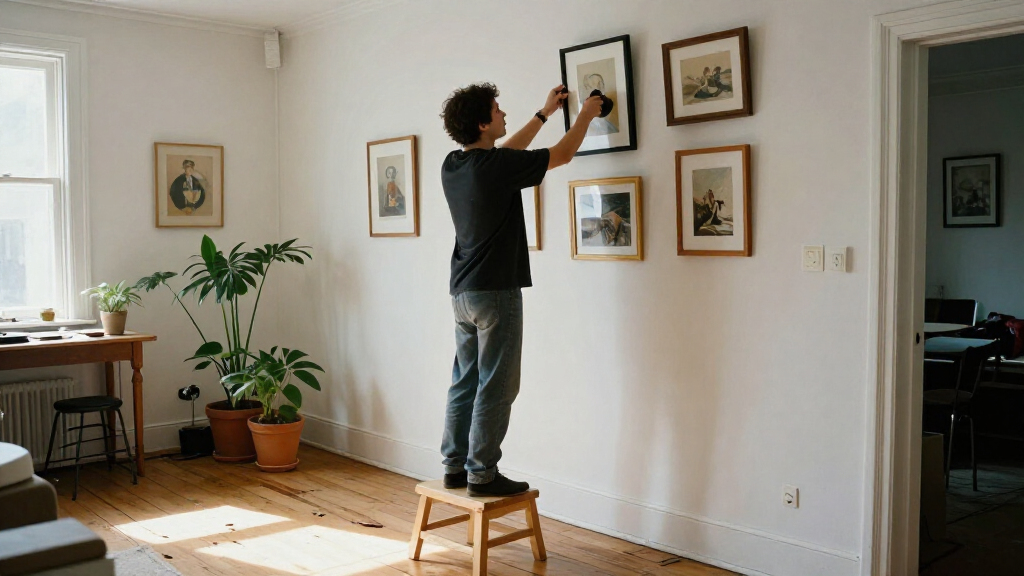
Before hanging an antique frame, check its weight and use wall anchors and hardware suited to the wall and the load. The source does not specify installation products or provide a technical mounting standard, so people uncertain about the wall or hardware should seek appropriate professional advice. The report does not identify a next industry milestone or provide evidence about whether the trend will continue; for now, the described approach remains a design practice supported by the experts quoted.
Key Questions
What gallery wall rule is being challenged?
A design convention recalled in the House Beautiful report advised against placing 20th-century art in elaborate Rococo frames. The newer pairing puts contemporary images—such as prints or movie posters—in ornate antique frames.
Why do designers say modern art can work in an antique frame?
Designers quoted in the report say the contrast can give an image a different point of view and add visual interest. That is professional opinion, rather than a measured result applicable to every room or artwork.
How can a gallery wall stay cohesive?
Designer Alyssa Buzzeo recommends repeating finishes such as antique gold, dark wood or black. Michelle Squire suggests balancing ornate frames with simpler ones, or using a consistent finish across an all-ornate grouping.
What should I check before hanging a heavy antique frame?
Check the frame’s weight and use anchors and hardware suited to the wall and load. The report stresses proper mounting but does not specify a particular product or installation method.
Source: rss
Fall yard work Picks
leaf blowers
As an affiliate, we earn on qualifying purchases.