
TL;DR
Homeowner Alexis Moore revamped her 1980s dining room over eight weeks as part of the One Room Challenge, according to Apartment Therapy. She painted over difficult-to-remove wallpaper, added a forest-patterned paper above the chair rail and furnished the room largely with secondhand finds.
Homeowner Alexis Moore completed an eight-week dining room makeover for the One Room Challenge, replacing the room’s dated look with forest-patterned wallpaper, muted paint and mostly secondhand furniture, Apartment Therapy reported. The project offers a documented example of how a homeowner worked around difficult-to-remove wallpaper while reshaping a room with vintage-inspired pieces.

Get business pricing on tools and workshop supplies
- Business-only prices and quantity discounts
- Tax-exempt purchasing
- Multiple users, one account, clear invoices
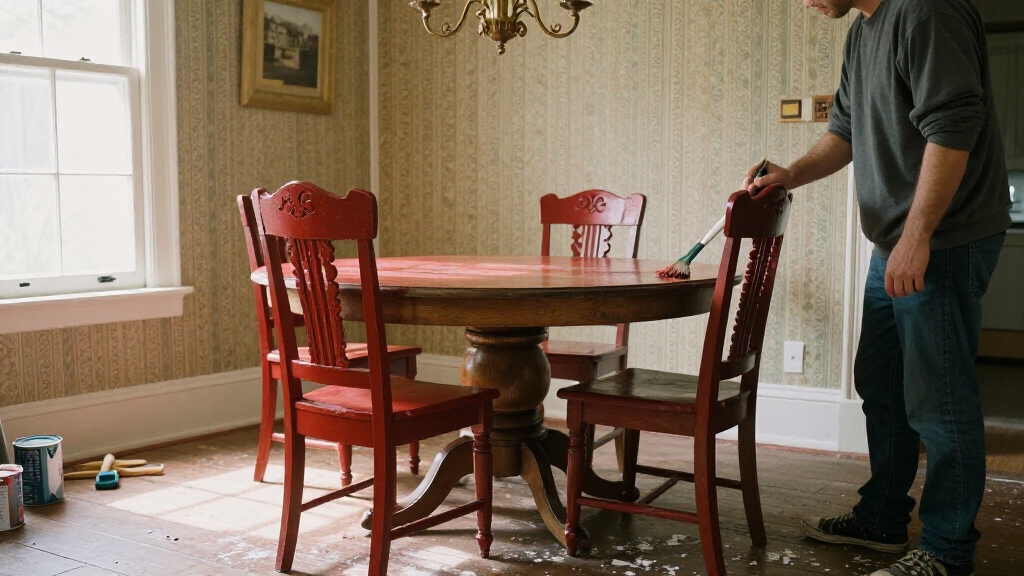
Moore said the dining room in her 1980s home had not been updated since it was built and felt outdated and disconnected from her style. She wanted to retain features she liked, including the hardwood floors, natural light and open layout, while changing the dark red wallpaper that dominated the room.
According to Apartment Therapy, the existing paper appeared to have been pasted directly onto the drywall, making removal difficult. Moore instead filled holes, skim-coated the walls and applied primer before painting over the old wallpaper in Sherwin-Williams’ “Hardware”, a color the report describes as between tan and gray. Above the chair rail, she installed Wall Blush’s “Wedded Woodlands”, a forest-patterned wallpaper inspired by vintage designs.
Moore sourced the dining table and chairs through Facebook Marketplace and found the buffet at a Habitat for Humanity ReStore, the article says. She also sold her former table, chairs and buffet through Facebook Marketplace to offset the cost. Much of the decor was secondhand, including an oversized antique-looking mirror; a lamp from HomeGoods cost $30, according to the report.
A Wallpaper Workaround Shapes the Redo
The makeover’s practical detail is its approach to the original wallpaper. Rather than strip paper that Moore found difficult to remove, she prepared the surface and painted over it, then used a separate patterned wallpaper above the chair rail. Her account indicates that surface preparation was central to the result: she said the work was frightening at first, but added that after the preparation, “you’d never even know!” The article does not independently assess the wall’s condition or the durability of the finish.
The project also shows how Moore combined used furniture and decor with selected new purchases. She said vintage pieces bring character and a lived-in feeling to a room. Selling the old furniture helped offset expenses, though the report gives no total project budget, itemized costs or estimate of the savings. That limits comparisons with other renovations, but the sourcing details show the specific choices behind this makeover.
For readers considering a similar room refresh, Moore’s experience offers a concrete account of the time and skill involved: she sought help from a friend with wallpaper experience for the first few panels, then completed the rest herself. It is one homeowner’s project, not a guarantee that painting over wallpaper will suit every wall or produce the same result.
Popular right now

Hisense 85U6SF Pro 85-Inch U6 Pro Mini-LED 4K UHD Smart Fire TV

Dyson V11 Torque Drive Cordless Vacuum Cleaner

Ninja SP151 Flip Toaster Oven & Air Fryer, Stainless Steel
As an affiliate, we earn on qualifying purchases.
From Dark Red Paper to Woodland Print
Apartment Therapy presents the project as a before-and-after report on a single dining room, rather than a survey of renovation costs or a general guide. The source says Moore undertook the redo as part of the One Room Challenge and completed it over eight weeks. It does not provide the challenge’s rules, a calendar of the work or a breakdown of how Moore divided the time.
The original room had some features Moore wanted to keep, including wood flooring and natural light. Her changes centered on the wall treatment, furniture and decor. The lower walls received gray-tan paint over the existing wallpaper, while the woodland pattern went above the chair rail. The article attributes the color and wallpaper names to the products Moore used; it does not report independent testing or endorsements of either product.
Moore said wallpapering such a large area was new to her and that the material represented a significant investment for her. A friend with more experience helped her hang the first few panels, she said, giving her confidence to finish the installation alone. The report does not state the wallpaper’s price or how many rolls the room required.
““It felt super outdated and lacked my personal style.””
— Alexis Moore, as quoted by Apartment Therapy
Costs and Long-Term Finish Are Unreported
The Apartment Therapy report does not give a total project cost, the amount spent on wallpaper and paint, or the savings from selling the former furniture. It also does not state the precise completion or publication date beyond saying it was published the day before the source material was provided.
The report offers Moore’s account of painting over the old paper but does not describe the drywall beneath it in detail, provide an independent inspection, or track how the painted surface holds up over time. It is also unclear whether any additional work was required beyond the listed filling, skim-coating and priming. The article describes one project and does not establish that the same method will work for other walls.
No Further Project Milestone Listed
The source describes the room as finished and gives no indication of planned follow-up work, a new renovation phase or another scheduled update. Moore said she was proud of completing the project herself and of the secondhand pieces she found and used.
Any further details about the room’s cost, the wallpaper installation or the finish’s performance would depend on an update from Moore or Apartment Therapy. For now, the available account documents the eight-week makeover and its main materials and furniture sources, without a stated next milestone.
Key Questions
Who completed the dining room makeover?
Alexis Moore, a homeowner, completed the project as part of the One Room Challenge, according to Apartment Therapy.
How did Moore handle the old wallpaper?
She said removal was difficult because the wallpaper seemed to be pasted directly onto drywall. After filling holes, skim-coating and priming, she painted over it; she added forest-patterned wallpaper above the chair rail.
Where did the furniture come from?
The table and chairs came from Facebook Marketplace, and Moore found the buffet at a Habitat for Humanity ReStore. The report says she sold her previous dining furniture through Facebook Marketplace to offset the cost.
How much did the makeover cost?
The total cost is not reported. The article gives one decor price: Moore bought a HomeGoods lamp for $30. It does not state the wallpaper, paint or overall project costs.
Source: rss