
TL;DR

Get business pricing on tools and workshop supplies
- Business-only prices and quantity discounts
- Tax-exempt purchasing
- Multiple users, one account, clear invoices
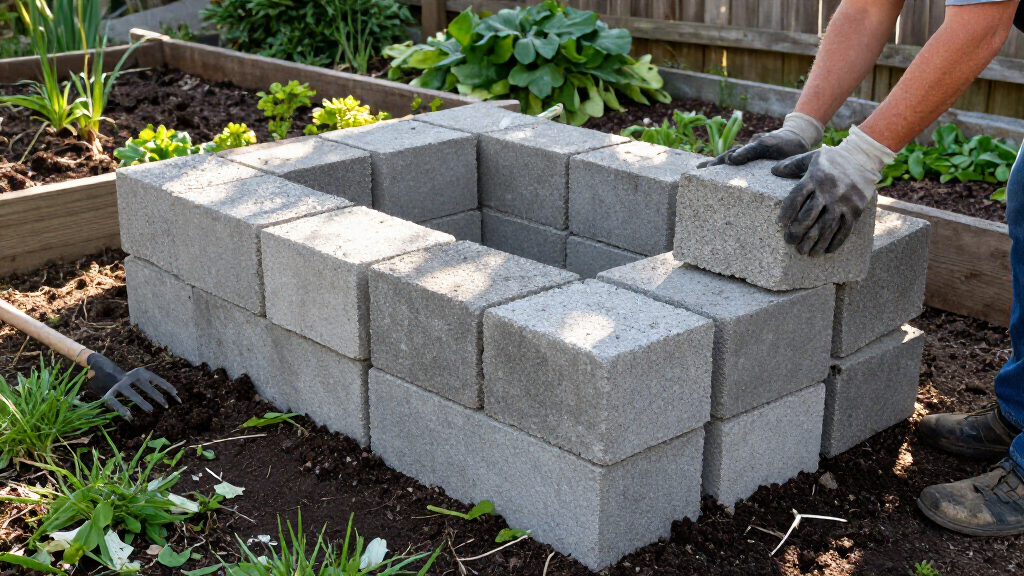
A Hunker report describes building a backyard compost enclosure from roughly 30 to 35 concrete blocks, stacked without mortar. The design leaves the front open for access and uses block openings or gaps to allow airflow; its long-term performance will depend on placement and upkeep.
Hunker has outlined a DIY compost enclosure made by stacking about 30 to 35 concrete blocks without mortar, offering gardeners a durable alternative to a purchased bin or lighter homemade structures. The proposed design keeps one side open for adding and turning material, while block openings or spaces between them allow air to reach the pile.
The guide recommends starting with a back wall of four or five blocks and building two side walls to form a three-sided enclosure. The front remains open so compost can be added, turned and checked. Additional blocks are stacked to raise the walls, with the report describing about four rows at the back and side walls that may taper toward the front. Staggering the blocks rather than lining up every joint is suggested to improve stability.
Airflow is a central part of the design. The report says the hollow sides can face inward, or the blocks can be arranged with gaps between them. It describes air as necessary for the aerobic bacteria involved in decomposition, but does not provide measured composting times or a comparison with other bin designs. The guide says a single enclosure can be assembled in less than a day; that estimate may vary with site preparation, block availability and the builder’s experience.
For sourcing, Hunker suggests looking for used blocks through local listings, construction sites, junk haulers or Habitat ReStore locations. The article also cites new 8-by-8-by-16-inch blocks at Home Depot for less than $3 each at the time of its report. Prices and availability can change, and the source does not give a total project cost.
A Reusable Structure for Backyard Compost
For gardeners seeking a stationary compost setup, the approach offers a simple structure assembled from individual blocks rather than a manufactured container. No mortar is required, and blocks can be rearranged or added to create another enclosure, according to the guide. That flexibility may appeal to households with access to low-cost reclaimed materials or a need to expand composting capacity over time.
The open front also makes the pile accessible for routine handling, while gaps and hollow cores are intended to support airflow. Those features matter because composting requires conditions that support decomposition, but the source does not establish that this design will outperform a commercial bin or produce finished compost faster. The practical benefit is a sturdy, adjustable enclosure, not a guaranteed composting result.
As an affiliate, we earn on qualifying purchases.
How the Block Design Works
Backyard composters use a range of containers, from wood and wire constructions to buckets and bags. Hunker presents concrete blocks as an alternative for people who want a heavier, more permanent enclosure. The source’s focus is a straightforward build: arrange a back and two side walls, leave the front open, then stack and stagger blocks to reach the desired height.
The article uses “concrete blocks” and “cinder blocks” interchangeably, and its instructions allow more than one orientation for the hollow cores. It says the openings should face the pile or the blocks should be spaced to maintain airflow. The guide does not specify a required foundation, exact dimensions for the finished enclosure, or a site-specific design; the number and arrangement of blocks depend partly on the desired size.
““These hollow blocks create airflow that aerobic bacteria need.””
— Hunker
Cost, Stability and Results Vary
The supplied report does not give a publication date, a final materials budget, or test results comparing this enclosure with other compost bins. Its cited block price is time-sensitive, and local availability of free or reused blocks will vary. The article also does not say how the structure performs in different climates, on uneven ground, or under repeated handling.
Readers should treat the suggested block count and wall layout as a general plan rather than a site-specific construction specification. The source does not address local rules, drainage, or whether a particular location is suitable for a compost pile. It also provides no guaranteed timeline for decomposition or guidance for resolving common compost problems.
Plan the Site Before Stacking
Anyone considering the build would first need to choose a suitable location, decide how large the enclosure should be and check whether reclaimed blocks are available nearby. Before stacking, gardeners can assess whether the ground is reasonably level and plan where access to the open front will be needed. The source provides no follow-up testing or update on the design, so cost, durability and composting performance remain matters for individual use.
Key Questions
How many concrete blocks does the suggested compost bin need?
Hunker estimates about 30 to 35 blocks for one enclosure. The total can vary with the chosen dimensions and wall layout.
Does the enclosure require mortar?
No. The report describes stacking the blocks without mortar, with joints staggered for added stability. It does not provide engineering specifications for every site or arrangement.
Why leave the front of the compost bin open?
The open side provides access to add and turn compost and check its temperature, according to the guide.
How should the blocks be arranged for airflow?
The guide says to have the hollow sides face inward or leave spaces between blocks. It presents airflow as support for the aerobic bacteria involved in decomposition, but gives no measured speed advantage.
What might the blocks cost?
Hunker cited new 8-by-8-by-16-inch blocks at less than $3 each at Home Depot when its report was written. Current prices and availability may differ; used blocks may be available through local listings, construction sites, junk haulers or Habitat ReStore locations.
Source: rss
Fall yard work Picks
leaf blowers
As an affiliate, we earn on qualifying purchases.