
TL;DR

Get business pricing on tools and workshop supplies
- Business-only prices and quantity discounts
- Tax-exempt purchasing
- Multiple users, one account, clear invoices
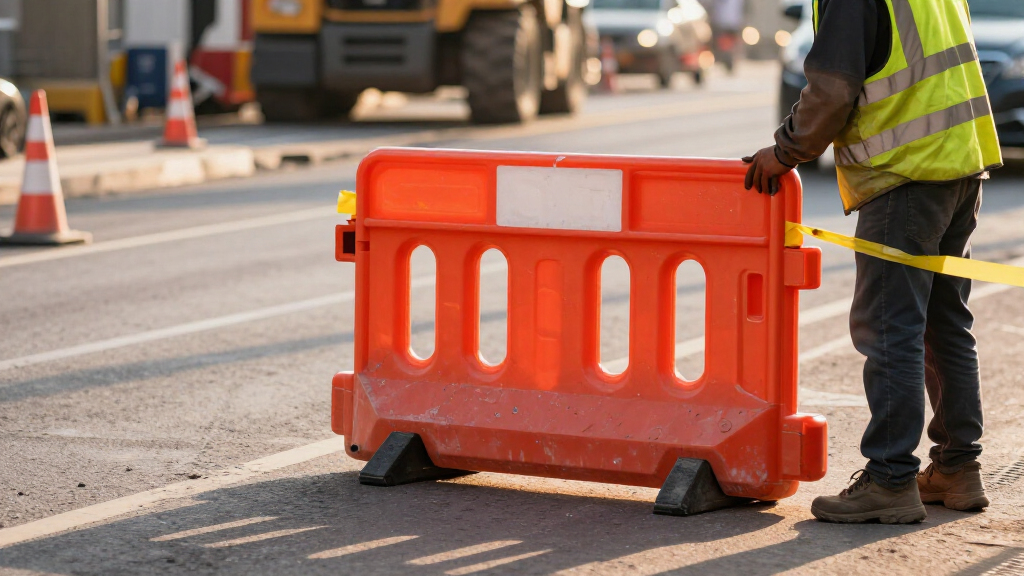
A Family Handyman report explains that construction barricade colors are tied to different safety purposes, but meanings depend on the setting and applicable standards. Red and yellow commonly warn of danger or physical hazards, while orange-and-white road barricades help direct traffic around work and closures.
Construction barricade colors signal different kinds of warnings, information and traffic directions, according to a Family Handyman report drawing on workplace-safety and highway standards. The colors are not interchangeable: the setting and the sign or barrier’s purpose matter, and the same color may serve different functions under different rules.
For workplace settings, red marks danger and can identify emergency stops or fire-protection equipment. A red Danger sign may warn of exposed electrical equipment or another hazard with the potential to cause serious injury. OSHA’s general-industry rules also call for red warning lights at barricades and temporary obstructions.
Yellow generally signals caution about physical hazards, such as falls or falling objects. It may appear on tape around a damaged walkway or a maintenance area. Orange has workplace and road uses: workplace warning signs can mark hazards around machinery or equipment being repaired, while orange road barriers and signs alert drivers to work, lane changes or other temporary traffic conditions.
Other colors can provide information or point to specific hazards. Green signs can identify first aid or safety equipment; blue notices typically communicate workplace information, such as equipment being out of service. Certain radiation warning signs use a purple or magenta radiation symbol on yellow, under OSHA rules cited in the report.
How Color Helps People Respond
Recognizing a color can give workers and members of the public a quick indication of whether they are approaching a hazard, looking for safety equipment or being directed around roadwork. The practical value is faster recognition, especially where a person must decide whether to stop, keep clear or follow a changed route.
But color alone does not tell the whole story. The report describes different rules for workplaces and roads, and notes that a color can have different uses depending on location. People should follow the sign, barrier placement and traffic instructions, rather than assuming every red, yellow or orange marker means precisely the same thing everywhere.
construction barricade safety tape
As an affiliate, we earn on qualifying purchases.
As an affiliate, we earn on qualifying purchases.
Workplace and Highway Rules
The report bases its workplace color explanations on OSHA provisions, including 29 CFR 1910.144 on safety colors for physical hazards and 29 CFR 1926.200 on accident-prevention signs and tags. It also cites OSHA’s ionizing-radiation rule, 29 CFR 1910.1096, for radiation warnings.
ANSI’s Z535.1-2022 standard covers safety colors, while Z535.5-2022 addresses safety tags and barricade tape. Road construction uses a separate framework: the report cites the Federal Highway Administration’s Manual on Uniform Traffic Control Devices, 11th edition with Revision 1. Orange-and-white striped barricades can close lanes or roads and guide drivers around construction. When stripes indicate which way to pass an obstruction, they slope down toward the side traffic should use.
“Barricade colors aren’t random, and they don’t all mean the same thing.”
— Family Handyman report
Where Color Meanings Can Differ
The report does not establish a single color code that applies to every construction site, road or jurisdiction. It says the same color may serve a different purpose depending on location, and workplace rules differ from highway standards. The precise meaning of an individual barrier may depend on its accompanying sign, placement and applicable local requirements.
The supplied material also does not identify a particular site, incident or newly adopted rule. Its coverage is an explanation of existing color uses, not evidence that every employer or road crew uses every color in the same way. Readers should not infer a specific hazard from color alone when posted instructions provide more detail.
Follow Signs at Each Site
For anyone approaching a work area, the immediate step is to obey posted warnings, keep out of restricted zones and follow traffic-control directions around road closures or lane changes. Use the full message on the sign and the barrier’s direction, not just its color, to understand what action is required.
The cited standards provide the reference points for workplace and highway safety, but the report does not announce a change to those rules or set out a future policy milestone. Where a barrier’s meaning is unclear, do not cross it or bypass it; seek direction from site personnel or follow the marked public route.
Key Questions
What does a red construction barricade or sign mean?
Red commonly marks danger, emergency stops or fire-protection equipment in workplace safety. A red Danger sign may identify a serious hazard, but the sign’s wording and location provide important details.
What does yellow tape usually warn about?
Yellow generally warns of physical hazards, including falls or falling objects. It may mark a maintenance area or damaged walkway; do not cross it unless authorized.
Why are roadwork barriers orange and white?
Orange alerts drivers to roadwork and temporary traffic conditions; striped barricades can close lanes or guide traffic around an obstruction. The stripe direction indicates the side traffic should pass when the barricade is directing drivers around it.
Do barricade colors mean the same thing everywhere?
No. The meaning depends on the setting and applicable standards. Workplace safety rules and highway traffic-control rules are separate, and a color may have different uses by location.
What do green and blue safety signs indicate?
Green signs can point to first aid or safety equipment. Blue notices typically provide workplace information or instructions, such as identifying a machine that is out of service, rather than warning of immediate danger.
Source: rss
Fall yard work Picks
leaf blowers
As an affiliate, we earn on qualifying purchases.