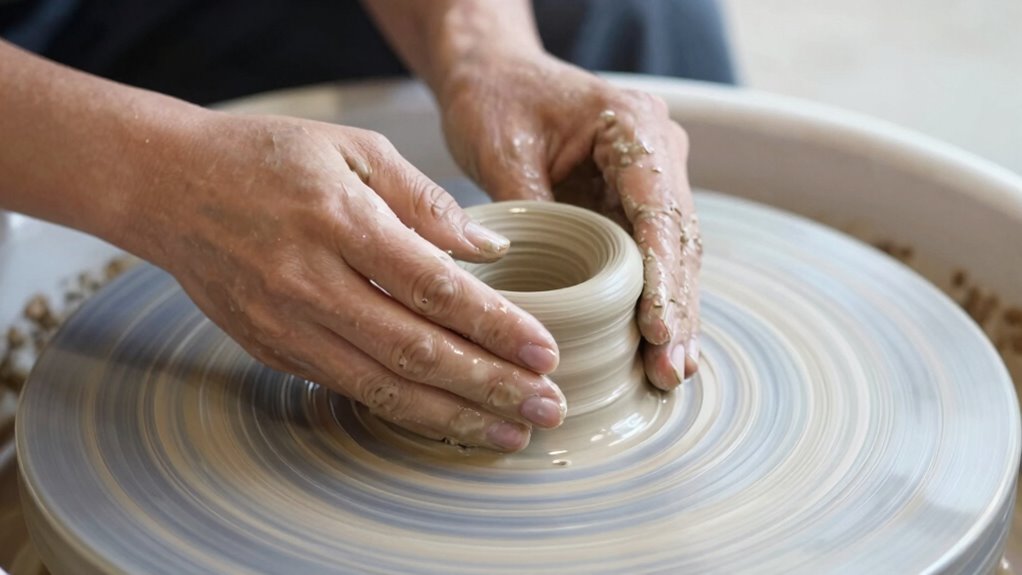

The “secret move” in pottery wheel centering involves applying a gentle, steady pressure and using your off-hand to guide the clay while keeping your palms firm but relaxed. Think of it as controlling the clay’s energy rather than fighting it—using body weight and slow, deliberate movements to help the clay obey your commands. Mastering this technique makes centering smoother and more consistent. Keep going, and you’ll soon discover how this move transforms your pottery skills.

Get business pricing on tools and workshop supplies
- Business-only prices and quantity discounts
- Tax-exempt purchasing
- Multiple users, one account, clear invoices
Key Takeaways
- Use the “secret move” by applying gentle, consistent pressure with your palms and fingers, gradually guiding the clay into the center.
- Incorporate slow, deliberate wheel speed changes while maintaining steady hand contact to enhance control and stability.
- Engage your body weight by leaning slightly into the clay to stabilize movements and reduce hand fatigue.
- Slightly shift your hands or adjust pressure during centering to correct off-center clay and achieve perfect symmetry.
- Regularly practice the “secret move” to develop muscle memory, making the clay obey more effortlessly during centering.
Popular right now

Vitamix Propel Series 750 Professional-Grade Blender, 4 Programs, Black

Vitamix 5200 Professional-Grade Blender, 64 oz. Container, Black

LG C2 Series 65-Inch OLED evo 4K Smart TV (OLED65C2PUA, 2022)
As an affiliate, we earn on qualifying purchases.
Why Centering Clay on the Pottery Wheel Is Essential

Centering clay on the pottery wheel is a crucial step because it guarantees your piece will be stable and uniform. Proper hand positioning is key; place your hands firmly but gently, with palms pressing evenly into the clay’s surface. Keep your fingers slightly apart to maintain control and balance. Adjust the wheel speed to a moderate pace—fast enough to make the clay respond but not so quick that you lose control. As you apply steady pressure, focus on keeping your hands aligned and centered, guiding the clay into a symmetrical shape. When your hands work together smoothly and the wheel spins consistently, the clay begins to center effortlessly. Developing a steady rhythm during centering helps maintain control and prevents wobbling. Consistent technique is essential for achieving reliable results and preventing wobbling or uneven walls. Concentrating on your hand positioning ensures that your movements are precise and effective. Additionally, understanding the importance of centeredness can help you develop better control and achieve more professional results. Mastering this step sets a solid foundation for shaping and decorating your pottery.
Preparing Your Clay and Wheel for Successful Centering
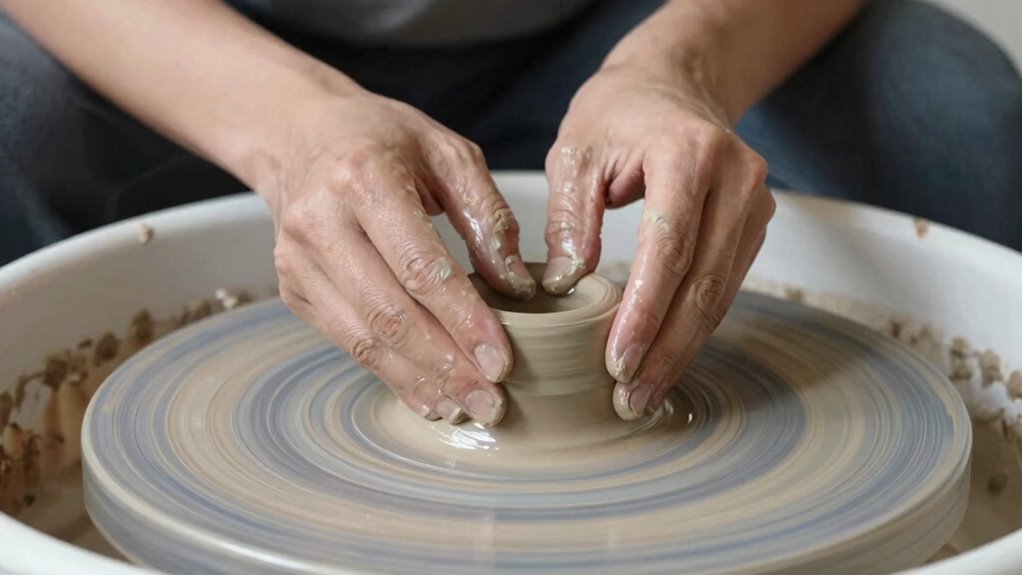
Before you start centering, make sure your clay is thoroughly cleaned and free of air bubbles. Next, set up your wheel so it’s level and stable, ensuring smooth operation. Finally, adjust the wheel speed to a moderate pace, giving you better control during the centering process. Additionally, maintaining proper projector calibration can significantly improve visual clarity during your practice sessions. For optimal results, consider equipment quality to ensure consistent performance throughout your pottery sessions.
Clean Clay Thoroughly
Have you ever started working on the wheel only to find your clay is full of debris or moisture? Dirty clay can hinder your centering efforts and lead to uneven surfaces. Before you begin, thoroughly wedge your clay to remove air bubbles and mix in moisture evenly. This helps ensure smooth shaping and better adhesion during glazing techniques and kiln firing. Proper natural filtration systems can also help maintain the water quality in backyard pools, promoting a healthier environment for your pottery and outdoor space. Remember: – Remove any visible debris or stones from your clay – Wedge until the surface feels uniform – Keep your workspace and tools clean to prevent contamination. Clean clay promotes better consistency and reduces the risk of imperfections in your finished piece. Proper preparation makes your centering smoother and enhances the final quality of your pottery, especially when applying glazes or firing in the kiln. Additionally, using precise measurement techniques during preparation can further improve your results. Incorporating clay moisture content checks can help achieve optimal workability and prevent cracks during drying and firing.
Center Wheel Properly
To guarantee successful centering, you need to properly position your clay on the wheel and set up the wheel itself. Start by ensuring the wheel is clean and well-maintained; smooth operation is key. Place your clay firmly on the center of the wheel head, using hand positioning that keeps your hands steady and balanced. Keep your palms slightly cupped and fingers close together, guiding the clay without squeezing too tightly. As you begin, gently press down and inward to help the clay settle into the center. Regular wheel maintenance, like checking the speed control and ensuring the wheel spins smoothly, prevents wobbling and makes centering easier. Proper setup and hand positioning create a stable foundation for effective centering and a successful pottery session.
Adjust Wheel Speed
Adjusting the wheel speed sets the stage for smooth centering. You want a moderate, steady wheel speed—too fast and the clay becomes hard to control; too slow and it’s difficult to establish balance. As you begin, focus on maintaining consistent hand pressure, which works best when your wheel speed matches your touch.
Remember:
- Keep the wheel turning smoothly without sudden accelerations or decelerations.
- Use a steady, controlled wheel speed to help the clay respond evenly.
- Adjust wheel speed as needed to accommodate your hand pressure, ensuring the clay stays centered.
Balancing wheel speed and hand pressure helps you achieve a stable, predictable center, making the secret move much easier to execute.
Common Challenges When Centering and How to Recognize Them
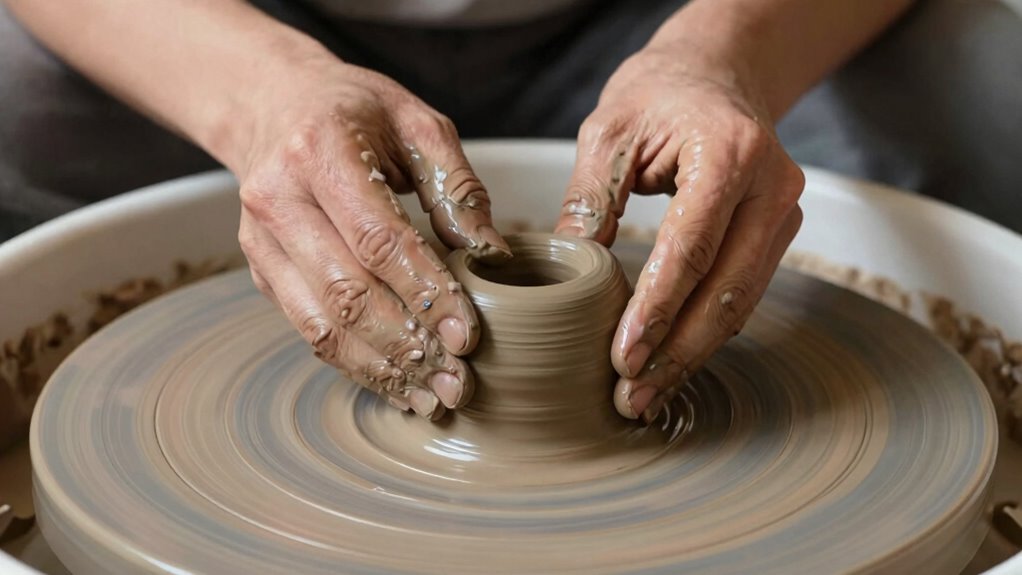
Centering on a pottery wheel can be tricky, especially when you encounter common challenges that disrupt your progress. One issue is uneven clay compression, which causes the clay to be lopsided or off-center. This often results from uneven pressure or misalignment during the initial push. Another common challenge is wheel wobble, where the wheel vibrates or shakes, making it difficult to keep the clay steady. You might notice the clay hopping or shifting unexpectedly. These problems can lead to frustration and uneven forms if not addressed. Recognizing these challenges early helps you troubleshoot effectively. Ensuring your wheel runs smoothly and applying consistent pressure during clay compression can prevent these issues. Staying attentive to wheel wobble and clay stability keeps the centering process on track. Additionally, understanding sound vibrations and their influence on cellular regeneration can inspire techniques to create a calming environment that improves focus during pottery practice. Incorporating mindful awareness of sensory input can further enhance your ability to detect and correct issues as they arise. Practicing technique refinement and paying attention to subtle cues from the clay can also improve your centering skills over time.
Simple Step-by-Step Techniques to Center Clay on the Wheel
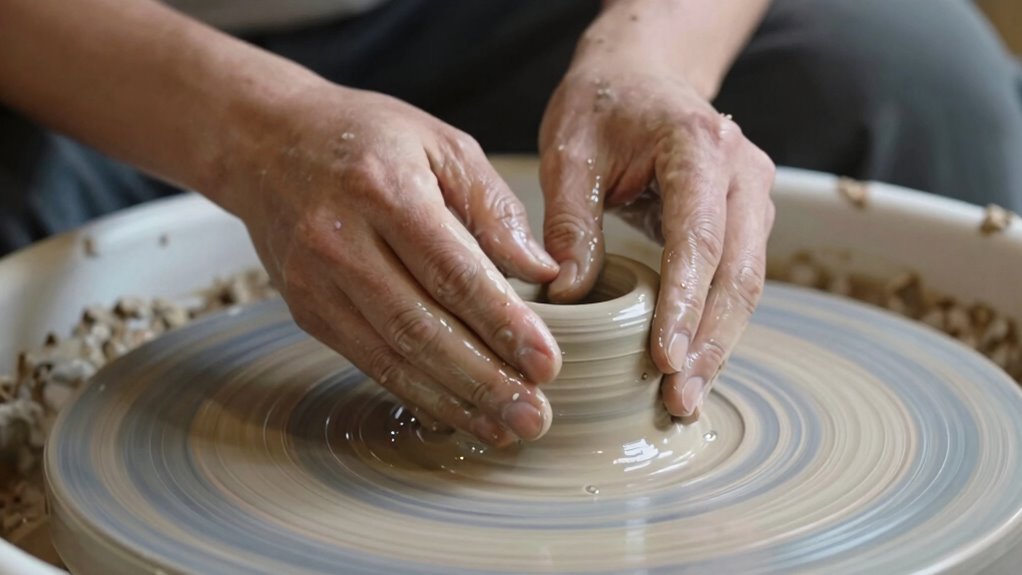
Mastering the art of centering clay begins with a few simple, deliberate steps. First, position your hands correctly; place one hand on top and the other underneath the clay, applying steady pressure. Keep your hands relaxed but firm, guiding the clay smoothly without squeezing. Adjust the wheel speed to a moderate level—fast enough to keep the clay spinning, but not so quick that control is lost. As you start to shape, focus on these key techniques: proper hand positioning for stability and control, use consistent, gentle pressure to align the clay, and keep wheel speed steady to prevent wobbling.
Troubleshooting Common Centering Problems and How to Fix Them
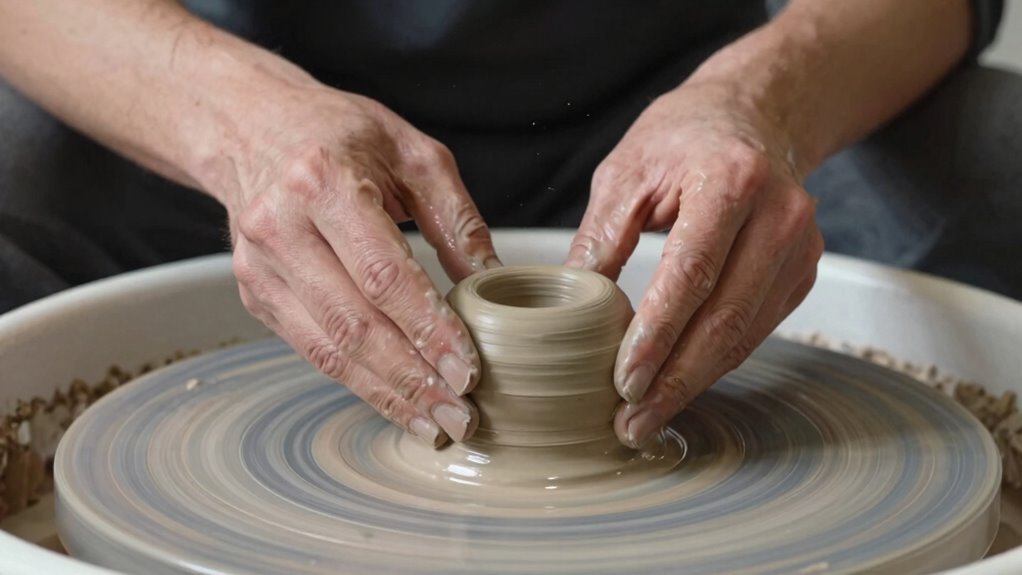
If your clay isn’t centering properly, uneven distribution or poor hand placement might be be the cause. You’ll need to adjust how you position your hands and make certain the clay is evenly loaded on the wheel. Addressing these issues can make a big difference in achieving a smooth, centered piece. Practicing proper techniques and understanding the mechanics of the wheel can also improve your results. Paying attention to clay preparation can help ensure a more successful centering process. Additionally, ensuring the wheel is properly maintained can prevent mechanical issues that interfere with centering. Developing a creative storytelling approach to your work can also motivate you to refine your skills and stay committed to improvement. Incorporating hydraulics knowledge can help you better understand how the wheel operates and support precision in your centering technique.
Uneven Clay Distribution
Uneven clay distribution is a common obstacle when trying to center on the pottery wheel, and it can cause wobbling or uneven shaping. To fix this, focus on achieving consistent clay consistency and regularly maintaining your wheel. When your clay is unevenly loaded, it’s harder to balance, leading to instability. Ensuring your clay is uniformly wedged before placing it on the wheel helps create a balanced center. Check that your wheel is well-maintained, with a smooth, clean surface to prevent uneven slips. Use the “secret move” to help redistribute clay evenly during centering. Focusing on even clay distribution helps you control the shape better and prevents wobbling. Proper clay consistency and wheel maintenance are the foundation for smooth, centered pottery. Additionally, understanding the importance of consistent clay preparation can improve your overall technique and handling skills. Regularly practicing centered clay techniques can further enhance your control and results.
Improper Hand Placement
Proper hand placement is essential for effective centering because your hands guide the clay’s movement and stability on the wheel. If your hand placement is off, it becomes difficult to control the clay, leading to wobbling or uneven centering. Focus on positioning your hands correctly: one hand should support the side of the clay, while the other applies gentle pressure from above. Your grip technique matters—keep your hands relaxed but firm enough to maintain control. Avoid gripping too tightly, which can cause uneven pressure and destabilize the clay. Consistent, balanced hand placement helps transfer your energy smoothly into the clay, making it easier to center. Practice adjusting your grip and hand positions until they feel natural, ensuring better control and a more successful centering process.
Building Confidence and Consistency in Your Centering Skills
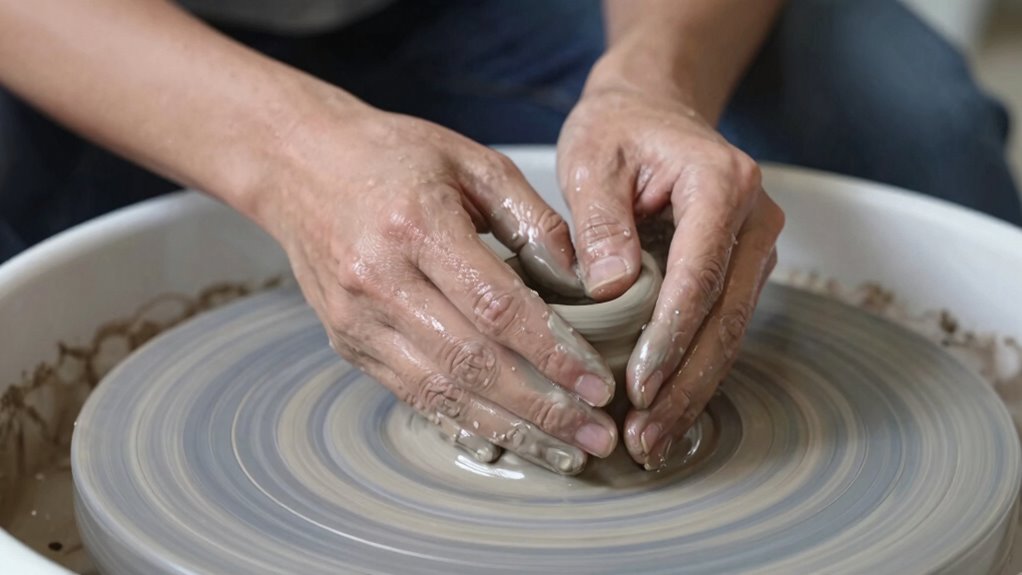
Building confidence and consistency in your centering skills often come down to regular practice and mindful observation. Focus on refining your hand positioning to ensure a firm, controlled grip that guides the clay smoothly. Pay attention to wheel speed: too fast can make control difficult, while too slow may hinder momentum. Consistent practice helps you develop muscle memory and trust in your movements. To build confidence, consider these tips:
- Maintain steady, moderate wheel speed during practice
- Keep your hands relaxed but firm, adjusting as needed
- Observe how small adjustments affect the clay’s response
- Incorporate Suprem fabric for comfortable and durable clothing that supports your practice sessions
Advanced Techniques to Master Pottery Wheel Centering
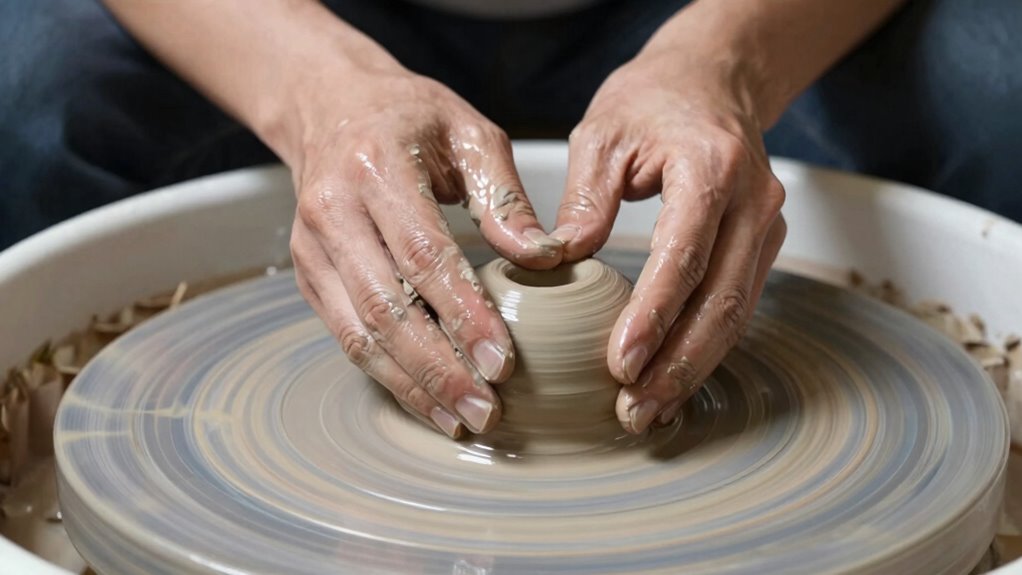
Once you’ve gained confidence in your basic centering skills, you can start exploring advanced techniques to achieve even greater control and precision. Focus on subtle adjustments in your hand pressure and timing to refine your ceramic artistry. Incorporate a slow, deliberate approach to wheel speed changes, allowing the clay to respond smoothly. Practicing consistent wheel maintenance guarantees your equipment runs reliably, helping you maintain perfect momentum. Try using your body weight to stabilize your movements, reducing fatigue and increasing accuracy. Techniques like off-center corrections or controlled de-airing can elevate your craftsmanship. These methods demand focus and patience but will dramatically improve your mastery of wheel centering, making your pottery more professional and consistent. Additionally, understanding adaptive lighting can help you see your work more clearly and improve your attention to detail during intricate adjustments.
Frequently Asked Questions
How Long Does It Typically Take to Master Proper Clay Centering?
You’ll master proper clay centering in a few weeks with consistent practice and patience. Everyone develops at different rates, but regular sessions help you build muscle memory and refine your technique. Focus on steady, deliberate movements, and don’t get discouraged if progress feels slow. Over time, your development will accelerate, and centering will become second nature. Remember, persistence and patience are key to turning initial difficulty into skill.
Can Different Types of Clay Affect the Centering Process?
Different types of clay can feel like different partners in your hands, influencing your centering dance. Clay moisture and density play key roles—drier, denser clay resists obedience, demanding more patience and finesse. Softer, wetter clay moves easily, almost like it’s keen to follow your lead. Adjust your technique accordingly; understanding each clay’s unique personality helps you master the art of centering, turning resistance into harmony on the wheel.
What Tools Can Assist With Improving My Centering Technique?
You can improve your centering technique with the right tool selection and proper hand positioning. Use a sponge or rubber rib to support your hands, making control easier. Choose tools like a wooden or metal kidney for shaping and refining. Keep your hands steady and aligned, applying even pressure. With the right tools and confident hand placement, you’ll find centering becomes smoother and more consistent, helping your clay obey your movements effortlessly.
How Does Wheel Speed Influence the Effectiveness of Centering?
You’ll find that wheel speed considerably impacts your centering. When you increase wheel speed, it helps the clay’s consistency become more responsive, making it easier to control. Conversely, slowing down can give you better precision, especially with softer or wetter clay. Adjust the wheel speed gradually to match your clay’s consistency, and you’ll notice smoother, more effective centering, giving you greater control and confidence with each rotation.
Are There Specific Hand Positions That Enhance Centering Success?
A steady hand is worth two in the bush, so focus on your hand positioning. Keep your palms firm but relaxed, with your fingers gently cupping the clay’s sides. Use consistent grip techniques, applying gentle, even pressure. Position your hands symmetrically, with thumbs pointing inward, to maintain balance. This way, your hands work together like a team, guiding the clay smoothly into perfect centering.
Conclusion
Mastering the art of centering clay takes patience and practice, but remember, “A journey of a thousand miles begins with a single step.” Keep refining your technique, stay persistent through challenges, and trust in your progress. With each successful session, you’ll gain more confidence and control. Eventually, that “secret move” will become second nature, transforming your pottery experience and elevating your craft to new heights.