Proper booster seat logistics may seem small, but they can spark big co-parent fights and safety issues. When schedules, seat handovers, and equipment handling aren’t coordinated, it leads to confusion, delays, and frustration—especially during busy times. Ensuring clear communication, organized storage, and quick installation helps prevent conflicts and keeps kids safe. Paying attention to these details makes a difference, and if you keep going, you’ll discover ways to manage this smoothly and avoid common pitfalls.
Key Takeaways
- Poor coordination of booster seat transitions can lead to delays and misunderstandings between co-parents.
- Lack of clear labeling and portable storage increases the risk of incorrect or unsafe seat installations.
- Inconsistent scheduling and communication cause frustration and conflicts over pickup and drop-off times.
- Improper handling and storage of seats during transitions can compromise safety and cause disagreements.
- Small logistical oversights in booster seat management can escalate into significant co-parenting disputes.
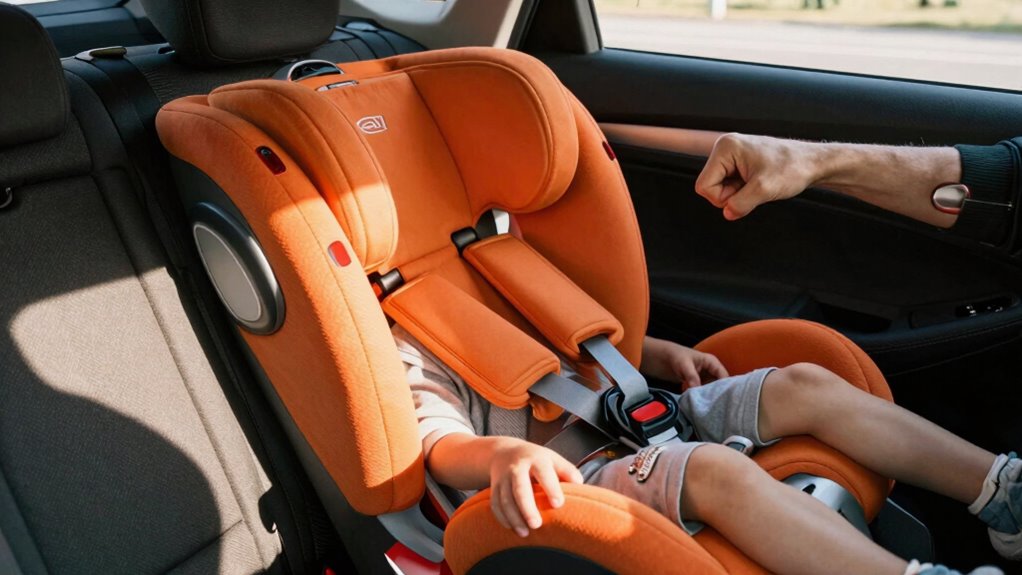
Have you ever wondered how to efficiently manage booster seat logistics for your organization or event? It’s a small detail that can quickly turn into a big headache if not handled properly. Travel timing and seat transition are key factors that often get overlooked but are crucial for smooth operations and avoiding unnecessary conflicts. When planning to transport children, especially in a group setting, knowing exactly when and where each booster seat needs to be used can make all the difference.
The challenge begins with travel timing. If you don’t coordinate departure and arrival times precisely, you risk delays that cause confusion and frustration. Imagine a parent arriving late or a bus running behind schedule—you might find yourself scrambling to adjust booster seat placement or get children settled. To prevent this, establish a clear timeline for each leg of the trip. Communicate with drivers, staff, and parents so everyone understands the schedule. This way, booster seats can be prepared and distributed efficiently, minimizing downtime and keeping children safe and comfortable. Implementing a seat management system can further enhance coordination and reduce errors during these processes.
Seat transition is another critical aspect. Moving booster seats from one vehicle to another requires careful planning. You should consider how seats are stored, transported, and installed. Fumbling with booster seats during a transition not only wastes time but also risks improper installation, which compromises safety. A good system involves labeling seats clearly, using portable storage containers, and training staff or volunteers on quick, correct installation techniques. When transitions are seamless, children experience less discomfort and parents feel more confident that safety protocols are being followed. Proper booster seat management is essential to ensure safety and efficiency during these processes. Additionally, understanding home robotics can aid in automating some of these logistical tasks, reducing manual effort and human error.
Another factor to consider is the physical logistics—how booster seats are loaded onto vehicles, how they’re secured during transit, and how they’re brought into your event or organization’s space. Streamlining these processes reduces chaos and prevents damage to the seats. It also helps keep the focus on the children’s safety rather than on managing equipment. The key is to plan ahead: have a designated packing area, utilize checklists, and assign responsibilities so everyone knows their role in the seat transition process.
Ultimately, managing booster seat logistics isn’t just about equipment; it’s about precision in timing and execution. When you prioritize travel timing and streamline seat transitions, you eliminate many common frustrations. This keeps children safe, reduces parent concerns, and ensures your organization runs smoothly. Small details like these might seem minor, but they can be the difference between a well-organized event and one marred by avoidable conflicts.
As an affiliate, we earn on qualifying purchases.
Frequently Asked Questions
How Do I Handle Disagreements Over Booster Seat Placement?
To handle disagreements over booster seat placement, focus on clear parenting communication and prioritize your child’s safety. Stay calm and avoid emotional triggers that escalate tensions. Share your concerns respectfully, and listen to your co-parent’s perspective. Collaborate on a consistent plan, perhaps by creating a simple, shared guideline. This approach minimizes conflict, keeps discussions constructive, and helps you both stay focused on what’s best for your child’s well-being.
What Are Legal Booster Seat Requirements Across Different States?
You need to follow your state’s regulations on booster seat requirements to guarantee child safety. Each state has specific laws about when a child must switch from a car seat to a booster, often based on age, weight, and height. Check your state’s Department of Transportation or DMV website for the precise rules. Staying informed helps you comply with legal requirements and prioritizes your child’s safety during travel.
How Can Co-Parents Coordinate Booster Seat Use During Exchanges?
To coordinate booster seat use during exchanges, you can create clear communication channels and consistent routines. Confirm child safety needs beforehand, ensuring both parents agree on booster seat policies. Establish a predictable parenting routine, like always using the same booster seat at designated times. This prevents confusion, minimizes conflicts, and keeps your child safe. By collaborating on these logistics, you foster a smoother, more secure handoff for your child’s well-being.
What Are Common Emotional Triggers Related to Booster Seat Disputes?
You might find emotional triggers like feeling disrespected or blamed can spark conflict escalation over booster seat disputes. When you perceive inconsistency or neglect, your frustration rises, making disagreements more intense. These triggers often stem from concerns about your child’s safety or fairness, leading to heightened emotions. Recognizing these triggers helps you stay calm, preventing minor disagreements from escalating into bigger conflicts, and promoting smoother co-parenting interactions.
How Do I Document Booster Seat Agreements for Custody Cases?
You should keep detailed records of booster seat agreements for custody cases by documenting parenting communication about child safety. Save emails, texts, or written agreements that specify each parent’s responsibilities. Take photos of the booster seat setup and any related discussions. Consistent documentation demonstrates your commitment to your child’s safety, helps prevent disputes, and provides clear evidence in custody cases. Always stay respectful and focus on the child’s well-being.
Conclusion
Managing booster seat logistics might feel like a tiny dance, but it’s really about respecting each other’s rhythm. When you approach these small details with patience and understanding, you’ll find that the rhythm becomes smoother for everyone. Remember, it’s the little moments of cooperation that build a harmonious co-parenting tune. So, keep the focus on your shared goal—your child’s safety and happiness—and let the minor disagreements become just a gentle hum in the background.