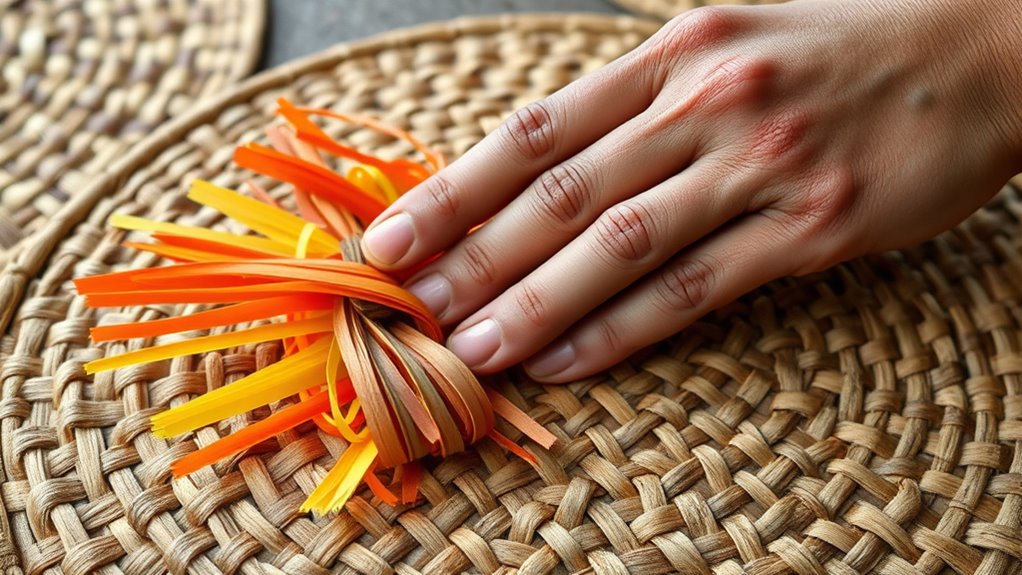
To weave Mkeka placemats with paper strips, start by cutting recycled magazines, newspapers, or scrap paper into uniform half-inch strips. Interlace the strips in an over-and-under pattern, maintaining even tension to create a sturdy, textured surface. Use vibrant colors to add visual interest and reflect cultural significance. Whether you’re a beginner or experienced, this sustainable craft combines tradition with creativity. Keep going to discover step-by-step techniques and tips for perfecting your woven placemat.
Key Takeaways
- Cut recycled paper into uniform strips, about half an inch wide, for consistent weaving.
- Interlace horizontal and vertical strips using over-and-under patterns to create a tight, textured placemat.
- Maintain even tension during weaving to ensure a flat, well-shaped mkeka placemat.
- Experiment with strip colors and textures for visual interest and personalized designs.
- Optionally, seal or coat the finished placemat with a protective finish for durability and longevity.
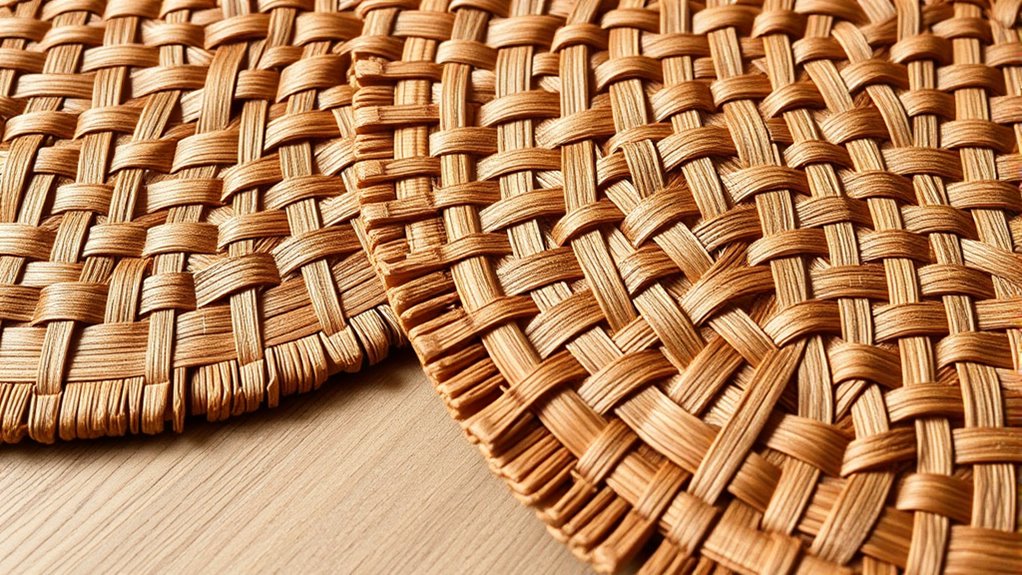
Weaving mkeka placemats is a timeless craft that combines tradition with creativity, making each piece a unique addition to your table setting. Traditionally, mkeka mats are woven from natural fibers like sisal, coconut husks, or grass, which are sustainable materials that support eco-friendly practices. However, you can also craft mkeka placemats using paper strips, a versatile and accessible alternative that still honors the cultural significance behind the craft. Using paper strips allows you to explore the weaving process without needing specialized natural fibers, making it easier to engage with this art form at home.
Weaving mkeka placemats combines tradition and creativity using natural fibers or eco-friendly paper strips.
When you choose paper strips, you’re still embracing the cultural significance woven into mkeka placemats. These mats are more than just decorative items; they carry historical and spiritual meaning in many African communities, symbolizing respect, hospitality, and social connection. By weaving with paper, you keep this cultural heritage alive while adapting it to modern, sustainable materials. It’s an innovative way to honor tradition while reducing environmental impact, especially if you opt for recycled paper or scrap materials. This approach aligns with the principles of sustainability, helping you create beautiful, functional pieces without relying on resource-intensive natural fibers.
To start, gather your paper strips. You can use recycled magazines, newspapers, or scrap paper to ensure your project remains eco-friendly. Cut these into uniform strips—about half an inch wide—to keep your weaving neat and consistent. As you weave, you’ll notice that paper is flexible yet sturdy enough to form a durable placemat. The weaving process involves interlacing horizontal and vertical strips, alternating over and under each other, which creates a tight, textured surface. Keep your tension even as you work to ensure the placemat lays flat and maintains its shape. This technique is simple enough for beginners but allows for creative experimentation, such as varying strip colors or textures for visual interest.
While working on your mkeka placemat, remember that the act of weaving connects you to a tradition that spans generations. It’s a craft rooted in community and cultural expression, and even with paper strips, you’re preserving this legacy. The process is meditative and rewarding, producing a beautiful piece that can serve as a centerpiece or a thoughtful gift. As you finish your project, consider sealing or coating it with a clear protective finish to enhance durability and maintain its appearance over time. In doing so, you create a sustainable, culturally meaningful item that celebrates both craftsmanship and environmental consciousness, all while adding a personal touch to your table.
Frequently Asked Questions
What Are the Best Paper Strip Materials for Weaving Mkeka Placemats?
You should use recycling paper and colorful paper strips for weaving mkeka placemats. Recycling paper is eco-friendly and adds a rustic, authentic look, while colorful strips bring vibrancy and personality to your design. Aim for sturdy, flexible paper strips that are cut evenly to guarantee smooth weaving. Using recycled and colorful paper not only enhances your craft but also promotes sustainability, making your placemats both beautiful and environmentally conscious.
How Long Does It Take to Complete a Woven Mkeka Placemat?
It typically takes you about 2 to 4 hours to complete a woven mkeka placemat, depending on your skill level and the complexity of the design. To manage your time effectively, focus on steady progress and practice regularly to develop your weaving skills. As you gain experience, you’ll find it easier to complete placemats faster, making the process more enjoyable and efficient.
Can Mkeka Placemats Be Washed or Cleaned Easily?
Cleaning mkeka placemats is a breeze, like giving your favorite quilt a gentle hug. You can spot clean with a damp cloth and mild soap, making stain removal simple. For stubborn spots, use a soft brush and a mixture of water and vinegar. Avoid soaking them completely, as excess moisture can damage the fibers. Regular cleaning keeps your placemats looking fresh and vibrant, ready to impress every time.
Are There Eco-Friendly Alternatives to Traditional Paper Strips?
Yes, you can find eco-friendly alternatives to traditional paper strips by recycling paper and using biodegradable materials. You might consider shredding recycled paper or using biodegradable craft paper, which breaks down naturally and reduces environmental impact. These options make your mkeka placemats more sustainable, and they’re easy to work with. Plus, recycling paper helps lessen waste and supports eco-conscious crafting, making your project both beautiful and environmentally responsible.
What Tools Are Essential for Weaving Mkeka Placemats?
You might think special tools are necessary, but for weaving mkeka placemats, just a few basic items suffice. An overview of essential tools includes scissors for cutting paper strips, a ruler to measure accurately, and a weaving needle or pin for guiding strips through tightly woven sections. Mastering weaving techniques with these simple tools allows you to create beautiful placemats without complex equipment, making the process accessible and enjoyable.
Conclusion
As you finish weaving your mkeka placemat, remember it’s more than just a craft — it’s a symbol of tradition and resilience. Each paper strip, like threads of history, intertwines to create something beautiful and lasting. Your hands have brought to life a piece of culture, a tapestry of stories and memories. Let this handmade creation remind you that, like the placemat, our roots hold strength and beauty, even when woven from fragile materials.