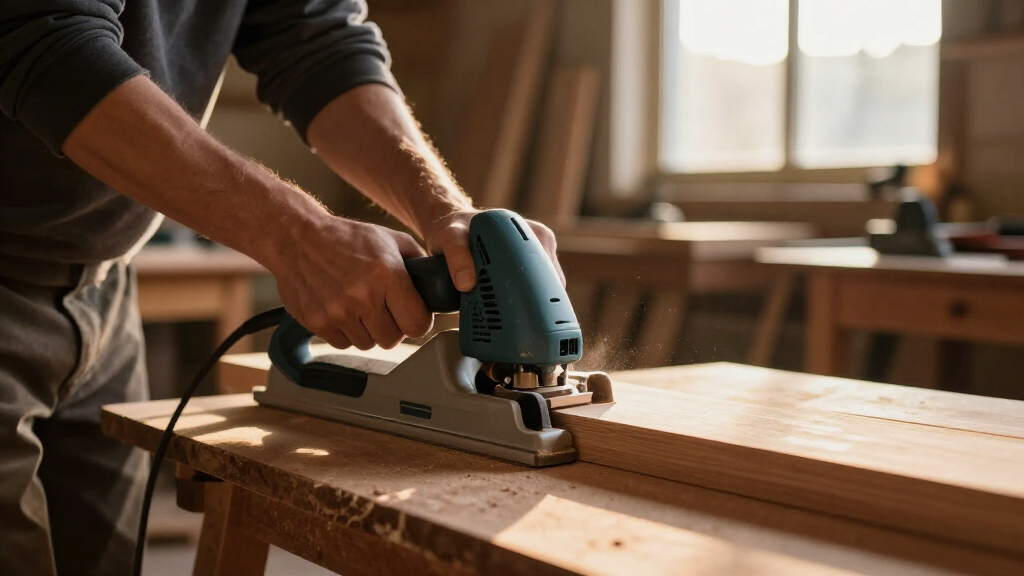

Electric wood planers split into two very different tools: benchtop thickness planers for dimensioning lumber and handheld planers for trimming doors, edges, and joints. The DEWALT DW735X earns my best overall pick for its two-speed, three-knife cutting system that produces a finished surface most benchtop planers can’t match, though it costs more than twice as much as budget rivals like the VEVOR 13-inch models. On the handheld side, the WEN 6534 stands out for its wider 4-3/8-inch cut capacity and stronger 8-amp motor, while the Bosch PL1632 wins on precision and control. The main tradeoff you’ll face is power and finish quality versus price and portability. Read on for the full breakdown of all 11 models.

Get business pricing on tools and workshop supplies
- Business-only prices and quantity discounts
- Tax-exempt purchasing
- Multiple users, one account, clear invoices
Complete the kit


Key Takeaways
- The DEWALT DW735X justifies its premium price with a three-knife cutterhead and two-speed gearbox — the slower 90 RPM speed produces a finish quality that single-speed budget planers like the VEVOR 13-inch models cannot replicate.
- The two VEVOR 13-inch benchtop planers cost hundreds less than the DEWALT and are nearly identical to each other; the extended infeed table version is the better buy for longer boards, while the foldable 2000W model suits small shops.
- Among handhelds, motor amperage maps almost directly to capability: the 8-amp WEN 6534 handles harder woods and deeper passes, while the 3.8-amp WEN 6528 is limited to light door and edge work.
- The DEWALT 20V MAX brushless planer is the only battery-powered model in the lineup — a strong choice for job sites, but it’s sold bare, so the real cost climbs once you add batteries and a charger.
- The generic-brand 7.5-amp corded hand planer lands in a middle ground with a 16000 RPM motor and included edge guide and dust bag, making it a value alternative to the Bosch PL1632 if brand support matters less to you.
| VEVOR 13-Inch Benchtop Thickness Planer, 2000W, 8000 RPM |  | Best Budget Thickness Planer | Motor Power: 2000W | Blade Speed: 8000 RPM | Feeding Speed: 6 m/min | VIEW LATEST PRICE | See Our Full Breakdown |
| WEN 6530 6-Amp Electric Hand Planer, 3-1/4-Inch |  | Best Overall Hand Planer | Motor Power: 6 Amp | Cutting Capacity: 3-1/4 inches | Cutting Speed: 34,000 cuts per minute | VIEW LATEST PRICE | See Our Full Breakdown |
| WEN 6534 8-Amp Electric Hand Planer, 4-3/8-Inch |  | Best for Heavy-Duty Hand Planing | Motor Power: 8 Amp | Cutting Capacity: 4-3/8 inches | Cutting Depth: 0 to 1/8 inches | VIEW LATEST PRICE | See Our Full Breakdown |
| VEVOR Electric Hand Planer, 3-1/4-Inch, 710W, 16,500 RPM |  | Best Value Workhorse | Power: 710W | RPM: 16,500 RPM | Cut Width: 3-1/4 inches | VIEW LATEST PRICE | See Our Full Breakdown |
| WEN 6528 3.8-Amp Electric Hand Planer, 2-3/8-Inch |  | Best for Beginners and Light Duty | Motor Power: 3.8 Amp | Cutting Width: 2-3/8 inches | Maximum Cutting Depth: 1/16 inch | VIEW LATEST PRICE | See Our Full Breakdown |
| DEWALT 13-inch Thickness Planer, 3-Knife, Two-Speed, 15 Amp (DW735X) |  | Best Premium Benchtop Planer | Planing Width: 13 inches | Motor: 15 Amp | Cutterhead Speed: 10,000 RPM | VIEW LATEST PRICE | See Our Full Breakdown |
| Hand Planer Corded, 3-1/4″ Planing Width, 7.5A 16000RPM, Edge Guide & Dust Bag |  | Best Value Hand Planer Kit | Planing Width: 3-1/4 inches (82mm) | Motor Power: 7.5 Amp | No-Load Speed: 16,000 RPM | VIEW LATEST PRICE | See Our Full Breakdown |
| Skil 6.5 Amp Electric 3-1/4 Inch Corded Planer – PL2012-00 |  | Best for Beginners | Power: 6.5 Amp | Blade Size: 3-1/4 inches | Chip Exhaust: Dual | VIEW LATEST PRICE | See Our Full Breakdown |
| VEVOR 13-Inch Thickness Planer with 15-Amp Motor and Extended Infeeding Table |  | Best Value Thickness Planer | Worktable Width: 13 inches | Max Board Thickness: 6 inches | Motor Power: 2000W / 15A | VIEW LATEST PRICE | See Our Full Breakdown |
| Bosch PL1632 3-1/4 Inch Planer |  | Best Build Quality Hand Planer | Motor Power: 6.5 Amp | No-Load Speed: 16,500 RPM | Blade Type: Reversible Woodrazor micrograin carbide | VIEW LATEST PRICE | See Our Full Breakdown |
| DEWALT 20V MAX Planer, 30,000 Cuts Per Minute, 2 mm Cut Depth, Brushless Motor (Bare Tool) |  | Best Cordless Pick | Cutting Speed: 30,000 cuts per minute | Maximum Cut Depth: 2 mm | Motor Type: Brushless | VIEW LATEST PRICE | See Our Full Breakdown |
| electric wood planer | Motor Power |
|---|---|
| VEVOR 13-Inch Benchtop Thickne | 2000W |
| WEN 6530 6-Amp Electric Hand P | 6 Amp |
| WEN 6534 8-Amp Electric Hand P | 8 Amp |
| VEVOR Electric Hand Planer | — |
| WEN 6528 3.8-Amp Electric Hand | 3.8 Amp |
| DEWALT 13-inch Thickness Plane | — |
| Hand Planer Corded | 7.5 Amp |
| Skil 6.5 Amp Electric 3-1/4 In | — |
| VEVOR 13-Inch Thickness Planer | 2000W / 15A |
| Bosch PL1632 3-1/4 Inch Planer | 6.5 Amp |
| DEWALT 20V MAX Planer | — |
More Details on Our Top Picks
VEVOR 13-Inch Benchtop Thickness Planer, 2000W, 8000 RPM
Anyone who needs to flatten wide boards knows a handheld planer can’t compete with a 13-inch benchtop thickness planer, and this VEVOR makes that capability affordable. The 2000W motor spinning at 8000 RPM chews through softwood and hardwood stock alike at a steady 6 m/min feed rate, and thickness capacity from 0.2 to 6.3 inches covers everything from thin veneers to chunky 6×6 blanks. Compared with the DEWALT DW735X, the VEVOR gives up the two-speed gearbox and three-knife cutter head, so expect a slightly rougher finish on figured wood — but you’re also paying a fraction of the price. The 45mm dust exhaust keeps shavings manageable, and the foldable design helps with storage even though this is not a machine you’ll move casually.
Pros:- 13-inch cutting width handles full-width boards in one pass
- 2000W motor powers through dense hardwoods without bogging down
- Foldable design and detachable stand ease storage in tight shops
- Dust exhaust port keeps the workspace cleaner during long runs
Cons:- HSS blades dull faster than carbide and add long-term replacement cost
- Fixed feed speed means no slow-pass option for a finer finish
- Heavy and awkward to reposition without help
Best for: Small workshops and budget-minded woodworkers who need to thickness wide boards without paying professional-grade prices
Not ideal for: Contractors who need portability — at this weight class it lives on a bench or stand, unlike the WEN 6530 hand planer
- Motor Power:2000W
- Blade Speed:8000 RPM
- Feeding Speed:6 m/min
- Max Cutting Width:13 inches
- Cutting Thickness Range:0.2–6.3 inches
- Dust Exhaust Diameter:45 mm
- Design:Foldable benchtop with stand
Our verdict“The cheapest credible path to thicknessing wide boards at home, as long as you accept fixed speed and disposable blades.”
WEN 6530 6-Amp Electric Hand Planer, 3-1/4-Inch
This is the sweet spot in the WEN hand-planer lineup. The 6-amp motor delivering 34,000 cuts per minute gives it enough grunt for door edges and 2x lumber without the wrist fatigue of the heavier WEN 6534, and its 6-pound frame is noticeably easier to keep flat over a long run. Sixteen positive depth stops across 0 to 1/8 inches make repeatable cuts simple, and the included rabbeting guide opens up to 1 inch — enough for hinge recesses and panel grooves. Compared with the smaller WEN 6528, the extra amp rating and wider 3-1/4-inch shoe mean fewer passes on standard lumber. The tradeoff: there’s no variable speed, so the aggressive blade speed can tear out on wild grain if you don’t slow your feed by hand.
Pros:- 34,000 cuts per minute powers through dense stock without stalling
- 16 positive stops make depth changes fast and repeatable
- Full accessory kit includes dust bag, kickstand, and fence bracket
- 2-year warranty adds peace of mind at this price
Cons:- 1/8-inch maximum depth means more passes on heavy removal jobs
- No variable speed control limits finish flexibility
- Corded only — no battery-platform option like the DEWALT 20V MAX
Best for: DIYers and general carpenters who want one versatile hand planer for doors, edges, and fitting work
Not ideal for: Fine-finish woodworkers working figured hardwoods — fixed blade speed invites tear-out without careful technique
- Motor Power:6 Amp
- Cutting Capacity:3-1/4 inches
- Cutting Speed:34,000 cuts per minute
- Depth Adjustment:0 to 1/8 inches, 16 positive stops
- Rabbeting Capacity:Up to 1 inch
- Weight:6 pounds
- Warranty:2 years
Our verdict“The most balanced corded hand planer here — enough power for real work, light enough to control all day.”
WEN 6534 8-Amp Electric Hand Planer, 4-3/8-Inch
When the job is hogging material off thick stock — planing 4x4s, leveling beams, shaving composite decking — the 8-amp motor and 4-3/8-inch cutting width of this WEN put it in a different class from the WEN 6530. That extra inch of shoe width means fewer passes on wide edges, and the two-way dust port lets you vent shavings left or right depending on your working position, a genuinely useful detail the smaller WEN doesn’t match. The tradeoff is weight: this is the heaviest hand planer in the lineup, and after twenty minutes of overhead or edge work your forearms will know it. Like its siblings, there’s no variable speed, so it’s a removal tool first and a finishing tool second.
Pros:- 8-amp motor handles the hardest removal jobs without bogging
- 4-3/8-inch width planes wide timbers in fewer passes
- Two-way dust port adapts to left- or right-handed workflows
- 16 positive depth stops keep settings consistent between passes
Cons:- Heaviest hand planer here — fatiguing during prolonged or overhead use
- No variable speed, so tear-out on irregular grain is a real risk
- 1/8-inch max depth still falls short of true roughing capacity
Best for: Deck builders and framers who regularly plane wide timbers and need maximum material removal per pass
Not ideal for: Precision trim work or anyone with limited arm strength — the weight and aggressive cut make it clumsy for fine fitting
- Motor Power:8 Amp
- Cutting Capacity:4-3/8 inches
- Cutting Depth:0 to 1/8 inches
- Positive Stops:16
- Dust Port:Two-way directional
Our verdict“Pick this only if the standard 3-1/4-inch planers feel underpowered for your lumber — the extra muscle costs you agility.”
VEVOR Electric Hand Planer, 3-1/4-Inch, 710W, 16,500 RPM
Positioned between the WEN 6530 and WEN 6534 in power, this VEVOR carves out a value niche: a 710W motor at 16,500 RPM with W18Cr4V high-speed steel blades that hold an edge longer than the standard carbon blades found on many budget competitors. The 3-1/4-inch width matches the WEN 6530, but the depth adjustment tops out at 5/64 inches — slightly shallower than WEN’s 1/8 inch — which encourages lighter passes and a cleaner surface, at the cost of speed on heavy removal. Setup is the real friction point: some assembly is required out of the box, whereas WEN tools are ready to work in minutes. For a shop on a tight budget that mostly needs smooth, dimensioned edges rather than fast stock removal, this trade works.
Pros:- High-speed steel blades stay sharper longer than typical budget blades
- 16,500 RPM delivers a smooth finish on lighter passes
- Effective dust collection keeps the cut line visible
- Durable housing stands up to jobsite wear
Cons:- 5/64-inch max depth slows down heavy material removal
- Requires assembly and setup before first use
- Narrower effective capacity than the WEN 6534 for wide stock
Best for: Budget-conscious DIYers and carpenters who prioritize finish quality and blade life over raw removal speed
Not ideal for: Anyone who wants to start planing immediately — assembly and setup requirements will frustrate first-time buyers
- Power:710W
- RPM:16,500 RPM
- Cut Width:3-1/4 inches
- Blade Material:W18Cr4V high-speed steel
- Depth Adjustment:0 to 5/64 inches (2mm)
- Dust Collection:Integrated dust system
Our verdict“A solid budget pick for finish-minded work, as long as you don’t mind wrench time before the first cut.”
WEN 6528 3.8-Amp Electric Hand Planer, 2-3/8-Inch
At 4.3 pounds, this is the lightest planer in the roundup, and that’s the whole point. The 3.8-amp motor still spins at over 32,000 cuts per minute, so it’s no toy — but the 1/16-inch maximum depth and narrow 2-3/8-inch shoe deliberately rein it in, making it forgiving for a first-time user who’s learning to keep the tool flat. Compared with the WEN 6530, you give up roughly half the depth capacity and most of the heavy-removal ability; in exchange you get a tool that’s easy to control one-handed on doorsills and edge-truing jobs. The kickstand and onboard wrench storage are thoughtful touches that keep blades and surfaces protected between cuts. It’s corded, so anyone invested in a battery platform should look at the DEWALT 20V MAX instead.
Pros:- 4.3-pound weight makes it the easiest planer here to control precisely
- 32,000+ cuts per minute deliver a clean surface on light passes
- Kickstand protects blades and work surfaces between cuts
- Onboard wrench storage means blade changes don’t require hunting for tools
Cons:- 1/16-inch max depth forces many passes on anything but light touch-ups
- 2-3/8-inch width is too narrow for standard 2x lumber edges
- Corded design limits jobsite flexibility
Best for: Beginners, occasional DIYers, and anyone doing light fitting and smoothing work where control matters more than speed
Not ideal for: Builders doing volume work — the shallow max depth and narrow shoe make large jobs painfully slow
- Motor Power:3.8 Amp
- Cutting Width:2-3/8 inches
- Maximum Cutting Depth:1/16 inch
- Cutting Speed:32,000+ cuts per minute
- Positive Stops:9
- Weight:4.3 pounds
- Warranty:2 years
Our verdict“A gentle, affordable entry point into electric planing that you’ll outgrow if you take on serious stock removal.”
DEWALT 13-inch Thickness Planer, 3-Knife, Two-Speed, 15 Amp (DW735X)
The DW735X is the most capable machine in this lineup, and it earns its premium standing through cut quality rather than raw power alone. Its three-knife cutter head at 10,000 RPM leaves a finish that two-knife machines like the VEVOR 13-Inch Thickness Planer can’t match without extra sanding, and the two-speed gearbox lets you trade finish quality for faster stock removal on rough lumber. The automatic carriage lock is the feature that separates it most from cheaper benchtop rivals — snipe, the bane of thickness planing, is reduced without any manual fiddling. The tradeoff is price and complexity: compared with the Skil PL2012-00 hand planer, this is a workshop commitment, not a grab-and-go tool, and beginners will face a steeper learning curve during setup.
Pros:- Three-knife cutter head delivers superior finish quality and longer knife life
- Two-speed gearbox lets you match cutting speed to the task
- Automatic carriage lock reduces snipe without manual adjustment
- 15 amp motor powers through wide, deep cuts in hardwood
Cons:- Premium price places it well above benchtop rivals like the VEVOR
- Setup and alignment are more involved than simpler machines
- Heavy stationary design rules out jobsite portability
Best for: Serious woodworkers and small professional shops that plane rough lumber regularly and need repeatable, snipe-minimized finishes
Not ideal for: Hobbyists on a budget or anyone needing portability — it’s a stationary workshop machine with a premium price
- Planing Width:13 inches
- Motor:15 Amp
- Cutterhead Speed:10,000 RPM
- Motor Speed:20,000 RPM
- Knife Type:Three knife
- Base Material:Cast aluminum
- Depth Stop:Turret type
Our verdict“If you plane lumber weekly and finish quality is your priority, the DW735X justifies its cost; casual users should stick with a hand planer.”
Hand Planer Corded, 3-1/4″ Planing Width, 7.5A 16000RPM, Edge Guide & Dust Bag
This unnamed-brand planer punches above its price by pairing a 7.5 amp motor with an accessory package the bigger brands charge extra for. Against the Bosch PL1632, it gives up some refinement — Bosch’s ratcheting depth knob and carbide blades feel more precise — but it counters with dual dust ports on both sides plus an included edge guide and V-groove for chamfering, which the Bosch fence system only partially replicates. The 3 mm maximum depth of cut is generous for this class and makes quick work of door edges and heavy stock removal. It’s a corded tool, so mobility suffers compared with the DEWALT 20V MAX, but you get consistent full power without battery anxiety. Build quality is where the savings show: expect more blade changes and less long-term durability than brand-name rivals.
Pros:- Strong 7.5A motor removes stock quickly
- Dual dust ports plus included dust bag keep the workspace clean
- Edge guide and V-groove add chamfering versatility out of the box
- Generous 3mm maximum depth of cut for a hand planer
Cons:- Corded design limits mobility around a jobsite
- May feel heavy during prolonged overhead or edge work
- Unknown-brand blades and parts may be harder to replace
Best for: Budget-conscious DIYers and general contractors who want a full accessory kit without paying Bosch or DEWALT prices
Not ideal for: Professionals who need all-day durability and brand-name parts availability for years of daily use
- Planing Width:3-1/4 inches (82mm)
- Motor Power:7.5 Amp
- No-Load Speed:16,000 RPM
- Max Depth of Cut:0 to 3mm (15/127 inch)
- Dust Ports:Dual, left and right
- Included Accessories:Edge guide, V-groove, dust bag
Our verdict“The smart pick for occasional users who want maximum accessories per dollar, as long as daily professional abuse isn’t on the agenda.”
Skil 6.5 Amp Electric 3-1/4 Inch Corded Planer – PL2012-00
The Skil PL2012-00 makes this list because it lowers the barrier to entry without cutting corners on safety. The lock-off switch prevents accidental starts — a real concern if you’re new to a tool with exposed blades — and the kickstand lets you set the planer down mid-task without gouging your workpiece, something the budget corded hand planer above doesn’t address. Compared with the WEN 6530, Skil’s 6.5 amp motor and bundled parallel guide, rebate fence, and dust bag give a first-time user everything needed to learn edge-planing and rebating in one box. Power is modest next to the 7.5A competitor, so deep cuts in hardwood take extra passes. Still, for learning the craft, forgiving and safe beats fast.
Pros:- Lock-off switch and kickstand make it genuinely beginner-friendly
- Complete accessory bundle includes dust bag, parallel guide, and rebate fence
- Dual chip exhaust keeps cut lines visible
- Backed by a 1-year limited warranty
Cons:- 6.5A motor is underpowered for deep cuts in dense hardwood
- 3-1/4 inch width limits it to edges, doors, and narrow stock
- Cord restricts movement on larger projects
Best for: First-time woodworkers and occasional home users who want a safe, complete starter kit with a one-year warranty
Not ideal for: Users milling wide boards or large stock — a 3-1/4 inch hand planer can’t compete with a 13-inch thickness planer for that work
- Power:6.5 Amp
- Blade Size:3-1/4 inches
- Chip Exhaust:Dual
- Included Components:Dust bag, parallel guide, rebate fence, spanner
- Safety Features:Lock-off switch, kickstand
- Warranty:1 Year Limited
Our verdict“The most forgiving entry point into electric planing, ideal for a first tool purchase where safety and included accessories matter more than raw power.”
VEVOR 13-Inch Thickness Planer with 15-Amp Motor and Extended Infeeding Table
For buyers who want benchtop thickness planing without the DEWALT price, this VEVOR is the rational middle path. Its 15-amp, 2000W motor matches the DW735X on paper, and the 12-inch extended infeeding table actually out-supports many pricier rivals when feeding long boards — a genuine advantage over shorter-table machines that force you to buy roller stands. The compromise is the two-knife cutter head: you’ll get accurate, smooth results, but the DW735X’s three-knife head produces a finer finish at higher speed. Compared with hand planers like the Bosch PL1632, this machine solves an entirely different problem — flattening and thicknessing wide boards — which no 3-1/4 inch tool can attempt. Assembly and setup take real time, and it’s heavy enough to live permanently on a bench.
Pros:- 15-amp 2000W motor rivals premium machines in stock removal
- 12-inch extended infeed table supports long stock without extra stands
- Quick-change two-knife solid steel cutter head simplifies blade swaps
- Built-in 20A overload protection and dust port
Cons:- Two-knife head leaves a rougher finish than three-knife competitors
- Heavy and bulky — not meant to move around the shop
- Requires assembly and calibration before first use
Best for: Home woodworkers and small shops that need to thickness wide boards on a budget and can tolerate a slightly rougher finish
Not ideal for: Anyone wanting portability or fine-furniture-grade finishes straight off the machine — spend up for the DW735X instead
- Worktable Width:13 inches
- Max Board Thickness:6 inches
- Motor Power:2000W / 15A
- Infeed Table:Extended, 12 inches
- Cutter Head:Two-knife solid steel, quick change
- Overload Protection:20A built-in
- Dust Collection:Yes, dust port included
Our verdict“The best dollar-per-inch-of-planing value here, as long as you accept a finish that needs a light sanding pass.”
Bosch PL1632 3-1/4 Inch Planer
The Bosch PL1632 is the hand planer for buyers who care about precision details. Its reversible Woodrazor micrograin carbide blades outlast the standard steel blades on the generic 7.5A corded planer, and reversible mounting effectively doubles blade life before you buy replacements. The ratcheting depth knob gives positive, repeatable adjustments where cheaper planers rely on friction knobs that drift mid-task. Against the Skil PL2012-00, Bosch wins on machining tolerances — precision aluminum shoes mean flatter results — but Skil counters with a better dust management story, since the PL1632’s dust collection is an afterthought. The 1/16 inch maximum cut depth is shallower than the budget model’s 3mm, meaning more passes for heavy removal. What you’re paying for is consistency and durability, not speed.
Pros:- Reversible micrograin carbide blades last far longer than steel knives
- Ratcheting depth knob delivers precise, repeatable adjustments
- Precision-machined aluminum shoes produce flatter surfaces
- Dual-mount guide fence and spring-loaded stand add versatility and protection
Cons:- Dust collection is weak compared with dual-port rivals
- Shallow 1/16 inch max cut depth slows heavy stock removal
- Premium price with weight not disclosed, suggesting a heftier build
Best for: Finish carpenters and detail-oriented woodworkers who value repeatable depth settings and long-lasting carbide blades
Not ideal for: Users doing heavy stock removal or anyone who needs integrated dust extraction — look at the dual-port alternatives
- Motor Power:6.5 Amp
- No-Load Speed:16,500 RPM
- Blade Type:Reversible Woodrazor micrograin carbide
- Max Depth of Cut:0 to 1/16 inch
- Guide Fence:Dual-mount
- Safety Features:Ambidextrous lock-off button, spring-loaded stand
- Additional Features:Electronic blade positioning
Our verdict“The most refined 3-1/4 inch planer in this batch, best suited to finish work where precision outlasts the appeal of a bargain.”
DEWALT 20V MAX Planer, 30,000 Cuts Per Minute, 2 mm Cut Depth, Brushless Motor (Bare Tool)
Most planers in this roundup are corded, which limits you to jobs near an outlet — the DEWALT 20V MAX breaks that constraint. Its brushless motor spins at 30,000 cuts per minute, meaning cleaner finishes than the WEN 6530‘s slower, brushed motor can deliver, and the 0.01 mm depth increments out-refine anything from VEVOR or Skil here. That precision matters most when trimming doors or fitting joints, where one pass too deep ruins the workpiece. Compared with the Bosch PL1632, you get comparable finesse without dragging a cord across a job site. The tradeoff: it ships as a bare tool only, so battery and charger cost extra, and the 2 mm maximum depth is shallower than the corded alternatives — this is a finishing and fitting tool, not a hogger.
Pros:- Brushless motor delivers 30,000 cuts per minute for smooth, efficient removal
- Ultra-fine 0.01 mm depth adjustment for precision fitting work
- Cordless convenience untethers you from outlets on job sites
- Durable aluminum shoes keep cuts parallel to the surface
Cons:- Bare tool only — battery and charger sold separately, inflating real cost
- 2 mm maximum cut depth is shallower than most corded rivals
- No blades included in the box
Best for: Carpenters and remodelers already on the DEWALT 20V battery platform who need door-trimming precision on job sites without extension cords
Not ideal for: Buyers starting from zero or anyone doing heavy stock removal — the bare-tool pricing plus battery costs adds up, and the 2 mm depth ceiling slows rough work
- Cutting Speed:30,000 cuts per minute
- Maximum Cut Depth:2 mm
- Motor Type:Brushless
- Power Source:20V MAX battery (bare tool)
- Depth Adjustment:1/256 in. (0.01 mm) increments
- Shoe Material:Aluminum
- Replacement Blade Part Number:DW6654
Our verdict“If you already own DEWALT 20V batteries and need a cordless planer for door and trim work, this is the pick; everyone else should price a battery into the equation first.”

How We Picked
I separated this lineup into benchtop thickness planers and handheld electric planers, because judging them against each other makes no sense — they solve different problems. For benchtop models, I weighed cut width, motor power, cutterhead design (knife count and speed options), snipe control features like infeed and outfeed table support, and dust management. For handhelds, I compared cut width, motor amperage, maximum depth per pass, ergonomics, and included accessories like edge guides and dust bags.
The ranking logic favors tools that deliver measurable outcomes for the money: finish quality, repeatable accuracy, and durability over time. The DEWALT DW735X ranks highest among benchtops because its three-knife head and two-speed transmission directly translate to better surfaces and fewer sanding passes. Among handhelds, models with stronger motors and wider cut capacities rank higher because they reduce the number of passes needed on doors and beams, which is where cheap planers frustrate buyers most.
Factors to Consider When Choosing Electric Wood Planers
Before choosing between these planers, it helps to understand the bigger picture — including the mistakes that cost buyers money and the situations where spending more actually pays off.Benchtop vs. Handheld: Match the Tool to the Job
The single biggest mistake buyers make is purchasing the wrong category entirely. A handheld planer removes small amounts of material — think door edges, warped board faces, and joint fitting — while a benchtop thickness planer machines boards to consistent thickness across their full length and width. If your goal is turning rough-sawn lumber into furniture stock, no handheld will do that job well. Conversely, if you only need to shave a sticking door, a benchtop planer is an expensive, immobile solution. Buyers who do both types of work often start with a handheld because it’s cheaper, then add a benchtop later — a reasonable path, but know that the handheld will never substitute for the benchtop on dimensioning work.
Motor Power and Cutterhead Design
Motor power determines how deep you can cut without bogging down or leaving chatter marks. A 15-amp benchtop motor handles full-width cuts in hardwoods, while underpowered motors force you to take shallow passes, doubling your work. Cutterhead design matters just as much: three-knife heads produce more cuts per inch than two-knife designs, which shows up as a smoother surface and less sanding afterward. Two-speed gearboxes, like the one on the DEWALT DW735X, let you slow the feed rate for a finish pass — a feature budget planers skip entirely. Spiral or helical cutterheads, absent from this price range, are the next upgrade tier and reduce tearout on figured wood, but they typically cost far more than any planer listed here.
Snipe Control and Table Support
Snipe — the deeper cut that appears at the start and end of a board — is the most common complaint with benchtop planers, and it wastes material every time it happens. Longer infeed and outfeed tables dramatically reduce snipe by supporting the board as it enters and exits the cutterhead, which is why the VEVOR model with an extended infeeding table is worth a second look over its sibling. Some woodworkers also lift the board slightly as it feeds through, but proper table support is the more reliable fix. If you plan to work with long boards, factor in whether you’ll build roller stands anyway — a cost and space consideration that budget planer buyers often overlook. Cheaper machines can still produce good results, but expect to spend more time fighting snipe.
Dust Management Is Not Optional
Planers generate an enormous volume of chips — far more than saws — and operating one without dust extraction creates a hazardous mess that clogs the cutterhead and obscures your workline. Most models here include a dust port or bag, but port size varies, and some cheap adapters don’t fit standard shop vac hoses without improvisation. Handheld planers with dust bags, like the generic 7.5-amp model, only capture a portion of the debris; a shop vac connection works far better. If your workshop already has dust collection, check the port diameter before buying. Skipping dust management doesn’t just make a mess — chips left on the bed can dent the surface of your next board and mar the finish.
Corded vs. Cordless, and the True Cost of Bare Tools
Battery-powered planers like the DEWALT 20V MAX look convenient, but bare-tool pricing hides the real cost. If you don’t already own compatible batteries and a charger, add a substantial amount to the total. Cordless makes sense primarily for job-site carpenters who already live in a battery ecosystem and need to plane installed doors without dragging cords. For workshop use, a corded 6-to-8-amp hand planer delivers comparable or better sustained power for less money. Brushless motors, like the DEWALT’s, do extend runtime and tool life, but that advantage only pays off under heavy daily use. Casual users almost always get better value from corded models in this lineup.
When to Pay More — and When Not To
The price gap between budget and premium planers in this category is wide, and the honest answer is that occasional hobbyists don’t need the premium tier. If you plane a few boards a month for home projects, a VEVOR or WEN model will serve you well and save hundreds of dollars. Pay more when accuracy is your livelihood or your hobby: the DEWALT DW735X’s finish quality reduces sanding time, its knives last longer, and parts availability is far better years down the road. Also consider blade replacement costs — proprietary knives for some premium planers cost more than universal ones, a recurring expense that compounds over ownership. The cheap tool that dies in two years is rarely a bargain, but neither is the premium tool that sits unused.
Frequently Asked Questions
Can a handheld electric planer replace a benchtop thickness planer?
No, and understanding why saves buyers an expensive mistake. A handheld planer removes material in narrow strips guided by your hands, so it cannot produce a board of uniform thickness across its full width and length — the results depend entirely on your technique and a flat reference surface. A benchtop thickness planer, by contrast, passes the board through a fixed cutterhead between rollers, guaranteeing consistent thickness. Handhelds excel at trimming door edges, flattening localized high spots, and fitting joints, while benchtops handle dimensioning lumber. If you build furniture from rough stock, you need the benchtop; if you do installation and repair carpentry, the handheld is the right call.
Is the DEWALT DW735X worth the extra cost over the VEVOR 13-inch planers?
It depends on how much you plane and how good the surface needs to be. The DW735X’s three-knife cutterhead spinning at 10,000 RPM combined with its two-speed gearbox produces roughly 90 or 179 cuts per inch, leaving a surface that often skips straight to fine sanding. Single-speed budget planers leave visible knife marks that require more sanding, and their tables and rollers typically allow more snipe. For a hobbyist planing occasional boards, the VEVOR’s savings buy a lot of sandpaper. For anyone producing furniture, cabinetry, or sales stock regularly, the DW735X’s finish quality, durability, and DEWALT’s parts network recover the price difference over time.
What motor size do I need in a handheld planer?
Motor amperage in handheld planers roughly maps to how deep and how fast you can cut. A 3.8-amp model like the WEN 6528 handles light door trimming and softwood edge work, but it bogs down on hardwoods and deeper passes. Six-amp class planers, like the WEN 6530 or Skil PL2012-00, cover most homeowner tasks comfortably. The 8-amp WEN 6534 and the 7.5-amp generic model give headroom for dense hardwoods, glued-up panels, and repeated deep cuts without strain. A motor running near its limit burns out faster and leaves chatter marks, so if you work hardwoods regularly, buy more amperage than you think you need.
Do I need a dust extractor, or is the included dust bag enough?
For handheld planers doing occasional small jobs, the included bag catches enough debris to be workable, though expect some spillage. Benchtop thickness planers are a different story — they can eject several gallons of chips per hour, and the small bags included with budget models fill within minutes and restrict airflow, which degrades cut quality. A shop vac or dedicated dust collector connected to the planer’s port is close to mandatory for benchtop use. Check the port diameter before purchase, since some budget planers use non-standard sizes requiring adapters. Beyond cleanliness, chip buildup in and around the cutterhead affects feed performance and leaves debris marks on your boards.
Is buying the cordless DEWALT 20V MAX planer as a bare tool a good deal?
Only if you already own DEWALT 20V MAX batteries and a charger. The bare-tool price looks attractive next to corded models, but a compatible 5Ah battery and fast charger can double the real cost if you’re starting from zero. The planer itself is excellent — the brushless motor sustains 30,000 cuts per minute and handles 2 mm depth cuts competitively with corded rivals. Its real advantage is job-site portability: planing an installed door or working where power access is awkward happens faster without a cord. Workshop-based users who don’t own DEWALT batteries will get equivalent performance for less money from a corded model like the WEN 6534.
Conclusion
My recommendations map cleanly to buyer type. For best overall, the DEWALT DW735X earns the top spot with its two-speed, three-knife system — no other benchtop here matches its finish quality, and serious woodworkers will feel the difference on every board. For best value, the VEVOR 13-inch planer with extended infeed table delivers real dimensioning capability at a fraction of the DEWALT price, with the longer table taming snipe better than its foldable sibling. For best handheld value, the WEN 6534 pairs the strongest motor in the handheld group with the widest cut, making it the pick for door work and hardwoods. Beginners should start with the WEN 6530 or the Skil PL2012-00 — both are affordable, forgiving, and enough tool for learning without a painful investment. For precision-focused handheld work, the Bosch PL1632 offers the best control and build quality, while job-site carpenters already in the DEWALT battery ecosystem will find the 20V MAX brushless planer the most convenient option on this list. Match the tool to your actual workload, and you won’t overspend or outgrow your purchase.
Halloween Picks

Spirit Halloween Scary Sitting Scarecrow Animatronic, 4 ft 6 in

27FT Giant Inflatable Pumpkin Lighted Outdoor Halloween Decor

10 ft Halloween Inflatable Archway with Built-in LEDs
As an affiliate, we earn on qualifying purchases.