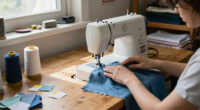
The Brother CS5055 is my best overall pick among the best beginner sewing machines because its computerized controls and LCD display can make stitch selection easier to follow. For a straightforward mechanical option, the SINGER M1500 keeps the learning curve more traditional, while the Brother GX37 offers a broader stitch selection for sewists who want room to explore. The main tradeoff is between simple controls and features that support a wider range of projects. Mini machines may appeal for occasional repairs, but they are a narrower fit than full-size models for regular garment or quilting work. Read on for the full comparison, buying advice, and picks for different sewing needs.

Get business pricing on tools and workshop supplies
- Business-only prices and quantity discounts
- Tax-exempt purchasing
- Multiple users, one account, clear invoices
Complete the kit



Key Takeaways
- The Brother CS5055 is the clearest all-around pick for beginners who value guided stitch selection and a computerized interface.
- The SINGER M1500 and Brother XM2701 represent the simpler mechanical route; the right choice depends on whether you prefer a more basic setup or a larger stitch selection.
- Mini machines such as the Chunara, Tessora, and finger-guard model suit limited, light-duty tasks better than a first machine intended for regular sewing projects.
- The Brother XR3774 and Brother SE700 options point toward specialized interests: quilting for the XR3774, and sewing plus embroidery for the SE700 models.
- Heavy-duty labels do not automatically make a machine a better beginner choice; the SINGER Heavy Duty 4452 and Brother ST371HD make more sense when sturdier materials are part of the plan.




| beginner sewing machine | Dimensions | Weight | Built-in stitches |
|---|---|---|---|
| Chunara Mini Electric Sewing M | 12 × 11 × 6 in (D × W × H) | — | — |
| Zeuboary Portable Sewing Machi | 10.6 × 4.5 × 9.3 inches | 5.7 pounds | — |
| SINGER M1500 Lightweight Porta | 14.57 × 7.12 × 11.34 in | 9.7 lbs | 6 |
| SINGER Heavy Duty 4452 Sewing | — | — | 32 |
| Brother CS5055 Computerized Se | — | — | 60 |
| Sewing Machine for Beginners w | 10 x 9 x 6.9 inches | 3 pounds | — |
| Tessora Portable Mini Sewing M | 12.2 x 5.9 x 11.2 inches | 4.5 pounds | — |
| Brother SE700 Wireless Sewing | — | — | — |
| Brother ST371HD Heavy-Duty Sew | — | — | 37 |
| Brother SE700 Combo Sewing and | — | — | — |
| Brother GX37 Sewing Machine 37 | 7 × 15 × 17 in (D × W × H) | 10.1 lb | 37 |
| Brother XR3774 Sewing and Quil | 5.8 × 15.3 × 12 in | 15 lb | 37 |
| Brother Sewing Machine | 15.3 × 5.86 × 12.01 in (D × W × H) | 12.6 lb | 27 |
| Janome Blue Couture Sewing Mac | 7 × 16 × 12 in (D × W × H) | 12 lb | 15 |
| Beginner Sewing Machine for Ad | 12.8 × 6.08 × 11.42 in (D × W × H) | 5.5 lb | — |
More Details on Our Top Picks
Chunara Mini Electric Sewing Machine with 12 Stitches, Dual Speed, Foot Pedal and 42-Piece Sewing Kit
The Chunara pairs 12 stitch patterns and two speed settings with a 42-piece sewing kit, so a beginner can start with basic home projects without sourcing as many accessories. Its free arm helps with sleeves and pant legs, while the thread cutter, rewind function, and sewing light cover useful setup tasks. Compared with the SINGER M1500, it offers more stitch patterns and a larger included kit, but the SINGER provides a clearer established brand model and lists its included presser feet and other accessories. The Chunara’s compact size suits mending and smaller crafts, though it may feel limiting when handling broad fabric pieces. Its power listing mentions both batteries and corded electricity without specifying battery requirements, so buyers should check the power details before choosing it.
Pros:- Includes a 42-piece sewing kit and foot pedal.
- Offers 12 stitch patterns and two speed settings.
- Free arm helps sew sleeves and pant legs.
- Built-in thread cutter, rewind function, tension dial, and sewing light.
Cons:- The power listing does not explain battery requirements.
- Compact dimensions may restrict comfortable handling of larger projects.
Best for: Beginners who want a compact machine with a broad starter kit for simple mending and small DIY projects.
Not ideal for: Sewists planning larger quilts or frequent projects with bulky fabric, or buyers who need clearly specified battery requirements.
- Brand:Chunara
- Model:Model-705A
- Stitch patterns:12
- Speed settings:2
- Included components:42-piece sewing kit, foot pedal
- Features:Free arm, automatic thread rewind, thread cutter, tension dial, sewing light
- Power source:Battery-powered, corded electric
- Dimensions:12 × 11 × 6 in (D × W × H)
Our verdict“Choose the Chunara if you want a compact beginner machine that arrives with a substantial kit for small sewing jobs.”
Zeuboary Portable Sewing Machine with 12 Stitches and Extension Table
At 5.7 pounds, the Zeuboary is the easiest option here to carry or tuck away, and its extension table gives fabric more support when a small machine’s base feels cramped. Beginners can choose foot pedal or push-button control, with adjustable speed options and 12 stitch patterns for basic repairs and crafts. Compared with the Chunara Mini Electric Sewing Machine, it adds an extension table and specifies AC adapter or four AA batteries, though the batteries are not included. It also has an LED light, thread cutter, and storage drawer. The tradeoff is its plastic construction and compact format: this is better suited to occasional, smaller jobs than repeated sewing on bulky fabrics or larger projects.
Pros:- Lightweight 5.7-pound body is easy to carry and store.
- Extension table supports fabric beyond the machine’s compact base.
- Foot pedal and push-button controls offer two ways to sew.
- Includes an LED light, thread cutter, storage drawer, and 32-color thread kit.
Cons:- Four AA batteries are not included.
- Plastic construction may be less suited to demanding or frequent sewing.
Best for: Beginners in small homes or sewing students who need a lightweight machine that can be stored or carried easily.
Not ideal for: Buyers who plan to sew thick layers regularly or want a sturdier machine with a larger work area.
- Brand:Zeuboary
- Model:505
- Stitch options:12
- Dimensions:10.6 × 4.5 × 9.3 inches
- Weight:5.7 pounds
- Power source:AC adapter or 4 AA batteries (not included)
- Controls:Foot pedal or push button
- Included accessories:Extension table, 32-color thread kit, replaceable presser feet
Our verdict“Pick the Zeuboary if portability and flexible controls matter more than a sturdy build for heavy projects.”
SINGER M1500 Lightweight Portable Sewing Machine with Accessory Kit
The M1500 keeps setup simple with preset stitch length and width and marked threading guides, making it a practical fit for beginners who want to focus on straight seams, crafts, and mending rather than adjusting many settings. Its 57 stitch applications cover varied tasks, and the included feet address common jobs such as zippers and buttonholes. Compared with the Brother CS5055, the M1500 is lighter and less feature-heavy, while the Brother offers more built-in stitches and one-step buttonholes. That simplicity has limits: the M1500’s buttonhole takes four steps, and preset stitch dimensions restrict manual control. At 9.7 pounds, it is portable enough for classes, though the compact design may not be the best match for larger work.
Pros:- Marked threading guides help make setup easier to follow.
- Preset stitch length and width reduce decisions for basic sewing.
- Lightweight design suits classes and smaller workspaces.
- Includes all-purpose, zipper, and buttonhole feet plus other accessories.
Cons:- Buttonholes require a four-step process.
- Preset stitch length and width limit manual adjustment.
Best for: New sewists who want marked threading guidance and straightforward settings for learning repairs, crafts, and simple garments.
Not ideal for: Beginners who want to fine-tune stitch length and width or make buttonholes with a one-step process.
- Brand:SINGER
- Model:M1500
- Stitch applications:57
- Built-in stitches:6
- Buttonhole:Four-step
- Weight:9.7 lbs
- Dimensions:14.57 × 7.12 × 11.34 in
- Warranty:One year
Our verdict“Choose the M1500 if you want guided, basic sewing with fewer settings to manage as you learn.”
SINGER Heavy Duty 4452 Sewing Machine Bundle with Extension Table and Accessory Feet
The 4452 is the strongest fit here for a beginner whose projects include denim, canvas, or multiple fabric layers. Its full metal frame and motor rated for speeds up to 1,100 stitches per minute support a more substantial workload than the compact Zeuboary Portable Sewing Machine. Adjustable stitch length and width also give learners room to refine settings as their skills grow. The bundle’s extension table helps support larger pieces, and the walking foot is useful when feeding layers evenly. That capability comes with a steeper learning curve: the machine has more settings and accessories to manage than the guided SINGER M1500. The extension table is removable, so it needs to be attached when a project requires the extra surface.
Pros:- Full metal frame and powerful motor are suited to thicker fabrics and multiple layers.
- Adjustable stitch length and width allow more control as skills develop.
- Removable extension table supports larger projects.
- Includes a walking foot, non-stick foot, and one-step buttonhole foot.
Cons:- More settings and accessory options can be a lot to manage for a first machine.
- The extension table must be attached when extra workspace is needed.
Best for: Beginners who expect to sew denim, canvas, layered materials, or larger projects and want room to build skills.
Not ideal for: New sewists who want a very lightweight machine with minimal setup and mostly plan to mend thin fabrics.
- Model:4452
- Built-in stitches:32
- Stitch applications:110
- Maximum sewing speed:1,100 stitches per minute
- Frame:Full metal frame
- Bobbin:Top drop-in with clear view cover
- Needle threader:Built-in
- Included accessories:Removable extension table; blind hem, open toe, all-purpose, zipper, button sewing, one-step buttonhole, even feed/walking, and non-stick feet
Our verdict“Choose the 4452 if your beginner projects already include thick fabric or larger pieces that need a sturdier machine.”
Brother CS5055 Computerized Sewing Machine with LCD Display
The CS5055 gives a beginner more variety without requiring manual buttonhole sizing: it has 60 built-in stitches and seven one-step auto-size buttonhole styles. Its LCD display supports stitch selection, while the automatic needle threader and jam-resistant drop-in bobbin simplify two common setup tasks. Compared with the SINGER M1500, the Brother offers more stitch choices and easier buttonholes, but the M1500’s preset stitch settings may feel simpler for someone who wants fewer options at first. The CS5055’s metal frame, fixed needle bar, and spacious needle-to-arm area make it a more capable choice for growing projects. One practical limitation is its 120-volt design, which is intended for US use; buyers elsewhere should check compatibility and warranty terms.
Pros:- 60 built-in stitches cover utility, decorative, and heirloom sewing.
- Seven one-step auto-size buttonhole styles simplify garment projects.
- Automatic needle threader and jam-resistant drop-in bobbin ease setup.
- Metal frame and spacious work area support a broader range of projects.
Cons:- Designed for 120-volt use in the United States; other use may affect the warranty.
- A larger stitch selection may take more time for a beginner to learn.
Best for: Beginners who want computerized stitch selection, multiple buttonhole styles, and room to take on more varied projects.
Not ideal for: Buyers outside the United States who need a machine designed for a different voltage or warranty region.
- Brand:Brother
- Model:CS5055
- Built-in stitches:60
- Buttonhole styles:7 one-step auto-size
- Included accessories:7 sewing feet, 4 bobbins, needle set, user manual
- Frame material:Metal
- Power source:Corded electric
- Input voltage:120 volts
Our verdict“Pick the CS5055 if you want a beginner-friendly computerized machine with stitch variety and one-step buttonholes.”
Sewing Machine for Beginners with Fabrics&Finger Guard, Mini Size
The included fabric squares and safety features make this mini machine a practice-focused pick for someone learning basic sewing at home. Its 20 cotton squares give a beginner material for small projects, while the finger guard and two speed settings can make early practice feel more manageable. It also uses a double-thread setup, which the listing says can sew up to five fabric layers without manually tying off the thread.
Compared with the Tessora Portable Mini Sewing Machine, this model emphasizes practice fabric and a finger guard rather than a larger assortment of stitch patterns and control options. Its compact size and tool kit are convenient, but a 3-pound plastic machine is a limited choice for frequent garment sewing or thicker projects. I’d choose it for guided practice and small crafts, not as a long-term substitute for a full-size machine.
Pros:- Includes 20 patterned cotton fabric squares for practice and small crafts
- Finger guard and two speed settings support cautious beginner practice
- Double-thread design is listed to handle up to five fabric layers
- Comes with sewing tools including bobbins, scissors, measuring tape, and a needle threader
Cons:- Mini size and 3-pound weight may feel less stable for extended sewing
- No stitch-pattern count or wider range of sewing functions is specified
- The plastic construction may be less suited to frequent heavy use
Best for: New sewists who want practice fabric, a finger guard, and basic tools for small learning projects
Not ideal for: Beginners planning frequent garment alterations or larger projects who need a stable, full-size machine
- Dimensions:10 x 9 x 6.9 inches
- Weight:3 pounds
- Material:Plastic
- Power source:AC adapter
- Input voltage:110 V
- Included practice fabric:20 cotton squares, 8 x 8 inches
- Speed settings:Two: slow and standard
- Listed fabric capacity:Up to five layers
Our verdict“Choose this compact machine if you want a practice-oriented starter with fabric and safety accessories for small projects.”
Tessora Portable Mini Sewing Machine with Dust Cover and Starter Kit
Two ways to control the machine give this compact model a useful learning advantage: beginners can use the foot pedal or button control as they get comfortable guiding fabric. It also offers 12 stitch patterns and two speeds, plus an automatic bobbin winder, thread cutter, and sewing light—conveniences that are not specified for the smaller practice-focused KPCB machine.
The 50-piece kit and dust cover make it a ready-to-store starter setup, and battery operation can help when an outlet is inconvenient, though the four AA batteries are not included. At 4.5 pounds, it remains portable, but its mini format is still a compromise for long seams or substantial projects. Compared with the Brother ST371HD, it offers a broader beginner kit and more portability, while giving up the full-size format and fabric range suited to repairs and alterations.
Pros:- 12 stitch patterns and two speeds provide a range of basic settings
- Foot pedal or button control lets beginners choose how to operate it
- 50-piece starter kit and dust cover are included
- Automatic bobbin winder, thread cutter, and sewing light add convenience
Cons:- Four AA batteries are not included
- Mini format is less suited to long seams and larger projects
- Not designed for industrial use
Best for: Beginners who want a portable machine with both button and pedal controls for simple crafts and practice
Not ideal for: Sewists who expect to alter denim or sew frequently on large projects and need a full-size machine
- Model:505-COVER
- Stitch patterns:12
- Speed settings:Two
- Controls:Foot pedal or button
- Power options:AC adapter or four AA batteries (not included)
- Dimensions:12.2 x 5.9 x 11.2 inches
- Weight:4.5 pounds
- Included accessories:50-piece sewing kit and dust cover
Our verdict“Pick the Tessora if portability, flexible controls, and a bundled starter kit matter more than full-size sewing capacity.”
Brother SE700 Wireless Sewing and Embroidery Machine
Sewing and embroidery in one computerized machine give the SE700 room to grow beyond basic beginner projects. It has 103 sewing stitches, 135 built-in embroidery designs, 10 lettering fonts, and a 4 x 4-inch embroidery field. The color touchscreen, automatic needle threader, and wireless design transfer add ways to select and personalize projects without relying only on manual stitch selection.
This is a more feature-rich path than the mechanical Brother ST371HD, which is geared toward everyday sewing and repairs rather than embroidery. That extra capability also means more settings to learn, and the small embroidery field limits the size of designs made in one placement. The 120 V specification makes it a US-use machine, so it is a less straightforward fit for buyers elsewhere. I’d choose it when embroidery is a real goal, not just a possible future interest.
Pros:- Combines sewing and embroidery functions in one machine
- Offers 103 sewing stitches, 135 embroidery designs, and 10 lettering fonts
- Color touchscreen and wireless LAN support design selection and transfer
- Automatic needle threader and eight included sewing feet support varied projects
Cons:- The 4 x 4-inch embroidery field limits single-placement design size
- Computerized features may add a learning curve for someone seeking basic sewing
- Specified for 120 V US use
Best for: Beginner sewists who specifically want built-in embroidery and digital design transfer alongside regular sewing
Not ideal for: Buyers who want a simple mechanical machine for basic repairs, or users outside the US who need different power compatibility
- Built-in sewing stitches:103
- Embroidery designs:135
- Embroidery lettering fonts:10
- Embroidery field:4 x 4 inches
- Display:3.7-inch color LCD touchscreen
- Maximum sewing speed:710 stitches per minute
- Connectivity:Wireless LAN and USB
- Power compatibility:120 V, US use
Our verdict“Choose the SE700 if embroidery is part of your beginner plan and you want computerized sewing in the same machine.”
Brother ST371HD Heavy-Duty Sewing Machine with 37 Built-In Stitches
A mechanical design and broad fabric range make the ST371HD a practical beginner choice for people who expect to sew repairs and alterations, not only small crafts. Its 37 stitches include utility and decorative options, while the free arm helps reach cuffs and sleeves. The listing says it handles fabrics from lightweight silk to denim, leather, and suede, giving it a more repair-focused role than the compact Tessora Portable Mini Sewing Machine.
The tradeoff is that it does not offer the SE700’s computerized embroidery or wireless design features; its appeal is straightforward sewing rather than customization. An automatic needle threader and jam-resistant drop-in bobbin can simplify setup, though beginners will still need to learn stitch selection and fabric handling. At 800 stitches per minute, it has a defined maximum speed, and its 25-year limited warranty has terms that buyers should review. This pick suits useful everyday sewing better than embroidery-led projects.
Pros:- 37 utility and decorative stitches, including buttonhole and stretch stitches
- Listed for fabrics ranging from silk to denim, leather, and suede
- Free arm helps with cuffs, sleeves, and other tubular pieces
- Automatic needle threader and jam-resistant drop-in bobbin simplify setup
Cons:- Mechanical controls lack the touchscreen and wireless features of the Brother SE700
- Maximum sewing speed is 800 stitches per minute
- Warranty is limited and subject to its terms
Best for: Beginners who expect to sew household repairs, garment alterations, and projects across varied fabric types
Not ideal for: Buyers whose main goal is embroidery or who want an especially small machine for occasional crafts
- Machine type:Mechanical sewing machine
- Built-in stitches:37
- Maximum sewing speed:800 stitches per minute
- Bobbin:Jam-resistant drop-in top bobbin
- Needle threader:Automatic
- Feed feature:Drop feed for free-motion sewing
- Included sewing feet:6
- Warranty:25-year limited warranty
Our verdict“Choose the ST371HD if your beginner projects include real repairs and alterations across a range of fabrics.”
Brother SE700 Combo Sewing and Embroidery Machine with Hoops, Thread Set, and Accessories
The included hoops and embroidery thread make this SE700 bundle a more project-ready choice for a beginner whose interest in embroidery is already clear. It pairs more than 103 sewing stitches with 135 built-in embroidery designs and 10 fonts, and adds a color touchscreen and wireless LAN. Four hoops and 40 polyester thread spools give a new owner materials for experimenting with different embroidery layouts from the start.
Compared with the standard Brother SE700 Wireless Sewing and Embroidery Machine in this roundup, the machine’s core sewing and embroidery feature set is similar; this version’s distinction is its accessory bundle. That convenience comes with the same main constraint: the listed embroidery area is 4 x 4 inches, so larger designs need repositioning or a different setup. Its digital features also ask more of a first-time sewist than the mechanical Brother ST371HD. I’d pick this package when the bundled embroidery supplies are useful, rather than for basic sewing alone.
Pros:- Combines sewing and embroidery with more than 103 sewing stitches and 135 designs
- Includes four embroidery hoops and 40 polyester thread spools
- Touchscreen and wireless LAN support design selection and transfer
- Includes 10 embroidery fonts and 10 one-step auto-size buttonhole styles
Cons:- The listed embroidery area is limited to 4 x 4 inches
- Wireless design transfer requires a compatible network and software
- The bundle’s embroidery features may add unnecessary complexity for basic sewing
Best for: Beginners committed to trying embroidery who want hoops and thread included with a computerized sewing machine
Not ideal for: New sewists focused on basic garment repairs who do not need embroidery supplies or computerized features
- Machine type:Combo sewing and embroidery
- Embroidery area:4 x 4 inches
- Built-in embroidery designs:135
- Built-in embroidery fonts:10
- Built-in sewing stitches:More than 103
- Buttonhole styles:10 one-step auto-size
- Embroidery hoops:Four included: two 4 x 4-inch, one 4 x 6.75-inch, one 1 x 2.5-inch
- Included embroidery thread:40 polyester spools, 500 m each
Our verdict“Choose this SE700 bundle if you want to start embroidering and value included hoops and thread alongside sewing features.”
Brother GX37 Sewing Machine 37 Built-in Stitches
The GX37 gives beginners room to try different sewing techniques without moving to a computerized machine. Its 37 built-in stitches cover utility and decorative work, and the stitch choices are printed on the machine for quick reference. Compared with the Brother XM2701, it offers more stitch options while keeping a similar dial-based setup. The automatic needle threader and top-loading bobbin also cut down on two common setup frustrations.
The tradeoff is that more stitch choices can feel like extra clutter if you only need basic mending, and its included feet are fewer than the XR3774’s eight. It weighs about 10 pounds, but its 120-volt US-only specification limits where it can be used without compatibility concerns. I’d choose it for a learner who expects to explore beyond straight seams.
Pros:- 37 built-in utility and decorative stitches
- Stitch choices are printed on the machine and selected with a dial
- Automatic needle threader and top-loading drop-in bobbin
- Six included sewing feet support common garment tasks
Cons:- The larger stitch selection may be unnecessary for basic repairs
- Fewer included feet than the Brother XR3774
- Specified for 120-volt use in the US
Best for: New sewers who want a broad selection of decorative and utility stitches for clothing, crafts, and occasional quilting.
Not ideal for: Learners who want the simplest possible stitch selection or need a machine for use outside a 120-volt US setup.
- Built-in stitches:37
- Buttonhole:One-step automatic
- Needle threading:Automatic
- Bobbin:Top-loading drop-in
- Included sewing feet:6
- Power:Corded electric
- Voltage:120 volts
- Dimensions:7 × 15 × 17 in (D × W × H)
- Weight:10.1 lb
Our verdict“Choose the GX37 if you want more stitch variety than the XM2701 while keeping a straightforward mechanical setup.”
Brother XR3774 Sewing and Quilting Machine with 37 Stitches
The XR3774 is the most quilting-ready choice in this group for someone who wants to learn on an everyday machine. Its wide table gives larger fabric pieces more support, while the eight included feet and 37 stitches provide useful options for piecing, hems, and decorative details. The Brother GX37 has the same stitch count, but the XR3774’s table and broader foot selection make it better suited to projects that spread beyond a small work area.
That extra workspace comes with more bulk: at 15 pounds, it is heavier than the XM2701 and less convenient to put away between sessions. The instructional DVD may help a first-time owner, though the machine still uses mechanical controls rather than a screen-guided interface. Its listed voltage details are inconsistent, so buyers should confirm compatibility with their local supply.
Pros:- Wide table supports larger quilting pieces
- Eight included sewing feet cover varied tasks
- 37 stitches and a one-step buttonhole
- Automatic needle threader and top-loading bobbin simplify setup
Cons:- At 15 pounds, it is heavier than the Brother XM2701
- The wide table takes additional storage space
- Product details list both 110V and 120V
Best for: Beginners planning to sew quilts or other wide projects who can leave the machine set up on a table.
Not ideal for: Sewers with limited storage or anyone prioritizing a lighter machine for frequent carrying.
- Built-in stitches:37
- Buttonhole:One-step
- Needle threading:Automatic
- Bobbin:Top-loading drop-in
- Included sewing feet:8
- Included workspace:Wide table
- Power:Corded electric
- Dimensions:5.8 × 15.3 × 12 in
- Weight:15 lb
Our verdict“Pick the XR3774 if you want quilting workspace and included accessories more than a compact, easy-to-store machine.”
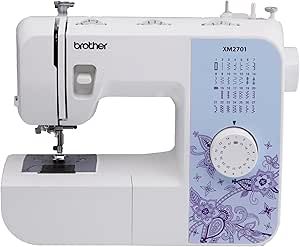
Brother Sewing Machine, XM2701, Portable Sewing Machine, 27 Stitches
The XM2701 keeps the learning curve manageable while covering the sewing most beginners are likely to do: alterations, simple garments, and household fixes. Its 27 stitches include stretch and blind-hem options, and the six quick-change feet help with tasks such as zippers and narrow hems. Like the GX37, it has an automatic needle threader and a top-loading bobbin, but the XM2701’s smaller stitch menu makes the controls feel less crowded for someone starting with the basics.
It is also lighter than the XR3774, though it does not include that model’s wide quilting table or eight-foot set. The free arm is practical for cuffs and sleeves, but this is still a corded machine rather than a compact battery-powered option. I’d favor it for everyday sewing over the GX37 if 27 stitches are enough.
Pros:- 27 stitches include blind hem, stretch, and decorative options
- Automatic needle threader and jam-resistant drop-in bobbin
- Six feet support common tasks such as zippers and buttonholes
- Free arm helps sew cuffs, sleeves, and pant legs
Cons:- Fewer built-in stitches than the GX37 and XR3774
- No wide table is included for supporting large quilt pieces
- Specified for 120-volt use in the US
Best for: First-time sewers learning clothing repairs, hems, and uncomplicated garment projects at home.
Not ideal for: Quilters who need a wide work surface or beginners who specifically want the larger 37-stitch selection.
- Built-in stitches:27
- Buttonhole:One-step automatic
- Needle threading:Automatic
- Bobbin:Top-loading drop-in
- Included sewing feet:6
- Power:Corded electric
- Voltage:120 volts
- Dimensions:15.3 × 5.86 × 12.01 in (D × W × H)
- Weight:12.6 lb
Our verdict“Choose the XM2701 for a lighter everyday starter machine with useful basics and fewer stitch choices to sort through.”
Janome Blue Couture Sewing Machine
The Blue Couture suits a beginner who would rather learn a compact set of core techniques than browse a long stitch menu. Its 15 built-in stitches, adjustable stitch length and zigzag width, and metal interior frame make it a straightforward mechanical alternative to the Brother GX37 and XR3774, both of which offer 37 stitches. Tutorial videos and a built-in bobbin diagram add practical guidance during setup.
The simpler layout has tradeoffs: the front-loading bobbin takes a different loading routine from the Brothers’ drop-in systems, and its four-step buttonhole requires more handling than their one-step versions. Four included presser feet also make this a more basic package than the XR3774’s eight. I’d choose it for a learner who values guided setup and adjustable basics over stitch variety or quilting extras.
Pros:- Interior metal frame
- Adjustable stitch length and zigzag width
- Tutorial videos and built-in bobbin diagram support learning
- Removable free arm for smaller tubular projects
Cons:- Four-step buttonhole takes more handling than the Brothers’ one-step options
- Front-loading bobbin may be less convenient for beginners
- Only four presser feet are included
Best for: Beginners who want a mechanical machine with setup guidance and adjustable stitch basics for repairs and simple projects.
Not ideal for: Learners who prefer a drop-in bobbin, a one-step buttonhole, or a large selection of built-in stitches.
- Built-in stitches:15
- Buttonhole:4-step
- Bobbin:Front-loading
- Frame:Interior metal
- Adjustments:Stitch length and zigzag width
- Feed dogs:3-piece
- Included presser feet:4
- Dimensions:7 × 16 × 12 in (D × W × H)
- Weight:12 lb
Our verdict“Choose the Blue Couture if guided setup and a sturdy mechanical design matter more to you than stitch count and quick buttonholes.”
Beginner Sewing Machine for Adults, Double Needle Sewing Machine with 16 Stitch Patterns, Adjustable Speed, Includes Multiple Accessories, Portable Home Sewing Machine for Daily Use
This compact machine puts speed control and a small footprint ahead of the broader project range offered by the Brother XM2701. Its two-speed foot pedal is intended to let beginners start slowly, while the listed 16 stitch patterns and tension adjustment offer some room to experiment. At 5.5 pounds, it is the lightest option among these five, which may suit a learner who needs to pack sewing gear away after each session.
The stated fabric guidance is restrictive: lightweight denim is recommended, with six layers on single needle mode potentially jamming and double needle mode limited to four layers. That makes it a less reassuring choice for sturdy alterations than the Brother GX37. Product details also do not identify the stitch types or provide a brand and model, so buyers have less information for judging support and capabilities. I’d keep it to light practice and small household jobs.
Pros:- Lightweight 5.5-pound body is easy to store and carry
- Two-speed foot pedal offers a slower setting for practice
- 16 listed stitch patterns with adjustable tension
- Includes LED lighting, reverse stitching, and automatic thread cutting
Cons:- Fabric guidance limits it mainly to lightweight projects
- Product details do not identify the stitch types or a brand and model
- Double-needle mode has stated layer limits and may tangle on thicker stacks
Best for: Beginners with limited storage who want to practice controlled stitching on light fabrics and small projects.
Not ideal for: Sewers planning frequent denim alterations, thicker layered projects, or buyers who want clearly documented stitch types and support.
- Stitch patterns:16
- Tension settings:1–9
- Needle modes:Single or double needle
- Speed control:Two-speed foot pedal
- Recommended fabric thickness:0.17 in or less
- Lighting:LED
- Power:DC
- Dimensions:12.8 × 6.08 × 11.42 in (D × W × H)
- Weight:5.5 lb
Our verdict“Consider this machine for light, space-conscious practice, but choose the Brother XM2701 for better-documented everyday sewing versatility.”
How We Picked
I compared these machines around the needs that shape a first purchase: how approachable the controls appear, what kinds of projects the machine can support, and whether its included accessories or features address a real beginner need. I also weighed the tradeoffs between compact mini machines and full-size models, mechanical controls and computerized functions, and general sewing machines and specialized sewing-and-embroidery or quilting options. Product names and listed features informed this comparison; where details such as stitch quality, maintenance demands, or material limits were not provided, I avoid treating them as proven performance claims.
The ranking favors machines that appear to offer a practical balance of usability and room to learn, with more specialized or limited-purpose models placed according to the buyer they serve. The CS5055 leads for its computerized interface and LCD display. Mechanical models remain strong alternatives for people who want a simpler control scheme, while heavy-duty, quilting, embroidery, and mini options rank best when their distinct purpose matches the buyer’s plans. A longer stitch list alone does not determine placement: fit, usability, and project scope matter more.
Factors to Consider When Choosing Best Beginner Sewing Machines
Before choosing a first machine, I would start with the projects you actually expect to sew and the space and setup you can give the machine. The right feature set depends on that combination, not on the longest list of stitches or accessories.
Match the machine to your first projects
List a few projects you are likely to attempt in the next year, such as simple repairs, garments, home items, or quilts. A machine for occasional hems does not need the same features as one intended for frequent garment construction. Quilting can call for a larger work area and useful quilting accessories, while embroidery requires dedicated embroidery functions and compatible hoops. A general sewing machine may handle basic seams but will not replace an embroidery machine for decorative designs. Beginners often buy for a far-off ambition and overlook the tasks they will practice first. Pick a machine whose listed purpose fits those early projects, with room for one or two likely next steps.
Choose controls you will enjoy learning
Mechanical machines use physical controls, while computerized models add digital selection and display features. A display can make it easier to identify a selected stitch, but it also adds another interface to learn. Mechanical controls may feel more direct to someone who prefers turning dials and setting each choice by hand. Neither approach guarantees easier stitching, so check the manual and control layout before deciding. Consider whether you learn better from clear visual prompts or from a small set of physical settings. The best first machine is one whose controls you can understand without avoiding practice.
Treat stitch count as a secondary measure
A large number of built-in stitches can look like more capability, but most beginners rely on a few practical stitches for early projects. Check whether the machine offers the specific functions you expect to use, such as a buttonhole option, and how those functions are selected. Decorative stitches add creative choices, yet they do not automatically improve basic seam work. A smaller selection can be easier to learn if the common settings are clear. Avoid choosing by stitch count alone when other details, such as project type and setup, matter more to you. Buy for useful functions rather than a number on the box.
Know what a mini machine can and cannot cover
Compact mini machines can take up less room and may suit occasional repairs or very light sewing. Their small form can also limit the kinds of projects that feel comfortable to manage. Check the product details for intended materials and use before expecting a mini model to serve as your only machine. Included starter kits can help you gather basic supplies, but a large accessory bundle does not expand a machine’s capabilities by itself. If you plan to sew garments, larger home projects, or quilts regularly, compare full-size models first. Choose a compact option when easy storage and modest tasks are your priorities.
Pay extra for a feature you will actually use
Specialized functions make sense when they line up with a real interest. A sewing-and-embroidery machine can suit a buyer ready to use both capabilities, but it brings a different setup and learning path from a basic sewing machine. A quilting-focused model is a more direct fit for someone who expects to work with quilt pieces and wants relevant accessories. Heavy-duty models may be worth considering when sturdier materials are part of regular projects, yet that label alone does not tell you how a machine handles every fabric. Compare included accessories with the projects you plan to make, not with the size of the bundle. If a feature is unlikely to leave its box, a simpler machine may be the better first purchase.
Check the practical setup before committing
Before choosing, confirm what is included and which supplies you will need to add. Look for information about threading, bobbin setup, maintenance, and where to find the manual, since these details shape the first few sewing sessions. Consider the machine’s footprint and whether you have a stable place to use it. A foot pedal, extension table, cover, or accessory set can be useful, but only when it suits your working style and projects. Beginners sometimes focus on the machine’s headline feature and leave setup questions until delivery. Reviewing those details ahead of time can prevent avoidable frustration.
Frequently Asked Questions
Should I choose a computerized machine or a mechanical one for my first sewing machine?
I would choose based on which controls you are more likely to use confidently. A computerized display, like the one listed for the Brother CS5055, can make stitch selection more visible. A mechanical model such as the SINGER M1500 keeps the controls physical and direct. Neither type removes the need to learn threading, fabric handling, and seam practice. Read the manual or inspect the control layout if that information is available before choosing.
Can a mini sewing machine handle clothing projects?
That depends on the machine’s stated capabilities and the fabrics and construction involved. The mini models in this roundup are best approached as compact options for light or occasional tasks, rather than assumed equivalents to full-size machines. Check the product information for material guidance and project limitations before buying. Garments can involve long seams, multiple layers, and repeated use, which may make a full-size model a more practical starting point. If clothing is your main goal, compare the full-size mechanical and computerized options first.
Do I need a heavy-duty sewing machine as a beginner?
Most beginners do not need to start with a machine labeled heavy-duty unless their planned projects call for sturdier materials or more demanding use. The SINGER Heavy Duty 4452 and Brother ST371HD are the roundup’s choices in that category, but the label alone does not establish which fabrics each can handle. Verify the manufacturer’s guidance for your intended materials and project layers. A general-purpose machine may be easier to match to everyday learning projects. Choose a heavy-duty model for a specific need, not as insurance against every future project.
Is a machine with more stitches better for learning?
Not by itself. A broad stitch selection can offer creative options, as with the Brother GX37 and XR3774, but beginners often need only a handful of useful stitches at first. Clear controls and a comfortable learning process matter more than the size of the stitch list. Think about whether decorative stitches or quilting-related functions match the projects you expect to make. If not, a simpler machine may provide a more focused start.
When does a sewing-and-embroidery machine make sense as a first machine?
It makes sense when you already expect to explore embroidery as well as ordinary sewing and are ready to learn a more specialized setup. The Brother SE700 entries are the roundup’s options for that combined interest. Their listed hoops and accessories may be relevant to embroidery work, but those extras do not make the machine necessary for someone learning basic seams. Compare what the embroidery function requires, including compatible supplies and design workflow, before deciding. If you mainly want to learn garment repairs or simple sewing, a general-purpose model is a more direct starting point.
Conclusion
For most new sewists, I recommend the Brother CS5055 as the best overall because its computerized controls and LCD display offer a clear starting point with room to learn. The SINGER M1500 is my best value-style choice for a straightforward mechanical setup, while the Brother GX37 is a good fit for beginners who want more built-in stitch options. For a more specialized first machine, choose the Brother XR3774 for quilting or a Brother SE700 for sewing and embroidery if you plan to use both functions. I would reserve the compact mini machines for light, occasional sewing and consider the heavy-duty models when sturdier materials are a real part of your projects. Match the machine to the work you want to learn first, then let that choice guide how much complexity you take on.