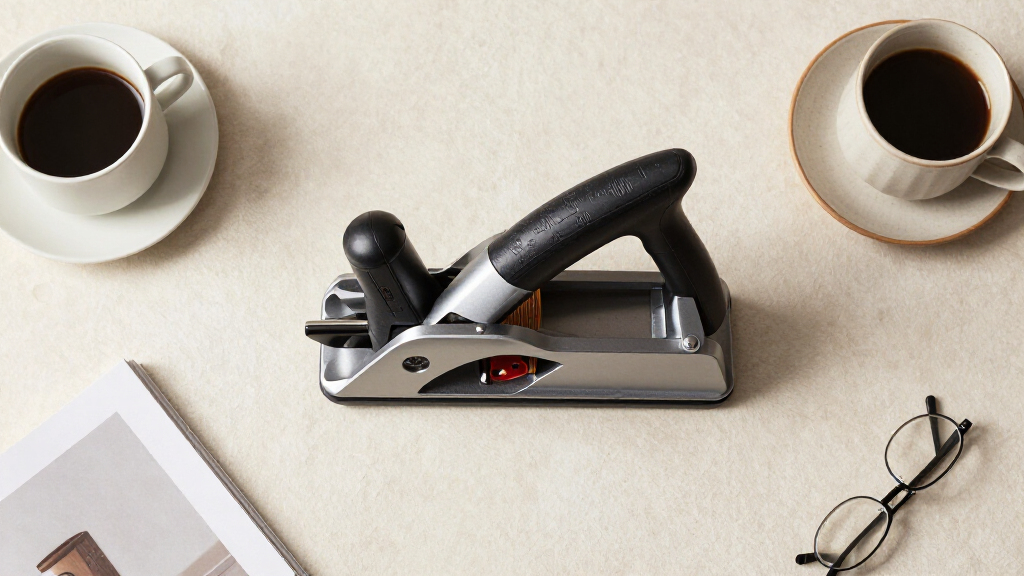

Benchtop thickness planers turn rough-sawn lumber into smooth, consistent stock, and the biggest differences between models come down to cutterhead type, finish quality, and durability rather than raw power. My top pick overall is the DEWALT DW735X, because its three-knife cutterhead and two-speed feed deliver the best balance of surface finish and long-term reliability. The WEN PL1337 stands out for bringing a spiral cutterhead with two-speed feed to a midrange price, while the VEVOR 13-Inch Two-Speed models offer serious cutting capacity for budget-focused buyers who can accept a rougher finish and more setup effort. The main tradeoff in this category is simple: straight-knife machines cost less but require more frequent blade work, whereas spiral-head planers cost more upfront but produce tear-free finishes on figured wood with less maintenance. Read on for the full breakdown of all 15 models.

Get business pricing on tools and workshop supplies
- Business-only prices and quantity discounts
- Tax-exempt purchasing
- Multiple users, one account, clear invoices
Complete the kit

Key Takeaways
- The DEWALT DW735X earned best overall because it is the only straight-knife machine here that consistently rivals spiral-head finish quality, thanks to its three-knife cutterhead and two-speed feed.
- Five of the fifteen models are VEVOR variants — they dominate the budget tier, but overlapping specs mean buyers should compare cutterhead style and two-speed feed rather than wattage, which is nearly identical across all of them.
- Spiral cutterheads (WEN PL1337, WEN PL1326, VEVOR Spiral) separate themselves most on figured hardwoods and reduce blade maintenance to individual insert rotation instead of full knife changes.
- The DEWALT DW734 and WEN PL1252 remain the strongest picks for hobbyists who plane mostly construction lumber and don’t need two-speed feed or premium finish.
- Sub-$300 two-blade models like the Triton TPT125 and VEVOR entry planers trade snipe control and finish quality for price — fine for utility work, frustrating for fine furniture stock.
| VEVOR 13-Inch Benchtop Thickness Planer with Foldable Stand and Dust Exhaust |  | Best Complete Setup | Cutting Width: 13 in (330 mm) | Cutting Thickness: 0.2–6.3 in (6–160 mm) | Motor: 15 AMP, 2000W (1800W rated) | VIEW LATEST PRICE | See Our Full Breakdown |
| VEVOR Two-Blade 13-Inch Benchtop Thickness Planer, 1800W, Dual Rollers |  | Best for Long Boards | Cutting Width: 13 in | Max Board Thickness: 6 in | Worktable Length: 28.2 in | VIEW LATEST PRICE | See Our Full Breakdown |
| Triton TPT125 High Performance Benchtop Planer, 12-1/2-Inch | 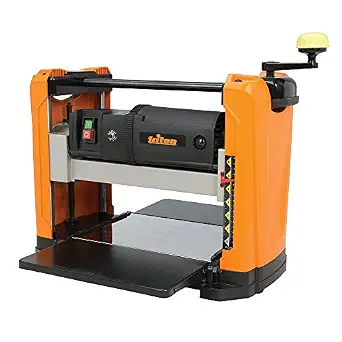 | Best Finish Precision | Cutting Width: 12-1/2 in (317 mm) | Cutter Height Range: 1/8 in to 5.9 in | Cut Rate: 17,500 cuts per minute | VIEW LATEST PRICE | See Our Full Breakdown |
| VEVOR 13-Inch Two-Blade Benchtop Planer with 12-Inch Extended Infeed Table |  | Best for Dimensioning Rough Lumber | Cutting Width: 13 in | Max Cutting Thickness: 6 in | Motor: 15 AMP, 2000W | VIEW LATEST PRICE | See Our Full Breakdown |
| WOODERS 13-Inch Benchtop Thickness Planer, 15A, 4 HSS Blades |  | Best for Hardwoods and Easy Handling | Cutting Width: 13 in (330 mm) | Cutting Height Range: 1/4 to 6.3 in (6–160 mm) | Motor: 15 AMP, 2000W all-copper | VIEW LATEST PRICE | See Our Full Breakdown |
| DEWALT DW734 Benchtop Planer, 15-Amp, 12-1/2-Inch, 3-Knife Cutter |  | Best Finish Quality Runner-Up | Motor: 15 Amp, 20,000 RPM | Cutting Width: 12-1/2 inches | Cutter Head: Three-knife, disposable reversible knives | VIEW LATEST PRICE | See Our Full Breakdown |
| VEVOR 13-Inch Benchtop Thickness Planer, Three-Blade, 2000W, Dual Rollers |  | Best Budget 13-Inch Workhorse | Cutting Width: 13 inches | Max Cutting Height: 6 inches | Table Length: 28.2 inches | VIEW LATEST PRICE | See Our Full Breakdown |
| CRAFTSMAN CMEW320 15 Amp Benchtop Planer |  | Easiest Knife Maintenance | Brand: CRAFTSMAN | Model: CMEW320 | Motor: 15 Amp | VIEW LATEST PRICE | See Our Full Breakdown |
| VEVOR 13″ Benchtop Thickness Planer, Three-Blade, Two-Speed, 2000W |  | Best Two-Speed Value | Cutting Width: 13 inches | Max Cutting Thickness: 6 inches | Table Total Length: 35 inches (with pull-out extensions) | VIEW LATEST PRICE | See Our Full Breakdown |
| WEN PL1326 15-Amp 13-Inch Spiral Benchtop Thickness Planer |  | Best Spiral Cutterhead Value | Motor: 15 Amp | Cutterhead: Spiral, 26 staggered rotatable HSS blades | Cutterhead Speed: 10,000 RPM | VIEW LATEST PRICE | See Our Full Breakdown |
| WEN PL1252 15-Amp 12.5-Inch Two-Blade Benchtop Thickness Planer |  | Best Budget Entry Point | Motor: 15 Amp | Cutting capacity: Up to 6 in. thick, 12.5 in. wide | Cut rate: 20,000 cuts per minute | VIEW LATEST PRICE | See Our Full Breakdown |
| DEWALT Thickness Planer, 13-inch Wood Planer, Three Knife Two Speed, 15 Amp, 20,000 RPM Motor (DW735X) |  | Best Overall | Motor: 15 Amp, 20,000 RPM | Cutterhead speed: 10,000 RPM | Cutterhead: Three-knife | VIEW LATEST PRICE | See Our Full Breakdown |
| VEVOR 13-Inch Two-Speed Benchtop Thickness Planer, 2000W Motor, Three HSS Blades, Dual-Roller Feeding |  | Best Value Workhorse | Motor: 2000W | Cutting width: 13 inches | Max cutting height: 6 inches | VIEW LATEST PRICE | See Our Full Breakdown |
| WEN PL1337 13-Inch Two-Speed Benchtop Thickness Planer with Spiral Cutterhead | 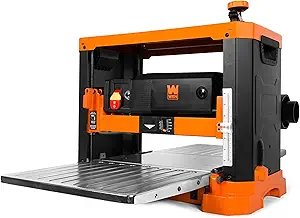 | Best Spiral Cutterhead Value | Motor: 15 Amp | Cutting width: 13 inches | Max board thickness: 6 inches | VIEW LATEST PRICE | See Our Full Breakdown |
| VEVOR 13-Inch Spiral Thickness Planer, Benchtop Woodworking Planer with 2000W Motor |  | Best for Finish Quality on a Budget | Motor: 2000W | Cutterhead speed: 23,500 RPM, single speed | Cut rate: 8,000 CPM | VIEW LATEST PRICE | See Our Full Breakdown |
| benchtop thickness planer | Motor | Cutting Width |
|---|---|---|
| VEVOR 13-Inch Benchtop Thickne | 15 AMP, 2000W (1800W rated) | 13 in (330 mm) |
| VEVOR Two-Blade 13-Inch Bencht | 1800W | 13 in |
| Triton TPT125 High Performance | — | 12-1/2 in (317 mm) |
| VEVOR 13-Inch Two-Blade Bencht | 15 AMP, 2000W | 13 in |
| WOODERS 13-Inch Benchtop Thick | 15 AMP, 2000W all-copper | 13 in (330 mm) |
| DEWALT DW734 Benchtop Planer | 15 Amp, 20,000 RPM | 12-1/2 inches |
| VEVOR 13-Inch Benchtop Thickne | — | 13 inches |
| CRAFTSMAN CMEW320 15 Amp Bench | 15 Amp | — |
| VEVOR 13" Benchtop Thickness P | 2000W at 23,500 RPM | 13 inches |
| WEN PL1326 15-Amp 13-Inch Spir | 15 Amp | — |
| WEN PL1252 15-Amp 12.5-Inch Tw | 15 Amp | — |
| DEWALT Thickness Planer | 15 Amp, 20,000 RPM | 13 inches |
| VEVOR 13-Inch Two-Speed Bencht | 2000W | 13 inches |
| WEN PL1337 13-Inch Two-Speed B | 15 Amp | 13 inches |
| VEVOR 13-Inch Spiral Thickness | 2000W | — |
More Details on Our Top Picks
VEVOR 13-Inch Benchtop Thickness Planer with Foldable Stand and Dust Exhaust
Most benchtop planers arrive as just the head unit, leaving you to solve the stand and infeed support problems on your own. This VEVOR 13-inch model is the exception, pairing the planer with a detachable heavy-duty iron stand and foldable extension plates right out of the box. For a buyer who wants to start dimensioning lumber the same afternoon, that matters more than a marginally finer finish. Compared with the WOODERS 13-inch planer, which includes spare blades but no stand, this option trades blade extras for a complete workstation. The 2000W motor and 8000 RPM cutterhead keep pace with the two-blade VEVOR variants, and overload protection guards the motor during heavy cuts. The tradeoff is weight and portability — once assembled, this is a semi-permanent shop fixture rather than something you haul between job sites.
Pros:- Includes a sturdy detachable stand and foldable extension plates for immediate setup
- 2000W motor handles thick hardwood stock without stalling
- Dust exhaust interface connects to standard collectors, keeping the bench area clean
- Overload protection switch extends motor life during aggressive cuts
Cons:- Heavy and among the least portable options in this lineup
- HSS blades dull noticeably faster than the carbide or spiral cutters on models like the WEN PL1326
Best for: Home woodworkers setting up a first dedicated shop space who want a ready-to-run planer station without buying a stand separately
Not ideal for: Contractors or hobbyists who need to move the machine frequently — the stand and iron construction make it awkward to transport
- Cutting Width:13 in (330 mm)
- Cutting Thickness:0.2–6.3 in (6–160 mm)
- Motor:15 AMP, 2000W (1800W rated)
- Blade Speed:8000 RPM
- Feed Speed:236 in/min (6 m/min)
- Blades:2 HSS double cutter blades
- Dust Port:1.8 in inner / 2 in outer (45/50 mm)
- Stand:Detachable heavy-duty iron stand with foldable extension plates
Our verdict“This pick makes the most sense for anyone who values a turnkey planing station over maximum portability or premium cutter technology.”
VEVOR Two-Blade 13-Inch Benchtop Thickness Planer, 1800W, Dual Rollers
Snipe — that deep gouge at the end of a board — is the number one frustration for benchtop planer owners, and it gets worse on long stock. This VEVOR two-blade planer attacks the problem with a dual-roller feeding system and a 28.2-inch worktable that keeps long or warped boards registered flat against the bed. Compared with the VEVOR B0BYYHG7NJ, which counters snipe with pull-out table extensions instead, this model builds the support into the fixed bed, which means fewer adjustments but a larger floor footprint. The 1/8-inch depth control is coarser than the Triton TPT125’s 1/16-inch increments, so it favors stock removal speed over ultra-fine finish passes. A practical bonus is the 2-inch and 4-inch dust hose compatibility, which fits most shop vacuums and larger dust collectors alike.
Pros:- Dual rollers reduce vibration and keep boards feeding straight for cleaner cuts
- Long 28.2-inch table supports lengthy stock better than most compact rivals
- Handles oak, maple, and other dense hardwoods without bogging down
- Works with both 2-inch and 4-inch dust hoses for flexible dust collection
Cons:- Coarse 1/8-inch depth increments limit precision finishing compared with the Triton TPT125
- Larger footprint than compact benchtop units, demanding more bench space
Best for: Woodworkers who regularly plane long or twisted boards and want built-in support to minimize snipe without jury-rigging roller stands
Not ideal for: Finish carpenters doing light, precise passes — the 1/8-inch depth increments are too coarse for fine surfacing work
- Cutting Width:13 in
- Max Board Thickness:6 in
- Worktable Length:28.2 in
- Motor:1800W
- Cut Rate:16,000 CPM
- Blades:2 HSS blades
- Depth Adjustment:1/8 in increments
- Dust Hose Compatibility:2 in and 4 in
Our verdict“The right choice if long, awkward lumber is the norm in your shop and snipe control matters more than fine depth adjustment.”
Triton TPT125 High Performance Benchtop Planer, 12-1/2-Inch
Where the VEVOR entries compete on raw power and bundled accessories, the Triton TPT125 plays a different game: refinement. Its 1/16-inch depth increments via a graduated crank are twice as fine as the VEVOR two-blade models, which translates directly into smoother final passes and less sanding afterward. The 4-post column design keeps the cutterhead rigid under load, reducing chatter that cheaper single-column designs can transmit into the workpiece. At 17,500 cuts per minute with a two-blade head, it won’t remove stock as aggressively as the 2000W VEVOR machines, but the cut quality is where this unit earns its place. The reversible dust chute is a thoughtful touch the VEVOR models lack — left- or right-side extraction adapts to your shop layout. The honest tradeoff is capacity: 12-1/2 inches of width rules out wider glued panels that 13-inch machines handle.
Pros:- 1/16-inch depth increments allow precise, repeatable finish passes
- 4-post column design keeps the cutterhead rigid for consistent results
- Dust chute mounts on either side to fit different shop configurations
- Circuit breaker adds an extra layer of electrical safety
Cons:- 12-1/2-inch width is narrower than the 13-inch VEVOR and WEN alternatives
- Two-blade head at 17,500 CPM removes material slower than higher-CPM rivals
Best for: Detail-oriented woodworkers and furniture makers who prioritize fine depth control and surface quality over maximum stock removal
Not ideal for: Anyone planing 13-inch glued panels or doing heavy roughing work — the narrower width and moderate feed rate slow dimensioning
- Cutting Width:12-1/2 in (317 mm)
- Cutter Height Range:1/8 in to 5.9 in
- Cut Rate:17,500 cuts per minute
- Depth Adjustment:1/16 in (1.6 mm) increments
- Column Design:4-post
- Dust Extraction:Reversible dust chute, either side
- Power Source:Corded electric
- Weight:65 lb
Our verdict“This model is better suited to woodworkers who measure success in surface finish rather than board feet per hour.”
VEVOR 13-Inch Two-Blade Benchtop Planer with 12-Inch Extended Infeed Table
If your workflow starts with rough-sawn boards from a sawmill, this VEVOR 13-inch planer is built for the dirty work. The precision-machined cast iron bed combined with pull-out table extensions delivering 35 inches of total support length gives it the longest effective bed in this batch, edging out the 28.2-inch fixed table on the VEVOR B0FNX6WRLD while folding away when not needed. The hardened two-knife steel cutterhead (HRC55-60) holds up reasonably well through abrasive rough stock, and the quick-change design limits downtime when blades need swapping. At 23,500 RPM, it removes material quickly, though the two-blade configuration leaves more witness marks than the spiral cutterheads on the WEN PL1326. A 20A over-current protector shuts things down before a stalled cut cooks the motor — a real concern when hogging through 6-inch hardwood.
Pros:- Cast iron bed with extensions provides 35 inches of total stock support
- Quick-change hardened cutterhead minimizes blade-swap downtime
- 20A over-current protection guards the motor during deep cuts
- Handles boards up to 6 inches thick and 13 inches wide
Cons:- Two-blade head leaves more visible knife marks than spiral-head planers like the WEN PL1326
- Extension setup requires adjustment to get tables coplanar, adding setup time
Best for: Hobbyists milling rough-sawn or reclaimed lumber who need maximum bed support and aggressive stock removal
Not ideal for: Woodworkers focused on glass-smooth finishes straight off the planer — the two-blade head can’t match spiral or three-knife cut quality
- Cutting Width:13 in
- Max Cutting Thickness:6 in
- Motor:15 AMP, 2000W
- Blade Speed:23,500 RPM
- Blades:2-knife hardened steel cutterhead (HRC55-60)
- Total Table Length:35 in with extensions
- Overload Protection:20A over-current protector
- Weight:54 lb
Our verdict“A strong fit for rough-lumber dimensioning where support length and cutting muscle outrank finish quality.”
WOODERS 13-Inch Benchtop Thickness Planer, 15A, 4 HSS Blades
This WOODERS 13-inch planer distinguishes itself in two ways the VEVOR models don’t address. First, the 2000W all-copper motor spinning at 10,000 RPM is paired with an anti-snipe infeed/outfeed structure designed to keep dense hardwoods like oak and walnut flat from end to end — no wasted inches on a board. Second, the ergonomic oversized depth crank and high-visibility indicator make it a genuine option for older craftsmen or anyone with wrist and joint issues, a consideration most tool makers ignore entirely. The package also ships with two extra HSS blades in a storage box, a practical hedge the VEVOR B09BHY57WH (which spends its budget on a stand instead) doesn’t offer. Against the DEWALT DW734, you give up the third knife and brand-name service network, but you gain a heavier planted frame that resists walking across the bench during heavy passes.
Pros:- Ergonomic oversized crank reduces hand and wrist strain during adjustments
- All-copper 2000W motor powers through oak and walnut without chattering
- Includes two spare blades in a storage box for quick swaps
- Heavy-duty frame stays planted on the bench, cutting vibration
Cons:- HSS blades require more frequent replacement than carbide or spiral cutterheads
- Newer brand with a thinner track record for parts and service than DEWALT or Triton
Best for: Older woodworkers and those with arthritis or joint strain who regularly plane dense hardwoods and value easy blade changes
Not ideal for: Buyers who want long-term parts availability and brand service support — lesser-known brands can’t match DEWALT’s dealer network
- Cutting Width:13 in (330 mm)
- Cutting Height Range:1/4 to 6.3 in (6–160 mm)
- Motor:15 AMP, 2000W all-copper
- Cutterhead Speed:10,000 RPM
- Blades:2 installed + 2 spare HSS blades
- Depth Indicator:0 to 1/8 in, high-visibility
- Dimensions:22.4 x 14.2 x 17.9 in
- Weight:60 lb
Our verdict“A smart pick for hardwood-focused woodworkers whose hands need a break, provided they’re comfortable with a less-established brand.”
DEWALT DW734 Benchtop Planer, 15-Amp, 12-1/2-Inch, 3-Knife Cutter
The DW734 earns its place with a three-knife cutter head producing 96 cuts per inch — one of the finest finishes available from any portable planer, and a clear step up from the two-knife CRAFTSMAN CMEW320 in surface smoothness. Its 15-amp, 20,000 RPM motor takes deeper passes in hardwood without bogging down, and the four-column carriage lock minimizes the snipe that plagues cheaper machines like the VEVOR single-speed models. The extra-long infeed and outfeed tables give 33-1/2 inches of material support, which matters if you plane long boards regularly. The tradeoffs: the knives are disposable and reversible rather than indexable, so once they dull you replace them instead of rotating carbide inserts like on the WEN PL1326. And at 12-1/2 inches of width, it’s slightly narrower than the 13-inch competition.
Pros:- Three-knife head delivers 96 cuts per inch for an exceptionally fine finish
- Four-column carriage lock dramatically reduces snipe compared to budget machines
- Extra-long infeed/outfeed tables support long workpieces
- Powerful 15-amp motor handles deep cuts in hardwood
Cons:- Disposable, reversible knives must be fully replaced rather than rotated like carbide inserts
- 12-1/2-inch width is narrower than most current 13-inch competitors
Best for: Woodworkers who prioritize a smooth, nearly sand-ready finish and long stock support without paying for a two-speed machine
Not ideal for: Anyone wanting indexable carbide cutters or a full 13-inch capacity — the disposable knives and narrower bed limit long-term economy
- Motor:15 Amp, 20,000 RPM
- Cutting Width:12-1/2 inches
- Cutter Head:Three-knife, disposable reversible knives
- Cutter-Head Speed:10,000 RPM (96 cuts per inch)
- Snipe Control:Four-column carriage lock
- Material Support:33-1/2 inches of infeed/outfeed table
- Features:Turret depth stop, material removal gauge, extra-large thickness scale
Our verdict“A strong choice for finish-focused hobbyists who want DEWALT durability and a superior cut surface, as long as disposable knife costs don’t bother them.”
VEVOR 13-Inch Benchtop Thickness Planer, Three-Blade, 2000W, Dual Rollers
This VEVOR three-blade planer makes the list because it hits the capacity numbers that matter — 13-inch width, 6-inch thickness, and a 2000W motor — at a price point where competitors like the DEWALT DW734 simply can’t compete. The dual-roller feeding system is the real differentiator here: it grips stock more evenly than single-roller designs, which translates to less vibration and fewer chatter marks on figured wood. With 24,000 cuts per minute, it powers through oak and maple without the straining you’d expect at this tier. Compared with the two-blade VEVOR models elsewhere in this roundup, the third blade produces a visibly smoother surface. The compromises are real, though: HSS blades dull noticeably faster than the hardened or spiral alternatives, and there’s no two-speed option for fine finishing passes like the VEVOR B0BSN91X2Z offers.
Pros:- Full 13-inch width and 6-inch thickness capacity at a budget price
- Dual-roller feed system reduces vibration and improves finish consistency
- 2000W motor handles dense hardwoods like oak and maple
- Fits both 2-inch and 4-inch dust hoses for flexible dust collection
Cons:- HSS blades dull faster than carbide or hardened alternatives
- Single feed speed forces a compromise between speed and finish quality
Best for: Budget-conscious woodworkers who need full 13-inch hardwood capacity and smooth feeding without paying name-brand prices
Not ideal for: Finish carpenters doing fine final passes — single feed speed and fast-dulling HSS blades limit refinement work
- Cutting Width:13 inches
- Max Cutting Height:6 inches
- Table Length:28.2 inches
- Motor Power:2000W
- Speed:23,500 RPM / 24,000 CPM
- Blades:3 HSS blades
- Depth Adjustment:1/8-inch increments
- Dust Hose Compatibility:2-inch and 4-inch
Our verdict“The smart pick for a home shop that needs serious hardwood capacity on a tight budget, provided you accept more frequent blade changes.”
CRAFTSMAN CMEW320 15 Amp Benchtop Planer
The CRAFTSMAN CMEW320 stands out for one thing it does better than anything else in this lineup: quick-change, double-edged reversible knives. When a knife dulls, you flip it; when both edges are spent, replacement takes minutes instead of the fiddly alignment work that three-knife heads like the DEWALT DW734 can demand. The poly-v cutterhead drive and ball-bearing-mounted solid steel head deliver smooth, vibration-free cuts, and the 15-amp motor holds its own in both hard and soft woods. The honest tradeoff is surface quality: with only two knives on the head, it produces fewer cuts per inch than the three-blade VEVOR machines or the spiral WEN PL1326, so expect more sanding after final passes. For workshop productivity over glass-smooth output, though, this design makes a lot of sense.
Pros:- Quick-change reversible knives make maintenance fast and inexpensive
- Solid steel cutter head on ball bearings runs smoothly and lasts
- 15-amp motor with poly-v drive handles both hard and soft woods
- Built-in vacuum port supports effective dust collection
Cons:- Two-knife head produces a coarser finish than three-knife or spiral competitors
- Fewer cuts per inch means more sanding before finishing
Best for: Hobbyists and small shops that plane rough lumber for dimensioning and value fast, cheap blade swaps over a pristine finish
Not ideal for: Woodworkers who want a finish-ready surface straight off the machine — the two-knife head leaves more visible knife marks
- Brand:CRAFTSMAN
- Model:CMEW320
- Motor:15 Amp
- Cutter Head:Two-knife, quick-change, solid steel
- Knives:High-carbon steel, double-edged, reversible
- Drive:Poly-v cutterhead drive
- Bearings:Ball bearings
- Dust Collection:Vacuum port
Our verdict“A practical dimensioning machine for users who’d rather flip a knife in two minutes than chase a perfect surface.”
VEVOR 13″ Benchtop Thickness Planer, Three-Blade, Two-Speed, 2000W
What separates this VEVOR two-speed planer from the single-speed VEVOR B0FNC1ZFNG is choice: 15 ft/min for fine finishing passes, 24 ft/min for aggressive stock removal. That flexibility, normally a premium feature reserved for machines like the DEWALT DW735X, changes how you work — rough-flatten at speed, then slow down for the final pass that needs almost no sanding. The 35-inch total table with pull-out extensions beats most rivals’ stock support, helping long boards stay flat and reducing snipe. Its hardened three-knife head (HRC55-60) should also hold an edge longer than standard HSS blades. The catches: you’ll need to supply your own vacuum for dust collection, the 6-inch thickness and benchtop format can’t match stationary machines, and the fit and finish won’t feel like a DEWALT.
Pros:- Two feed speeds let you choose between fast removal and fine finishing
- Extended 35-inch table supports long stock and reduces snipe
- Hardened HRC55-60 three-knife cutter head resists wear
- Built-in 20A over-current protection protects the motor
Cons:- Dust collection requires a separate vacuum that isn’t included
- Benchtop construction limits workpiece size versus stationary planers
Best for: Value-driven woodworkers who want a finish pass and a dimensioning pass from one affordable machine
Not ideal for: Professional shops needing all-day durability and integrated dust collection — the build quality and separate vacuum requirement add friction
- Cutting Width:13 inches
- Max Cutting Thickness:6 inches
- Table Total Length:35 inches (with pull-out extensions)
- Knife Count:3, hardened HRC55-60
- Feed Speeds:15 and 24 ft/min
- Motor:2000W at 23,500 RPM
- Over-Current Protection:20A
- Dust Collection:Vacuum port (vacuum not included)
Our verdict“The most versatile planer per dollar here, ideal if you want two-speed flexibility without the two-speed price tag.”
WEN PL1326 15-Amp 13-Inch Spiral Benchtop Thickness Planer
The WEN PL1326 brings a spiral cutterhead with 26 staggered, rotatable blades to the table — technology that was exclusive to much pricier machines until recently. Those staggered blades shear wood at an angle rather than chopping straight down, which produces a cleaner surface with far less tear-out on figured or reversing grain than any straight-knife machine here, including the DEWALT DW734. When a blade edge dulls, you rotate it rather than replace the whole knife. Add the heavy-duty cast iron base — genuinely rare at this tier — plus height-adjustable tables to fight snipe, and this model makes a compelling case over the similarly priced WEN PL1252 two-blade. The honest weakness: these are HSS blades, not carbide inserts, so they dull faster than true carbide spiral heads, and the single 26 ft/min feed rate means no slow finishing pass.
Pros:- 26-blade spiral cutterhead produces a smooth finish with minimal tear-out
- Rotatable blades extend cutter life and simplify maintenance
- Heavy-duty cast iron base keeps the machine stable during heavy cuts
- Height-adjustable infeed/outfeed tables and depth stop improve accuracy
Cons:- HSS spiral blades are less durable than carbide inserts on premium spiral heads
- Single feed rate limits finish-quality control versus two-speed machines
- Requires a sturdy stand or work surface, sold separately
Best for: Woodworkers working with figured, curly, or tear-out-prone lumber who want spiral-head performance at a mid-range price
Not ideal for: Users who want carbide insert durability or two-speed flexibility — this model offers neither despite its spiral head
- Motor:15 Amp
- Cutterhead:Spiral, 26 staggered rotatable HSS blades
- Cutterhead Speed:10,000 RPM
- Feed Rate:26 feet per minute
- Max Cutting Width:13 inches
- Max Cutting Thickness:6 inches
- Max Depth of Cut:1/8 inch per pass
- Base:Heavy-duty cast iron
- Replacement Blades:WEN BP510H
Our verdict“The best route into spiral-cutting performance for woodworkers battling tear-out, as long as carbide durability isn’t a dealbreaker.”
WEN PL1252 15-Amp 12.5-Inch Two-Blade Benchtop Thickness Planer
For buyers who want a no-frills workhorse without paying for spiral cutterheads or two-speed gearboxes, this option makes a case as the simplest way into thickness planing. The 15-amp motor and 12.5-inch capacity cover the same board sizes most hobbyists will ever touch, and the two reversible SK5 blades effectively double blade life before you spend a cent on replacements. Compared with the WEN PL1337, you give up the spiral cutterhead and fine-finish feed speed, so expect more sanding after dimensioning rough lumber. The fixed 26 FPM feed rate also means fewer choices — which is either a limitation or a relief depending on your experience level. Where it trails the DEWALT DW735X most is in rigidity and snipe control; the lighter chassis demands a flat, sturdy surface and supportive infeed/outfeed rollers when planing long boards.
Pros:- 15-amp motor delivers 20,000 cuts per minute for solid stock removal
- 12.5-inch width handles most common project boards
- Reversible blades double usable blade life and cut running costs
- Simple depth adjustment keeps operation beginner-friendly
Cons:- 1/8-inch maximum depth per pass slows heavy stock removal
- Lighter benchtop chassis increases snipe risk on long workpieces without added support
- Single feed speed limits finish quality compared to two-speed models
Best for: Hobbyists and garage woodworkers who want full-width 12.5-inch planing capacity at the lowest possible entry cost
Not ideal for: Anyone planing wide hardwood slabs or chasing furniture-grade finishes — the two-blade head and single feed speed will leave more cleanup work
- Motor:15 Amp
- Cutting capacity:Up to 6 in. thick, 12.5 in. wide
- Cut rate:20,000 cuts per minute
- Feed rate:26 feet per minute
- Depth of cut:0 to 1/8 inch per pass
- Blades:Two reversible 12.5-inch SK5 blades (BP122K)
Our verdict“A sensible starter planer for occasional dimensioning where finish quality is less important than price and simplicity.”
DEWALT Thickness Planer, 13-inch Wood Planer, Three Knife Two Speed, 15 Amp, 20,000 RPM Motor (DW735X)
This is the model every other planer in this roundup is measured against, and the DW735X earns that status through refinement rather than raw power alone. The two-speed gearbox lets you run 96 CPI for aggressive dimensioning or drop to 179 CPI for a near-sanded finish — a flexibility the WEN PL1252 simply doesn’t offer. The fan-assisted chip ejection keeps the cutterhead clear without a dust collector, something most competitors here can’t claim, and the automatic carriage lock attacks snipe at the source instead of asking you to remember a lever. The package includes folding infeed/outfeed tables and an extra set of knives, softening the cost of the first blade change. The tradeoffs are real, though: it’s heavier and pricier than the WEN and VEVOR options, and the disposable straight knives won’t match a spiral cutterhead like the WEN PL1337’s for tearout on figured wood.
Pros:- Two-speed gearbox delivers 96 or 179 cuts per inch for both roughing and finishing
- Fan-assisted chip ejection works even without dust collection hooked up
- Automatic carriage lock reduces snipe without manual engagement
- Rigid cast aluminum base and folding tables support long stock
- Includes an extra knife set and a three-year limited warranty
Cons:- Heavier and more expensive than competing benchtop models
- Straight knives still tear out on figured grain compared to spiral cutterheads
- Disposable knives add long-term running costs versus indexable inserts
Best for: Serious hobbyists and small professional shops that need repeatable, accurate thicknessing across a wide range of woods every week
Not ideal for: Casual weekend woodworkers with tight budgets — the added cost buys capabilities a once-a-month user may never touch
- Motor:15 Amp, 20,000 RPM
- Cutterhead speed:10,000 RPM
- Cutterhead:Three-knife
- Feed speeds:Two-speed (96 or 179 CPI)
- Cutting width:13 inches
- Base:19-3/4 in. cast aluminum with folding tables
- Chip ejection:Fan-assisted
- Warranty:3-year limited
Our verdict“The safest all-around choice for anyone who planes wood regularly and wants finish flexibility plus snipe control in one machine.”
VEVOR 13-Inch Two-Speed Benchtop Thickness Planer, 2000W Motor, Three HSS Blades, Dual-Roller Feeding
This option stands out for packing two-speed flexibility and a 13-inch table into a package priced well below the DEWALT DW735X, making it the value play for woodworkers who want capability without the premium badge. The 2000W motor pushing 24,000 CPM has headroom for oak and maple, and the dual-roller feed system grips warped boards more securely than the single-roller designs found on cheaper two-blade VEVOR models. Compared with the DEWALT, you lose the fan-assisted chip ejection and the carriage lock, so expect to lean harder on dust collection and careful technique to manage snipe. The most frustrating compromise is the depth adjustment in fixed 1/8-inch steps, which makes dialing in a precise final thickness fussier than on competitors with continuous adjustment. Still, for raw capacity per dollar, few benchtop planers in this lineup compete.
Pros:- 2000W motor handles dense hardwoods without stalling
- Two feed speeds cover both fast dimensioning and finer cuts
- Dual-roller feeding reduces vibration and improves finish consistency
- Long 28.2-inch table supports long boards and limits snipe
- Fits both 2-inch and 4-inch dust hoses
Cons:- Depth adjustment limited to fixed 1/8-inch steps
- Requires solid mounting for heavy-duty stability
- No fan-assisted chip ejection like the DEWALT DW735X
Best for: Budget-conscious woodworkers who regularly dimension hardwood and need two-speed feed without paying flagship prices
Not ideal for: Precision-focused builders — the 1/8-inch stepped depth adjustment fights fine thickness tuning
- Motor:2000W
- Cutting width:13 inches
- Max cutting height:6 inches
- Table length:28.2 inches
- Cut rate:24,000 CPM
- Blades:Three HSS blades
- Feed speeds:Two speeds
- Dust compatibility:2-inch and 4-inch hoses
Our verdict“The best capacity-to-price ratio here for hardwood-focused hobbyists who can live with stepped depth adjustment.”
WEN PL1337 13-Inch Two-Speed Benchtop Thickness Planer with Spiral Cutterhead
Among the spiral-head planers in this roundup, this one hits the sweet spot between the WEN PL1326’s simpler setup and far pricier pro machines. The 26 staggered, rotatable HSS inserts mean that when one edge dulls or nicks, you rotate it rather than replacing a whole knife — a maintenance model that makes the WEN PL1252’s straight-blade design feel dated by comparison. The 16 FPM finishing speed at up to 1354 cuts per inch leaves surfaces that need minimal sanding, and the included depth stop, material removal gauge, and return rollers are touches usually reserved for higher-tier machines. The honest weakness is blade material: these are HSS inserts, not carbide, so they dull faster on abrasive or dirty stock than the carbide inserts on premium spiral heads. Mounting to a stand is close to mandatory — the chassis flexes if you try to run it freestanding on a bench.
Pros:- Spiral cutterhead with 26 rotatable inserts minimizes blade replacement downtime
- Two feed speeds switch between fast dimensioning and fine finishing
- Included depth stop, removal gauge, and return rollers add real workflow value
- Two-year warranty with a nationwide service network
Cons:- HSS inserts are less durable than carbide on competing spiral heads
- Requires firm mounting to a stand or bench for stable operation
- No carriage lock for snipe reduction like the DEWALT DW735X
Best for: Woodworkers upgrading from a straight-knife planer who want spiral-head finish quality and low blade maintenance at a mid-range price
Not ideal for: Those planing reclaimed or dirty lumber frequently — HSS inserts won’t survive embedded grit the way carbide will
- Motor:15 Amp
- Cutting width:13 inches
- Max board thickness:6 inches
- Cutterhead:Spiral, 26 staggered rotatable HSS blades
- Cutterhead speed:10,000 RPM
- Feed speeds:26 FPM and 16 FPM
- Max depth of cut:1/8 inch per pass
- Dust port:2-1/2 inch and 4 inch combination
- Warranty:2 years
Our verdict“The smartest mid-range upgrade path for finish-focused hobbyists who want spiral-head results without carbide-head pricing.”
VEVOR 13-Inch Spiral Thickness Planer, Benchtop Woodworking Planer with 2000W Motor
Where the VEVOR three-blade two-speed model prioritizes raw cut rate, this sibling trades speed for surface quality — the 24-insert spiral cutterhead shears wood in small overlapping slices that leave boards nearly splinter-free straight off the table. That makes this model better suited to woodworkers whose projects skip heavy sanding, like box makers or anyone working with prone-to-tearout species. The 2000W motor keeps feeding through oak and maple without stalling, and the dual-roller feed pairs with the long 28.2-inch table to keep boards flat and snipe manageable. The defining limitation is the single feed speed: unlike the WEN PL1337, which offers a slow finishing gear, you get one rate, and the modest 8,000 CPM means removing lots of stock takes patience. Depth control is also stepped at 1/8 inch, which complicates hitting an exact final thickness.
Pros:- Spiral cutterhead with 24 inserts produces smooth, splinter-free finishes
- 2000W motor powers through hardwoods without bogging down
- Long 13-inch by 28.2-inch table supports long stock and reduces snipe
- Accepts both 2-inch and 4-inch dust collection hoses
Cons:- Single feed speed removes any flexibility for different materials or finishes
- 8,000 CPM cut rate makes heavy stock removal slow
- 1/8-inch stepped depth control limits fine thickness tuning
Best for: Small-project woodworkers and box makers who value glass-smooth surfaces over fast stock removal
Not ideal for: Anyone dimensioning rough lumber in volume — the single speed and low CPM make heavy removal slow going
- Motor:2000W
- Cutterhead speed:23,500 RPM, single speed
- Cut rate:8,000 CPM
- Cutterhead:Spiral-style with 24 inserts
- Worktable:13 in. wide x 6 in. high x 28.2 in. long
- Depth control:1/8-inch increments
- Dust compatibility:2-inch and 4-inch hoses
Our verdict“A finish-first budget spiral planer for woodworkers who would rather plane once and skip sanding than remove stock quickly.”

How We Picked
I ranked these planers on four factors that actually change the outcome on your outfeed table: finish quality, cutterhead design, feed system, and long-term cost of ownership. Finish quality weighs heaviest because it determines how much sanding you’ll do after planing — a two-speed feed that slows the cut is worth more than an extra 500 watts of motor power. Cutterhead design came next: spiral heads with carbide inserts outlast straight knives and handle figured grain far better, while three-knife straight heads beat two-knife heads on smoothness at the same feed rate. I also weighed snipe control, table support, and dust collection, since a planer that chips board ends wastes the lumber you paid for.
Value was judged on total cost over time, not sticker price alone. A cheap two-blade planer that needs replacement knives every few months can cost more than a spiral-head model within a couple of years of regular use. That logic is why the ranking favors the DW735X at the top, places the WEN spiral-head models in premium contention, and slots the VEVOR units as value picks rather than overall winners despite their attractive specs.
Factors to Consider When Choosing Benchtop Thickness Planers
Before choosing a specific model, it helps to understand what actually separates a satisfying planer from one that gathers dust in the corner. These are the factors I weighed most heavily, along with the mistakes I see buyers make at each decision point.Cutterhead Type Is the Single Biggest Decision
The choice between straight knives and a spiral cutterhead shapes your entire ownership experience, not just the first few boards. Straight-knife heads are cheaper and produce good results on straight-grained wood, but they dull as a unit, and one nick in a blade leaves a visible ridge down every board until you replace or shift the knives. Spiral heads use rows of small carbide inserts; when one gets nicked, you rotate it 90 degrees in minutes and keep working. On figured woods like maple or quartersawn oak, a spiral head can be the difference between a glass-smooth surface and tearout that no amount of sanding fully hides. My advice: if you plane mostly construction pine and straight-grained stock, straight knives are perfectly adequate. If you work with hardwoods or hate blade maintenance, budget for a spiral head from day one rather than planning to upgrade later — cutterhead retrofits rarely make financial sense on benchtop machines.
Two-Speed Feed: When It Matters and When It Doesn’t
Two-speed feed systems let you slow the cutterhead-to-board ratio, which produces more cuts per inch and a visibly finer finish. That matters most on the final smoothing pass, where the difference between 60 and 90 cuts per inch shows up directly in your sanding time. But don’t pay a premium for two speeds if you primarily dimension lumber for outdoor projects, shelving, or paint-grade work — the faster setting does that job just as well. A common mistake I see is buyers assuming two-speed means twice the motor power; it doesn’t. What it changes is finish, not throughput on roughing passes. If you’re torn between a two-speed straight-knife model and a single-speed spiral model at the same price, the spiral model usually wins, because insert cutting geometry delivers a fine finish even at one feed speed.
Snipe and Board Support
Snipe — the deeper cut at the start or end of a board — is the most common complaint among benchtop planer owners, and it’s largely a function of table length, roller pressure, and infeed/outfeed support. Machines with short bed extensions flex as boards enter and exit the cutterhead, which is why models with extended infeed tables or add-on roller stands consistently produce cleaner board ends. You can reduce snipe on any machine by lifting the board slightly as it feeds, but that’s a workaround, not a fix. If you mill expensive hardwoods where every inch counts, prioritize longer tables and a rigid carriage even if it means a heavier machine. If you plane construction lumber for workbenches and utility shelving, snipe is a minor annoyance you can simply cut off.
Dust Collection Is Not Optional
A benchtop planer can eject an astonishing volume of chips — enough to bury a shop floor in minutes — and running one without extraction pushes shavings into the cutterhead, where they degrade finish and can force you to stop mid-board. Machines differ meaningfully here: some include a dedicated dust hood with a standard port, while others ship with a basic chute that needs adaptation. Before buying, check whether the machine’s port matches your extractor or shop vacuum hose, because improvising adapters around a spinning cutterhead is nobody’s idea of fun. Chip management also affects blade life: abrasive dust trapped against the cutterhead accelerates edge wear on straight knives. Budget for at least a shop vacuum with a reducer fitting if you don’t own a dust extractor, because this is the accessory most first-time planer buyers forget.
Motor Power vs. Real Cutting Capacity
Spec sheets in this category are misleadingly similar — most models cluster around 15 amps and 2000 watts — so motor ratings tell you almost nothing about how a planer handles hardwood. What actually limits you is maximum cutting depth per pass and the machine’s willingness to take that depth in dense stock without bogging down. A planer that bogs at 1/16 inch in oak forces you into extra passes, which adds time and heat. Rather than comparing watts, look at how users describe full-depth cuts in hardwood, and plan to take lighter passes regardless: multiple shallow passes produce better finish and extend blade life on every machine in this class. The honest expectation for any benchtop planer is 1/8 inch per pass in softwood and roughly half that in hardwood.
Budget Honestly for Blade Replacement Cycles
The purchase price is only the entry fee. Straight-knife machines need knife sets replaced or resharpened periodically depending on how much knots, grit, and reclaimed wood you feed them, and prop stands, spare blade sets, and dust hoods add up. A practical approach is to price out two years of consumables before choosing: if replacement knives for a budget model cost a third of a spiral-head upgrade each year, the math changes quickly. Spiral heads flip that equation — carbide inserts last years for most hobbyists, and rotating them costs nothing. Also resist buying capacity you won’t use; a 13-inch width sounds appealing, but if your stock rarely exceeds 10 inches, a well-built 12-1/2 inch machine with better finish is the smarter spend.
Frequently Asked Questions
Is a spiral cutterhead worth the extra cost on a benchtop planer?
For most hobbyists who work with hardwoods, yes — but the answer depends on what you plane. A spiral head gives you a finer finish at any feed speed, dramatically reduces tearout on figured grain, and replaces the chore of aligning long knives with the simplicity of rotating individual carbide inserts. If you plane mostly softwoods, construction lumber, or paint-grade stock, a quality three-knife straight head like the DW734’s will serve you well and save real money. The break-even point is usually a few hours of blade maintenance per year plus the value of salvaging figured boards that would otherwise be ruined by tearout. If either of those describes your work, the spiral upgrade pays for itself in frustration saved.
What’s the actual difference between the DEWALT DW734 and DW735X?
They look similar but behave differently in practice. The DW734 uses a three-knife cutterhead at a single feed speed, producing a good finish that handles most hobbyist work comfortably. The DW735X adds a two-speed gearbox — the slower setting yields a noticeably finer final-pass finish — along with stronger feed power that handles wider hardwood boards with less strain, plus it ships with infeed/outfeed tables and a dust hood that the base DW735 omits. If you mill rough hardwoods regularly or sell your work, the two-speed feed alone justifies the gap. If you’re a weekend woodworker dimensioning pine and poplar, the DW734 is one of the best values in the category and leaves money for lumber.
Why do so many budget planers have nearly identical specs, and does it matter which one I pick?
Many budget planers come from the same family of factories, which is why you see the same 15-amp motor, 13-inch width, and 2000W rating repeated across brands. Because the headline specs are identical, the differences hide in details that matter more: cutterhead design, whether the feed has two speeds, roller quality, table extension length, and how well the height adjustment holds its setting. Among similar-looking machines, prioritize the version with the better cutterhead and feed options over the one with the bigger claimed wattage. Also check parts availability — a cheap planer with no blade supply chain becomes a paperweight the first time a knife chips.
How much snipe should I expect from a benchtop planer, and can I eliminate it?
Some snipe is inherent to the benchtop design because the cutterhead carriage sits between the feed rollers with minimal bed support at the ends. You can minimize it to near-invisibility with a few habits: support long boards with roller stands set a hair above bed height, lift up slightly on the board as the ends enter and exit, and take lighter final passes. Machines with longer cast beds and rigid carriages — the DEWALT models are strong here — show less snipe out of the box than lightweight units with short tables. A practical strategy many woodworkers use is simply planing boards long and trimming an inch off each end after the final pass, which turns remaining snipe into offcuts instead of waste in finished parts.
Can a benchtop thickness planer handle hardwoods like oak and maple?
Yes, every machine in this class will plane hardwoods — the constraint is depth of cut, not capability. Expect to take about 1/32 to 1/16 inch per pass in dense stock rather than the full 1/8 inch the scale allows in softwood, and listen for bogging as your signal to lighten the cut. Wide, hard boards are where motor and feed quality separate machines: models with strong feed systems power through without stalling, while marginal ones slow down and burnish the surface. On figured maple and other tearout-prone species, cutterhead type matters more than power — this is where spiral-head models clearly outperform straight knives. The honest limit for any benchtop unit is very wide, very thick hardwood stock; that’s where floor-standing planers earn their footprint.
Conclusion
Matching the machine to your work is easier once you know what each tier does well. For best overall, the DEWALT DW735X justifies its price with the finest straight-knife finish in the lineup, two-speed feed, and proven durability. For best value, the DEWALT DW734 delivers professional-grade results for hobbyists, while the VEVOR 13-Inch Two-Speed models are the smart pick if budget is the primary constraint and you’re willing to accept more setup and maintenance. For best premium, the WEN PL1337 pairs a spiral cutterhead with two-speed feed at a price well below what spiral machines historically cost, making it the strongest choice for fine furniture work. Beginners who want a simple, low-stakes entry point should look at the WEN PL1252 or CRAFTSMAN CMEW320 — both are straightforward, forgiving machines that teach the fundamentals without a big investment. And for specific needs: buyers who mill a lot of figured hardwood should shortlist the spiral-head models (PL1337, PL1326, VEVOR Spiral), while anyone prioritizing a complete out-of-box setup with stand and dust exhaust will appreciate the VEVOR foldable-stand model. Whatever you choose, buy the cutterhead that matches your wood, not the wattage that looks biggest on paper.
Fall yard work Picks
leaf blowers
As an affiliate, we earn on qualifying purchases.