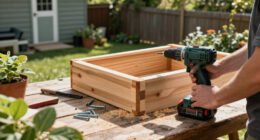
For most small shops, I’d start with the DEWALT DW735X: its two feed speeds and three-knife cutterhead make it a versatile choice for both stock removal and smoother finishing passes. The JET 13-Inch Helical Cutterhead stands out for buyers who prioritize cutterhead design, while the WEN PL1252 offers a simpler route for occasional dimensioning. The main tradeoffs are cutterhead quality, board capacity, feed control, noise, and the room needed for dust collection and long workpieces. More blades or a helical head can improve finish and maintenance options, but they do not remove the need for careful setup and sharp cutters. Continue reading for my full comparison of 15 benchtop wood planers and guidance on matching one to your shop.

Get business pricing on tools and workshop supplies
- Business-only prices and quantity discounts
- Tax-exempt purchasing
- Multiple users, one account, clear invoices
Complete the kit



Key Takeaways
- Feed speed is a meaningful differentiator: the DEWALT DW735X and DW735 offer two speeds, giving buyers more control over the balance between material removal and finish quality.
- Cutterhead styles split the field: the lineup includes two-knife, three-knife, HSS-blade, and spiral or helical designs, each with different maintenance needs and finish expectations.
- 13-inch capacity is common, not a guarantee of shop fit: models with foldable stands may suit tight spaces, but long boards still need clear infeed and outfeed support.
- Premium features only pay off when they match your work: a helical cutterhead or extra feed-speed control matters more for frequent use and varied stock than for occasional rough dimensioning.
- Similar model names can hide meaningful differences: compare the exact cutterhead, blade count, speed settings, and included accessories rather than choosing by brand or width alone.
| JET JWP-13BTK 13-Inch Benchtop 3-Knife Planer |  | Best for Space-Conscious Shops | Planing capacity: 13 inches | Motor power: 2 HP | Input: 120 V, 20 A | VIEW LATEST PRICE | See Our Full Breakdown |
| VEVOR 13-Inch Two-Blade Benchtop Thickness Planer |  | Best for Long-Stock Support | Maximum workpiece width: 13 inches | Maximum workpiece thickness: 6 inches | Motor: 2000 W, 15 A | VIEW LATEST PRICE | See Our Full Breakdown |
| CRAFTSMAN 12.25-Inch Benchtop Thickness Planer, 15 Amp, Two-Knife (CMEW320) |  | Best for Reversible-Knife Value | Model: CMEW320 | Cutting width: 12.25 inches | Motor: 15 A | VIEW LATEST PRICE | See Our Full Breakdown |
| DEWALT DW735X 13-Inch Two-Speed Thickness Planer |  | Best for Feed-Rate Control | Cutting width: 13 inches | Motor: 15 A | Input: 120 V, corded electric | VIEW LATEST PRICE | See Our Full Breakdown |
| WEN PL1252 15-Amp 12.5-Inch Two-Blade Benchtop Thickness Planer |  | Best for Practical Everyday Stock | Cutting width: 12.5 inches | Maximum board thickness: 6 inches | Motor: 15 A | VIEW LATEST PRICE | See Our Full Breakdown |
| VEVOR 13-Inch Thickness Planer with Foldable Stand and Dust Exhaust |  | Best for a Ready-to-Set-Up Workstation | Motor: 15 A, 1800 W | Maximum cutting width: 13 in (330 mm) | Cutting thickness: 0.2–6.3 in (6–160 mm) | VIEW LATEST PRICE | See Our Full Breakdown |
| VEVOR 13-Inch Spiral Benchtop Thickness Planer |  | Best for a Long, Stable Worktable | Model: M1B-LS-3301 | Motor: 2000 W, 15 A, 110 V | Planing width: 13 in | VIEW LATEST PRICE | See Our Full Breakdown |
| WOODSTARTER 13-Inch Benchtop Wood Planer with 3 HSS Blades |  | Best for Multi-Hose Dust Setups | Model: TP20K | Motor: 2000 W | Motor speed: 10,000 RPM | VIEW LATEST PRICE | See Our Full Breakdown |
| DEWALT DW734 12-1/2-Inch Benchtop Planer, 15-Amp, 3-Knife Cutter Head |  | Best for a Fine Finish with Reversible Knives | Motor: 15 A | Motor speed: 20,000 RPM | Cutter head speed: 10,000 RPM | VIEW LATEST PRICE | See Our Full Breakdown |
| WEN PL1326 15-Amp 13-Inch Spiral Benchtop Thickness Planer |  | Best Spiral-Cutterhead All-Rounder | Motor: 15 A | Maximum rotational speed: 10,000 RPM | Feed rate: 26 ft/min | VIEW LATEST PRICE | See Our Full Breakdown |
| JET 13-Inch Benchtop Thickness Planer with Helical Cutterhead |  | Best for Quieter, Lower-Maintenance Cutting | Model: JWP-13BTHH | Planing capacity: 13 in. wide x 6 in. thick | Cutterhead: Helical, 30 four-sided carbide inserts | VIEW LATEST PRICE | See Our Full Breakdown |
| VEVOR 13-Inch Two-Speed Three-Blade Benchtop Thickness Planer |  | Best for Adjustable Feed Pace | Maximum board capacity: 13 in. wide x 6 in. thick | Table length with extensions: 35 in. | Cutterhead: Three-knife quick-change solid steel, hardened to HRC 55–60 | VIEW LATEST PRICE | See Our Full Breakdown |
| DEWALT DW735 13-Inch Two-Speed Thickness Planer with Three-Knife Cutterhead |  | Best for Finish Control and Chip Ejection | Model: DW735 | Cutting width and depth capacity: 13 in. wide x 6 in. deep | Motor: 15 A, corded | VIEW LATEST PRICE | See Our Full Breakdown |
| WOODERS 13-Inch Benchtop Thickness Planer with 2000W Motor and 4 HSS Blades |  | Best for Taller Stock | Model: PL13-15AB | Maximum capacity: 13 in. wide x 6.3 in. high | Minimum height: 1/4 in. | VIEW LATEST PRICE | See Our Full Breakdown |
| VEVOR 13-Inch Two-Blade Benchtop Thickness Planer |  | Best for Straightforward Single-Speed Planing | Model: M1B-LS-3301 | Cutting capacity: 13 in. wide x 6 in. high | Worktable length: 28.2 in. | VIEW LATEST PRICE | See Our Full Breakdown |
| benchtop wood planer | Motor | Cutterhead |
|---|---|---|
| JET JWP-13BTK 13-Inch Benchtop | — | 3 knives |
| VEVOR 13-Inch Two-Blade Bencht | 2000 W, 15 A | Two-blade, quick-change solid steel |
| CRAFTSMAN 12.25-Inch Benchtop | 15 A | Solid steel, two-knife, quick-change |
| DEWALT DW735X 13-Inch Two-Spee | 15 A | Three knives |
| WEN PL1252 15-Amp 12.5-Inch Tw | 15 A | — |
| VEVOR 13-Inch Thickness Planer | 15 A, 1800 W | 2 HSS double-cutter blades |
| VEVOR 13-Inch Spiral Benchtop | 2000 W, 15 A, 110 V | Spiral-style with 24 alloy blade inserts |
| WOODSTARTER 13-Inch Benchtop W | 2000 W | — |
| DEWALT DW734 12-1/2-Inch Bench | 15 A | Three knives |
| WEN PL1326 15-Amp 13-Inch Spir | 15 A | Spiral, with 26 staggered and rotatable HSS blades |
| JET 13-Inch Benchtop Thickness | 2 HP, 15 A, 120 V | Helical, 30 four-sided carbide inserts |
| VEVOR 13-Inch Two-Speed Three- | 2000 W, 15 A | Three-knife quick-change solid steel, hardened to HRC 55–60 |
| DEWALT DW735 13-Inch Two-Speed | 15 A, corded | Three-knife |
| WOODERS 13-Inch Benchtop Thick | 2000 W, 15 A | — |
| VEVOR 13-Inch Two-Blade Bencht | 1800 W, 15 A | — |
More Details on Our Top Picks
JET JWP-13BTK 13-Inch Benchtop 3-Knife Planer
The JET JWP-13BTK pairs a full 13-inch capacity with folding tables and vertical storage, making it a strong fit when shop floor space is limited but narrow-planer capacity would be a frustration. Its three-knife cutterhead and 2 HP motor are aimed at steady thicknessing, though the listed 0.13-inch maximum cut per pass means heavy stock removal calls for multiple passes. Compared with the DEWALT DW735X, the JET offers a more storage-friendly format and a longer stated warranty, while the DEWALT adds two feed speeds and fan-assisted chip ejection. The JET’s dual-size dust port also gives buyers flexibility with existing hoses. Choose it for capacity and compact storage, not for frequent relocation or aggressive single-pass cuts.
Pros:- 13-inch capacity accommodates wider boards in a benchtop planer.
- Folding tables and vertical storage help reclaim shop space.
- Three-knife cutterhead and 2 HP motor support efficient thicknessing.
- Dust port accepts both 2.5-inch and 4-inch hoses.
Cons:- Maximum listed cutting depth of 0.13 inches can mean extra passes on rough stock.
- Corded 120 V, 20 A operation requires a suitable power connection.
- Storage-friendly design does not make it a cordless or effortless-to-move planer.
Best for: Woodworkers with limited shop space who need to plane boards up to 13 inches wide and can store the machine vertically between projects.
Not ideal for: Users who need to remove substantial material in each pass or regularly move a planer around the shop; it is corded, and its listed cut depth is 0.13 inches.
- Planing capacity:13 inches
- Motor power:2 HP
- Input:120 V, 20 A
- Cutterhead:3 knives
- Cutterhead speed:9,500 RPM
- Cutting depth:0.13 inches
- Dust port:Compatible with 2.5-inch and 4-inch hoses
- Construction and storage:Four-post construction, cast aluminum base, vertical storage capability
- Warranty:5 years
Our verdict“Choose the JET if you need 13-inch capacity with space-saving storage, but favor the DEWALT DW735X if variable feed speed matters more.”
VEVOR 13-Inch Two-Blade Benchtop Thickness Planer
The VEVOR 13-Inch Two-Blade Planer stands out for its cast-iron bed and 35-inch table length with extensions, a useful combination when feeding longer boards that need steady support. Its two-blade cutterhead is made from solid steel and is specified for a maximum 3 mm cut, while the 13-inch width covers most common furniture stock. Compared with the WEN PL1252, VEVOR offers a longer stated table setup and a 13-inch capacity rather than 12.5 inches; the WEN, however, lists reversible blades and workpiece return rollers. VEVOR’s 2000 W motor and vacuum port suit a workshop with dust extraction, but this is a substantial, corded machine with a 6-inch maximum workpiece thickness. It makes more sense for a fixed setup than frequent transport.
Pros:- 13-inch maximum width handles broad workpieces.
- Cast-iron bed and 35-inch table length with extensions support longer stock.
- Solid-steel, quick-change two-blade cutterhead.
- Vacuum port allows connection to dust collection.
Cons:- Maximum workpiece thickness is 6 inches.
- Corded 110 V operation limits placement to a suitable outlet.
- A two-blade head is a simpler arrangement than the three-knife cutterheads on the JET JWP-13BTK and DEWALT DW735X.
Best for: Woodworkers who regularly thickness long boards and have a stable bench, 110 V power, and a vacuum system available.
Not ideal for: Mobile hobbyists or buyers working with stock thicker than 6 inches; its corded setup and fixed benchtop format are less suited to frequent moves.
- Maximum workpiece width:13 inches
- Maximum workpiece thickness:6 inches
- Motor:2000 W, 15 A
- Input voltage:110 V
- Cutterhead:Two-blade, quick-change solid steel
- Maximum rotational speed:23,500 RPM
- Cutting depth:3 mm
- Table length with extensions:35 inches
- Bed material:Cast iron
Our verdict“Pick this VEVOR for supported feeding of long boards and 13-inch capacity, but compare the WEN PL1252 if return rollers and reversible blades better match your workflow.”
CRAFTSMAN 12.25-Inch Benchtop Thickness Planer, 15 Amp, Two-Knife (CMEW320)
The CRAFTSMAN CMEW320 is a practical pick for buyers who want reversible, double-edged knives and a solid-steel cutterhead without stepping up to a 13-inch machine. Its 12.25-inch cutting width is narrower than the JET JWP-13BTK and VEVOR 13-Inch Two-Blade Planer, so wider boards may need a different tool or a narrower cut. The 15 A motor, 8,000 RPM cutterhead, and stated 16,000 cuts per minute provide a clear specification base for routine thicknessing, while the vacuum port supports dust collection. Unlike the DEWALT DW735X, this CRAFTSMAN has no stated dual-feed-speed system or three-knife head. Its appeal is a straightforward two-knife setup with reversible edges; the tradeoff is less width and a 0.13-inch maximum cut per pass.
Pros:- Reversible, double-edged knives offer another usable cutting edge.
- Solid-steel, quick-change two-knife cutterhead.
- 15 A motor and stated 16,000 cuts per minute support regular thicknessing work.
- Vacuum port provides a dust-collection connection.
Cons:- 12.25-inch cutting width is narrower than the 13-inch JET, VEVOR, and DEWALT options.
- Maximum listed cutting depth is 0.13 inches per pass.
- Lacks the two feed-rate choices listed for the DEWALT DW735X.
Best for: Hobbyist furniture makers who mostly work with boards under 12.25 inches wide and want reversible knives for continued use before replacement.
Not ideal for: Woodworkers who routinely plane full-width 13-inch stock or want selectable feed speeds and a three-knife cutterhead.
- Model:CMEW320
- Cutting width:12.25 inches
- Motor:15 A
- Input:120 V, corded electric
- Cutterhead:Solid steel, two-knife, quick-change
- Knife material and design:High-carbon steel, double-edged and reversible
- Cutterhead speed:8,000 RPM
- Cuts per minute:16,000
- Warranty:3-year limited warranty
Our verdict“Choose the CRAFTSMAN for reversible knives and routine work on narrower boards, but step up to a 13-inch model if your stock often exceeds its capacity.”
DEWALT DW735X 13-Inch Two-Speed Thickness Planer
The DEWALT DW735X earns its place for buyers who want more control over the finish-versus-throughput tradeoff: its gearbox offers 96 or 179 cuts per inch, letting the operator choose a finer feed setting or move stock through more quickly. The three-knife head, included extra knives, and fan-assisted chip ejection make it a more fully equipped package than the CRAFTSMAN CMEW320, which has a narrower 12.25-inch capacity and no stated two-speed feed. Compared with the space-conscious JET JWP-13BTK, the DEWALT is heavier at 102 pounds and lacks the listed vertical-storage feature, but it supplies two feed rates and an automatic carriage lock. It needs a dedicated spot and dust handling; its weight is a real drawback if the planer must be moved after each session.
Pros:- Two feed rates—96 or 179 cuts per inch—give users a choice between finish and pace.
- Three-knife cutterhead includes an extra set of knives.
- Fan-assisted chip ejection helps clear chips from the machine.
- Automatic carriage lock helps limit movement associated with snipe.
Cons:- At 102 pounds, it is difficult to move often.
- 13-inch cutting width sets a firm limit on board width.
- Corded 120 V operation requires a suitable power location.
Best for: Dedicated-shop woodworkers who plane a mix of stock and want two feed settings, included spare knives, and built-in chip ejection.
Not ideal for: Small-shop users who need to carry or store the planer frequently, or anyone who needs to plane boards wider than 13 inches.
- Cutting width:13 inches
- Motor:15 A
- Input:120 V, corded electric
- Cutterhead:Three knives
- Feed rates:96 or 179 cuts per inch
- Cutterhead speed:10,000 RPM
- Cutting depth:0.13 inches
- Weight:102 pounds
- Included components:Infeed and outfeed tables, extra knives, dust hose adapter, dust-ejection chute
Our verdict“Choose the DW735X for feed-rate flexibility and included accessories in a fixed shop, but pick the JET JWP-13BTK if compact storage matters more.”
WEN PL1252 15-Amp 12.5-Inch Two-Blade Benchtop Thickness Planer
The WEN PL1252 covers common small-shop stock sizes with a 12.5-inch width, a 6-inch maximum board thickness, and adjustable infeed and outfeed tables. Its workpiece return rollers can help keep a solo operator’s workflow moving by holding a planed board within reach. The two reversible SK5 blades and cast-iron base give it a straightforward setup, while the 2-inch dust port calls for a compatible collection connection. Compared with the VEVOR 13-Inch Two-Blade Planer, the WEN gives up half an inch of width and has a shorter listed table arrangement, but adds return rollers and a stated 26-feet-per-minute feed rate. The 55.6-pound body is more manageable than the 102-pound DEWALT DW735X, though it is still not light for repeated carrying. Its 1/8-inch maximum pass depth also favors gradual stock removal.
Pros:- Handles boards up to 12.5 inches wide and 6 inches thick.
- Workpiece return rollers support a convenient one-person workflow.
- Adjustable infeed and outfeed tables help support stock.
- Two reversible 12.5-inch SK5 blades are included.
Cons:- Maximum depth per pass is 1/8 inch, so heavy stock removal takes multiple passes.
- At 55.6 pounds, it remains a substantial load to carry.
- The 2-inch dust port may not match larger dust-collection hose setups without an adapter.
Best for: Home-shop woodworkers processing boards up to 12.5 inches wide who value return rollers, adjustable tables, and reversible blades.
Not ideal for: Buyers who regularly work with boards wider than 12.5 inches, need a lighter machine for frequent carrying, or want to remove more than 1/8 inch per pass.
- Cutting width:12.5 inches
- Maximum board thickness:6 inches
- Motor:15 A
- Maximum speed:20,000 RPM
- Maximum depth per pass:1/8 inch
- Feed rate:26 feet per minute
- Blades:Two reversible 12.5-inch SK5 blades
- Dust port:2 inches
- Weight:55.6 pounds
Our verdict“Pick the WEN PL1252 for everyday boards and helpful return rollers, but choose the VEVOR if you need a full 13-inch width.”
VEVOR 13-Inch Thickness Planer with Foldable Stand and Dust Exhaust
The foldable stand and extension plates give this VEVOR an advantage for woodworkers who need a planer setup that can be packed away between projects. Its 13-inch capacity matches the WEN PL1326, while the 15-amp motor and two HSS double-cutter blades make it a more straightforward cutterhead design than that model’s spiral head with 26 inserts. Automatic feed and return rollers reduce the effort of guiding stock, and the adjustable tables help support boards as they enter and leave.
The tradeoff is that the dust setup depends on your shop: the exhaust can connect to a collector, but the included cover is not a substitute for dust collection. Compared with the WOODSTARTER TP20K, this model’s supplied stand is a practical setup advantage, but it has fewer blades and less detailed feed-rate information. Choose it for flexible placement, not a permanently installed, dust-managed station.
Pros:- 13-inch cutting width accommodates a broad range of common boards.
- Included detachable foldable stand and extension plates support a stowable setup.
- Automatic feeding and return rollers help move stock through the machine.
- Dust exhaust can connect to a collector or take the included dust cover.
Cons:- The dust exhaust needs a compatible collector for active dust removal.
- Two-blade cutterhead is a simpler setup than the spiral heads on the WEN PL1326 and VEVOR M1B-LS-3301.
- Still requires a suitable workspace for operation despite the foldable stand.
Best for: Woodworkers who need a 13-inch planer that can be mounted on its included foldable stand and stored compactly between shop sessions.
Not ideal for: Shops without a suitable benchtop or dust collector, or buyers who want a spiral cutterhead with many replaceable inserts.
- Motor:15 A, 1800 W
- Maximum cutting width:13 in (330 mm)
- Cutting thickness:0.2–6.3 in (6–160 mm)
- Blade speed:8000 rpm
- Feeding speed:236 in/min (6 m/min)
- Cutterhead:2 HSS double-cutter blades
- Dust exhaust interface:1.8 in (45 mm) inner diameter; 2 in (50 mm) outer diameter
- Safety features:Power-off electromagnetic switch and over-current protection
Our verdict“Choose this VEVOR if a foldable stand and broad board capacity matter more than a spiral cutterhead or a fully specified feed system.”
VEVOR 13-Inch Spiral Benchtop Thickness Planer
The 28.2-inch worktable and dual-roller feed system make this VEVOR a sensible pick for buyers who regularly plane longer or less cooperative boards. Its 24-insert spiral cutterhead differs from the WOODSTARTER TP20K’s three HSS knives: the many small cutting edges are intended to smooth hard and soft wood, while the WOODSTARTER offers a conventional knife arrangement. Dust-hose compatibility with both 2-inch and 4-inch connections also gives this model more flexibility than the VEVOR 13-Inch Thickness Planer with Foldable Stand.
The compromise is a single-speed feed and 6-inch maximum workpiece height, so it is less adaptable for stock outside that envelope. The stated 1/8-inch adjustment increments provide a simple depth-control approach, but buyers wanting variable-speed control should look elsewhere. This is the lineup’s more workpiece-support-focused VEVOR, not the one to pick for compact storage or adjustable operating speed.
Pros:- Long 28.2-inch worktable supports boards through the cutting path.
- Spiral cutterhead uses 24 alloy blade inserts.
- Dual rollers are designed to stabilize feeding and reduce vibration.
- Dust system accepts 2-inch and 4-inch hoses.
Cons:- Single-speed operation does not let the user adjust feed speed for different work.
- Maximum workpiece height is limited to 6 inches.
- Unlike the VEVOR model with a foldable stand, it has no stated included stand for compact storage.
Best for: Small-shop woodworkers who often feed longer boards and want a spiral cutterhead with broad dust-hose compatibility.
Not ideal for: Buyers who need to plane stock thicker than 6 inches, vary feed speed, or store the machine in a very limited footprint.
- Model:M1B-LS-3301
- Motor:2000 W, 15 A, 110 V
- Planing width:13 in
- Maximum workpiece height:6 in
- Worktable length:28.2 in
- Cutterhead:Spiral-style with 24 alloy blade inserts
- Cutting depth:0.13 in
- Dust hose compatibility:2 in and 4 in
Our verdict“Pick this VEVOR if board support and spiral cutting matter more than variable speed or a folding stand.”
WOODSTARTER 13-Inch Benchtop Wood Planer with 3 HSS Blades
The three HSS blades and 29-inch worktable give the WOODSTARTER TP20K a conventional cutterhead and useful stock support without narrowing the choice to one dust-hose size. Its port accepts 1-2/5-, 2-1/2-, and 4-inch connections, a wider stated range than either VEVOR planer here. That makes it a practical fit for a shop that already has a particular vacuum or extraction hose. The overload and overheat protection, plus a built-in depth stop, add useful controls for repeat jobs.
Compared with the WEN PL1326, the WOODSTARTER uses three blades rather than 26 spiral inserts, and its stated feed rate is slower at 21 feet per minute versus WEN’s 26. The tradeoff is conventional blade upkeep: the knives will need maintenance or replacement over time. Its maximum stock thickness is 6-3/16 inches, so buyers should use that figure rather than the slightly higher adjustment range mentioned in the product title.
Pros:- Three HSS blades provide a conventional cutterhead arrangement.
- 29-inch worktable and adjustable infeed and outfeed tables support stock handling.
- Dust port accommodates three stated hose sizes.
- Overload and overheat protection and a built-in depth stop support controlled operation.
Cons:- Three knives require maintenance or replacement as their edges wear.
- Stated 21 ft/min feed rate is slower than the WEN PL1326’s 26 ft/min.
- Maximum stock thickness is 6-3/16 inches, below the title’s 6-1/4-inch adjustment claim.
Best for: Home-shop woodworkers who need a 13-inch planer, a conventional three-blade head, and dust-port options for different vacuum hoses.
Not ideal for: Buyers who prioritize a spiral cutterhead, faster stated feed than the WEN PL1326, or stock thicker than 6-3/16 inches.
- Model:TP20K
- Motor:2000 W
- Motor speed:10,000 RPM
- Working width:13 in
- Maximum stock thickness:6-3/16 in
- Feed rate:21 ft/min
- Blades:3 HSS blades
- Cutting depth per pass:Up to 1/8 in
- Dust port sizes:1-2/5 in, 2-1/2 in, and 4 in
Our verdict“Choose the WOODSTARTER if flexible dust-hose fit and a supported three-blade setup outweigh the appeal of a spiral cutterhead.”
DEWALT DW734 12-1/2-Inch Benchtop Planer, 15-Amp, 3-Knife Cutter Head
The DW734 earns its place for buyers who value a three-knife cutterhead rated at 96 cuts per inch and a long, supported feed path. Its 33.5 inches of table support is more than the WOODSTARTER TP20K’s 29-inch table, giving boards more room as they move through the planer. The reversible disposable knives also offer a straightforward way to use the other edge before replacing a worn knife, while the turret depth stop helps repeat common thickness settings.
Its main compromise is capacity: at 12.5 inches wide, it cannot handle the full-width boards accepted by the 13-inch WEN PL1326 or either 13-inch VEVOR. The knives are disposable rather than a sharpening-focused system, so replacement is part of upkeep. This DEWALT suits finish-conscious users who can work within its narrower capacity; buyers planning around wider stock should choose a 13-inch model instead.
Pros:- Three-knife cutterhead is specified at 96 cuts per inch.
- Reversible disposable knives provide a second usable edge before replacement.
- 33.5 inches of table support aids longer stock handling.
- Turret depth stop supports repeat thickness settings.
Cons:- 12.5-inch cutting width is narrower than the 13-inch WEN PL1326 and VEVOR options.
- Disposable knives must be replaced when both edges are worn.
- The included dust hood is not a complete dust-collection system.
Best for: Woodworkers who prioritize a fine planed surface, long table support, and repeatable depth settings over a full 13-inch capacity.
Not ideal for: Buyers who regularly plane boards wider than 12.5 inches or prefer a cutterhead system with many rotatable inserts.
- Motor:15 A
- Motor speed:20,000 RPM
- Cutter head speed:10,000 RPM
- Cutting width:12.5 in
- Cutting depth:0.13 in
- Cutterhead:Three knives
- Cuts per inch:96
- Table support length:33.5 in
- Knife type:Disposable, reversible
Our verdict“Choose the DW734 for its fine-cut specification and extended table support if your boards fit within its 12.5-inch width.”
WEN PL1326 15-Amp 13-Inch Spiral Benchtop Thickness Planer
The WEN PL1326 stands out as a balanced 13-inch spiral-cutterhead planer: its 26 staggered, rotatable HSS blades are designed to smooth both hard and soft wood, while the stated 26-feet-per-minute feed rate is quicker than the WOODSTARTER TP20K’s 21 feet per minute. An onboard material-removal gauge and depth stop help users keep track of cuts and repeat a preferred thickness, while adjustable infeed and outfeed tables support stock at the ends of the cut.
It handles boards up to 6 inches thick, but material removal is capped at 1/8 inch per pass, so heavily dimensioned stock may take several passes. Unlike the VEVOR 13-Inch Thickness Planer with Foldable Stand, the WEN has no included stand listed and needs a suitable mounting surface. This is a strong fit for a fixed shop station seeking a spiral head and useful depth controls, rather than a planer chosen for portability or deep single-pass removal.
Pros:- Spiral cutterhead has 26 staggered, rotatable HSS blades.
- 26 ft/min feed rate is faster than the WOODSTARTER TP20K’s stated 21 ft/min.
- Material-removal gauge and depth stop help guide repeat cuts.
- 13-inch width and 6-inch thickness capacity suit a broad range of shop stock.
Cons:- Maximum material removal is limited to 1/8 inch per pass.
- Requires a suitable work surface or stand for mounting.
- No variable feed-rate setting is listed.
Best for: Small-shop woodworkers who want a 13-inch spiral cutterhead, repeatable depth controls, and a faster stated feed rate than the WOODSTARTER TP20K.
Not ideal for: Buyers who need a portable stand, work with stock thicker than 6 inches, or expect to remove more than 1/8 inch in one pass.
- Motor:15 A
- Maximum rotational speed:10,000 RPM
- Feed rate:26 ft/min
- Maximum board width:13 in
- Maximum board thickness:6 in
- Cutterhead:Spiral, with 26 staggered and rotatable HSS blades
- Maximum material removal per pass:1/8 in
- Base:Heavy-duty cast iron
Our verdict“Pick the WEN PL1326 for a 13-inch spiral head and useful depth controls if you have a stable mounting surface and can work in modest passes.”
JET 13-Inch Benchtop Thickness Planer with Helical Cutterhead
The JET JWP-13BTHH is the clearest choice here for woodworkers who want a helical cutterhead rather than conventional knives. Its 30 four-sided carbide inserts can be rotated to expose fresh edges, while the cutterhead is designed to produce a smoother, quieter cut than a standard three-knife setup such as the DEWALT DW735. That combination suits a shared workshop or repeat work in solid lumber, though it does not make the planer suitable for plywood, painted stock, reclaimed lumber, or end grain. Its 13-inch capacity, folding tables, preset depth stop, and two dust-port sizes make it practical in a space-conscious shop. The tradeoff is a 1/16-inch maximum cut at full width, plus a 550 CFM minimum recommended dust collector. At 66 pounds, it is also not a casual carry-in tool.
Pros:- Helical cutterhead uses 30 four-sided carbide inserts, with five spare inserts included.
- Designed for smoother, quieter cutting than conventional knife arrangements.
- Folding infeed and outfeed tables help support boards and reduce storage footprint.
- Preset depth stop and dual-size dust port add useful setup and collection options.
Cons:- Restricted to solid wood; unsuitable for plywood, particleboard, painted or reclaimed lumber, and end grain.
- Maximum cut per pass drops to 1/16 inch across the full 13-inch width.
- At 66 pounds, unboxing and repositioning can call for a second person; dust collection is recommended at 550 CFM minimum.
Best for: Woodworkers who regularly plane solid boards and want a quieter cutterhead with rotatable carbide edges and folding support tables.
Not ideal for: Shops that plane plywood, painted or reclaimed lumber, or end grain, and users without dust collection capable of the recommended airflow.
- Model:JWP-13BTHH
- Planing capacity:13 in. wide x 6 in. thick
- Cutterhead:Helical, 30 four-sided carbide inserts
- Motor:2 HP, 15 A, 120 V
- Cutterhead speed:9,500 RPM
- Feed rate:24.6 FPM
- Maximum cut per pass:1/8 in. up to 6 in. wide; 1/16 in. at full width
- Dust port:4 in. and 2-1/2 in.; 550 CFM minimum recommended
- Weight and warranty:66 lb; 5-year limited warranty
Our verdict“Choose the JET over the DEWALT DW735 if quieter solid-wood planing and rotatable carbide edges matter more than a deeper full-width cut.”
VEVOR 13-Inch Two-Speed Three-Blade Benchtop Thickness Planer
The VEVOR two-speed three-blade planer makes the most sense for buyers who want to switch between faster stock removal and a slower feed for finishing without moving to a different machine. Its 15 and 24 ft/min feed settings give it a practical distinction from the single-speed VEVOR M1B-LS-3301, while 35 inches of table support helps steady longer boards. The 13-by-6-inch capacity is on par with the DEWALT DW735, and the hardened three-knife steel cutterhead is aimed at both hard and soft wood. Still, the supplied data does not give a cuts-per-inch figure or a knife-change system detail comparable to the DW735’s two stated finish settings. A vacuum port offers a collection connection, but no airflow recommendation is specified. This is a corded, 110-volt machine, so it suits a fixed shop more than a mobile setup.
Pros:- Two feed speeds let users choose between faster planing and a slower finishing pace.
- 35 inches of total table support helps stabilize longer boards.
- 13-inch width and 6-inch thickness capacity match common benchtop planer needs.
- Vacuum port and 20 A over-current protection are included.
Cons:- Three-knife cutterhead lacks the helical insert design of the JET JWP-13BTHH.
- No dust-collector airflow requirement or cuts-per-inch figures are supplied.
- Corded 110 V operation and 6-inch maximum thickness limit where and what it can plane.
Best for: Home-shop woodworkers who want selectable feed speed for dimensioning and finishing, plus extended table support for longer boards.
Not ideal for: Buyers seeking a helical cutterhead, a stated fine-finish cuts-per-inch setting, or a planer they can use away from a 110 V outlet.
- Maximum board capacity:13 in. wide x 6 in. thick
- Table length with extensions:35 in.
- Cutterhead:Three-knife quick-change solid steel, hardened to HRC 55–60
- Feed speeds:15 ft/min and 24 ft/min
- Motor:2000 W, 15 A
- Input voltage:110 V AC
- Maximum rotational speed:23,500 rpm
- Cutting depth:0.13 in.
- Dust collection and protection:Vacuum port; 20 A over-current protection
Our verdict“Pick this VEVOR over the single-speed M1B-LS-3301 if switching feed pace and longer table support are your main priorities.”
DEWALT DW735 13-Inch Two-Speed Thickness Planer with Three-Knife Cutterhead
The DEWALT DW735 stands out for buyers who want a defined choice between production speed and a finer surface finish. Its gearbox offers 96 or 179 cuts per inch, a more specific finish-control measure than the VEVOR two-speed model’s listed feed rates. Fan-assisted chip ejection also pushes debris toward a chute or hose connection, which is useful when a planer is generating chips faster than a basic vacuum port can manage. The three-knife head and 13-inch width make it a strong general-purpose option, while the JET JWP-13BTHH is the better fit for someone prioritizing quieter helical cutting and carbide inserts. The DW735’s maximum cut remains 1/8 inch, so deep passes are not its strength. The supplied weight figures conflict, and buyers should plan for a substantial machine rather than assume it will be easy to move.
Pros:- Two feed settings provide 96 or 179 cuts per inch for different surface-finish needs.
- Fan-assisted chip ejection directs debris to a chute or hose connection.
- 13-inch width and 6-inch depth capacity handle a broad range of common stock.
- Automatic carriage lock is designed to help reduce snipe.
Cons:- Maximum cut depth is limited to 1/8 inch per pass.
- Three-knife cutterhead does not offer the quieter cutting approach of the JET’s helical design.
- Listed weight is inconsistent, making transport expectations less clear.
Best for: Furniture makers and serious home-shop users who want two stated finish settings and active chip ejection from a 13-inch planer.
Not ideal for: Buyers who prioritize a helical cutterhead, a lighter machine, or a deeper-than-1/8-inch cut per pass.
- Model:DW735
- Cutting width and depth capacity:13 in. wide x 6 in. deep
- Motor:15 A, corded
- Cutterhead:Three-knife
- Feed settings:96 or 179 cuts per inch
- Maximum cut depth:1/8 in.
- Material support:33-1/2 in. infeed and outfeed tables
- Dust management:Fan-assisted chip ejection, dust-hose adapter and dust-ejection chute
- Listed weight:80 or 92 lb. (source figures conflict)
Our verdict“Choose the DW735 over the VEVOR two-speed model if cuts-per-inch options and fan-assisted chip ejection matter more than a specified feed-rate pair.”
WOODERS 13-Inch Benchtop Thickness Planer with 2000W Motor and 4 HSS Blades
The WOODERS PL13-15AB earns a distinct place for buyers whose stock is too tall for the 6-inch capacity shared by the DEWALT DW735 and both VEVOR models here. Its stated 6.3-inch maximum height gives a little extra room, paired with a 13-inch width and 2000 W motor. The four double-edged HSS blades are a conventional alternative to the JET JWP-13BTHH’s carbide-insert helical head: they keep the setup straightforward, but do not offer the same insert-rotation approach. WOODERS also lists an anti-snipe dual-blade system, ergonomic crank, visible indicator, dust collector, and two spare blades. Those additions suit a stationary shop workflow, though the data does not provide feed speed, maximum cut per pass, or a quantified weight. Its heavy-duty frame may be less convenient to relocate, and long boards still need external support.
Pros:- 6.3-inch maximum height exceeds the 6-inch capacity listed for the DEWALT DW735 and VEVOR models.
- Four double-edged HSS blades and two extra blades are included.
- Anti-snipe system and ergonomic crank are designed to support controlled feeding and setup.
- Dust collector is included with the planer.
Cons:- Heavy-duty construction is described as less portable, and no specific weight is provided.
- No feed speed or maximum cut-per-pass figure is listed.
- Conventional HSS blades lack the rotatable carbide inserts and helical arrangement of the JET.
Best for: Woodworkers who need to plane solid stock slightly taller than 6 inches and prefer a conventional HSS-blade setup with included spares.
Not ideal for: Buyers who need a lightweight, frequently moved planer or want detailed feed-rate and per-pass cutting specifications before choosing.
- Model:PL13-15AB
- Maximum capacity:13 in. wide x 6.3 in. high
- Minimum height:1/4 in.
- Motor:2000 W, 15 A
- Cutterhead speed:10,000 RPM
- Blades:4 HSS double-edged blades
- Frame and shaft:Rugged frame; iron blade shaft
- Included components:Dust collector, 2 extra HSS blades, lifting handle and planer
Our verdict“Choose the WOODERS over the 6-inch-capacity DEWALT DW735 if the extra stated height capacity is more useful than detailed feed settings or a helical cutterhead.”
VEVOR 13-Inch Two-Blade Benchtop Thickness Planer
The VEVOR M1B-LS-3301 is the simpler match for a shop that wants a 13-inch planer with a familiar two-blade HSS head and no feed-speed choices to manage. Its dual-roller feed system is intended to move boards steadily, while the 28.2-inch worktable gives more support than a bare compact bed. Compared with the other VEVOR in this batch, it has one speed rather than selectable 15 and 24 ft/min feeds; that means less control over the pace of a finishing pass, but a less involved operating setup. Its 1800 W motor and 1/8-inch adjustment increments cover routine dimensioning, and compatibility with 2-inch and 4-inch hoses gives flexible dust hookup. The aluminum base and 57.8-pound weight make it a substantial bench tool, not a grab-and-go planer. Buyers wanting a stated fine-finish setting should look at the DEWALT DW735 instead.
Pros:- Dual rollers are designed to feed stock steadily and limit alignment issues.
- 28.2-inch worktable supports boards better than a short, unsupported bed.
- Accepts both 2-inch and 4-inch dust hoses.
- Two HSS blades and 1/8-inch cutting-depth adjustment suit straightforward dimensioning.
Cons:- Single-speed operation offers less finishing control than the VEVOR two-speed model or DEWALT DW735.
- At 57.8 pounds, it may be awkward to move between work areas.
- Maximum capacity is 6 inches thick, with no listed slower feed setting for finish passes.
Best for: DIY woodworkers who want a basic 13-inch planer with dual-roller feeding and flexible dust-hose connections for routine board sizing.
Not ideal for: Users who want selectable feed speeds, a stated cuts-per-inch finish setting, or a lightweight planer they can move often.
- Model:M1B-LS-3301
- Cutting capacity:13 in. wide x 6 in. high
- Worktable length:28.2 in.
- Blades:2 HSS blades
- Motor:1800 W, 15 A
- Power:Corded electric, 110 V
- Maximum rotational speed:23,500 rpm
- Feed system and speed:Dual rollers; 1 speed
- Dust hose compatibility and weight:2 in. and 4 in.; 57.8 lb
Our verdict“Pick this VEVOR over the two-speed VEVOR if straightforward single-speed operation matters more than adjusting feed pace for finish work.”

How We Picked
I compared these planers on the features that change day-to-day results: working width, cutterhead and blade arrangement, feed-speed options, motor and power details where specified, and practical features such as dust exhaust or a stand. I also weighed maintenance demands, the likely finish tradeoff between cutter designs, and whether a feature appears useful for routine shop work or mainly adds complexity.
The ranking favors capable, versatile machines first, then options with a clear advantage for a specific buyer. That puts the DEWALT DW735X near the top for its two-speed setup and three-knife head, while helical and spiral models earn attention for buyers focused on cutterhead performance. Simpler two-blade options can make sense for lighter use, but they rank lower when they offer fewer controls or less differentiation. I treat duplicate and closely related listings as separate only where the stated configuration differs, and recommend checking the exact listing details before purchase.
Factors to Consider When Choosing Benchtop Wood Planers
I’d choose a benchtop planer by starting with the work it must do, then checking whether the shop can support it. Capacity and cutterhead design matter, but workflow, maintenance, and safe handling often decide whether a machine is a good fit.
Match Cutterhead Design to Your Wood and Finish Expectations
A cutterhead’s blade arrangement affects both finish and upkeep, but it should not be treated as a promise of flawless surfaces. Two-knife heads use fewer cutting edges, while three-knife designs add cutting edges across each rotation; spiral or helical heads use multiple small cutters and may let you rotate or replace individual inserts, depending on the model. Before paying for a more advanced head, ask whether your stock includes figured grain, knots, or material that tends to tear out. A sharp, correctly set conventional blade can still produce a useful finish, particularly on straightforward boards. The common mistake is choosing by cutterhead label alone and ignoring setup, feed direction, and final sanding. If you plane only occasional construction lumber, simple maintenance may matter more than a premium cutterhead.
Think Beyond the Advertised Planing Width
A 13-inch capacity tells you the maximum board width the machine can accept, not the size of every board you can process comfortably. Long stock needs stable support before and after the cutterhead, so measure the full working area rather than only the planer’s footprint. Check whether the infeed and outfeed tables fold, whether a stand is included, and where the machine can sit while in use. A compact bench can be a poor match if boards will sag or tip as they pass through. Buyers with limited space should plan a storage position and a separate operating setup before buying. For wide panels or long boards, capacity and support should be evaluated together.
Choose Feed Control for the Work You Actually Do
Two-speed models give you another way to balance throughput and surface finish, which can help when one shop handles both rough stock reduction and more careful finishing passes. A single-speed planer can still suit occasional dimensioning when the wood and finish requirements are predictable. Do not assume that slower feed alone solves tear-out; grain direction, blade condition, cut depth, and board stability all matter. Think about how often you process boards in batches, since speed control is more useful when jobs vary than when every pass is similar. A second common mistake is prioritizing motor wattage or amperage without checking the electrical supply and the machine’s other specifications. Match the machine to your circuit and workload, and follow the manufacturer’s guidance on cut depth and feed.
Plan Dust Collection Before the First Cut
Planers produce a large volume of chips, and the collection setup affects both cleanup and how comfortably you can work. A dust exhaust port is useful only if it connects to a collector or extraction system with suitable capacity and compatible fittings. Check the port size, whether an adapter is needed, and how the hose will route without interfering with stock or the operator. A shop vacuum may handle some setups, but a planer can produce chips faster than a small vacuum can manage. Avoid placing the machine where chips will clog a walkway or collect around motors and moving parts. Dust collection is a workflow and housekeeping decision, not just an accessory choice.
Compare Maintenance and Replacement Parts, Not Just Initial Features
Any planer’s usefulness depends on having a practical way to maintain its cutters and keep the machine adjusted. Before choosing a less familiar model, check whether replacement blades or inserts are clearly identified and how they are installed. Reversible or individually replaceable cutters can reduce the disruption of a damaged edge, while conventional knives may require more attention to alignment and sharpening or replacement. Also look for accessible instructions on blade changes, table care, and feed-roller cleaning. A low-maintenance claim is less helpful if consumables are difficult to identify later. Buyers who plane frequently should give parts support and service documentation more weight than shoppers who expect only occasional use.
Set a Realistic Budget for the Whole Planing Station
The planer is only one part of the setup: support stands, dust collection, extension tables, and safe storage can all affect the final choice. Paying more makes sense when a feature solves a recurring problem, such as varied feed requirements or frequent work with difficult grain. It makes less sense to buy a premium cutterhead if the machine will sit unused for most of the year. Beginners may benefit more from stable support, clear setup instructions, and a straightforward blade system than from extra cutting features. Leave room for sharp cutters, measuring tools, and dust control rather than assigning every shop dollar to the machine. A realistic total setup plan helps prevent a capable planer from becoming awkward to use.
Frequently Asked Questions
Should I choose a two-speed planer over a single-speed model?
I’d favor two speeds if the planer will handle both fast rough dimensioning and slower finishing passes, or if different projects regularly call for different feed settings. A single-speed model may be a better fit for occasional work with predictable stock and limited setup needs. Feed speed is only one factor in surface quality; cutter sharpness, grain direction, cut depth, and board support matter too. Compare the exact machine specifications and instructions rather than assuming all two-speed models behave alike. If you rarely change tasks, simpler controls may be more useful than an extra setting.
Is a spiral or helical cutterhead worth choosing for a small shop?
It can be a strong choice if you plane often, work with figured or tear-out-prone wood, or want a cutter system that may let you rotate or replace individual cutters. The benefit depends on the specific design, cutter availability, and how easy the machine is to maintain. A spiral or helical head does not remove the need to set a sensible cut depth or inspect boards for defects. For occasional rough dimensioning, a conventional knife head may be easier to justify and maintain. I’d check replacement-cutter availability before making the cutterhead the deciding factor.
Will a 13-inch benchtop planer handle wide boards and long lumber?
A 13-inch rating generally describes the maximum board width the planer accepts, but it does not mean every wide board will feed smoothly without support. Measure the board and confirm the machine’s actual capacity and operating instructions. Long stock can sag at the infeed or outfeed, causing uneven results or unsafe handling, so stable support is part of the setup. If your work regularly exceeds the machine’s width, you may need a different process or a larger planer. For occasional wide stock, check whether the board can be safely milled in stages or prepared with another tool.
What should I check before buying a less familiar planer brand?
I’d verify the exact model configuration, especially cutter type, blade count, speed settings, and included stand or dust fittings. Then check whether replacement blades or cutters are easy to identify and whether the manufacturer provides clear setup and maintenance instructions. Confirm the power requirements and dust-port dimensions against your shop equipment. A low purchase cost is less useful if consumables are hard to source or the machine cannot connect cleanly to your dust system. Where details differ between listings, rely on the manufacturer’s specification sheet for the exact model number.
What matters more for a beginner: a premium cutterhead or an easier setup?
For most beginners, I’d prioritize stable support, clear instructions, accessible maintenance, and a dust setup that works with the shop. A premium cutterhead can be appealing, but it will not compensate for poor board handling or incorrect setup. Beginners also benefit from learning to measure stock, make conservative cuts, and check grain direction before feeding a board. If the user expects to plane frequently or work with difficult grain, a more advanced head may be a sensible step up. Otherwise, a straightforward machine leaves more attention for safe technique and basic milling skills.
Conclusion
My best overall pick is the DEWALT DW735X for its two-speed control and three-knife configuration, making it the most adaptable choice across varied shop tasks. For a best value direction, I’d compare the WEN PL1252 and the simpler VEVOR two-blade models against the exact accessories and support included in each listing. The best premium fit is a helical or spiral option such as the JET 13-Inch Helical or WEN PL1326 when cutterhead design is a priority. For beginners, a straightforward two-blade planer is a sensible starting point if its instructions, parts, and dust connections suit the shop. For specific needs, choose a foldable-stand model when storage space is tight, a two-speed planer when workloads vary, or a helical-head model for frequent work with challenging grain. Confirm the exact model configuration and plan the support and dust-collection setup before choosing.
Black Friday Picks

Vitamix 5200 Blender with 64 oz Container, Black
As an affiliate, we earn on qualifying purchases.