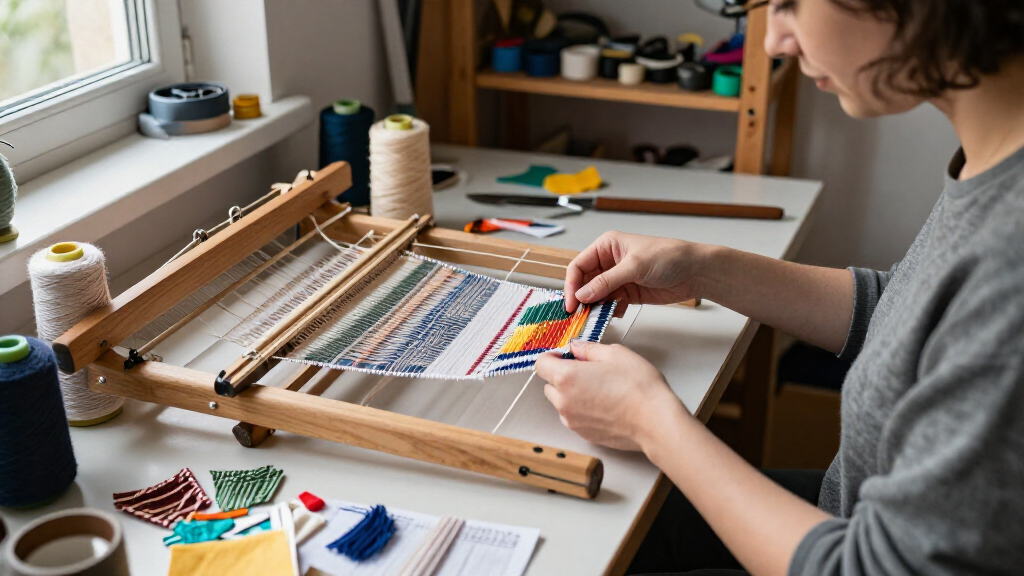
The best textile and fiber art books balance useful instruction with ideas that help readers see cloth, thread, and fiber in new ways. I’d start with The Art of Manipulating Fabric for hands-on fabric techniques, while Textilepedia is a stronger reference for identifying and understanding fabrics. For contemporary art context, Textiles x Art offers a different route than project-led guides. The main tradeoff is whether you want practical exercises, material knowledge, artist inspiration, or historical breadth. Read on for all 15 picks, ranked by how well each serves a distinct kind of textile art reader.

Get business pricing on tools and workshop supplies
- Business-only prices and quantity discounts
- Tax-exempt purchasing
- Multiple users, one account, clear invoices
Complete the kit


Key Takeaways
- The Art of Manipulating Fabric leads for practical technique because its focus is specific and directly useful at the worktable; it is less suited to readers seeking broad art history.
- Textilepedia stands apart as a fabric reference, while project books teach you how to make rather than how to recognize and compare materials.
- Fiber Craft Heritage offers an accessible bridge between historical methods and making through its try-it projects, though readers wanting advanced contemporary practice may outgrow it.
- Textiles x Art and Textiles: The Art of Mankind suit readers seeking context and visual breadth more than step-by-step instruction.
- The lineup’s strongest choices have clear purposes: sculptural work, mindful stitching, fabric manipulation, technique sampling, or artist research. Choosing by purpose matters more than choosing the broadest-sounding title.
| The Textile Artist: Sculptural Textile Art: A Practical Guide to Mixed Media Wire Sculpture |  | Best for Wire Sculpture | Format: Not specified in product data | Pages: Not specified in product data | Subject: Sculptural textile art | VIEW LATEST PRICE | See Our Full Breakdown |
| Dimensional Cloth: Sculpture by Contemporary Textile Artists |  | Best for Contemporary Sculpture Inspiration | Format: Not specified in product data | Pages: Not specified in product data | Subject: Dimensional cloth sculpture | VIEW LATEST PRICE | See Our Full Breakdown |
| The Art of Textile & Fiber Crafts: A Practical Guide to Cloth, Thread, Yarn, Needlework, Construction, Repair, and Handcraft |  | Best for Broad Hands-On Craft Skills | Format: Not specified in product data | Pages: Not specified in product data | Book type: Practical guide | VIEW LATEST PRICE | See Our Full Breakdown |
| Textilepedia: The Complete Fabric Guide |  | Best Fabric Reference | Format: Paperback | Pages: 350 | Subject: Fabric types, properties, and uses | VIEW LATEST PRICE | See Our Full Breakdown |
| Stitch, Fibre, Metal & Mixed Media: Inspiration, Projects & Techniques For Textile Artists |  | Best for Mixed-Media Experimentation | Format: Not specified in product data | Pages: Not specified in product data | Subjects: Stitch, fiber, metal, and mixed media | VIEW LATEST PRICE | See Our Full Breakdown |
| Textiles x Art: How Textiles Are Shaping Contemporary Art |  | Best for Contemporary Art Context | Format: Book | Subject: Textiles in contemporary art | Focus: The role of fabric and fiber in artistic practice | VIEW LATEST PRICE | See Our Full Breakdown |
| Slow Stitch: Mindful and Contemplative Textile Art |  | Best for Mindful Stitching | Format: Book | Subject: Textile art | Primary focus: Slow stitching | VIEW LATEST PRICE | See Our Full Breakdown |
| Textile Portraits: People and Places in Textile Art |  | Best for Figurative Textile Art | Format: Book | Subject: Textile art | Primary focus: People and places | VIEW LATEST PRICE | See Our Full Breakdown |
| Textile Fine Art: Conversations with Artists Creating by Hand |  | Best for Artist Perspectives | Format: Book | Subject: Textile fine art | Stated format: Conversations with artists | VIEW LATEST PRICE | See Our Full Breakdown |
| Reflective Stitch: Time & Place in Textile Art |  | Best for Time-and-Place Themes | Format: Book | Subject: Textile art | Stated themes: Time and place | VIEW LATEST PRICE | See Our Full Breakdown |
| The Art of Manipulating Fabric |  | Best for Fabric Surface Experimentation | Title: The Art of Manipulating Fabric | ASIN: 0801984963 | Subject: Fabric manipulation | VIEW LATEST PRICE | See Our Full Breakdown |
| Abstract Textiles: Color, Shape, and Pattern in Textile Art |  | Best for Abstract Composition | Title: Abstract Textiles: Color, Shape, and Pattern in Textile Art | ASIN: 1849949417 | Subject: Abstract textile art | VIEW LATEST PRICE | See Our Full Breakdown |
| Fiber Craft Heritage: Easy-to-Learn Textile Techniques from the Stone Age to Today, with 52 Try-It Projects |  | Best for Hands-On Historical Learning | Title: Fiber Craft Heritage: Easy-to-Learn Textile Techniques from the Stone Age to Today, with 52 Try-It Projects | ASIN: 0764369628 | Subject: Textile techniques and fiber craft heritage | VIEW LATEST PRICE | See Our Full Breakdown |
| Nalbinding – It’s Not Knitting: Heritage Techniques for the Contemporary Textile Crafter |  | Best for Exploring Nalbinding | Title: Nalbinding – It’s Not Knitting: Heritage Techniques for the Contemporary Textile Crafter | ASIN: 178994306X | Subject: Nalbinding | VIEW LATEST PRICE | See Our Full Breakdown |
| Textiles: The Art of Mankind |  | Best for a Broad Textile Art Survey | Title: Textiles: The Art of Mankind | ASIN: 0500516456 | Subject: Textile art | VIEW LATEST PRICE | See Our Full Breakdown |
| textile and fiber art book | Format | Subject | ASIN |
|---|---|---|---|
| The Textile Artist: Sculptural | Not specified in product data | Sculptural textile art | — |
| Dimensional Cloth: Sculpture b | Not specified in product data | Dimensional cloth sculpture | — |
| The Art of Textile & Fiber Cra | Not specified in product data | — | — |
| Textilepedia: The Complete Fab | Paperback | Fabric types, properties, and uses | — |
| Stitch | Not specified in product data | — | — |
| Textiles x Art: How Textiles A | Book | Textiles in contemporary art | — |
| Slow Stitch: Mindful and Conte | Book | Textile art | 1849942994 |
| Textile Portraits: People and | Book | Textile art | 1849947538 |
| Textile Fine Art: Conversation | Book | Textile fine art | 1529437318 |
| Reflective Stitch: Time & Plac | Book | Textile art | 1849947546 |
| The Art of Manipulating Fabric | Book | Fabric manipulation | 0801984963 |
| Abstract Textiles: Color | Book | Abstract textile art | 1849949417 |
| Fiber Craft Heritage: Easy-to- | Book | Textile techniques and fiber craft heritage | 0764369628 |
| Nalbinding | Book | Nalbinding | 178994306X |
| Textiles: The Art of Mankind | Book | Textile art | 0500516456 |
More Details on Our Top Picks
The Textile Artist: Sculptural Textile Art: A Practical Guide to Mixed Media Wire Sculpture
Wire-led sculptural work gives this guide a focused place in a textile art shelf: it is aimed at makers who want cloth and mixed media to hold three-dimensional form. Compared with Dimensional Cloth, which centers on sculpture by contemporary artists, this title is framed as a practical guide, making it the more technique-oriented choice for someone ready to build their own forms. Its narrow subject is also its limitation: readers seeking a broad survey of fiber processes or fabric selection will get more range from Textilepedia. The available product information identifies wire and mixed media as its focus but gives no details about project count, skill level, or specific techniques. I would choose it for a targeted sculptural practice, while treating it as a supplement rather than a general textile reference.
Pros:- Dedicated focus on sculptural textile art
- Combines wire with mixed media
- Practical-guide positioning suits makers seeking applied instruction
Cons:- Narrow focus offers less coverage of other textile methods
- Available product information does not specify project details or skill level
Best for: Textile artists who want a focused guide to combining wire, fabric, and mixed media in sculptural work
Not ideal for: Readers seeking a broad introduction to textile crafts, fabric types, or a documented set of beginner projects
- Format:Not specified in product data
- Pages:Not specified in product data
- Subject:Sculptural textile art
- Primary material:Wire
- Approach:Mixed media
- Book type:Practical guide
Our verdict“Choose this for a focused entry into wire-based textile sculpture; pick Textilepedia for wider material reference.”
Dimensional Cloth: Sculpture by Contemporary Textile Artists
Contemporary textile sculpture is the center of this book, giving it a different purpose from technique-first guides. Its title points to a collection of artists and sculptural work, so it suits readers looking to study how cloth can occupy space and support an artistic idea. Compared with The Textile Artist: Sculptural Textile Art, which is presented as a practical guide to wire and mixed media, Dimensional Cloth appears better suited to visual research and inspiration than step-by-step making. That distinction matters: makers who need explicit instructions, supply lists, or beginner exercises may find the available product information too limited to establish that this book provides them. With no description or specifications supplied, details such as format, page count, and technique coverage remain unknown. I would place it beside a hands-on manual, not in its place.
Pros:- Centers sculpture made with cloth
- Focuses on contemporary textile artists
- Offers a distinct inspiration-led complement to practical technique books
Cons:- Product data does not confirm whether it includes instructional projects
- Format, page count, and specific techniques are not supplied
Best for: Textile artists and students researching contemporary approaches to cloth-based sculpture
Not ideal for: Beginners who need confirmed step-by-step instructions, materials lists, or specific practice projects
- Format:Not specified in product data
- Pages:Not specified in product data
- Subject:Dimensional cloth sculpture
- Artists covered:Contemporary textile artists
- Primary medium:Cloth
- Instruction details:Not specified in product data
Our verdict“Choose this for contemporary sculpture ideas and visual reference, and pair it with a practical guide for instruction.”
The Art of Textile & Fiber Crafts: A Practical Guide to Cloth, Thread, Yarn, Needlework, Construction, Repair, and Handcraft
Range across materials and hand skills is this guide’s clearest distinction. The description covers cloth, thread, yarn, and needlework, then extends into construction and repair, so it may suit makers who want textile practice to include both creating and maintaining useful objects. That scope is broader than The Textile Artist: Sculptural Textile Art, which concentrates on wire-based mixed media sculpture, but it appears less specialized for readers pursuing an individual fine-art direction. The listing describes traditional handcraft and practical techniques, yet it gives no page count, format, or named projects; buyers cannot tell how deeply each craft is covered. I would favor it as a cross-disciplinary starting point for varied making, while readers focused on choosing among fabric types may get a more targeted reference from Textilepedia.
Pros:- Covers cloth, thread, yarn, and needlework
- Includes construction and repair topics
- Emphasizes practical, traditional hand skills
Cons:- Breadth may mean less depth in any one craft
- Product data does not specify projects, format, or page count
Best for: Hands-on crafters who want one guide spanning cloth, yarn, needlework, construction, and repair
Not ideal for: Textile artists seeking a deep, specialized treatment of sculpture or contemporary fine-art practice
- Format:Not specified in product data
- Pages:Not specified in product data
- Book type:Practical guide
- Materials:Cloth, thread, and yarn
- Craft topics:Needlework and handcraft
- Additional topics:Construction and repair
Our verdict“Choose this for a wide-ranging introduction to textile handcraft, while specialists should select a book focused on their medium.”
Textilepedia: The Complete Fabric Guide
Fabric choice and identification make this the most reference-oriented pick in the group. Its 350-page paperback covers fabric types, properties, and uses, with illustrations and practical selection advice, giving designers and makers a way to match material to a project. Compared with The Art of Textile & Fiber Crafts, which ranges across hand skills and repair, Textilepedia keeps its attention on cloth itself; it also offers more material breadth than the wire-sculpture focus of The Textile Artist. The tradeoff is that a detailed fabric guide may feel like more book than a casual maker needs, and the listing notes the physical copy can be bulky to carry. I would choose it when material decisions are a regular part of the work, rather than as a project-led introduction to fiber art.
Pros:- Wide coverage of fabric types and properties
- Illustrations support material identification
- Practical advice connects fabric choice to use
- Organized as a reference for quick consultation
Cons:- Detailed coverage may overwhelm casual readers
- Paperback is described as bulky to carry
Best for: Designers, sewists, and textile artists who regularly need to compare fabric properties and select materials
Not ideal for: Casual readers who want a short project book or makers looking primarily for sculpture instruction
- Format:Paperback
- Pages:350
- Subject:Fabric types, properties, and uses
- Illustrations:Included
- Organization:Reference guide
- Intended readers:Designers, tailors, and hobbyists
Our verdict“Choose this when fabric selection is central to your work; choose a craft guide for hands-on project instruction.”
Stitch, Fibre, Metal & Mixed Media: Inspiration, Projects & Techniques For Textile Artists
Stitch, fiber, and metal together give this title a broader experimental angle than a guide centered on a single material. Its stated mix of inspiration, projects, and techniques suggests a balance between seeing possibilities and trying them, which may appeal to textile artists who want to push beyond cloth alone. Compared with The Textile Artist: Sculptural Textile Art, whose description specifically centers wire sculpture, this book signals a wider combination of media; unlike Dimensional Cloth, it explicitly names projects and techniques. The listing does not provide a contents breakdown, page count, or skill level, so the depth and accessibility of those projects are unclear. I would pick it for mixed-media exploration, while someone seeking a fabric-selection handbook should turn to Textilepedia instead.
Pros:- Combines stitch, fiber, and metal
- Names both projects and techniques
- Pairs inspiration with practical making content
Cons:- Product data does not detail the projects or techniques included
- Skill level and depth of coverage are not specified
Best for: Textile artists ready to combine stitching with fiber, metal, and other media in exploratory projects
Not ideal for: Readers seeking a focused fabric reference or a clearly documented beginner course in one technique
- Format:Not specified in product data
- Pages:Not specified in product data
- Subjects:Stitch, fiber, metal, and mixed media
- Content:Inspiration, projects, and techniques
- Intended readers:Textile artists
- Project details:Not specified in product data
Our verdict“Choose this for varied mixed-media prompts and projects; choose Textilepedia for material reference.”
Textiles x Art: How Textiles Are Shaping Contemporary Art
Textiles x Art is the strongest choice here for readers who want to understand how fiber and fabric function in contemporary art, rather than learn a specific stitch or construction method. Its expert analysis and full-color imagery connect textile techniques with broader visual culture, giving artists and students material for looking closely at how artists use cloth. Compared with The Art of Manipulating Fabric, which centers on what readers can make with fabric, this book gives more attention to interpretation and artistic context. That focus is also its tradeoff: readers seeking step-by-step projects may find less practical instruction, and its discussion is likely to suit people already curious about art or textile theory. I’d choose it as a visual and critical companion, not a technique manual.
Pros:- Explores textiles’ role in contemporary art
- Uses full-color images to support visual analysis
- Bridges craft and fine-art perspectives
- Offers context for interpreting textile-based work
Cons:- Its theory and art-history emphasis may not suit readers seeking hands-on instruction
- The supplied details do not identify specific techniques, projects, or skill levels
Best for: Textile artists, art students, and gallery-minded readers who want context for fiber’s place in contemporary visual art
Not ideal for: Beginners looking for illustrated, step-by-step sewing or fabric manipulation projects
- Format:Book
- Subject:Textiles in contemporary art
- Focus:The role of fabric and fiber in artistic practice
- Approach:Analysis connecting craft and fine art
- Visuals:High-quality, full-color images
- Intended readers:Artists, scholars, and textile art enthusiasts
Our verdict“Choose this for contemporary art context and visual analysis; pick a practical technique guide if you want projects to follow.”
Slow Stitch: Mindful and Contemplative Textile Art
Slow Stitch stands apart for readers drawn to the pace and attention of making, with a focus on mindful, contemplative textile art. That makes it a different kind of companion from Textiles x Art, which examines textile work through contemporary art and visual culture. Here, the stated emphasis is the experience and approach of stitching, rather than a broad account of textiles in galleries. The available information does not specify projects, techniques, or how much instruction the book includes, so I’d treat it as a thematic choice rather than assume it functions as a complete teaching guide. Its narrower focus is a plus for stitchers seeking a reflective practice, but a limitation for readers who want varied fiber methods or a survey of textile art.
Pros:- Centers mindful textile art
- Explores a contemplative approach to stitching
- Offers a distinct perspective beside art-context books such as Textiles x Art
Cons:- The supplied description does not confirm specific techniques or project instructions
- Its focused subject may be too narrow for readers seeking a broad textile art survey
Best for: Stitchers who want a reflective, unhurried approach to textile art and are interested in the contemplative side of making
Not ideal for: Readers seeking a broad survey of fiber art, detailed technique instruction, or a confirmed set of projects
- Format:Book
- Subject:Textile art
- Primary focus:Slow stitching
- Approach:Mindful and contemplative
- Medium:Stitching
- ASIN:1849942994
Our verdict“Choose this for a contemplative stitching focus, while readers who want documented techniques should look for a more explicitly instructional title.”
Textile Portraits: People and Places in Textile Art
Textile Portraits is the most focused pick in this group for readers interested in how textile art represents people and places. That subject gives it a clearer figurative lens than Slow Stitch, whose stated emphasis is the contemplative process of stitching, or Textiles x Art, which looks at textiles across contemporary art. The title suggests a subject-led exploration, but the product details supplied do not confirm whether it includes artist profiles, image analysis, practical exercises, or technique instruction. That makes it harder to recommend as a how-to book. I’d place it with readers who want to explore narrative and representation through textiles; anyone choosing by a particular technique should compare it with an explicitly practical guide.
Pros:- Focuses on people and places as subjects in textile art
- Provides a distinct figurative angle within this roundup
- Pairs naturally with readers interested in narrative and representation
Cons:- The supplied description gives no detail on techniques or instructional content
- The stated subject is narrower than a general survey of textile art
Best for: Textile artists and art readers drawn to figurative work, portraiture, and textile depictions of place
Not ideal for: Technique-focused makers who need confirmed project instructions, materials lists, or skill guidance
- Format:Book
- Subject:Textile art
- Primary focus:People and places
- Artistic subject:Portraiture and place
- Medium:Textiles
- ASIN:1849947538
Our verdict“Choose this if textile portraits and depictions of place are your main interest, but seek a technique guide for step-by-step making.”
Textile Fine Art: Conversations with Artists Creating by Hand
Textile Fine Art is the artist-perspective pick: its title frames the subject through conversations with people making textile work by hand. That offers a different route into the field from Textiles x Art, which is described as expert analysis of textiles’ place in contemporary art. Readers who value artists’ own accounts may prefer the conversational framing; those seeking a defined critical overview may find the latter title more directly suited to that need. The supplied product details contain no further description, so the subjects covered, depth of technique discussion, and visual content cannot be established here. I’d choose it for interest in makers’ viewpoints, with the caveat that readers who need practical instruction should verify the book’s contents before relying on it as a guide.
Pros:- Uses conversations with artists as its stated framing
- Centers hand-made textile fine art
- Offers a maker-focused complement to the analysis in Textiles x Art
Cons:- No detailed description was supplied to confirm interview subjects or topics
- The available information does not establish whether it includes practical instruction
Best for: Readers interested in how textile artists describe their hand-making practice and creative decisions
Not ideal for: Makers who need confirmed step-by-step projects, technique coverage, or a specified visual reference section
- Format:Book
- Subject:Textile fine art
- Stated format:Conversations with artists
- Creative approach:Creating by hand
- Medium:Textiles
- ASIN:1529437318
Our verdict“Choose this for artist voices and hand-made practice, but confirm the contents if you need specific techniques or projects.”
Reflective Stitch: Time & Place in Textile Art
Reflective Stitch gives readers a theme-led way into textile art, foregrounding time and place. That emphasis distinguishes it from Textile Portraits, which is framed around people and places, and from Slow Stitch, whose stated focus is contemplative stitching. The title points toward reflection on setting and temporality, but no product description was supplied to clarify whether that comes through artist interviews, visual essays, or practical work. I’d therefore recommend it to readers choosing by subject and mood, rather than to anyone who needs a known set of techniques or projects. Its thematic scope may create a thoughtful companion to making, though readers seeking a broad reference to fiber methods may find a practical guide more useful.
Pros:- Has a clear thematic focus on time and place
- Offers a distinct angle beside figurative-focused Textile Portraits
- Connects naturally with reflective approaches to textile art
Cons:- No detailed description was supplied to establish its format or contents
- The available information does not confirm project or technique instruction
Best for: Textile art readers and makers interested in how time and place shape artistic work
Not ideal for: Readers selecting a book for confirmed stitch instruction, project plans, or a broad technical survey
- Format:Book
- Subject:Textile art
- Stated themes:Time and place
- Medium:Stitch and textiles
- ASIN:1849947546
- Instructional details:Not provided
Our verdict“Choose this for a time-and-place perspective on textile art, and choose a documented how-to title if practical guidance is your priority.”
The Art of Manipulating Fabric
This pick centers on changing fabric itself, making it a fit for textile artists who want to explore how cloth can be shaped and transformed. The title points to a technique-led approach, which gives it a different purpose from Abstract Textiles: Color, Shape, and Pattern in Textile Art, whose stated focus is visual composition. That distinction helps readers choose between making structural changes to material and developing abstract designs. The available product information does not specify the techniques covered, project count, or skill level, so I would treat the book as a focused reference rather than assume it provides a complete course. Its narrow subject is also a tradeoff: readers seeking a broad survey like Textiles: The Art of Mankind may need another book alongside it.
Pros:- Focuses specifically on fabric manipulation
- Offers a distinct technique-centered angle within a textile art book collection
- Can complement books focused on composition or textile history
Cons:- The provided product information does not identify specific techniques or projects
- Its focused subject may not meet the needs of readers seeking a broad overview
- The available information does not establish its intended skill level
Best for: Textile artists looking for a focused book about manipulating fabric as a material
Not ideal for: Readers seeking a documented project count, beginner guidance, or a broad survey of textile art
- Title:The Art of Manipulating Fabric
- ASIN:0801984963
- Subject:Fabric manipulation
- Format:Book
- Technique details:Not provided
- Project count:Not provided
Our verdict“Choose this for a focused exploration of fabric manipulation, and pair it with a broader survey if you want more context.”
Abstract Textiles: Color, Shape, and Pattern in Textile Art
Color, shape, and pattern are this book’s stated focus, giving it a clear role for readers who approach textiles as a visual language. Compared with The Art of Manipulating Fabric, which is centered on altering the material, this title is aimed at thinking about how textile elements form an abstract composition. That makes it a useful choice for artists developing ideas or seeking a framework for visual decisions. The listing provides no detail about exercises, techniques, or intended experience level, so I would not assume it functions as a step-by-step project guide. Readers who want hands-on activities may find Fiber Craft Heritage, with its stated 52 try-it projects, a more explicit starting point; its historical breadth serves a different purpose than this book’s abstract focus.
Pros:- Names three specific elements of abstract textile art as its focus
- Serves readers developing visual compositions
- Offers a distinct alternative to technique-centered textile books
Cons:- The provided information does not specify exercises or projects
- No skill level or instructional approach is given
- Its abstract focus may not suit readers seeking a historical or broad craft survey
Best for: Textile artists working on abstract compositions who want to focus on color, shape, and pattern
Not ideal for: Readers who primarily want clearly listed hands-on projects or step-by-step technique instruction
- Title:Abstract Textiles: Color, Shape, and Pattern in Textile Art
- ASIN:1849949417
- Subject:Abstract textile art
- Focus:Color, shape, and pattern
- Format:Book
- Project count:Not provided
Our verdict“Pick this if your priority is shaping abstract textile compositions through color, form, and pattern.”
Fiber Craft Heritage: Easy-to-Learn Textile Techniques from the Stone Age to Today, with 52 Try-It Projects
Historical breadth paired with 52 try-it projects gives this book the clearest hands-on proposition in this group. Its journey from the Stone Age to today connects textile techniques with their long history, while the projects give readers a way to put that material into practice. Compared with Nalbinding – It’s Not Knitting, which focuses on one heritage technique, this book offers a much wider range; that breadth may suit curious makers, though it could give less room to any one method. The word “easy-to-learn” signals an accessible aim, but the provided details do not identify the techniques or project difficulty. Readers mainly interested in abstract composition may find Abstract Textiles more aligned with their creative goals.
Pros:- Covers textile techniques across a span from the Stone Age to today
- Includes 52 try-it projects
- Combines historical context with hands-on activity
- Describes its techniques as easy to learn
Cons:- Its broad historical scope may leave less room for detailed study of any one technique
- The provided information does not name the included techniques
- Project difficulty and required materials are not specified
Best for: Curious beginners and hands-on crafters who want to explore textile techniques through history and projects
Not ideal for: Experienced makers seeking in-depth instruction in one technique or artists focused mainly on abstract composition
- Title:Fiber Craft Heritage: Easy-to-Learn Textile Techniques from the Stone Age to Today, with 52 Try-It Projects
- ASIN:0764369628
- Subject:Textile techniques and fiber craft heritage
- Historical span:Stone Age to today
- Project count:52 try-it projects
- Stated learning approach:Easy-to-learn techniques
- Format:Book
Our verdict“Choose this for a wide-ranging, project-led introduction to textile crafts and their history.”
Nalbinding – It’s Not Knitting: Heritage Techniques for the Contemporary Textile Crafter
Nalbinding is the defining subject here, making this the specialized pick for textile crafters drawn to a particular heritage technique. Its contemporary-crafter framing suggests an interest in connecting traditional practice with present-day making, while Fiber Craft Heritage takes a broader route across textile history and includes 52 projects. That contrast is the main buying decision: choose this title for a focused subject, or the broader book for variety and stated project count. The product information does not describe the instruction, materials, or projects in detail, so readers should not assume a specific teaching format. Its specialization is also a limit for anyone seeking a general introduction to multiple fiber arts or a survey of textile art.
Pros:- Devotes its subject to nalbinding
- Connects a heritage technique with contemporary textile crafting
- Offers a focused alternative to broad technique surveys
Cons:- The provided information does not specify projects or instructional detail
- Its single-technique focus offers less breadth than Fiber Craft Heritage
- Materials and intended skill level are not provided
Best for: Contemporary textile crafters specifically interested in learning about nalbinding as a heritage technique
Not ideal for: Beginners who want a broad selection of techniques or readers seeking a stated number of guided projects
- Title:Nalbinding – It’s Not Knitting: Heritage Techniques for the Contemporary Textile Crafter
- ASIN:178994306X
- Subject:Nalbinding
- Approach:Heritage techniques for contemporary textile crafters
- Format:Book
- Project count:Not provided
Our verdict“Choose this when nalbinding is your specific interest; look to a broader craft survey for variety across techniques.”
Textiles: The Art of Mankind
The title promises the broadest view of textile art in this group, making this the survey-style choice for readers who want a wider frame than a single technique or creative theme. That sets it apart from Nalbinding – It’s Not Knitting, which concentrates on one heritage craft, and Abstract Textiles, which focuses on color, shape, and pattern. This breadth could help readers place textile art within a larger human story, but the supplied product details do not confirm its contents, historical scope, or balance between images and text. I would not choose it expecting projects or practical instruction based on the title alone. Makers who want activities with a stated count may prefer Fiber Craft Heritage, while this pick is best suited to readers seeking a wide-ranging title.
Pros:- Has a broad textile art framing in its title
- Provides a counterpoint to books focused on one technique
- May suit readers seeking a wide-ranging survey rather than project instruction
Cons:- The supplied information does not confirm its contents or historical scope
- No practical projects or instructional format are specified
- The breadth implied by the title may be less useful to readers seeking focused technique guidance
Best for: Readers looking for a broad introduction to textiles as a human art form
Not ideal for: Crafters seeking step-by-step techniques, a stated project count, or a focused guide to one method
- Title:Textiles: The Art of Mankind
- ASIN:0500516456
- Subject:Textile art
- Stated framing:Textiles as the art of mankind
- Format:Book
- Project count:Not provided
Our verdict“Choose this as a survey-style starting point if you want a broad view of textiles as art and human culture.”

How We Picked
I compared these books by the job a reader might want them to do: teach a technique, support material choices, spark new work, introduce artists, or place textile practice in historical and contemporary context. I gave more weight to a clear, distinctive role and practical usefulness than to broad coverage alone. That approach favors focused guides such as The Art of Manipulating Fabric for technique and Textilepedia for fabric literacy, while wider surveys earn their place for readers who value context over exercises.
The ranking also accounts for accessibility, range, and likely audience fit. A book aimed at beginners should offer a credible entry point; a specialist title should provide depth that justifies its narrower focus. Since these books serve different purposes, the order is a guide to overall usefulness across common reader needs, not a claim that one format suits every textile artist. Each pick includes a tradeoff so readers can see where another title in the lineup may serve them better.
| textile and fiber art book | Format |
|---|---|
| The Textile Artist: Sculptural | Not specified in product data |
| Dimensional Cloth: Sculpture b | Not specified in product data |
| The Art of Textile & Fiber Cra | Not specified in product data |
| Textilepedia: The Complete Fab | Paperback |
| Stitch | Not specified in product data |
| Textiles x Art: How Textiles A | Book |
| Slow Stitch: Mindful and Conte | Book |
| Textile Portraits: People and | Book |
| Textile Fine Art: Conversation | Book |
| Reflective Stitch: Time & Plac | Book |
| The Art of Manipulating Fabric | Book |
| Abstract Textiles: Color | Book |
| Fiber Craft Heritage: Easy-to- | Book |
| Nalbinding | Book |
| Textiles: The Art of Mankind | Book |
Factors to Consider When Choosing Best Textile And Fiber Art Books
Before choosing, decide what you want the book to change about your practice: your technique, your material decisions, your visual references, or your understanding of textile art. The same title can be an excellent reference for one reader and a poor fit for another.
Choose Between Instructions and Inspiration
A project-led book gives you a route from materials to a finished experiment, while an artist survey can expand your visual vocabulary without teaching a repeatable method. These serve different moments in a practice: use instruction when you need a way forward at the worktable, and inspiration when your making feels repetitive. A common mistake is buying an image-rich book expecting a sequence of lessons. Check whether the contents promise projects, technique explanations, artist profiles, or mostly visual essays. If you want both, pair one focused guide with one contextual book instead of expecting a single volume to cover every need.
Match the Book to Your Materials
Textile techniques can depend on the behavior of a specific fabric, yarn, wire, or thread, so consider what you already have and what you are willing to source. A broad craft guide may encourage experimentation across materials, while a focused sculpture or fabric manipulation book may be more useful when you have a particular medium in mind. Check for material lists and whether the instructions explain substitutions. Beginners often assume any cloth will behave the same way; weave, weight, stretch, and finish can change the result. If you prefer to use remnants or locally available materials, favor books that explain principles rather than relying on a narrow supply list.
Look for the Right Level of Guidance
“Practical guide” can mean anything from a series of approachable exercises to a reference for readers who already know the basics. Scan the description or sample pages for step order, diagrams, terminology, and explanations of why a technique works. A highly visual book may be easier to browse but leave you to infer construction details. Conversely, a dense manual can slow down readers who mainly want ideas to adapt. If you are new to textile work, choose clear foundations and projects with manageable scope; experienced makers may get more from specialized methods or artist-led approaches.
Decide How Much Context You Want
Some readers want to make; others want to understand how textile work fits into art, culture, and history. Historical surveys can connect techniques to their origins and wider significance, while contemporary artist books show how makers use fiber now. Neither approach replaces the other, and a book with many historical examples may offer fewer instructions for personal projects. Consider whether you want a reference you can return to for research or a working guide you can follow in short sessions. When choosing a survey, look for a scope that matches your interest, such as contemporary practice, heritage craft, or a broad history of textiles.
Think About Reuse, Not Just First Read
A useful textile book may function as a reference for years, even if you do not read it cover to cover. Technique indexes, clear project organization, material explanations, and strong visual documentation make it easier to return to a book when a new project calls for a familiar method. A linear essay collection may be rewarding to read but less handy beside a sewing table. Think about where you will use it: a studio reference benefits from quick navigation, while a reading copy can prioritize long-form ideas and artist interviews. Avoid choosing solely by page count or the promise of many techniques; clarity and relevance determine whether the book stays in reach.
Frequently Asked Questions
Which book should I choose if I want to learn techniques and also understand textile art?
I would begin with a practical guide that matches the technique you want to try, then add a contextual title if you want to understand how artists use textiles. The Art of Manipulating Fabric offers a focused route into fabric methods, while Textiles x Art emphasizes contemporary practice and ideas. They answer different questions, so one is not a substitute for the other. If you are choosing just one, let your immediate goal decide: making favors instruction, while research and visual context favor an art-focused book.
Are these books suitable for someone who has never made textile art?
Some are more approachable than others, and the title alone does not tell you how much guidance a book provides. Fiber Craft Heritage is a promising starting point for readers who want historical context alongside try-it projects. A specialist book on sculptural work or a broad art survey may assume more familiarity or offer limited step-by-step help. Before choosing, check sample pages for clear materials, sequential instructions, and explanations of unfamiliar terms. If you are new, one approachable project book is usually more useful than a shelf of inspiration books.
Should I buy a general textile reference or a book about one technique?
Choose a general reference if your questions usually start with materials, fabric types, or a need to browse across topics. Textilepedia is the lineup’s dedicated fabric guide, while a focused title can give more room to a particular process or artistic approach. A general book can help you make better material choices but may not take you far into any single method. A specialist guide can support deeper practice yet leave other questions unanswered. If you are still exploring, start broad; once a technique holds your attention, add a focused book.
Which type of book is better for researching textile artists and contemporary work?
Look for artist-centered or contemporary art titles rather than assuming a technique manual will provide substantial research material. Textiles x Art focuses on how textiles shape contemporary art, while Textile Fine Art centers conversations with artists creating by hand. A broad historical survey such as Textiles: The Art of Mankind serves a wider research purpose, but its scope differs from a contemporary-focused discussion. Check whether you need artist perspectives, visual examples, historical range, or citations for further study. That distinction will help you avoid buying a making guide when your real need is research context.
How can I tell whether a textile art book will suit my own style?
Look beyond the cover and compare the materials, forms, and working methods shown in sample spreads or the contents. A book centered on sculptural wire work will offer a different visual language from one focused on slow stitching, portraits, or abstract pattern. You do not need a book to match your current style exactly, but it should give you ideas you can adapt with your available materials and skill level. Consider whether you want to extend a familiar approach or find a deliberate contrast. Choosing by the kind of work you hope to make is more reliable than choosing by a broad label such as “fiber art.”
Conclusion
For the strongest all-around practical starting point, I recommend The Art of Manipulating Fabric; it has a clear technical purpose, though readers seeking broad historical context should choose another book. Textilepedia is my best value as a reusable fabric reference, and Fiber Craft Heritage is the most approachable pick for beginners who want projects tied to craft history. For a premium-feeling research or inspiration choice, consider Textiles: The Art of Mankind for breadth or Textiles x Art for contemporary work. If your interests are specific, choose Slow Stitch for contemplative practice, Dimensional Cloth for textile sculpture, or Nalbinding – It’s Not Knitting for a heritage technique. Start with the book that serves the work you want to do next, then add context or specialized instruction as your practice develops.
Halloween Picks
halloween
As an affiliate, we earn on qualifying purchases.