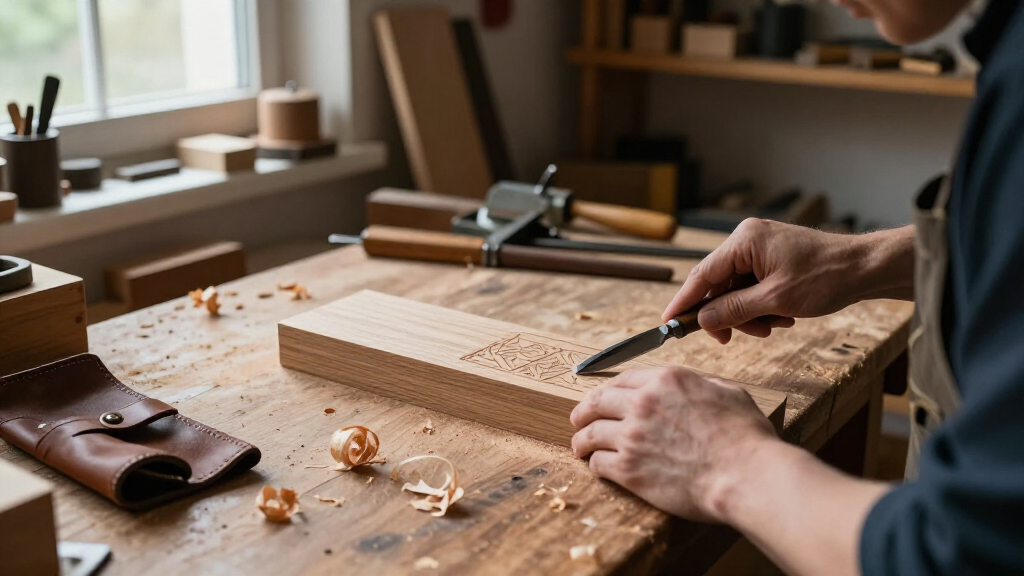

If you’re shopping for manual wood carving tools in 2026, you’ll quickly notice that the physical chisels and gouges are only half the equation — what separates a frustrating first year from a rewarding one is quality instruction. That’s why I’ve focused this comparison on the three most frequently recommended carving manuals on the market right now, because a $30 book can do more for your carving than a $300 tool roll if you don’t know how to sharpen, grip, or read the grain. My top pick is Chris Pye’s Woodcarving Course & Reference Manual, which remains the clearest traditional-technique foundation for hand-tool carvers. Close behind is the Power Carving Manual, Second Edition, the better choice if your workshop includes rotary tools and you want 22 projects plus a buyer’s guide. The original Power Carving Manual (first edition) takes third place — it’s still valuable, but its 16 projects are largely folded into the newer edition, which makes it harder to recommend at full price.
Listen free for 30 days with Audible
Thousands of audiobooks and originals — cancel anytime.
Start your free trialAs an affiliate, we earn on qualifying purchases.
The main tradeoff in this category comes down to traditional hand carving versus powered carving. Hand-tool carving is quieter, cheaper to start, and builds skills that transfer everywhere, but the learning curve on tool control is steep. Power carving removes material faster and forgives shakier technique, yet it demands dust management, bigger equipment spending, and a different safety mindset. The second tradeoff is depth versus breadth: a structured course-style book teaches fundamentals you’ll use for decades, while project collections get you carving something finished in a weekend. Where you fall on those two axes should determine which of these three belongs on your bench.
Complete the kit


Key Takeaways
- Chris Pye’s Woodcarving Course & Reference Manual is the best pick for hand-tool carvers because it teaches traditional technique — sharpening, grain reading, and cuts — rather than just projects.
- The Power Carving Manual, Second Edition supersedes the first edition with 22 projects (up from 16), updated tool photography, and a buyer’s guide, making it the stronger power carving purchase.
- The first-edition Power Carving Manual only makes sense as a discounted used copy or if you specifically want its original 16-project project list.
- Traditional carving books assume you’ll buy tools separately — budget for a starter gouge set alongside any of these titles.
- None of the three covers both hand and power carving deeply, so pick based on which carving style you actually intend to pursue first.
| Chris Pye’s Woodcarving Course & Reference Manual: A Beginner’s Guide to Traditional Techniques |  | Best Overall — the strongest foundation for true hand-tool carving | Format: Paperback instruction manual | Skill level: Beginner to early intermediate | Focus: Traditional hand-tool carving | VIEW LATEST PRICE | See Our Full Breakdown |
| Power Carving Manual, Second Edition: Tools, Techniques, and 22 All-Time Favorite Projects |  | Best for Powered Carving — the most complete project-driven option | Format: Paperback, second edition | Skill level: Beginner through advanced | Focus: Power carving with rotary tools | VIEW LATEST PRICE | See Our Full Breakdown |
| Power Carving Manual: Tools, Techniques, and 16 All-Time Favorite Projects (The Best of Woodcarving Illustrated) |  | Best Budget Pickup — worth it only at a discount | Format: Paperback, first edition | Skill level: Beginner to intermediate | Focus: Power carving techniques and projects | VIEW LATEST PRICE | See Our Full Breakdown |
| manual wood carving tool | Format | Skill level | Focus | Photography |
|---|---|---|---|---|
| Chris Pye’s Woodcarving Course | Paperback instruction manual | Beginner to early intermediate | Traditional hand-tool carving | Step-by-step instructional photos |
| Power Carving Manual | Paperback, second edition | Beginner through advanced | Power carving with rotary tools | Detailed step-by-step process photos |
| Power Carving Manual: Tools | Paperback, first edition | Beginner to intermediate | Power carving techniques and projects | Step-by-step instructional photos |
More Details on Our Top Picks
Chris Pye’s Woodcarving Course & Reference Manual: A Beginner’s Guide to Traditional Techniques
This is the book I’d put in the hands of anyone serious about manual wood carving, and it earns the top spot precisely because it’s the only title in this lineup that teaches the discipline from a hand-tool perspective. Chris Pye is one of the most respected voices in traditional carving, and that pedigree shows in how the book is organized: instead of leading with projects, it leads with tool selection, sharpening, and the fundamental cuts — the skills that determine whether your carving career survives its first year. Compared with both Power Carving Manual editions, this book asks more of you up front but pays that back with skills that transfer to every future project.
Structurally, the book works as a course first and a reference second, which is a genuine advantage over the project-collection format of the other two picks. Relief carving and carving in the round are both covered with step-by-step photography, and the reference material at the back — tool profiles, sharpening guidance, technique summaries — is the part most buyers report returning to long after the lessons are done. Where the second-edition Power Carving Manual gives you a broader buyer’s guide for powered equipment, Pye’s manual gives you something rarer: a durable mental model of how wood behaves under a blade.
The honest tradeoff is pace. There are fewer finished projects here than in either power carving title, and impatient beginners who want a carved spoon by Sunday may find the early chapters dry. It also assumes you’ll invest in a small set of quality gouges, so it’s not a zero-additional-cost purchase. Advanced carvers should skip it entirely — the content is deliberately foundational. But for the buyer this roundup is really about — someone learning manual carving with hand tools — this option stands out as the clearest, most complete starting point, and it makes the most sense for anyone who wants to build skill rather than just complete projects.
Pros:- Teaches fundamentals — sharpening, tool angles, grain direction — that the project-focused power carving books skip
- Structured as a progressive course, so skills build logically instead of assuming prior knowledge
- Doubles as a long-term reference with tool and technique material you’ll return to for years
- Written by a widely respected traditional carver with decades of teaching experience
Cons:- Fewer finished projects than either Power Carving Manual edition, so it rewards patience over quick wins
- Content may feel too basic for carvers with a year or more of experience
- Assumes a separate investment in hand tools, which adds to the real cost of following along
Best for: Beginners and early-intermediate carvers who want to learn traditional hand-tool carving properly, with sharpening and technique fundamentals before projects
Not ideal for: Advanced carvers who already know their tool grinds, or anyone who exclusively wants powered rotary-tool techniques
- Format:Paperback instruction manual
- Skill level:Beginner to early intermediate
- Focus:Traditional hand-tool carving
- Techniques covered:Relief carving and carving in the round
- Structure:Course-style lessons plus reference section
- Photography:Step-by-step instructional photos
- Author background:Professional traditional woodcarver and instructor
- Best pairing:Starter gouge and chisel set
Our verdict“If your goal is genuine manual wood carving with hand tools, this is the single best instructional investment in this comparison.”
Power Carving Manual, Second Edition: Tools, Techniques, and 22 All-Time Favorite Projects
If your definition of carving includes a rotary tool, this second edition is the strongest option in the lineup and the clear winner over its own predecessor. The upgrade is straightforward: 22 projects instead of 16, refreshed photography, and a buyer’s guide for power carving equipment that the first edition only partially delivers. That buyer’s guide alone changes who this book serves — compared with the original Power Carving Manual, this version actually helps you decide what to buy before you’ve committed to a tool ecosystem, which matters when entry-level rotary setups vary enormously in price and quality.
Against Chris Pye’s course, the comparison is less about quality and more about philosophy. This book is project-driven: you learn by making, with step-by-step photos carrying most of the instructional load. For buyers who learn kinesthetically, that format often clicks faster than Pye’s technique-first approach. The projects span skill levels too, which gives the book a longer usable life than a pure beginner text — the easier pieces work as confidence builders while the advanced ones stay aspirational.
The drawbacks are real, though. This is not a manual-technique book despite sitting in a roundup about manual carving tools — if you never intend to plug anything in, most of its tool guidance is irrelevant, and Pye’s title serves you far better. The project-driven structure also means less depth on fundamentals: sharpening theory, grain behavior, and cut mechanics get lighter treatment because the powered tool does much of that work for you. Dust and safety management for power carving is covered, but a book can only do so much there. This pick makes the most sense for the carver who already owns or plans to buy a rotary setup and wants structured projects to grow into — and at the same street price as the first edition, the math strongly favors this version.
Pros:- 22 projects across skill levels give it the longest usable lifespan of the three books
- Included buyer’s guide helps you choose power carving equipment before overspending
- Step-by-step photography makes techniques easy to follow without an instructor
- Supersedes the first edition with more projects and updated content at a comparable price
Cons:- Focused on powered carving, so its tool guidance doesn’t apply to hand-tool-only carvers
- Lighter on fundamentals like sharpening theory and grain-reading than a course-style book
- Requires a meaningful equipment investment beyond the book itself
Best for: Woodworkers with (or planning to buy) a rotary or power carving setup who want a project-rich, photo-driven guide with equipment buying advice
Not ideal for: Pure hand-tool carvers with no interest in powered equipment, or buyers wanting deep foundational technique instruction
- Format:Paperback, second edition
- Skill level:Beginner through advanced
- Focus:Power carving with rotary tools
- Projects included:22 step-by-step projects
- Extras:Buyer’s guide, expert tips, inspiration gallery
- Photography:Detailed step-by-step process photos
- Supersedes:First edition Power Carving Manual (16 projects)
- Best pairing:Rotary tool with carving bits and dust protection
Our verdict“The best power carving manual available in this comparison, and the smarter buy than its own first edition.”
Power Carving Manual: Tools, Techniques, and 16 All-Time Favorite Projects (The Best of Woodcarving Illustrated)
The original Power Carving Manual occupies an awkward position in 2026, and I want to be direct about why it ranks third: most of its content lives on in the second edition, which added six more projects and modernized the tool photography. When two editions sell for similar prices, the older one has to justify itself on value, and that only happens when you find it cheap — used or clearance-priced. At a steep discount, this becomes a legitimately good pickup for a beginner who wants a low-risk introduction to power carving without paying full freight.
What the book still does well is deliver its 16 favorite projects from Woodcarving Illustrated with clear step-by-step instructions and original patterns, plus expert advice that holds up because carving fundamentals age slowly. Compared with Chris Pye’s manual, it shares the same project-first philosophy as its successor — making things rather than drilling technique — but it lacks even the second edition’s improved buyer’s guide, which is a meaningful gap if you’re still deciding what equipment to purchase. Against its own successor, the honest summary is that it covers a subset of the same ground with older visuals.
There are niche reasons to choose it anyway. If you specifically want the original 16-project lineup and find the second edition unavailable or overpriced, this book satisfies. It also works as a second copy for a workshop, classroom, or gift where condition matters less than cost. And some buyers simply prefer reprints curated from Woodcarving Illustrated’s archive for the variety of contributing carvers. But as a primary purchase at full price, this model is bettered by the second edition in nearly every dimension a buyer cares about. Skip it unless the price gap is real — that’s the entire decision logic here.
Pros:- 16 well-regarded projects curated from Woodcarving Illustrated’s archive
- Includes original patterns and step-by-step instructions suitable for beginners
- Can be found cheap on the used market, making it a low-risk entry point
- Expert contributor advice that remains relevant despite the edition’s age
Cons:- Largely superseded by the second edition, which offers more projects and updated content for similar money
- Lacks the improved equipment buyer’s guide of the newer edition
- Older photography and tool references date parts of the content
Best for: Budget-conscious beginners who find it discounted, or buyers specifically seeking the original 16-project collection from Woodcarving Illustrated
Not ideal for: Anyone who can buy the second edition at a similar price, and hand-tool carvers who need traditional technique instruction
- Format:Paperback, first edition
- Skill level:Beginner to intermediate
- Focus:Power carving techniques and projects
- Projects included:16 projects
- Source material:The Best of Woodcarving Illustrated
- Photography:Step-by-step instructional photos
- Superseded by:Second edition (22 projects)
- Best pairing:Any starter rotary tool setup
Our verdict“A fine book at the right price and a poor one at full price — buy it discounted or buy the second edition instead.”
How We Picked
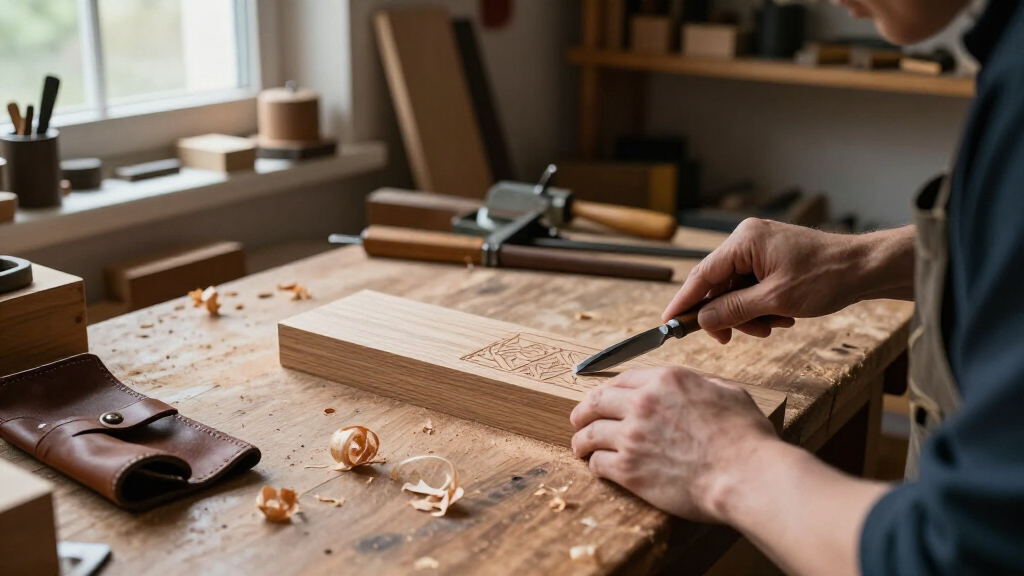
Since all three of these are instruction-focused titles rather than physical tools, I judged them on the criteria that actually predict whether a carving manual will help you improve. The first criterion was alignment with manual (hand-tool) carving — the promise of this roundup — because a book full of rotary-tool techniques does a hand-tool buyer no good. Second, I weighed instructional structure: does the book build skills progressively, or does it assume you already know how to hold a gouge? Third, I looked at project count, variety, and difficulty range, since projects are where most carvers actually internalize technique. Fourth, I considered longevity of reference value — a book you’ll return to for sharpening angles in year five beats one you finish in a month. Finally, I compared editions against each other, because buying a superseded edition at the same price is one of the most common mistakes in this niche. I did not rank based on marketing copy or page count alone; the ordering below reflects how well each title serves a specific type of buyer relative to its alternatives.
| manual wood carving tool | Format | Skill level | Focus | Photography |
|---|---|---|---|---|
| Chris Pye’s Woodcarving Course | Paperback instruction manual | Beginner to early intermediate | Traditional hand-tool carving | Step-by-step instructional photos |
| Power Carving Manual | Paperback, second edition | Beginner through advanced | Power carving with rotary tools | Detailed step-by-step process photos |
| Power Carving Manual: Tools | Paperback, first edition | Beginner to intermediate | Power carving techniques and projects | Step-by-step instructional photos |
Factors to Consider When Choosing Manual Wood Carving Tools
Before choosing among these three titles, it helps to understand what actually differentiates carving manuals — because the wrong book for your carving style is money wasted no matter how well reviewed it is. These are the factors I’d weigh in order of importance.Hand tools or power tools first?
This is the single biggest decision. Hand-tool carving uses gouges, chisels, and knives; it’s quiet, inexpensive to start, and builds transferable skill, but progress is slower and sharpening is a discipline in itself. Power carving uses rotary tools and burrs; it removes material fast and suits sculptural work, but requires dust extraction, hearing and eye protection, and a bigger budget. Chris Pye’s manual serves the first path; both Power Carving Manual editions serve the second. No book in this lineup does both well, so decide before you buy.
Course-style versus project-driven instruction
Course-style books like Pye’s build skills sequentially — you’ll practice cuts before making anything displayable. Project-driven books teach through completed pieces, which is more motivating for many beginners but leaves gaps in fundamentals. Neither approach is objectively better; it depends on whether you’re process-motivated or result-motivated. If quitting early is your risk, pick projects. If plateauing early is your risk, pick the course.
Reference longevity
A good carving manual should outlive its first read. Look for back-of-book reference sections covering tool profiles, sharpening angles, and technique summaries — the material you’ll consult years later. Pye’s manual is strongest here, which is a large part of why it takes my top spot despite having fewer projects than the power carving titles.
Editions and value
Carving books get revised, and older editions often linger in listings at prices close to the current ones. Always check whether a newer edition exists before buying — in this comparison, the second-edition Power Carving Manual makes the first edition nearly obsolete except at a steep discount. The reverse also applies: a heavily discounted prior edition can be a bargain if the revisions are mostly cosmetic.
Budget for tools, not just the book
Whichever path you choose, the book is the smaller expense. A basic hand-tool starter set runs modestly but quality matters — a sharp, well-made gouge outperforms a whole roll of dull budget chisels. Power carving entry costs more once you add bits and dust control. Factor the total cost of following the book, not just the cover price, into your decision.
Frequently Asked Questions
Which of these books is best for true manual wood carving with hand tools?
Chris Pye’s Woodcarving Course & Reference Manual is the clear choice for hand-tool carving. It’s the only title in this comparison focused on traditional technique — how to hold a gouge, read grain, and keep edges sharp — rather than powered rotary work. Both Power Carving Manual editions assume you’re using motorized tools, so their equipment guidance and technique sections simply don’t apply if your bench has nothing but chisels and gouges on it. If manual carving is the goal, Pye’s book plus a modest starter set of quality gouges is the combination I’d recommend above everything else here.
Is the second-edition Power Carving Manual worth buying if I already own the first edition?
Probably not, unless the six additional projects specifically appeal to you. The second edition’s real upgrades are the expanded project count, refreshed photography, and an improved buyer’s guide for power carving equipment. If you already own the first edition and have used its projects, most of the foundational technique content will feel repetitive. The second edition makes the most sense as a first purchase for someone who owns neither book — at similar street prices, getting 22 projects instead of 16 with updated visuals is an easy call. Existing first-edition owners should spend their money on tools or wood instead.
Can a beginner learn wood carving from a book alone, or do I need in-person instruction?
A well-structured book can absolutely carry a motivated beginner through the first year or two, and that’s exactly what these titles are designed for. Step-by-step photography compensates for a lot of missing supervision, and books let you progress at your own pace without workshop fees. That said, books can’t watch your grip or correct a dangerous habit, so supplement them with carving forums, video demonstrations of specific techniques, and — if possible — a local carving club, many of which welcome beginners freely. Treat the book as your curriculum and the community as your feedback loop; the combination works far better than either alone.
What tools do I need to actually use these manuals?
For Chris Pye’s manual, plan on a small set of hand tools: a couple of gouges in different sweeps, a carving knife or chisel, a strop and sharpening supplies, and a bench hook or carving vice to hold your work. For either Power Carving Manual, you’ll need a rotary tool, an assortment of carving burrs and bits, and proper dust protection — a respirator and eye protection are non-negotiable with powered carving since fine wood dust is a genuine health hazard. In both cases the tools represent the larger share of the total investment, so it’s worth buying fewer, better tools rather than large budget sets that arrive dull and stay that way.
Which book should I buy if I can only get one?
Buy Chris Pye’s Woodcarving Course & Reference Manual if you intend to carve with hand tools, and the second-edition Power Carving Manual if you intend to carve with rotary tools — that single question settles it. If you’re genuinely undecided between the two styles, default to Pye’s book, because traditional technique knowledge transfers into power carving later, while the reverse is much less true. The first-edition Power Carving Manual is the one title I’d only recommend opportunistically, when a discounted used copy makes it a low-cost way to sample power carving before committing to equipment.
Conclusion
After comparing all three titles, my recommendations break down cleanly by buyer type. If you’re a beginner committed to traditional hand-tool carving, buy Chris Pye’s Woodcarving Course & Reference Manual and pair it with a small set of quality gouges — it teaches the fundamentals the other two books skip, and its reference material will serve you for years, which is why it takes my best overall pick. If you’re a woodworker who already owns or plans to buy a rotary setup, the second-edition Power Carving Manual is the better buy: more projects, updated photography, and a buyer’s guide that helps you avoid wasting money on the wrong equipment. If you’re a budget-limited tinkerer curious about power carving, grab the original Power Carving Manual used or on clearance — it’s a perfectly good book that simply shouldn’t be bought at full price next to its own improved successor. And if you’re an experienced carver, honestly, none of these three will teach you much; your money is better spent on specialty titles, better steel, or more wood. The common thread across every buyer type: the book is the cheap part. Choose based on the carving style you’ll actually practice, then invest your real budget in the tools the book teaches you to use well.
Fall yard work Picks
leaf blowers
As an affiliate, we earn on qualifying purchases.